Cold Room to Freezer Conversion in Kuwait | Costs & Requirements
Convert a Cold Room to a Freezer in Kuwait: Costs & Feasibility
Do you have an existing cold room in a restaurant, grocery store, or commercial warehouse in Kuwait and want to convert it into a freezer instead of installing an entirely new room? The short answer is: Yes, converting a cold room into a freezer in Kuwait is technically possible in certain situations, but not every existing cold room is suitable for conversion. The decision depends on whether the insulation, walls, flooring, compressors, evaporators, and doors can operate under below-zero conditions. This is why understanding cold room to freezer conversion in Kuwait, its feasibility, and the total cost requires a comprehensive technical inspection before changing the thermostat settings or installing a more powerful compressor. Reaching a low temperature for a short period does not automatically mean that the room has become a safe, properly designed commercial freezer suitable for continuous operation.
You may currently have a refrigerated storage room for vegetables, dairy products, or chilled meat, but changes in your business activities may mean that you now need space for frozen meat, fish, or other frozen products. This raises an important question: can you reuse the existing insulation panels and equipment to reduce the cost of constructing a new freezer, or will the conversion require replacing most of the original components? The answer depends on the present condition of the room, the insulation thickness, the flooring construction, and the type of refrigeration system installed. In Kuwait's hot climate, freezing loads and heat infiltration may increase considerably if the room was not originally designed for low-temperature operation, particularly when doors are opened frequently and goods move continuously through the facility.
Through Cold Room and Display Refrigerator Maintenance in Kuwait, you can inquire about the technical options for modifying commercial cold rooms and evaluating your business requirements. This comprehensive guide explains when conversion is possible, which inspections are necessary, whether existing insulation can withstand freezer conditions, and when compressors and evaporators must be replaced. It also explains why freezer flooring is one of the most important factors in the decision, how conversion costs are calculated, and how to compare those costs with installing a completely new freezer room. Understanding these details can help you choose a suitable solution without spending your budget on modifications that may not be technically or financially worthwhile.
Converting a Cold Room into a Freezer in Kuwait: When Is It Possible and When Is It Not?
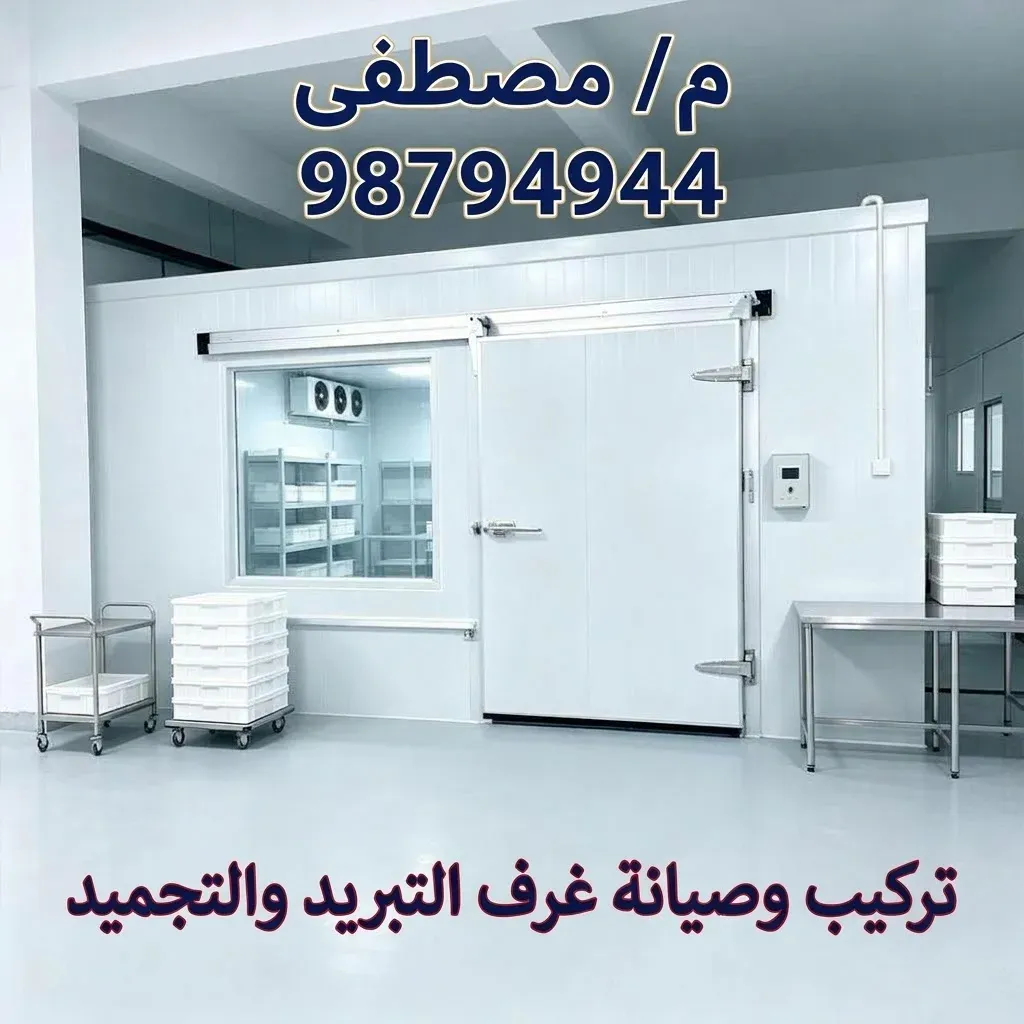
Converting a cold room into a freezer in Kuwait is possible when the existing components can be modified or replaced to meet the new operating requirements. However, not every refrigerated room is suitable for this type of conversion. Refrigerated cold rooms and freezer rooms have different requirements for insulation, flooring, doors, and refrigeration equipment. A room previously operating at a positive temperature, such as 2–5°C, will face significantly different conditions when operated below freezing.
A successful conversion begins with evaluating the room as one integrated system rather than inspecting only the compressor. For example, the refrigeration unit may be replaceable, but the floor may have insufficient insulation. Alternatively, the walls may be suitable while the doors allow substantial moisture infiltration. In these circumstances, the cost of correcting the weaknesses must be calculated before approving the project.
When Is Cold Room Conversion Worth Considering?
-
When the existing insulated structure is in good condition and is found suitable for freezer operation after assessment.
-
When the walls, ceiling, and panel joints meet the required insulation performance.
-
When the existing flooring is suitable for the new operating temperature or can be modified safely.
-
When suitable freezer refrigeration equipment can be installed at the site.
-
When the internal dimensions can accommodate the necessary modifications.
-
When the electrical supply can support the new equipment after inspection.
-
When the total conversion cost is financially reasonable compared with installing a new freezer.
-
When operational, storage, and safety requirements can be satisfied.
When Is Conversion Not Suitable?
Conversion may be unsuitable when insulation panels are damaged, insulation performance is poor, or the flooring requires extensive reconstruction.
This is particularly important when the modifications could affect the safety of the building or its intended use.
Conversion may also be financially unattractive if the project requires replacing the walls, flooring, door, compressor, and evaporator together. In that situation, the total conversion cost may approach or exceed the cost of installing a new freezer room.
Is Changing the Thermostat from Refrigeration to Freezing Enough?
No. Changing the controller setting to -18°C does not automatically convert a refrigerated cold room into a freezer.
Operating refrigeration equipment outside its intended range may cause poor performance, repeated faults, or an inability to reach the required temperature.
It may also create frost accumulation, insulation problems, and flooring-related risks.
Are Frozen Storage Requirements Different from Freezing Fresh Products?
Yes. Storing products that have already been frozen is different from introducing large quantities of unfrozen meat or fish and freezing them.
Initial freezing requires additional heat removal within an appropriate period. It may also require specialized equipment that is not included in an ordinary frozen storage room.
What Is the First Decision You Should Make?
Determine whether you need a room for storing previously frozen products or a system designed for initially freezing unfrozen products.
This distinction determines the required refrigeration loads and equipment and helps prevent investment in a system that does not meet your actual business needs.
The key consideration: Conversion is not impossible, but it is an engineering decision that requires inspecting the entire cold room and comparing modification costs with the price of a new freezer installation.
Can Existing Cold Room Insulation Handle Freezing Temperatures? Inspecting Walls, Ceilings, and Doors
The question “Can existing cold room insulation withstand freezer temperatures?” is one of the most important considerations before beginning any modifications. Insulation that was suitable for refrigerated storage above freezing may not provide adequate performance during continuous subzero operation. As the temperature difference between the inside of the room and the surrounding environment increases, thermal resistance, joint sealing, and vapor barriers become more important. In Kuwait, this difference can become particularly significant during summer because of high outdoor temperatures.
Not all insulated sandwich panels have identical specifications. Their performance depends on insulation material, thickness, actual condition, and installation quality. Some panels may look acceptable externally while containing internal moisture, poorly sealed connections, or damage around door openings. These problems can become more serious when the room is converted to freezer operation.
What Should Be Inspected in the Existing Insulation?
-
Type of insulation material.
-
Thickness of the existing panels.
-
Condition of the walls and ceiling.
-
Sealing of panel joints and corners.
-
Evidence of moisture or internal panel damage.
-
Air leakage around openings.
-
Condition of door insulation and frames.
-
Connections between walls and flooring.
-
Locations where pipework and cables pass through panels.
-
Suitability of insulation materials for the required operating temperature.
Is Standard Cold Room Panel Thickness Sufficient for a Freezer?
There is no single insulation thickness suitable for every project.
Requirements depend on the target temperature, insulation material, surrounding conditions, and construction details.
The actual thermal performance should therefore be assessed rather than relying exclusively on the stated panel thickness.
How Do Insulation Requirements Differ Between Refrigerated and Frozen Storage?
|
Comparison Factor |
Refrigerated Cold Room |
Freezer Room |
|
Operating temperature |
Usually above freezing |
Below freezing |
|
Temperature difference from surroundings |
Generally smaller |
Generally greater |
|
Insulation requirements |
Based on refrigeration conditions |
May require higher thermal resistance |
|
Joint sealing |
Important |
Particularly important |
|
Vapor barrier |
Depends on the design |
Requires careful consideration |
|
Frost formation risk |
Usually lower |
Greater when moisture enters |
|
Doors and frames |
Designed for refrigerated use |
May require additional freezer-specific features |
Why Are Vapor Barriers Important in Freezer Rooms?
A correctly designed and installed vapor barrier helps reduce moisture migration into the insulation layers.
If moisture enters the structure and condenses or freezes inside construction components, insulation performance may deteriorate, and problems may appear around joints and surfaces.
Can Insulation Be Increased Without Replacing the Entire Room?
This may be possible in certain projects.
However, adding insulation panels or layers requires careful consideration of how they will be secured, how the vapor barrier will remain continuous, and how joints and doors will be treated.
Additional internal insulation may also reduce usable storage space.
Is Frost on the Walls Normal?
Repeated frost formation around joints, door frames, or specific wall sections may indicate humid air infiltration or an insulation defect.
The underlying cause should be investigated rather than repeatedly removing the frost without correcting the problem.
Before approving a conversion, request a complete insulation assessment. Installing a new compressor will not correct inadequate panels or ongoing air and moisture infiltration.
Modifying Cold Room Flooring for Freezer Operation: Why the Floor Can Prevent Conversion
Modifying cold room flooring for freezer operation is one of the most important aspects of evaluating conversion feasibility. Flooring used in some positive-temperature cold rooms may differ significantly from flooring designed for continuous subzero operation. If the room is built on a concrete slab connected to the ground, prolonged exposure to low temperatures may cause moisture in the soil beneath it to freeze. Under certain conditions, this can produce expansion or floor movement that affects finishes or structural components.
It is therefore incorrect to assume that a floor suitable for ordinary refrigerated storage will remain suitable for freezer operation over many years. Simply placing insulation boards over existing tiles is not a universal solution. A successful flooring modification depends on the original floor layers, structural loading, drainage arrangements, vapor barrier construction, and protection against ground freezing.
Does Converting a Cold Room into a Freezer Require Floor Insulation?
For many freezer applications, floor insulation, vapor barriers, and protection against freezing beneath the floor should be evaluated.
However, the extent of the required work depends on the room's location and floor construction, including whether the slab is in contact with the ground or positioned above another space.
What Is Frost Heave?
Water present in the ground beneath a freezer floor may freeze, leading to changes in volume and the development of forces that cause unwanted movement or lifting of the floor.
This phenomenon is known in engineering as frost heave.
What Flooring Solutions May Be Considered?
-
Adding suitable floor insulation.
-
Installing a continuous vapor barrier according to the design.
-
Evaluating measures to prevent ground freezing.
-
Installing underfloor heating or frost protection systems where necessary.
-
Reviewing trolley and forklift loading requirements.
-
Selecting suitable floor finishes for freezing environments.
-
Treating joints between walls and flooring.
-
Reviewing drainage and areas where water may accumulate.
Does Every Freezer Room Need Underfloor Heating?
Not necessarily. Requirements depend on the building structure, operating temperature, ground conditions, and floor construction.
Some applications may use systems designed to prevent ground freezing, but their selection must follow a site-specific engineering assessment.
Underfloor heating should not be assumed to be a mandatory component of every freezer room.
Can a New Floor Be Installed Over the Existing One?
This may be possible in certain circumstances if the proposed arrangement is structurally and thermally suitable.
However, internal height, door clearances, structural loads, floor levels, and vapor barrier continuity must all be considered.
Raising the floor may reduce usable internal height and require door modifications or changes to shelving arrangements.
Floor Inspection Checklist Before Conversion
|
Existing Floor Condition |
Recommended Assessment |
|
Insulated floor originally designed for freezing |
Review condition and technical specifications |
|
Refrigerated floor with unknown insulation details |
Inspect construction layers and evaluate risks |
|
Concrete slab connected to the ground |
Assess insulation and ground-freezing protection |
|
Visible cracks, settlement, or damage |
Obtain structural evaluation before modification |
|
Floor requiring a higher finished level |
Review doors, height clearances, and loads |
|
Floor supporting trolleys or forklifts |
Calculate structural loads and select suitable finishes |
The most important point: If the flooring modifications are complex or expensive, constructing a new freezer room may be a better financial option even when the existing walls and refrigeration equipment are in good condition.
Checking Compressor Capacity Before Conversion: Can the Existing Unit Operate as a Freezer?
Checking compressor capacity before converting a cold room is essential because a compressor that performs well at positive refrigeration temperatures may not deliver the required performance under freezer conditions. The operating conditions of the refrigeration cycle change when a lower evaporating temperature is required. Refrigeration capacity, efficiency, pressures, and operating temperatures may also change. It is therefore not appropriate to rely exclusively on the compressor's nominal capacity without reviewing the manufacturer's performance data and permitted operating range.
The refrigerant type, expansion device, condensing unit, and other refrigeration circuit components should also be evaluated because converting a cold room into a freezer may require replacing more than one component. In Kuwait, the surrounding temperature of the condensing unit must be considered, particularly during summer, because actual system capacity is affected by condensing conditions and ventilation.
What Should Be Checked in the Existing Compressor?
-
Compressor model and technical specifications.
-
Permitted evaporating temperature range.
-
Actual capacity under freezer operating conditions.
-
Refrigerant type.
-
Expected condensing conditions.
-
Equipment condition and operating age.
-
Required refrigeration load.
-
Electrical connections and protective systems.
-
Compatibility of the other refrigeration circuit components.
-
Availability of manufacturer performance data for assessment.
Can the Existing Compressor Be Reused?
It may be possible if the manufacturer's specifications permit the new operating conditions and the compressor has sufficient capacity for the actual refrigeration load.
However, suitability cannot be confirmed without reviewing performance data, calculating the new operating requirements, and inspecting the equipment.
Why Does a Compressor Not Deliver the Same Capacity Under Freezer Conditions?
Evaporating and condensing conditions affect the amount of heat a refrigeration system can remove and its operating efficiency.
Available cooling capacity may decrease when operating at lower temperatures.
The manufacturer's performance tables should therefore be reviewed for the specific compressor model.
Will Installing a Larger Compressor Solve the Problem?
Not always.
A larger compressor may be incompatible with the evaporator, expansion valve, refrigeration pipework, or control system.
The preferable solution is to select a compatible group of components based on calculated refrigeration loads and the required operating range.
Can Only the Compressor Be Replaced?
This depends on the specifications and condition of the existing refrigeration system.
Certain conversions may also require modifications to the expansion valve, evaporator, condenser, pipework, and controller.
The complete refrigeration circuit should therefore be evaluated before deciding which components to replace.
Technical Comparison of Compressor Requirements
|
Inspection Factor |
Refrigerated Operation |
Freezer Operation |
|
Evaporating temperature |
Generally higher |
Generally lower |
|
Actual refrigeration capacity |
Depends on operating conditions |
Requires recalculation |
|
Compressor operating range |
Must suit refrigeration temperatures |
Must support freezer conditions |
|
Refrigerant |
According to system design |
Suitability must be verified |
|
Expansion valve |
Selected for refrigerated operation |
May require adjustment or replacement |
|
Electrical protection |
Based on existing equipment |
Must be reviewed for new loads |
Does Reaching a Low Temperature Prove That the System Is Suitable?
No. The room may reach a low temperature while empty but fail to maintain it when products are introduced or doors are opened frequently.
Performance should therefore be evaluated under appropriate operating conditions rather than relying on a short trial alone.
Before purchasing a new compressor or deciding to reuse the existing one, establish its actual refrigeration capacity at the required freezer operating conditions. This assessment determines an important part of the conversion budget.
Replacing a Cold Room Evaporator for Freezer Operation: Defrost, Fans, and Drainage
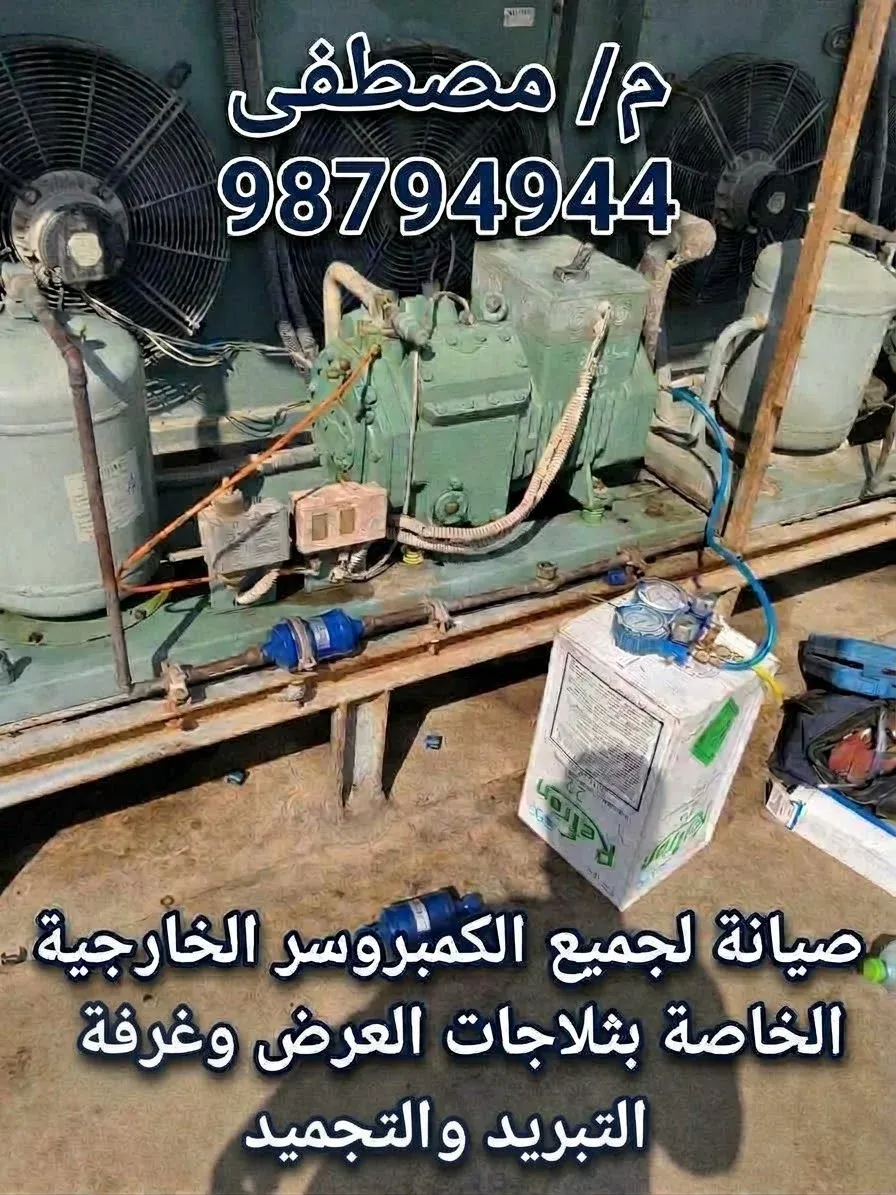
Replacing a cold room evaporator for freezer operation may be necessary because an evaporator designed for above-zero refrigeration conditions may not be suitable for lower operating temperatures. Freezer rooms are more susceptible to frost accumulation caused by warm, humid air entering when doors are opened. The system therefore needs appropriate arrangements for defrosting and draining water. Air distribution and the required temperature difference between the room and evaporator may also differ from the original refrigeration application.
Evaporator selection involves more than installing a larger-capacity unit. Performance depends on evaporating temperature, heat exchange surface, airflow, and the characteristics of stored products. Door-opening frequency and daily product loads should also be considered, particularly in restaurants and commercial warehouses receiving frequent shipments.
Can a Refrigeration Evaporator Be Used for Freezing?
It may be possible in limited circumstances if its specifications support freezer operation.
However, many applications require an evaporator specifically suited to lower temperatures.
Manufacturer data and evaporator performance at the required freezer conditions must be reviewed before making the decision.
What Is the Function of a Defrost System?
A defrost system removes frost that accumulates on the evaporator.
The method depends on the refrigeration system design.
Different solutions may be used, including electric defrost heaters or other appropriate systems.
Why Does Frost Accumulation Increase After Conversion?
When warm, humid air enters a freezer room, moisture can freeze on cold surfaces and the evaporator.
Excessive frost accumulation may restrict airflow and reduce heat transfer performance.
Does Replacing the Evaporator Require Drainage Modifications?
The drainage system may require modifications to prevent water from freezing inside pipes or drainage areas.
The appropriate solution depends on the evaporator design, defrost system, and operating temperature.
How Do Fans Affect Freezer Performance?
Fans help distribute refrigerated air, but their speed and arrangement should reflect the stored products and the storage layout.
Air distribution should avoid unsuitable temperature differences and should not interfere with product movement or employee access.
Is Manual Ice Removal Sufficient?
Manual removal should not be treated as a permanent substitute for a suitable defrost system when one is required by the design.
Sharp tools or methods that could damage the evaporator or refrigeration circuit should also be avoided.
Main Evaporator Inspection Points
-
Suitability of the model for freezing temperatures.
-
Refrigeration capacity under the new operating conditions.
-
Fin spacing and frost management.
-
Defrost system specifications.
-
Defrost water drainage.
-
Condition of fans and motors.
-
Sensor locations.
-
Air distribution inside the room.
-
Compatibility with the compressor and expansion device.
-
Maintenance accessibility.
If the room requires a new compressor, evaporator, expansion device, and defrost system, the cost of replacing the entire refrigeration system should be calculated before deciding whether conversion is worthwhile.
Converting Refrigerated Storage to Below-Zero Operation: Doors, Controllers, Electrical Systems, and Safety
Converting refrigerated storage to below-zero operation involves more than insulation and refrigeration equipment. Doors, controllers, electrical installations, and safety arrangements may also require modification. In freezer rooms, frost can develop around doors and frames when humid air infiltrates or temperature differences are substantial. Depending on their design, certain doors may need additional features to prevent freezing around seals and closing mechanisms. Safe internal door release, alarms, and procedures for working in low-temperature environments must also be reviewed.
The controller must be suitable for below-zero temperature regulation and the required operating functions, including defrost management, evaporator sensors, and alarms. Older refrigeration controllers may not support these functions. The capabilities of the existing equipment should therefore be established before relying on it for freezer operation.
Can the Existing Cold Room Door Be Used for Freezing?
This depends on the type, specifications, and condition of the door.
The room may require a door more suitable for freezer operation in terms of insulation, sealing, and frame features.
Safe opening from inside the room must also be provided.
What Problems May Develop Around the Door?
-
Frost formation around the frame.
-
Poor gasket sealing.
-
Warm, humid air infiltration.
-
Condensation on external surfaces.
-
Difficulty opening or closing the door.
-
Deterioration of certain joints through repeated use.
-
Increased refrigeration loads caused by frequent opening.
Does the Controller Need to Be Replaced?
Replacement may be necessary if the existing controller is unsuitable for the temperature range or lacks the required defrost and protective functions.
Some advanced controllers may be reconfigured within their specified capabilities after verifying compatibility with the sensors and refrigeration equipment.
Can the Existing Electrical Installation Support the New System?
The electrical supply capacity, circuit breakers, cables, and protective equipment must be reviewed according to the requirements of the new system.
A new compressor or additional defrost heaters should not be connected on the assumption that wiring suitable for the original cold room will also be adequate for freezer operation.
Does a Freezer Room Need an Internal Alarm?
The safety requirements appropriate to the room and employee activities should be evaluated, including safe exit arrangements and emergency notification where necessary.
The specific equipment should be selected according to the design and applicable safety requirements.
Why Is Temperature Monitoring Important?
Temperature sensors and recording systems help monitor storage conditions and detect changes, especially when substantial commercial quantities of frozen products are stored.
Measurement locations should be selected appropriately. Depending on the nature of the inventory, relying exclusively on the controller display may not provide sufficient monitoring.
Potential Additional Modifications
|
Component |
May Modification Be Required? |
Reason |
|
Door |
Yes |
Insulation and sealing suitable for freezer conditions |
|
Door gasket |
Yes |
Reducing air infiltration |
|
Door frame |
Depending on design |
Managing frost formation |
|
Controller |
Yes |
Temperature and defrost management |
|
Temperature sensors |
According to specifications |
Monitoring operating conditions |
|
Electrical installation |
According to new loads |
Power supply for replacement equipment |
|
Alarms |
According to risks and requirements |
Fault detection and employee safety |
|
Drainage |
May be necessary |
Preventing frozen drainage water |
|
Lighting |
According to specifications |
Suitability for below-zero operation |
A proper conversion must address all relevant operating and safety components. A room that reaches -18°C but suffers from frozen doors or unsuitable drainage cannot be considered a successful long-term solution.
Request an Assessment Before Purchasing Equipment
If you have an existing cold room and want to convert it into a freezer, prepare the room dimensions, photographs of the insulation panels, door and flooring, compressor and evaporator information, and the required operating temperature.
You can inquire about available modification and installation options through the official website of Cold Room and Display Refrigerator Maintenance:
Cold Room to Freezer Conversion Costs in Kuwait: What Should the Quotation Include?
The cost of converting a cold room into a freezer varies considerably between projects. Some rooms may require relatively limited equipment replacement once the insulation and flooring have been confirmed suitable. Others may need extensive modifications involving the structure, doors, electrical installations, and complete refrigeration system. There is therefore no fixed price per square metre that accurately represents every conversion project. The technical condition of the existing room may be more important than its dimensions alone.
A common mistake is comparing the price of a new compressor with the cost of installing a complete freezer room and immediately assuming conversion will be cheaper. In reality, the total cost may include dismantling and reinstalling equipment, removing existing components, adding insulation, modifying flooring, replacing doors, and updating defrost and control systems. The financial consequences of taking the room out of service during construction must also be considered, particularly when the business needs alternative storage for existing inventory.
Main Factors Affecting Conversion Costs
|
Modification Item |
When Is It Required? |
Effect on Costs |
|
Room inspection and calculations |
Before deciding whether to convert |
Depends on assessment scope |
|
Wall insulation modifications |
When existing insulation is unsuitable |
Depends on area and materials |
|
Ceiling modifications |
When insulation or joints are inadequate |
Depends on condition and dimensions |
|
Flooring modifications |
When the floor is unsuitable for below-zero operation |
May be a major cost component |
|
Compressor replacement |
When existing capacity is insufficient |
Depends on capacity and model |
|
Evaporator replacement |
When unsuitable for freezer operation |
Depends on capacity and defrost system |
|
Expansion valve modifications |
According to refrigeration circuit compatibility |
Depends on specifications |
|
Door replacement |
When the existing door is unsuitable |
Depends on type and dimensions |
|
Controllers and sensors |
According to required operating functions |
Depends on system capabilities |
|
Electrical work and pipework |
According to new equipment loads |
Influenced by location and distances |
|
Testing and commissioning |
To verify system performance |
Depends on the agreed scope |
Can Conversion Costs Be Determined from Photographs Alone?
Photographs can support a preliminary assessment of some components.
However, they cannot reliably establish insulation thickness, hidden moisture damage, flooring suitability, or actual equipment performance.
A final quotation may therefore require technical information, a site inspection, and suitable testing.
Does the Conversion Price Include Removing the Old Equipment?
Not necessarily.
Some quotations include dismantling existing equipment and arranging removal or relocation, while others price these activities separately.
These details should be confirmed before signing the agreement.
Is Compressor Replacement Always the Most Expensive Part?
Not necessarily.
Floor reconstruction, additional insulation, or replacement of several refrigeration components may represent major cost items, depending on the existing room.
The project must be evaluated before ranking its cost components.
Can Existing Equipment Be Reused to Reduce Costs?
It may be possible when the equipment is in suitable condition and its technical specifications meet the new requirements.
However, reuse should be based on inspection and engineering calculations rather than the desire to reduce initial expenses alone.
Does Conversion Take Less Time Than Installing a New Freezer?
Not necessarily.
Some conversions involve limited modifications, while others require dismantling, flooring treatment, insulation work, and extensive testing.
The duration cannot be determined accurately without knowing the required scope of work.
What Information Is Needed for a Clear Quotation?
-
Room length, width, and height.
-
Current operating temperature.
-
Required freezer temperature.
-
Product types and inventory quantities.
-
Insulation material and thickness, if known.
-
Flooring condition and construction details.
-
Compressor and evaporator specifications.
-
Door type and condition.
-
Condensing unit location.
-
Electrical supply condition.
-
Expected door-opening frequency.
-
Requested modification scope.
The most reliable way to establish conversion costs is to request a detailed quotation after inspecting the room. The proposal should identify which components can be retained and which require modification or replacement.
Comparing Cold Room Conversion Costs with New Freezer Installation: Which Is More Economical?
Comparing the cost of conversion with installing a new freezer room is one of the most important stages in making the decision. Reusing the existing insulated structure may initially appear cheaper, but this is not always the best option. If the floor, insulation, door, and refrigeration equipment all require extensive replacement, the total conversion cost may become high enough to make new installation more reasonable. However, if the existing room was built with suitable specifications and most components can be retained, conversion may be worth considering.
A meaningful comparison should not focus exclusively on the initial quotation. It must also consider whether the system will meet the intended operating requirements, how easily it can be maintained, expected energy consumption, and the interruption to business operations during construction. The age and condition of the existing structure and equipment should also be reviewed because reusing worn components may affect the project's long-term financial value.
Conversion Versus New Freezer Installation
|
Comparison Factor |
Converting the Existing Cold Room |
Installing a New Freezer Room |
|
Existing insulation panels |
May be reused if suitable |
Panels are selected for the new design |
|
Flooring |
Requires inspection and possible modification |
Can be designed for freezing from the beginning |
|
Compressor and evaporator |
May be retained or replaced |
Selected according to the new refrigeration load |
|
Door |
May require modification or replacement |
Specified for freezer operation |
|
Storage layout |
Limited by existing room dimensions |
Greater flexibility in design |
|
Dismantling work |
May be necessary |
Depends on the installation site |
|
Operational interruption |
Depends on the extent of modifications |
Depends on the construction plan |
|
Project cost |
Determined by existing component conditions |
Determined by new specifications |
|
Future expansion |
Limited by the existing structure |
Can be considered during initial design |
When Is Conversion the Better Option?
Conversion may be suitable when flooring, insulation, and the structure are in good condition and appropriate for freezing, and the required modifications are limited and financially reasonable.
However, the decision should be based on a clear technical and financial comparison.
When Is a New Freezer Room the Better Option?
A new installation may be preferable when the existing room requires reconstruction of major components or when its dimensions and layout are unsuitable for the new use.
It may also be worth considering if the business needs greater storage capacity or different arrangements for doors and shelving.
Is Reusing Existing Equipment Always Cheaper?
No. Reusing unsuitable equipment may lead to additional modifications, inefficient energy consumption, or recurring operating problems.
Operating and maintenance costs should therefore be included in the comparison.
How Should Financial Feasibility Be Evaluated?
Compare the total conversion cost, including modifications, equipment, testing, and potential operational interruption, with the full cost of constructing a new freezer room with equivalent requirements.
Then assess the remaining service life of reused components, expected operating costs, and future expansion plans.
Is There a Fixed Percentage That Determines Whether Conversion Is Worthwhile?
There is no universal percentage that applies to every project.
A documented comparison based on actual specifications and business requirements is preferable to using an unsupported general financial threshold.
If conversion requires replacing most of the existing components, do not approve the work before obtaining a clear comparison with the cost of a new freezer room.
Steps for Converting a Cold Room into a Freezer: From Inspection to Trial Operation
Converting a refrigerated room into a freezer requires an organized process to avoid purchasing equipment or beginning modifications before confirming whether the existing room is suitable. An inspection may reveal that certain components can be reused while others need replacement. It may also show that conversion is not financially worthwhile. Technical evaluation should therefore take place before equipment is dismantled, controller settings are changed, or a new compressor is installed.
The business must also plan how to handle products currently stored inside the room before construction begins. Conversion may require shutting down refrigeration and emptying the storage area. If the room contains perishable food, appropriate alternative storage conditions must be arranged throughout the work according to product requirements and food safety procedures.
Inspecting the Existing Cold Room
The assessment includes room dimensions and the condition of walls, ceilings, flooring, doors, and refrigeration equipment.
Site conditions, condensing unit location, and electrical infrastructure should also be reviewed.
Identifying the New Intended Use
The project must establish whether the room will store previously frozen products or initially freeze unfrozen goods.
Product quantities, receiving schedules, and required operating temperatures should also be identified.
Inspecting Insulation and Flooring
Insulation panel specifications, joints, and vapor barriers should be assessed, together with the floor construction and any necessary ground-freezing protection.
This evaluation may require specialists in structural engineering or insulation design.
Calculating the New Refrigeration Loads
The calculation includes heat transfer through surrounding surfaces, air infiltration during door opening, incoming product loads, and internal heat sources.
These figures are used to determine the required capacity of the freezer refrigeration system.
Reviewing Existing Equipment
The compressor, evaporator, expansion valve, and controller should be evaluated against their specified operating ranges.
Components should only be retained when they are found suitable after inspection.
They should not be approved simply because they worked under the original refrigeration conditions.
Preparing the Technical and Financial Comparison
A proposal should identify the required modifications, dismantling work, materials, equipment, and testing procedures.
When major modifications are necessary, a comparison with the cost of installing a new freezer should also be considered.
Emptying the Room and Preparing the Site
Before work begins, products must be transferred to storage conditions appropriate for their requirements.
Electrical equipment and refrigeration circuits should be isolated and handled by qualified personnel.
Carrying Out the Modifications
Work may include insulation and flooring modifications, door replacement, and the installation of refrigeration equipment, pipework, controllers, and defrost systems.
All work should follow the approved design, manufacturer instructions, and applicable safety requirements.
Inspection and Trial Operation
Testing should verify the electrical and refrigeration circuits, sensors, controllers, defrost functions, and the system's ability to reach the required temperature.
However, reaching a low temperature in an empty room does not, by itself, demonstrate that the system can handle full refrigeration loads during commercial operation.
Handover and Operating Instructions
The handover should explain the operating temperature, permitted uses, monitoring system, defrost procedures, and maintenance requirements.
Agreed documentation, test records, and warranty information should also be provided according to the contract.
A successful conversion begins with a clear assessment and ends with testing that demonstrates the system is suitable for its intended use. It is not simply a matter of displaying a below-zero temperature on the controller.
Why Choose Cold Room and Display Refrigerator Maintenance? Decision Criteria and Common Mistakes
Choosing a provider to evaluate a cold room to freezer conversion should involve reviewing the quality of the inspection, technical specifications, costs, and scope of service. The customer needs to understand whether the existing room is suitable for modification or whether installing a new freezer is the better option. Simply recommending a compressor replacement without examining the insulation and flooring is not sufficient. Any proposal should therefore identify the existing components, their condition, the required work, and any excluded items.
Through Cold Room and Display Refrigerator Maintenance in Kuwait, you can inquire about commercial cold room and freezer solutions and provide information about your existing room and new operating requirements. It is preferable to include the room dimensions, equipment details, and photographs of the walls, flooring, and doors. The actual scope of inspection, installation, and available services should be confirmed before entering into an agreement.
What Criteria Should You Review Before Choosing an Installation Provider?
|
Evaluation Criteria |
Benefit for the Customer |
|
Insulation inspection |
Determines structural suitability for freezing |
|
Flooring assessment |
Helps identify risks associated with ground freezing |
|
Compressor review |
Establishes whether existing equipment can be reused |
|
Evaporator and defrost inspection |
Clarifies below-zero operating requirements |
|
New cooling load calculation |
Supports suitable freezer capacity selection |
|
Door and controller assessment |
Identifies additional modifications |
|
Detailed quotation |
Explains the cost of each component |
|
Conversion versus new installation comparison |
Supports an informed financial decision |
|
Commissioning tests |
Help verify system performance |
|
Warranty conditions |
Clarify coverage and exclusions |
Mistake One: Changing Only the Thermostat Setting
Setting the controller to a freezing temperature does not prove that the room, equipment, or flooring is suitable.
Controller adjustments should never replace a proper technical assessment.
Mistake Two: Installing a Larger Compressor Without Calculations
The new compressor may not be compatible with the evaporator, expansion device, or the rest of the refrigeration system.
The cooling load should be established, and equipment should be selected as a compatible system.
Mistake Three: Ignoring the Existing Flooring
Unsuitable flooring may cause moisture-related problems or ground freezing.
Correcting these issues can represent a substantial part of the conversion cost.
Mistake Four: Retaining an Unsuitable Evaporator
An unsuitable evaporator or defrost system may lead to excessive frost accumulation, poor airflow distribution, or recurring operating problems.
Mistake Five: Neglecting Doors and Gaskets
Warm, humid air infiltration can increase refrigeration loads and contribute to ice formation around doors and inside the freezer.
Mistake Six: Confusing Frozen Storage with Rapid Freezing
A room designed to preserve previously frozen products is not necessarily suitable for freezing large quantities of fresh products.
Mistake Seven: Choosing the Lowest Quotation
The lowest quotation may exclude flooring, doors, electrical modifications, defrost equipment, or commissioning tests.
Technical specifications and included work should therefore be compared carefully.
Does the Company Provide a Conversion Warranty?
Warranty terms depend on the agreed quotation and contract.
Written clarification should be requested regarding the covered work and equipment, warranty duration, and exclusions.
It should not be assumed that a conversion guarantees fault-free operation or covers every existing component.
Does Conversion Require Official Approvals?
Changing a room's use or modifying its systems may require reviewing the applicable requirements of the relevant authorities, depending on the facility and the proposed work.
Successful technical testing does not automatically constitute regulatory approval.
How Can You Begin Requesting the Service?
Prepare the room dimensions, photographs of the panels, flooring, and doors, and compressor and evaporator information.
You should also specify the existing operating temperature, the required freezer temperature, and the types of products to be stored.
Then request an assessment explaining conversion feasibility, financial value, expected costs, and the required scope of work.
If you want to convert a cold room into a freezer, the most important first step is establishing whether the existing room is genuinely worth modifying or whether a new installation would be more suitable for your business and budget.
Frequently Asked Questions About Cold Room to Freezer Conversion in Kuwait
Can an Ordinary Cold Room Be Converted into a Freezer Operating at -18°C?
Yes, in certain cases, provided the insulation, flooring, doors, and refrigeration equipment are suitable or can be modified appropriately.
However, changing the thermostat setting alone is not sufficient.
The room must be inspected, the refrigeration load calculated, and a system selected that can maintain the required operating conditions.
How Much Does It Cost to Convert a Cold Room into a Freezer in Kuwait?
The cost depends on the room dimensions and the condition of the insulation, flooring, compressor, evaporator, doors, controllers, and electrical installations.
Some conversions require limited modifications, while others involve replacing substantial parts of the existing room.
An accurate price therefore requires technical evaluation and a detailed quotation.
Do I Have to Replace the Compressor and Evaporator When Converting a Cold Room?
Not always, but many conversions require these components to be reassessed or replaced.
The decision depends on manufacturer specifications, actual equipment capacity under freezer conditions, the required cooling load, and compatibility between refrigeration system components.
Does Converting a Cold Room into a Freezer Require Floor Insulation?
Many freezer applications require an assessment of floor insulation, vapor barriers, and protection against ground freezing, particularly when the floor is connected to the ground.
However, the final solution depends on the building structure, floor construction, and required operating temperature.
Is Converting an Existing Cold Room Cheaper Than Installing a New Freezer?
Conversion may be less expensive when the main structural components are suitable and only limited modifications are needed.
However, if flooring, insulation, doors, and refrigeration equipment all require replacement, installing a new freezer may offer better financial value.
A proper comparison should include construction, operation, and maintenance costs.
Conclusion: Should You Convert Your Cold Room or Install a New Freezer in Kuwait?
The answer to whether converting a cold room into a freezer in Kuwait is possible and how much it will cost depends on the condition of the existing room and the suitability of its insulation, flooring, compressor, evaporator, and doors for below-zero operation. Conversion involves much more than changing controller settings or installing more powerful refrigeration equipment. It is a technical modification that requires evaluating refrigeration loads, structural conditions, moisture and frost protection, and operational and safety requirements.
Whether you are researching the cost of modifying a cold room into a freezer, planning to convert refrigerated storage for below-zero operation, or asking whether your existing cold room insulation can handle freezing temperatures, a technical inspection before construction helps identify which components can be reused and which need replacement. Comparing conversion costs with the price of installing a new freezer room also supports a financial decision based on actual specifications rather than the cost of a compressor or insulation panels alone.
Through Cold Room and Display Refrigerator Maintenance in Kuwait, you can inquire about available commercial refrigeration and freezer installation solutions and explain your business requirements, while confirming the actual scope of technical services before entering into an agreement.
Do you have an existing cold room that you want to convert into a freezer, but you are unsure whether the modification is worthwhile?
Prepare the room dimensions, compressor and evaporator details, insulation and flooring information, and the required freezer temperature.
Request a detailed quotation that explains the inspection, modifications, equipment, and costs, together with a comparison against installing a new freezer room where appropriate.