Fish Freezer Rooms in Kuwait | Sizes and Installation Costs
Fish Freezer Rooms in Kuwait: Sizes and Installation Prices
If you own a fish shop or seafood restaurant in Kuwait, you probably understand that preserving the quality of frozen fish requires much more than operating a freezer throughout the day. Choosing fish freezer rooms for fish shops in Kuwait, including their dimensions and installation prices, depends on the types of products, storage quantities, required temperatures, and daily sales activities, as well as the available space and carton arrangement methods. For frozen fish, storage at -18°C or lower is a commonly recognized technical reference, while applicable local standards and product instructions must also be followed. However, freezing fresh fish from the beginning requires different equipment and calculations from simply preserving fish that has already been frozen.
Whether you are preparing a small freezer room for a fish shop, planning a frozen storage facility for a fish market, or establishing a commercial warehouse for wholesale fish cartons, the appropriate dimensions, compressor capacity, and insulation specifications should be determined according to the actual operating requirements. A shop that receives previously frozen fish and sells it daily has different needs from a distribution company storing large shipments. Similarly, storing shrimp, fish fillets, and packaged seafood products requires organized arrangements that protect cartons against damage and minimize temperature fluctuations during receiving and distribution.
Through Cold Room and Display Refrigerator Maintenance in Kuwait, you can inquire about commercial freezer room solutions for fish shops, restaurants, and seafood warehouses. This comprehensive guide explains the difference between frozen storage and rapid freezing, suitable temperatures, freezer room dimensions, shelving and flooring requirements, installation procedures, and the factors affecting prices. Understanding these considerations can help you identify your business requirements and request a detailed technical quotation that matches your inventory quantities and operating conditions.
Fish Freezer Room Installation in Kuwait: What Does the Service Include?
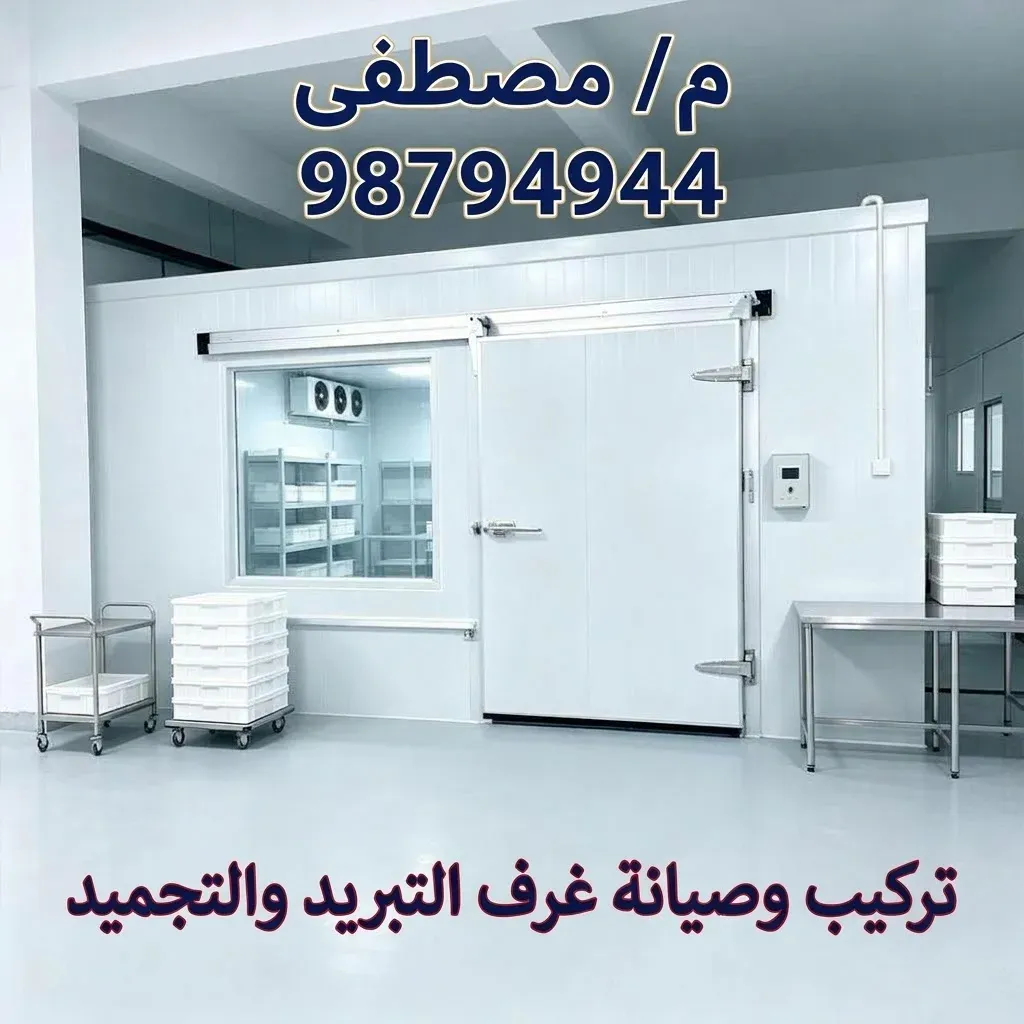
Installing fish freezer rooms in Kuwait requires designing a refrigeration system capable of maintaining the required temperature throughout the storage area while considering the characteristics of fish and seafood products, employee movement, and carton handling. Freezing fish differs from refrigerating fresh fish, and storing previously frozen products is different from placing unfrozen fish into a freezer for initial freezing. The preparation process should therefore begin by identifying the intended application before selecting insulation panels and compressor equipment.
Smaller fish shops may need a freezer room that preserves ready-to-sell frozen products while providing more storage space than individual commercial freezers. Larger restaurants and distribution companies may require warehouses capable of accommodating frequent shipments while organizing products according to type and expiration date. The installation location in Kuwait should also be considered, particularly the high outdoor temperatures and their effects on condensing equipment and thermal insulation.
Essential Components of a Fish Freezer Room
-
Insulated Sandwich Panels: These reduce heat transfer from the surrounding environment into the freezer room. Panel thickness and insulation material should be selected according to the required operating temperature and site conditions.
-
Compressor and Condensing Unit: Appropriate refrigeration capacity should be selected after calculating the cooling load rather than relying exclusively on the room's floor area.
-
Evaporator and Air Circulation Fans: These help cool the air inside the room and distribute it throughout the storage areas.
-
Defrost System: This manages frost accumulation on the evaporator according to the refrigeration system design and operating conditions.
-
Thermostat and Control System: These regulate temperature and manage refrigeration equipment operation.
-
Temperature Monitoring Sensors: These help track freezer room conditions and identify unusual temperature changes.
-
Insulated Freezer Door: This reduces warm, humid air infiltration and should include appropriate provisions for safe opening from inside the room.
-
Shelving and Loading Platforms: These organize cartons while maintaining movement routes and suitable airflow.
-
Freezer Room Flooring: Flooring should be designed according to expected loads, installation conditions, insulation requirements, and protection against ground freezing where necessary.
-
Electrical Connections and Protective Equipment: These support equipment operation in accordance with relevant safety requirements.
Is a Fish Freezer Room Different from a Fresh Fish Cold Room?
Yes. Refrigerating fresh fish involves different storage conditions from keeping frozen fish at freezing temperatures.
Fresh fish must be maintained under suitable chilled conditions according to food safety requirements, often close to the melting point of ice when appropriate icing methods are used.
Frozen fish, on the other hand, requires considerably lower temperatures to remain properly frozen.
An ordinary refrigerated cold room should therefore not automatically be considered a substitute for a freezer room.
Does Every Fish Shop Need a Walk-In Freezer Room?
Not necessarily. The decision depends on frozen inventory quantities, available floor space, and sales activities.
Some shops may operate effectively with suitable commercial freezers, while larger businesses may benefit from centralized frozen storage that improves inventory organization and access to cartons.
What Information Is Required Before Installation?
You should identify the types of fish and seafood products, maximum inventory quantities, packaging methods, product temperatures upon arrival, and expected door-opening frequency.
The key consideration: A suitable freezer room should be designed around the business activity and actual cooling load rather than simply choosing the largest compressor or the lowest installation price.
Frozen Fish Storage Rooms: Suitable Temperatures and the Difference from Rapid Freezing
A freezer room for storing frozen fish is primarily intended to maintain products that have already been frozen within the required temperature limits. Guidance from the Food and Agriculture Organization and Codex Alimentarius recommends maintaining frozen fish and seafood products at -18°C or lower during storage, while also following applicable product requirements and regulations. However, it is important to distinguish between the air temperature inside the freezer room and the actual temperature of the products. The controller display alone cannot confirm the condition of an entire shipment.
Rapid freezing of fresh fish is a different process that requires sufficient capacity to remove heat from the product within an appropriate period, particularly as water within the tissues passes through the temperature range where ice crystals form. Freezing performance depends on fish thickness, package dimensions, incoming product temperature, air velocity, and the type of freezing equipment. It is therefore incorrect to assume that an ordinary frozen storage room can efficiently freeze large quantities of fresh fish.
Differences Between Chilled Fish Storage, Frozen Storage, and Rapid Freezing
|
Service Type |
Primary Purpose |
Main Requirements |
|
Fresh fish refrigeration |
Preserve chilled products before sale or preparation |
Temperatures close to 0°C as appropriate for the product and food safety requirements |
|
Frozen fish storage |
Preserve products that have already been frozen |
Product temperature of -18°C or lower according to applicable requirements |
|
Initial fish freezing |
Convert unfrozen products into frozen products |
Calculations involving product heat and required freezing time |
|
Rapid freezing |
Freeze products at a rate appropriate for maintaining quality |
Specialized equipment, cooling load calculations, and freezing time assessments |
|
Long-term frozen storage |
Preserve frozen products throughout their specified storage period |
Stable temperatures, suitable packaging, and inventory management |
What Is the Appropriate Operating Temperature for a Fish Freezer Room?
A temperature of -18°C or lower is widely used as a reference for storing frozen fish.
However, choosing the freezer room air temperature setting requires consideration of the difference between air and product temperatures, door-opening frequency, refrigeration loads, product specifications, and applicable standards.
Does Setting the Room to -18°C Mean the Fish Is Completely Frozen?
No. The room may reach its temperature setpoint while the center of certain products remains warmer, particularly when shipments arrive unfrozen or at elevated temperatures.
Product temperatures and receiving information should therefore be reviewed when necessary.
The air temperature reading alone should not be considered sufficient evidence that the fish has been completely frozen.
Does Freezing Kill All Bacteria?
No. Freezing prevents the growth of many microorganisms while food remains frozen, but it does not necessarily eliminate every bacterium or make previously unsafe food suitable for consumption.
Fish that has deteriorated before freezing will not recover its original quality simply because it is placed inside a freezer.
Why Is Temperature Stability Important?
Temperature fluctuations can affect product quality and may contribute to changes in texture, increased moisture loss, and freezer burn under certain conditions.
Unnecessary door opening should therefore be minimized, doors should remain properly sealed, and temperatures should be monitored regularly.
If your business purchases fish that has already been frozen, specify that you need a frozen storage room. If you intend to freeze fresh fish from the beginning, make this clear before selecting the equipment.
Fish Shop Freezer Room Dimensions: How to Choose the Right Size
Selecting appropriate freezer room dimensions for fish shops begins with calculating the quantity of frozen products and how they will be stored. Every shop has different requirements depending on product varieties, carton dimensions, and sales activities. Some businesses need a small space for daily or weekly inventory, while others receive larger shipments and require shelving and aisles that allow employees to access products and perform inventory checks.
It is important to understand that floor area in square metres does not automatically translate into a fixed storage capacity in tonnes. Packaging density, carton dimensions, product weights, shelving, and aisle requirements vary between businesses. Loading arrangements also affect airflow inside the room. Actual storage capacity should therefore be assessed according to the intended storage layout rather than determined from room dimensions alone.
Approximate Fish Freezer Room Dimensions
|
Room Dimensions |
Floor Area |
Potential Application |
|
2 × 2 metres |
4 square metres |
Small shop with limited inventory |
|
2 × 3 metres |
6 square metres |
Fish shop with a varied frozen product range |
|
3 × 3 metres |
9 square metres |
Small storage room for a fish shop |
|
3 × 4 metres |
12 square metres |
Larger fish shop or seafood restaurant |
|
4 × 5 metres |
20 square metres |
Commercial warehouse with moderate inventory |
|
5 × 6 metres |
30 square metres |
Distribution warehouse requiring a more extensive layout |
Important note: These dimensions are illustrative examples only. They are not final engineering recommendations and do not represent specific storage capacities in tonnes.
What Information Is Needed to Determine Room Size?
-
Maximum expected frozen fish inventory.
-
Number, dimensions, and weights of cartons.
-
Types of seafood products being stored.
-
Number of shipments received each week.
-
Expected inventory holding period.
-
Whether products will be stored on shelving or pallets.
-
Frequency of employee access.
-
Use of trolleys or mechanical handling equipment.
-
Available internal room height.
-
Potential future business expansion.
Is Freezer Room Height Important?
Yes. Internal height affects the total room volume, shelving arrangements, and the space available for air circulation.
However, effective use of height requires reviewing shelving load limits and product accessibility.
Cartons should not be stacked all the way to the ceiling in ways that obstruct airflow or compromise safety.
How Is Freezer Room Volume Calculated?
The geometric volume equals the internal length multiplied by the width and height.
For example, a room measuring 3 metres long, 4 metres wide, and 2.5 metres high has a geometric volume of 30 cubic metres.
However, the net space available for storing products is smaller because shelving, refrigeration equipment, aisles, and airflow clearances occupy part of the volume.
Should I Choose a Larger Room Than I Currently Need?
Future expansion can be considered, but installing an unnecessarily large freezer room may increase initial construction and operating costs.
The preferable approach is to select capacity that meets current inventory needs while considering practical options for future expansion.
Before requesting a freezer room quotation, prepare the available dimensions together with the number, sizes, and weights of cartons so that storage capacity can be evaluated more accurately.
Freezer Room Capacity for Small Fish Shops: Organizing Inventory and Reducing Waste
Determining freezer room capacity for a small fish shop should begin with daily sales quantities, delivery schedules, and the amount of stock the business needs to hold without overcrowding. Limited storage capacity is not always the main problem. Sometimes inefficient carton arrangements or random stacking make certain products difficult to access and cause employees to leave the freezer door open for extended periods while searching for inventory.
For smaller fish shops, organizing products according to variety and sales requirements is particularly useful, especially when the business sells whole frozen fish, fillets, shrimp, and other seafood products. Organized storage allows employees to prepare customer orders more efficiently and reduces unnecessary carton movement while supporting suitable storage conditions.
How Do You Determine the Right Inventory Quantity?
Begin by calculating average sales quantities over a representative period.
Then review supplier delivery schedules and periods of increased demand.
Peak seasonal demand and promotional sales should also be considered so that the room can accommodate higher inventory levels when necessary.
Organizing Products by Category
Dedicated storage locations can be assigned to whole fish, fillets, shrimp, and other seafood products, considering packaging requirements, segregation, and hygiene.
Clear identification labels should also be used to show product type, receiving date, and expiration date without requiring employees to open cartons repeatedly.
Is Shelving Better Than Stacking Cartons Directly?
Suitable shelving and loading platforms help organize cartons, simplify cleaning, and make products easier to access.
However, shelving must be selected according to actual weights and permitted load capacities.
Products should never be arranged in ways that obstruct airflow or place excessive pressure on packaging.
The Importance of Inventory Rotation
An inventory rotation method that reflects product expiration dates should be used, such as First Expired, First Out (FEFO), while maintaining appropriate shipment traceability.
This helps reduce the likelihood of older products remaining in storage while newer shipments are distributed first.
How Can Freezer Door Opening Be Reduced?
-
Assign fixed locations for different product categories.
-
Prepare order lists before entering the freezer room.
-
Use clearly visible carton labels.
-
Avoid spending unnecessary time searching for products.
-
Keep movement aisles free from obstructions.
-
Check door seals and gaskets regularly.
-
Review inventory levels to prevent overcrowding.
-
Consider suitable air infiltration control measures when necessary.
Does Frequent Door Opening Increase the Refrigeration Load?
Yes. Warm, humid air entering the freezer adds heat to the room and contributes to frost formation inside the storage area and on the evaporator.
The frequency and duration of door opening should therefore be considered when designing the freezing system.
If you operate a small fish shop, do not choose a freezer room based only on the shop's available space. Consider inventory quantities, storage arrangements, and daily sales activity.
Preparing Wholesale Fish Carton Freezer Rooms: Shelving, Insulation, and Flooring
Preparing a freezer room for wholesale fish cartons requires attention to details that may not be immediately obvious when purchasing refrigeration equipment. Frozen seafood cartons can be heavy, and their dimensions differ according to the type of fish and packaging method. When receiving large commercial shipments, flooring, shelving, doors, and aisles must accommodate employees and handling equipment while maintaining the required temperature and preventing excessive stacking that restricts air circulation.
Choosing appropriate insulation is particularly important because a freezer room operates with a substantial temperature difference between its interior and Kuwait's outdoor environment. Unsuitable insulation or poorly sealed panel joints can increase heat and moisture infiltration. The freezer floor must also be properly evaluated, because some installations require special measures to reduce the risk of ground freezing or moisture-related problems beneath the floor, depending on site conditions and the approved design.
Choosing Sandwich Insulation Panels
Sandwich panels are commonly used to construct commercial freezer rooms.
However, suitable insulation thickness depends on operating temperature, surrounding conditions, and the insulation material.
A fixed panel thickness should not be selected for every project without reviewing the technical calculations and design requirements.
Does Freezer Room Flooring Require Insulation?
Freezer rooms may require insulated flooring, particularly when installed over concrete floors connected to the ground.
In certain situations, special protection against freezing beneath the room may also be required because ignoring ground freezing risks can lead to structural problems.
The appropriate solution should be determined according to the building conditions and reviewed by qualified specialists.
Choosing a Freezer Room Door
The door should accommodate the movement of employees, cartons, and trolleys while providing suitable insulation and effective sealing.
A safe internal release mechanism should also be provided.
The need for measures that reduce freezing around door frames should be assessed according to the design.
Preparing Shelving and Loading Platforms
-
Use materials suitable for freezing environments and cleaning.
-
Establish the maximum permitted load for each shelf.
-
Arrange cartons according to their dimensions and weights.
-
Avoid stacking products directly in front of the evaporator.
-
Provide suitable aisles for employee movement.
-
Do not exceed safe loading limits.
-
Maintain convenient access for inventory checks.
-
Keep flooring and areas beneath storage equipment clean.
Can Every Carton Withstand Stacking?
No. Packaging materials differ in strength and permitted stacking capacity.
Supplier instructions and packaging specifications should therefore be reviewed, particularly when substantial quantities will remain in storage for extended periods.
The Importance of Defrost Systems in Freezer Rooms
Humid air enters the room whenever the door is opened, which can contribute to frost accumulation on the evaporator.
The refrigeration system therefore needs an appropriate defrost arrangement.
Defrost timing and drainage methods should also be considered to prevent water or ice from creating additional problems inside the warehouse.
A well-designed wholesale fish carton warehouse is not simply the one that holds the largest number of cartons. It should also provide organized storage, suitable airflow, and safe movement.
Preparing Fish Market Freezer Rooms: Daily Operations, Maintenance, and Hygiene
Preparing a freezer room for a fish market differs from installing one inside a small retail shop because fish markets and supply centers may have continuous movement of products, workers, and shipments. The warehouse design should therefore account for entrance and exit routes, receiving and dispatch areas, packaging methods, and convenient cleaning and equipment maintenance.
Separating areas used for handling fresh fish from those used for frozen product storage is also important according to the business activity and applicable food safety requirements. Fresh and frozen products have different storage conditions. Water, waste, or cross-contamination moving between operational areas can affect food safety even when the freezer equipment itself is operating properly.
The Importance of Separating Operational Areas
The layout may include designated spaces for receiving and inspecting shipments, storing frozen products, preparing orders, and moving cartons.
The workflow should minimize the amount of time frozen products remain exposed to warm air during handling.
Protecting Products Against Contamination
Surfaces, floors, and shelving should be kept clean.
Water and waste should be managed in ways that prevent contamination of food packaging.
Damaged or nonconforming products should also be separated from acceptable inventory according to the facility's operating procedures.
How Should Products Be Handled Upon Arrival?
-
Inspect packaging for visible damage.
-
Check product identification and expiration dates.
-
Verify that shipments remain frozen according to receiving requirements.
-
Review available temperature information when necessary.
-
Avoid leaving products outside frozen storage for unnecessary periods.
-
Record concerns about shipments with questionable conditions.
-
Transfer accepted products to suitable storage locations.
-
Follow quality procedures when evidence suggests thawing or refreezing.
Is Ice Accumulation Normal?
Some frost can form on the evaporator because of humidity and normal refrigeration operation.
However, excessive frost accumulation or persistent ice around doors and flooring may indicate a problem requiring inspection.
Possible causes include air infiltration, defrost system faults, blocked drainage, or unsuitable operating conditions.
The Importance of Regular Maintenance
Monitoring condenser and evaporator cleanliness, fan operation, door gaskets, and temperature sensors helps identify problems before they become more serious.
Door condition, internal safety releases, and alarms should also be inspected according to the equipment installed.
Does a Fish Market Freezer Room Need Temperature Recording Equipment?
Continuous temperature recording can help monitor storage conditions and document changes, particularly in commercial warehouses holding substantial quantities of frozen products.
The specific recording requirements should be determined according to business operations, quality procedures, and applicable regulations.
If you are preparing a freezer room inside a fish market, consider employee movement, shipment handling, and hygiene from the design stage because these factors directly affect daily operating efficiency.
Custom Freezer Rooms for Fish Distribution Companies: Capacity, Shipments, and Cold Chain Management
Designing a custom freezer room for a fish distribution company requires planning that reflects commercial operations. Distribution companies typically handle larger quantities than retail fish shops and may receive frozen shipments from several suppliers before distributing them to restaurants, hotels, and seafood retailers. Storage capacity should therefore be determined according to peak inventory levels, the number of loading pallets, and receiving and dispatch procedures rather than daily sales volume alone.
Cold chain management is another important consideration during transportation, receiving, and distribution. Maintaining suitable temperatures inside the warehouse is not enough if frozen products are allowed to thaw during loading or delivery. The relationship between the freezer room, order preparation area, and refrigerated transport vehicles should therefore be evaluated, with dispatch procedures designed to minimize exposure to outdoor temperatures.
Determining Maximum Storage Quantities
The largest inventory expected during seasonal demand and high-delivery periods should be calculated, considering carton and pallet weights.
Space requirements for aisles, equipment, and access to stored products should also be estimated.
Choosing the Product Handling Method
Some warehouses rely on shelving, while others require pallets or mechanical handling equipment.
The storage design should be selected according to actual loads, stacking height, safety requirements, and airflow arrangements.
Is One Freezer Room Better Than Several Rooms?
This depends on product categories, inventory quantities, and order movement.
Separate rooms may be suitable when the business needs to divide inventory according to activities or operating conditions.
However, the decision should be based on available space, project costs, and actual requirements.
The Importance of Monitoring Shipment Temperatures
Reviewing product temperatures during receiving can be useful under the facility's procedures, particularly when handling substantial shipments or working with multiple suppliers.
If there is evidence that a shipment may have thawed or experienced unsuitable storage conditions, it should be handled according to food quality and safety procedures.
It should not be returned to sale without appropriate assessment.
Organizing Products for Distribution
-
Prepare order lists before opening the freezer room.
-
Arrange products according to delivery routes.
-
Minimize handling time outside frozen storage.
-
Use suitable transportation equipment for frozen products.
-
Monitor transport vehicle temperatures according to business requirements.
-
Protect packaging during loading.
-
Record shipment details when necessary.
-
Establish clear procedures for assessing returned products.
Does Future Expansion Affect the Design?
Yes. Increasing shipment quantities or adding new products may change the required storage capacity, shelving arrangements, and refrigeration equipment.
Future expansion or the possibility of adding another freezer room can therefore be considered without unnecessarily oversizing the initial installation.
If you operate a fish distribution company, explain your shipment quantities, pallet requirements, and receiving and dispatch activities so that the warehouse can be designed around your actual commercial operations.
Installing Frozen Seafood Warehouses: Storing Shrimp, Fish Fillets, and Different Products
Installing a frozen seafood warehouse requires consideration of differences in packaging, dimensions, and handling procedures. A seafood warehouse may store shrimp, fish fillets, squid, whole fish, and other products with different physical characteristics and commercial values. Although many of these products can be stored under suitable low-temperature conditions, their storage life and quality also depend on packaging, product condition before freezing, and temperature stability.
A common mistake is assuming that having a freezer guarantees identical quality for every product regardless of storage duration. In reality, freezing slows microbial and enzymatic deterioration, but it does not prevent every change associated with oxidation or moisture loss over time. Product expiration dates and specified storage conditions must therefore be followed, with suitable packaging used to protect seafood products.
Storing Frozen Shrimp
Frozen shrimp should be maintained at the recommended storage temperature, and its packaging should be protected against damage and moisture loss.
Product information and expiration dates should also be reviewed, while repeated temperature fluctuations should be avoided.
Storing Fish Fillets
Fish fillets may be particularly susceptible to certain quality changes associated with moisture loss and oxidation when packaging is unsuitable or the product experiences temperature fluctuations.
Appropriate packaging and stable frozen storage conditions therefore help protect product quality throughout the approved storage period.
Storing Frozen Whole Fish
Whole fish vary in size and packaging methods, which affects carton arrangements and refrigeration loads.
Larger fish may also require different equipment when the intention is to freeze them from their fresh condition rather than simply store them after freezing.
Can Different Frozen Seafood Products Be Stored Together?
Different frozen seafood products may be stored in the same warehouse when their storage requirements are compatible and suitable segregation, hygiene, and packaging protection are maintained.
However, cross-contamination risks, odor transfer, and allergen management should be considered.
Suitable storage procedures must be applied to each product category.
What Is Freezer Burn?
Freezer burn refers to surface quality changes resulting from moisture loss in frozen products under certain conditions.
It may appear as dry patches or changes in color and texture.
Freezer burn does not necessarily mean that a product is unsafe. Food safety assessment still depends on the product's condition and its storage and handling history.
How Can Frozen Seafood Quality Problems Be Reduced?
-
Maintain the specified storage temperature.
-
Protect the integrity of product packaging.
-
Minimize unnecessary freezer door opening.
-
Avoid stacking products in ways that obstruct airflow.
-
Rotate inventory according to expiration dates.
-
Inspect carton condition upon receiving shipments.
-
Handle returned products appropriately.
-
Review temperature records and equipment faults.
A successful frozen seafood warehouse should combine suitable freezing temperatures, organized packaging arrangements, and effective inventory management to reduce commercial waste.
Fish Shop Freezer Room Prices and Commercial Fish Freezing Warehouse Costs in Kuwait
How much does a freezer room for a fish shop cost in Kuwait? There is no single price suitable for every project because costs vary according to room dimensions, internal height, insulation specifications, compressor capacity, evaporator equipment, doors, flooring, controls, and electrical work. Prices also differ depending on whether the room is intended to preserve previously frozen fish or freeze fresh products. Initial freezing requires a different refrigeration capacity and technical design.
When calculating the cost of a commercial fish freezing warehouse, it is important to consider the entire project rather than the price of insulated sandwich panels alone. Some warehouses require insulated flooring, specialized door arrangements, and equipment for handling heavy cartons. Temperature monitoring and alarm systems may also be necessary. Refrigeration pipework distances, condensing unit locations, and site conditions can further affect installation costs. Requesting a detailed quotation is therefore preferable because it clarifies which components and services are included and excluded.
Main Factors Affecting Fish Freezer Room Installation Costs
|
Cost Factor |
Effect on the Price |
|
Room length, width, and height |
Determines room volume and insulation quantities |
|
Insulation material and thickness |
Influences structural cost and thermal performance |
|
Compressor and condensing unit |
Depends on cooling load and operating temperature |
|
Evaporator and fans |
Determined by capacity and airflow requirements |
|
Defrost system |
Varies according to equipment and frost removal methods |
|
Controller and sensors |
Depends on control and monitoring requirements |
|
Freezer door |
Varies according to dimensions, insulation, and safety features |
|
Flooring |
Determined by loads, installation conditions, and required protection |
|
Shelving and loading platforms |
Depends on quantities, weights, and layout |
|
Electrical installations |
Influenced by equipment loads, distances, and protective systems |
|
Commissioning tests |
Depends on the agreed project scope |
Is a Frozen Storage Room Cheaper Than a Rapid Freezing Room?
Costs may differ substantially because rapid freezing equipment must handle greater heat loads and achieve freezing within a defined period.
However, a fixed price difference cannot be established without knowing the product quantities, incoming temperatures, and required equipment.
Does the Price per Square Metre Include the Compressor and Installation?
Not necessarily.
Some quotations cover insulation panels only, while others include refrigeration equipment, doors, and installation services.
A detailed list of technical specifications and included work should therefore be requested before comparing quotations.
Is Thicker Insulation Always Better?
Greater insulation thickness may be suitable for certain operating conditions, but the correct selection depends on thermal calculations and technical specifications.
It is not advisable to choose insulation thickness randomly without considering project costs and actual requirements.
How Should You Compare Quotations?
Compare compressor type and capacity, evaporator specifications, insulation materials, doors, flooring, controllers, and the included installation work.
Commissioning tests and warranty conditions should also be reviewed.
Any exclusions or additional site preparation requirements should be identified.
Does the Lowest Price Always Mean Savings?
Not necessarily.
A lower quotation may involve different equipment or exclude important work.
Choosing unsuitable equipment can also result in additional expenses later.
It is preferable to define the required specifications first and then compare quotations based on those requirements.
Request a Quotation Based on Your Frozen Fish Inventory
If you want to understand the cost of a freezer room for a fish shop or seafood warehouse, prepare information about the available dimensions, product quantities, storage methods, and required operating temperatures.
You can inquire about suitable installation solutions through the official website of Cold Room and Display Refrigerator Maintenance:
Fish Freezer Room Installation Steps and Why Choose Cold Room and Display Refrigerator Maintenance
Preparing a fish freezer room requires an organized process that begins with assessing the business activity before purchasing equipment. Installing a warehouse for preserving already frozen products differs from designing a system intended to freeze fresh fish. Commercial warehouses also require shelving, aisles, and door arrangements that accommodate inventory quantities and product movement. Technical specifications should therefore reflect the actual intended application, with the required equipment and testing procedures clearly identified before installation begins.
Through Cold Room and Display Refrigerator Maintenance in Kuwait, you can inquire about commercial freezer room solutions for fish shops, restaurants, and fish distribution warehouses. Providing the installation location, inventory quantities, and required temperatures helps define the scope of the project. Equipment specifications, warranty conditions, and maintenance arrangements should also be reviewed before entering into an agreement.
Site Inspection and Dimension Measurements
The process begins by measuring the room length, width, and height, and reviewing flooring, doors, aisles, electrical connections, and ventilation.
The condensing unit location, refrigeration pipework routes, and maintenance accessibility should also be assessed.
Identifying Products and Intended Use
The project must establish whether the freezer room will preserve previously frozen fish or perform initial freezing of fresh products.
Fish varieties, weights, packaging, receiving schedules, and inventory movement should also be reviewed.
Calculating Refrigeration Loads
The calculation includes heat transfer through insulation, incoming product temperatures, air infiltration through doors, internal heat loads, and defrost requirements.
Equipment should be selected according to these calculations and the expected operating conditions.
Preparing the Design and Specifications
The design should identify room dimensions, insulation thickness, compressor and evaporator specifications, doors, flooring, controllers, and shelving.
Safety arrangements, movement routes, drainage, and maintenance requirements should also be considered.
Preparing a Detailed Quotation
The quotation should clearly identify the materials, equipment, and services included in the installation, together with any exclusions.
Warranty conditions, testing arrangements, and implementation responsibilities should preferably be confirmed in writing.
Installing Insulation and Doors
The site is prepared, and insulated panels, flooring, and doors are installed according to the approved design.
Panel joints and connections should be carefully sealed to minimize air and moisture infiltration.
Installing Freezing Equipment
Qualified technicians install the compressor, evaporator, refrigeration pipework, defrost system, and controller according to manufacturer instructions and applicable safety requirements.
Inspection and Trial Operation
Technical tests should verify the refrigeration circuit, electrical connections, controllers, sensors, defrost operation, and the system's ability to achieve the required operating conditions.
However, successful operation of an empty freezer room does not necessarily prove suitable performance when it receives the maximum inventory load during peak periods.
Handover and Operating Instructions
The handover should include instructions on temperature adjustment, monitoring readings, cleaning equipment, and responding to frost accumulation and equipment faults.
Operating limitations should also be explained, particularly when the room is designed for frozen storage rather than freezing large quantities of fresh products.
What Criteria Should You Review When Choosing an Installation Company?
|
Evaluation Criteria |
Benefit for the Project |
|
Identifying the intended use |
Prevents confusion between frozen storage and initial freezing |
|
Refrigeration load calculations |
Helps select suitable equipment |
|
Insulation specifications |
Clarifies suitability for freezing temperatures |
|
Flooring preparation |
Helps address site-specific requirements |
|
Door selection |
Supports movement and effective room sealing |
|
Defrost system |
Helps manage frost accumulation |
|
Temperature monitoring |
Provides information about storage conditions |
|
Commissioning tests |
Helps verify equipment performance |
|
Warranty conditions |
Clarify coverage and exclusions |
|
Maintenance arrangements |
Support ongoing operational planning |
Why Is a Technical Quotation Important Before Installation?
It clarifies the difference between a freezer room designed to preserve frozen fish and a room equipped to freeze fresh products.
It also makes it easier to compare insulation specifications, equipment, and installation requirements rather than choosing a provider based exclusively on price.
Does the Company Provide a Warranty for the Freezer Room?
This depends on the conditions of the agreed quotation.
It is important to request written clarification of warranty duration, covered equipment, and exclusions.
A comprehensive warranty or a guaranteed emergency response time should not be assumed unless officially confirmed.
How Can You Maintain the Freezer Room After Installation?
Temperature readings, doors, gaskets, condenser and evaporator cleanliness, and defrost operation should be monitored regularly.
Appropriate maintenance should be carried out according to equipment instructions.
Cartons should also be organized without blocking airflow routes, and unusual temperature changes should be investigated.
If you want a freezer room that supports your fish shop or commercial warehouse effectively, begin by identifying product characteristics and storage capacity, then request clear technical specifications before approving the installation.
Frequently Asked Questions About Fish Freezer Rooms in Kuwait
What Is the Suitable Temperature for a Fish Freezer Room?
A temperature of -18°C or lower is widely used as a reference for storing frozen fish and seafood products, while following applicable product requirements and local regulations.
It is important to distinguish between the freezer room air temperature and the actual product temperature.
How Much Does a Freezer Room for a Fish Shop Cost in Kuwait?
The price depends on room dimensions, internal height, insulation, compressors, evaporators, doors, flooring, defrost systems, and installation work.
For an accurate quotation, provide the available dimensions and required storage capacity and request a detailed technical proposal.
Can a Frozen Fish Storage Room Be Used to Freeze Fresh Fish?
Not necessarily.
A frozen storage room is primarily designed to preserve products that have already been frozen.
Freezing fresh fish requires additional cooling load calculations and an appropriate freezing time.
Specialized rapid freezing equipment may be necessary.
How Do I Determine Freezer Room Capacity for a Small Fish Shop?
Capacity depends on maximum frozen fish inventory, the number of cartons, carton dimensions and weights, internal height, shelving, aisles, and inventory movement.
Floor area alone is not sufficient to calculate actual storage capacity.
Do Fish Freezer Rooms Need Defrost Systems and Regular Maintenance?
Yes. Many freezer systems require suitable evaporator defrost arrangements, together with regular monitoring of equipment cleanliness, doors, sensors, and refrigeration connections.
Routine inspection helps identify problems before they affect storage conditions.
Conclusion: Prepare a Fish Freezer Room That Matches Your Business and Budget in Kuwait
Choosing fish freezer rooms for fish shops in Kuwait, including suitable dimensions and installation prices, requires careful consideration of the products, storage temperatures, carton quantities, and receiving and distribution procedures. The appropriate freezer room is much more than an insulated enclosure with a powerful compressor. It is an integrated system combining insulation, refrigeration equipment, flooring, doors, defrost arrangements, and inventory organization to help the business maintain the required freezing conditions.
Whether you are researching the price of a freezer room for a fish shop, planning a freezer facility for a fish market, or evaluating the cost of a commercial fish freezing warehouse, advance planning helps you choose suitable dimensions and equipment while understanding the difference between preserving frozen products and initially freezing fresh fish.
Through Cold Room and Display Refrigerator Maintenance in Kuwait, you can inquire about commercial freezer room solutions for fish shops, seafood restaurants, and distribution companies. By explaining your project requirements, you can obtain information about available technical options and related installation costs.
Do you own a fish shop or seafood warehouse and want to know how much a suitable freezer room will cost?
Prepare the available site dimensions, quantities of fish and seafood products, packaging types, and required operating temperatures.
Request a detailed quotation explaining the insulation, compressor, evaporator, door, flooring, defrost system, and installation work.