Freezer Room Maintenance in Al Rai & Subhan | Kuwait
Freezer Room Maintenance in Al Rai & Subhan: Fast Service
If you operate a frozen food warehouse in Al Rai or a factory in Subhan, Kuwait, and your freezer room can no longer maintain its required temperature, the first priority is identifying the cause of the problem and protecting your inventory before the situation becomes more serious. Freezer room maintenance in Al Rai and Subhan, providing fast service for warehouses and factories, is particularly relevant to business owners when compressors stop working, freezer temperatures rise, or excessive frost accumulates on evaporators. However, a quick response to a service request does not automatically guarantee that a technician will arrive within a particular time. Appointment availability and the nature of the fault determine the actual response time after booking confirmation. Most importantly, the problem should be approached through proper technical inspection rather than replacing components without identifying the cause.
Commercial freezer rooms differ from ordinary refrigerators because they are designed to maintain frozen products at low storage temperatures. They may operate for extended periods while handling substantial refrigeration loads and frequent shipments. In Al Rai warehouses, a problem may be associated with warm, humid air entering during receiving and distribution operations. In certain Subhan factories, freezer equipment may be affected by continuous production loads or changes in the temperature of products entering storage. Kuwait's high outdoor temperatures also make condenser efficiency, condensing unit ventilation, proper door sealing, and thermal insulation particularly important to stable operation. The facility's actual operating conditions must therefore be understood before diagnosing a refrigeration fault.
Through Cold Room and Display Refrigerator Maintenance in Kuwait, you can inquire about commercial freezer room inspection and repair services and the availability of a technician visit to Al Rai or Subhan. This comprehensive guide explains compressor, evaporator, defrost, and controller problems, along with common faults affecting meat freezers and frozen food warehouses. It also covers protecting inventory when refrigeration stops, the stages of inspection and repair, and the factors influencing maintenance costs. In addition, we explain how factory freezer maintenance differs from warehouse maintenance and what information should be prepared when booking a technician. Understanding these details can help you make appropriate decisions without unnecessary delays or spending money on repairs that have not been confirmed as necessary.
Freezer Room Maintenance in Al Rai and Subhan: What Does the Service Include for Warehouses and Factories?
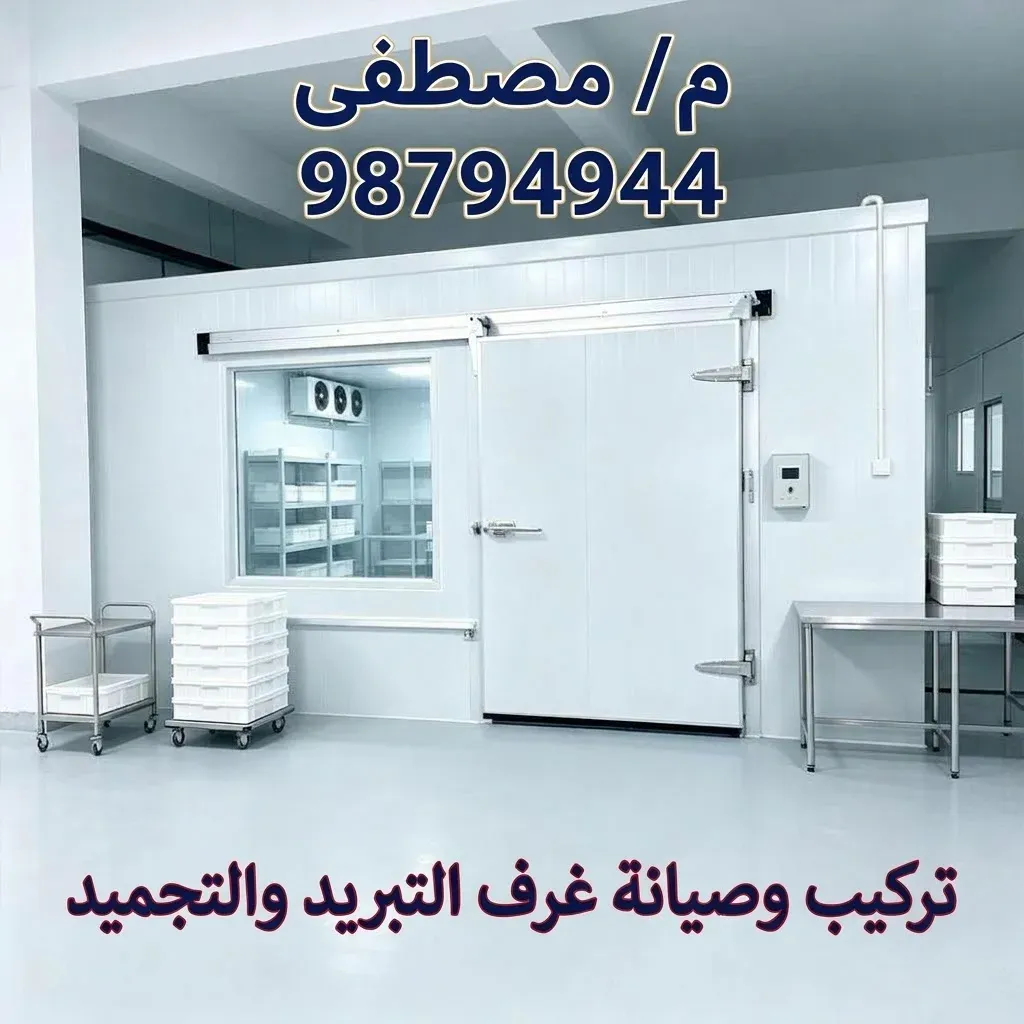
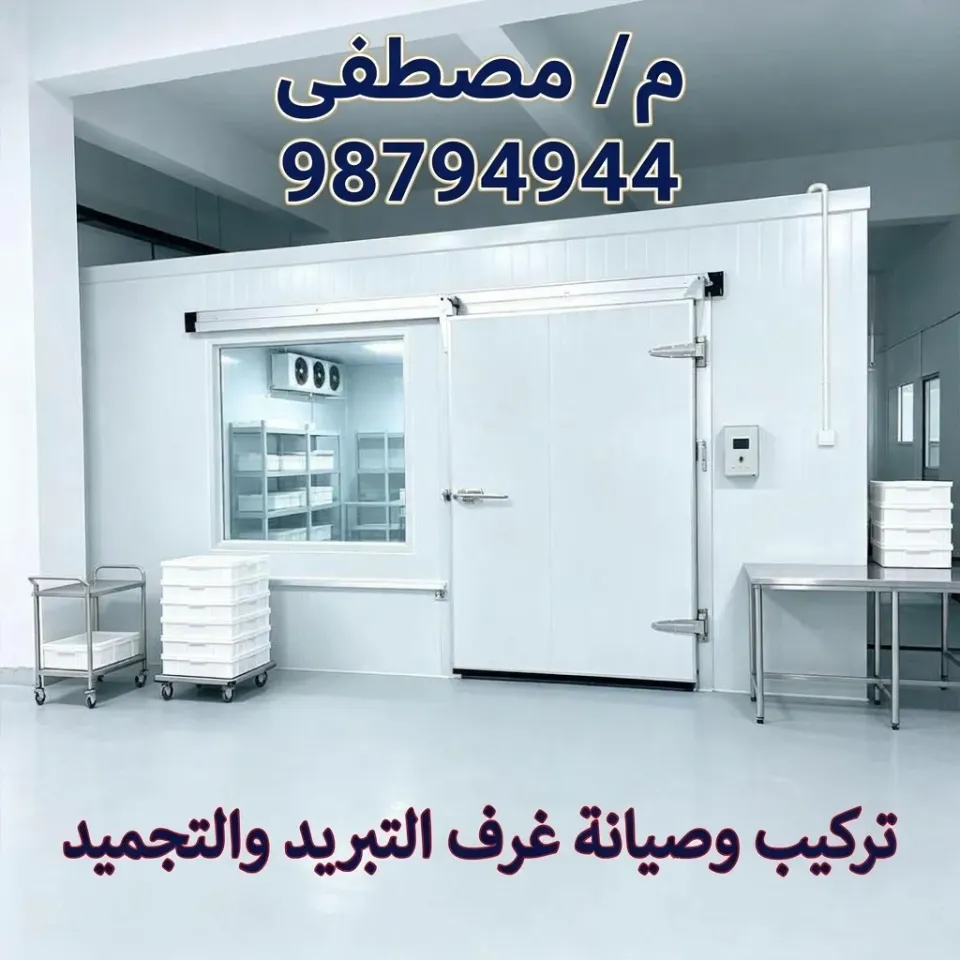
Freezer room maintenance in Al Rai and Subhan involves diagnosing faults that prevent the room from maintaining suitable freezing conditions. This includes inspecting electrical and mechanical components, control systems, insulation, and doors. However, the required service depends on the actual problem. A freezer room with a completely stopped compressor requires a different inspection from a room that continues operating but experiences temperature increases during shipment deliveries. Maintenance should therefore begin by understanding the facility's operating conditions, product types, required temperatures, and fault history before determining the appropriate repair.
Warehouse and factory freezer systems may contain one compressor or several compressors, condensers, evaporators, fans, expansion valves, controllers, sensors, and defrost systems. Some facilities use independent refrigeration equipment for each room, while others rely on centralized systems serving multiple storage zones. Inspection procedures differ according to system design, refrigerant type, and permitted operating ranges. The same repair procedures should not be applied to every refrigeration system without first reviewing its specifications.
Main Freezer Room Components That May Require Inspection
-
Compressor: Inspect operation, electrical protection devices, and refrigeration capacity under actual operating conditions.
-
Condenser: Review coil cleanliness, fan operation, ventilation, and heat rejection conditions.
-
Evaporator: Inspect heat transfer performance, airflow, and frost accumulation on the coils.
-
Defrost System: Verify that frost is removed appropriately without interfering with refrigeration performance.
-
Controller and Thermostat: Review temperature setpoints, operating parameters, and alarm history.
-
Temperature Sensors: Check readings and installation locations and compare them with suitable measuring instruments.
-
Expansion Valve: Assess refrigerant flow to the evaporator according to system design.
-
Doors and Gaskets: Review sealing effectiveness and reduce warm, humid air infiltration.
-
Thermal Insulation: Inspect panels, joints, moisture penetration, and damaged sections.
-
Defrost Water Drainage: Review drainpipes and heaters where installed.
Is Freezer Room Maintenance Different from Ordinary Cold Room Maintenance?
Yes. Operating below freezing introduces additional requirements relating to frost accumulation, defrost operation, door sealing, drainage, and flooring arrangements.
The operating conditions of certain compressors and evaporators also differ from those used in above-zero refrigeration systems.
Equipment specifications must therefore be considered when diagnosing faults.
Does Every Fault Require Compressor Replacement?
No. The problem may be caused by a stopped fan, dirty condenser, inaccurate temperature sensor, or a door allowing excessive air infiltration.
Compressor replacement should only be recommended when an inspection establishes that it is necessary.
Can a Freezer Room Be Inspected While It Is Operating?
Some inspections can be performed during operation by qualified technicians.
However, other procedures may require electrical isolation or shutting down part of the refrigeration circuit.
Arrangements for protecting stored inventory should be established before any procedure that may affect storage temperatures.
What Is the Objective of Technical Maintenance?
The objective is to identify the cause of the problem, correct it, and verify that the refrigeration system can maintain appropriate storage temperatures during normal use.
If you operate a freezer room in Al Rai or Subhan, begin by identifying the symptoms, product types, and required operating temperature before requesting replacement of any component.
Freezer Room Technicians in Al Rai: Inspecting Warehouse and Distribution Storage Faults
Searching for a freezer room technician in Al Rai often begins when warehouse temperatures rise, alarms appear repeatedly, or one of the refrigeration units stops working. In frozen food warehouses, however, the problem may not be related exclusively to equipment condition. Product movement, receiving operations, and frequent door opening all influence the refrigeration load. An inspection must therefore consider how the warehouse operates to distinguish an equipment malfunction from an increase in cooling demand that exceeds system capacity under certain conditions.
For example, if a freezer room reaches its required temperature overnight but becomes warmer during delivery operations, the cause may involve doors, incoming products that are warmer than expected, or inadequate airflow distribution. On the other hand, if the room temperature remains high throughout the day despite continuous compressor operation, the condenser, evaporator, and refrigeration circuit may require a more detailed inspection.
What Information Does the Technician Need About the Warehouse?
-
Warehouse location within Al Rai.
-
Number of freezer rooms.
-
Room dimensions and internal height.
-
Types of frozen products stored.
-
Required operating temperature.
-
Current temperature reading.
-
Daily receiving quantities.
-
Frequency of loading door operation.
-
Compressor and fan operating conditions.
-
Alarm codes, if available.
Why Is Shipment Movement Important?
Shipment information helps determine whether the refrigeration system is handling expected loads or operating under conditions different from those originally considered in its design.
Warm, humid air entering during loading and unloading can increase refrigeration loads and frost accumulation.
Does Continuous Compressor Operation Mean There Is a Fault?
Not necessarily. Some systems are designed to operate for extended periods depending on their refrigeration loads.
However, if the compressor continues running without reaching the required temperature, cooling capacity, door condition, airflow distribution, and controller operation should be inspected.
Can Carton Arrangements Cause the Problem?
Yes. Excessive stacking may block evaporator air outlets or restrict airflow between storage areas.
Appropriate clearances and airflow routes should therefore be reviewed during the inspection.
Can a Technician Identify the Fault from the Customer's Description?
The description helps identify which inspections may be necessary, but it is not always sufficient to confirm the cause.
Different technical faults can produce similar symptoms.
What Should You Do Before the Technician Arrives?
Keep freezer doors closed as much as possible, record when the problem began and the available temperature readings, and review your inventory protection procedures if products may be at risk.
If your freezer warehouse in Al Rai cannot maintain its temperature, explaining shipment activity and when the temperature increases can help the technician perform a more accurate diagnosis.
Factory Freezer Room Repair in Subhan: Managing Refrigeration Faults in Production Facilities
Repairing a factory freezer room in Subhan requires consideration of industrial operations because certain factories depend on freezing equipment during continuous production, preparation, or storage processes. A single freezer room failure may interrupt part of the operation or delay the movement of products to the next production stage. It is therefore important to determine whether the room stores products that are already frozen, cools products arriving from a production line, or participates in an initial freezing process. Each application involves different refrigeration capacities and diagnostic requirements.
In certain Subhan facilities, the problem may be associated with increased production quantities or changes in incoming product temperatures compared with the original design conditions. Faults may also involve fans, defrost systems, controllers, or centralized refrigeration equipment serving several rooms. The inspection should therefore assess the effect of the fault on the affected area and connected systems. Shared equipment should not be shut down without evaluating safety requirements and operational continuity.
What Is the Difference Between a Frozen Storage Room and a Production Freezing Room?
A frozen storage room is designed to maintain products that have already reached their required storage temperatures.
Initial freezing, however, requires removing additional heat from products and may involve specialized equipment designed to achieve freezing within a specified period.
Can Introducing Warm Products Reduce Freezing Performance?
Yes. Incoming products may add a substantial refrigeration load, especially when the quantities are large or products enter within a short period.
Product temperature upon arrival, total quantity, and the required time to reach storage conditions should therefore be evaluated.
Which Factory Problems Require Specialized Diagnosis?
-
Temperature increases during peak production.
-
Failure of one unit within a system serving several rooms.
-
Faults involving operating commands or controller communication.
-
Frost accumulation on evaporators.
-
Reduced condenser performance during high outdoor temperatures.
-
Temperature differences between storage zones.
-
Electrical protection-related failures.
-
Refrigeration system capacity that no longer matches current production quantities.
Can One Freezer Room Be Maintained Without Shutting Down the Entire Factory?
This depends on the system design, whether the room operates independently, and the type of repair.
Certain procedures may be performed on an isolated part of the system after appropriate safety measures are taken.
Other repairs may require a planned shutdown.
Why Is Coordination with the Production Manager Important?
Coordination helps identify suitable maintenance periods, temporary product storage locations, and measures necessary to protect employees and inventory.
It also helps determine whether the fault occurs repeatedly during particular production batches.
Does Repairing the Fault Guarantee That Production Will Not Be Interrupted Again?
No maintenance procedure can guarantee that unexpected faults will never occur.
However, proper diagnosis and suitable maintenance can help reduce certain risks.
The cause, repair results, and preventive recommendations should preferably be documented.
If your freezer room in a Subhan factory is connected to production operations, the assessment should include product loads, production schedules, and shared refrigeration equipment rather than the compressor alone.
Frozen Food Warehouse Maintenance in Al Rai: How to Protect Inventory During a Breakdown
Maintaining frozen food warehouses in Al Rai involves product safety as well as refrigeration performance because increasing freezer temperatures may affect the condition of stored food. Many frozen products require storage at approximately -18°C or lower, according to product requirements and applicable specifications. However, if a freezer fails, products should not automatically be considered safe simply because the air returns to its required temperature after the equipment is repaired.
The time when the fault began and the available temperature readings should therefore be recorded, and affected products should be assessed according to food safety procedures. Unnecessary door opening should also be minimized. Alternative storage arrangements may be needed if the required freezing conditions can no longer be maintained. Appropriate actions vary according to product characteristics, temperature history, and the duration of exposure to unsuitable conditions.
What Are the First Steps for Protecting Frozen Products?
-
Record the time when the alarm or fault appeared.
-
Review air temperature readings and recorded data where available.
-
Minimize unnecessary door opening.
-
Identify products most sensitive to temperature changes.
-
Review product temperatures according to facility procedures.
-
Prepare alternative storage if necessary.
-
Separate products whose safety is uncertain according to quality procedures.
-
Document the actions taken.
-
Do not rely exclusively on appearance or smell to determine food safety.
Does a Rise in Room Air Temperature Mean Every Product Has Thawed?
Not necessarily. The temperature of the air may change more quickly than the internal temperature of large or packaged frozen products.
However, this does not mean that the alarm can be ignored.
Product temperatures and exposure duration must be evaluated according to the characteristics of the products.
Is Returning the Freezer to -18°C Enough?
No. Restoring the air temperature does not prove that every product remained within its required storage conditions during the breakdown.
Temperature records and food safety instructions should be reviewed before affected products are released for distribution.
Can Products That Have Started Thawing Be Refrozen?
This depends on the product type, its temperature, exposure history, and applicable food safety requirements.
A general decision to refreeze products should not be made without appropriate assessment, particularly for higher-risk foods.
Can Frozen Products Be Moved to Another Warehouse?
Suitable alternative storage may be used when necessary, provided freezing conditions are maintained during transportation as far as required.
Transportation responsibilities, temperature monitoring, and documentation should be established where appropriate.
What Is the Benefit of Temperature Records?
Temperature records identify periods of deviation and help quality personnel evaluate product conditions.
They also provide useful information to the technician when diagnosing the fault.
Keeping controller data, alarm history, and system shutdown times can therefore be valuable.
Successful freezer room maintenance is not simply the return of compressor operation. Affected products must also be handled appropriately according to food safety procedures.
Freezer Room Technicians for Subhan Warehouses: Compressor, Condenser, and Refrigeration Circuit Repairs
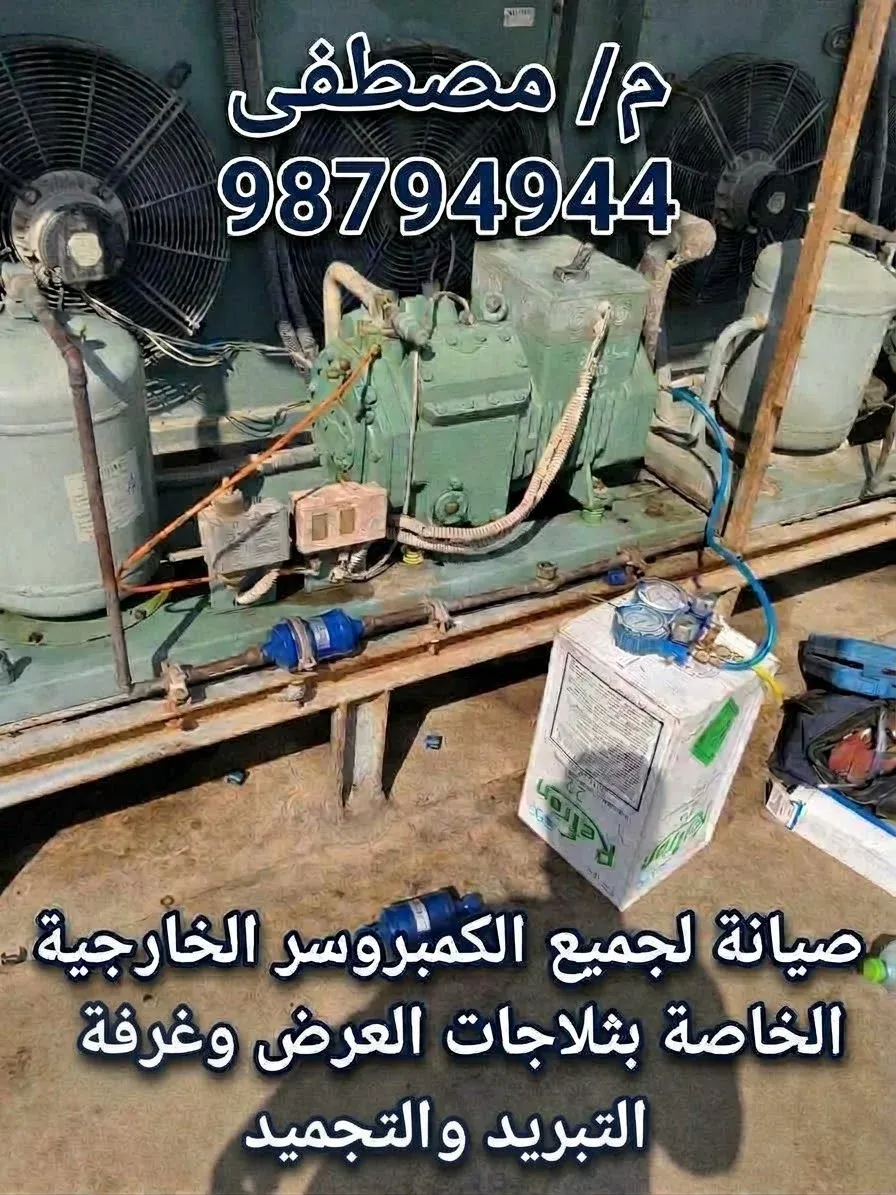
A freezer room technician serving warehouses in Subhan must determine whether inadequate freezing results from the compressor itself or another problem within the connected refrigeration system. A compressor may operate continuously without the room reaching its required temperature because of ineffective heat transfer, insufficient evaporator feeding, excessive refrigeration loads, or refrigeration circuit faults. In other situations, it may stop because of electrical protection trips, high pressure, or operating conditions outside its permitted limits.
Diagnosis should therefore rely on equipment specifications and suitable measurements rather than compressor noise or how hot the unit feels to an employee. The condenser, fans, and surrounding ventilation must also be reviewed because ineffective heat rejection can affect system performance, particularly during Kuwait's high outdoor temperatures.
What Can Cause a Freezer Compressor to Stop?
-
Electrical power supply problems.
-
Activation of protective devices.
-
Contactor or control circuit faults.
-
Unsuitable operating pressures.
-
Condenser or fan problems.
-
Motor or internal compressor faults.
-
Equipment operation outside its permitted range.
Does a Hot Compressor Mean It Is Damaged?
Not necessarily. Compressor operating temperatures vary according to design and refrigeration load.
Assessment requires relevant current, voltage, pressure, and temperature measurements, together with manufacturer instructions.
Can Refrigerant Charging Solve Poor Freezing Performance?
Low refrigerant charge caused by leakage may be one possible cause, but it is not the only explanation.
Refrigerant should not be added without proper diagnosis and repair of any confirmed leak, while following the specified refrigerant type and manufacturer procedures.
Can a Dirty Condenser Shut Down a Freezer Unit?
Condenser contamination may reduce heat rejection and increase condensing conditions.
In some systems, this may activate high-pressure protection.
However, the actual cause should be established through inspection because protective shutdowns may result from other factors.
What Does a Refrigeration Circuit Inspection Include?
-
Reviewing electrical measurements.
-
Measuring relevant operating pressures and temperatures when necessary.
-
Checking fan operation.
-
Inspecting condenser and evaporator condition.
-
Evaluating refrigerant supply to the evaporator.
-
Checking control and safety valves.
-
Investigating indications of refrigerant leakage.
-
Reviewing performance against manufacturer data.
Is Replacing the Compressor Better Than Repairing It?
This depends on compressor type, fault condition, repair feasibility, and expected costs.
Replacement should not be approved before determining whether an external problem caused the failure.
Common Freezer Unit Faults
|
Symptom |
Possible Causes |
Appropriate Inspection |
|
Compressor does not start |
Electrical, protective device, or internal fault |
Check power supply and operating commands |
|
Compressor trips repeatedly |
Pressure, load, or protection issue |
Review operating conditions |
|
Compressor operates without sufficient freezing |
Inadequate performance or excessive load |
Inspect overall system and refrigeration circuit |
|
Condenser temperature is unusually high |
Contamination, ventilation, or load problems |
Inspect fans and airflow |
|
Poor evaporator cooling |
Frost accumulation or inadequate refrigerant feeding |
Inspect defrost and refrigeration circuit |
|
Repeated alarms |
Sensor, controller, or performance fault |
Review alarm history and measurements |
If your warehouse freezer in Subhan is no longer freezing as effectively as before, request a complete system inspection before purchasing a compressor or adding refrigerant without diagnosis.
Request an Assessment of Your Freezer Problem
If you notice increasing temperatures or equipment shutdown, prepare the compressor specifications, operating temperature, stored product types, and observations related to the fault.
You can inquire about available inspection and maintenance services through Cold Room and Display Refrigerator Maintenance:
Warehouse Freezer Unit Repair in Al Rai: Evaporators, Defrost Systems, and Air Infiltration
Repairing a warehouse freezer unit in Al Rai requires particular attention to the evaporator, defrost system, and drainage because freezing systems operate at low temperatures that cause moisture in incoming air to form frost. Some frost formation may be expected under certain operating conditions, but excessive accumulation can block airflow between evaporator fins, reduce heat transfer, and cause the room temperature to increase.
It is important to distinguish between a defrost system fault and conditions that increase frost accumulation in the first place, such as poor door sealing, frequent door opening, or unsuitable airflow. Replacing a defrost heater without addressing excessive humid air infiltration may allow the problem to recur. Maintenance should therefore focus on the actual cause.
What Is the Function of a Defrost System?
A defrost system removes frost that accumulates on the evaporator.
Depending on the design, it may use electric heaters or other methods.
Its timing and duration are controlled according to equipment specifications.
Why Does Ice Accumulate Even When Defrost Is Operating?
Possible causes include insufficient defrost duration, a faulty termination sensor, inadequate drainage, or excessive entry of humid air.
Evaporator fan problems or refrigeration circuit operating conditions may also contribute.
Can the Door Cause Frost to Accumulate on the Evaporator?
Yes. Outdoor air contains moisture that may freeze when it reaches cold evaporator surfaces.
Door gaskets, hinges, closing mechanisms, and opening frequency should therefore be inspected.
Is Drainage Important in a Freezer Room?
Yes. Water produced during defrost can freeze inside pipes or drain pans if the drainage system is unsuitable.
Drain heaters or other specialized components may be included depending on equipment design.
Can I Remove Ice Using a Sharp Tool?
No. Sharp tools may damage evaporator tubes and cause refrigerant leakage.
The appropriate defrost procedures should be followed, and a qualified technician should be consulted when necessary.
What Should Be Inspected When Frost Keeps Returning?
-
Defrost settings.
-
Defrost heaters where installed.
-
Evaporator sensor or defrost termination sensor.
-
Air circulation fans.
-
Evaporator condition and airflow routes.
-
Water drainage.
-
Door gaskets and sealing.
-
Door-opening frequency.
-
Insulation condition around openings.
-
Refrigeration circuit operating conditions.
Does the Evaporator Need to Be Replaced?
Not always. The problem may involve defrost, fans, drainage, or air infiltration.
Replacement should only be considered when inspection establishes that the evaporator is unsuitable or damaged enough to require it.
If frost repeatedly accumulates on your freezer evaporator, increasing defrost frequency is not always the answer. The source of moisture or the reason for inadequate frost removal should be identified first.
Meat Freezer Room Maintenance in Subhan: Storage Temperatures and Inventory Safety
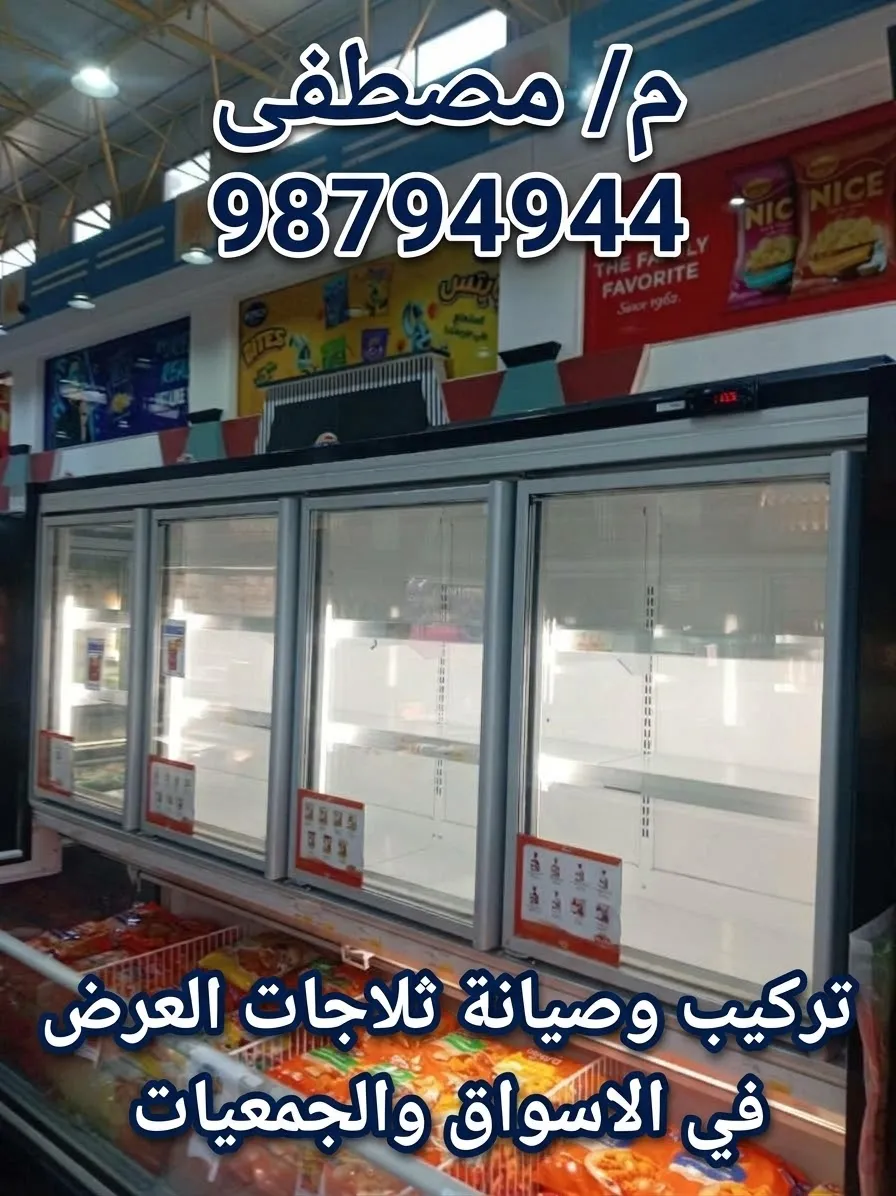
Maintaining meat freezer rooms in Subhan requires careful attention to frozen product storage conditions because meat products need appropriate temperature monitoring, handling procedures, and assessment of any unsuitable temperature exposure. A temperature of -18°C or lower is commonly used for many frozen food storage applications, although product-specific requirements and applicable regulations must always be followed. It is therefore incorrect to assume that every product has identical storage instructions or that the room air temperature alone is sufficient to evaluate the inventory.
Meat handling facilities may receive substantial shipments and use forklifts, trolleys, and loading equipment. Door condition, insulation, and airflow distribution are therefore important for stable freezer operation. If incoming products are warmer than their required storage temperatures, the refrigeration system may also need to remove additional heat. It is essential to establish whether the facility is storing previously frozen meat or carrying out initial freezing, because the difference affects system capacity and operating requirements.
What Is the Suitable Temperature for Frozen Meat?
Temperatures of -18°C or lower are commonly used in many frozen meat storage applications.
However, the required temperature must follow the product specifications and relevant food safety standards.
Product temperature should also be assessed where necessary rather than relying solely on the room air temperature.
Does a Short Increase in Freezer Temperature Mean the Meat Is Spoiled?
Product safety cannot be determined from the duration of an air temperature increase alone.
Product temperature, exposure history, packaging characteristics, and approved food safety procedures must also be considered.
How Can Temperature-Related Risks Be Reduced?
-
Organize door opening during loading operations.
-
Keep door gaskets in good condition.
-
Maintain unobstructed airflow routes.
-
Monitor storage temperatures continuously as required.
-
Review alarms promptly.
-
Avoid introducing quantities exceeding the designed freezing capacity.
-
Inspect condenser and evaporator condition.
-
Carry out suitable preventive maintenance.
-
Prepare a plan for refrigeration failures.
-
Document temperature deviations.
Can Excessive Stacking Affect Freezing Performance?
Unsuitable stacking may restrict airflow and make product access and inspection more difficult.
Pallets and cartons should be arranged according to warehouse design, loading limits, and movement routes.
Can Meat Be Transferred During Repairs?
Transfer may be necessary if suitable storage conditions cannot be guaranteed.
Appropriate transportation and storage equipment should be used, with temperature monitoring according to facility procedures and product requirements.
Does Every Fault Require Completely Emptying the Freezer?
This depends on the repair, expected downtime, inventory, and actual temperatures.
No general decision should be made without evaluating risks to stored products and relevant safety procedures.
Why Is Coordination Between the Technician and Quality Manager Important?
The technician is responsible for diagnosing and repairing refrigeration equipment within their professional scope.
The quality manager must assess product conditions and compliance with storage requirements.
Coordination helps prevent confusion between equipment functionality and food safety.
If you operate a meat freezer room in Subhan, priorities should include repairing the fault, maintaining the cold chain, and evaluating affected products separately.
Industrial Freezing Fault Inspection in Al Rai: Controllers, Sensors, and Electrical Systems
Inspecting industrial freezing faults in Al Rai requires examining controllers, sensors, and electrical protection systems because certain freezer problems appear as alarms or temperature fluctuations even while parts of the system continue operating. Possible causes include an inaccurate sensor, unsuitable settings, a stopped fan, or an electrical protection fault. Controller settings should therefore not be changed merely to remove an alarm without understanding its cause.
In commercial and industrial systems, a controller may manage compressor operation, fans, defrost cycles, and alarms, and it may be connected to additional equipment. Controller type, wiring arrangements, and manufacturer specifications should therefore be reviewed. Electrical inspection must also be performed by qualified professionals, particularly when the system contains three-phase equipment and multiple control panels.
What Are the Most Important Controller Settings?
-
Target operating temperature.
-
Temperature differential.
-
Alarm limits.
-
Defrost settings.
-
Compressor start delays.
-
Fan control functions.
-
Protective settings.
-
Sensor configuration.
-
Fault recording where available.
-
System operating modes.
Does a Temperature Alarm Mean the Sensor Is Damaged?
Not necessarily. The alarm may indicate a genuine increase in freezer temperature or a measurement fault.
Readings should therefore be compared with a suitable measuring instrument, and operating conditions should be inspected before replacing the sensor.
Can Resetting the Controller Solve the Problem?
A correctly identified configuration error may sometimes be corrected through appropriate controller adjustments.
However, resetting the controller is not a substitute for fault diagnosis.
Random changes may disable protective settings or leave the underlying problem unresolved.
What Should Be Included in an Electrical Inspection?
-
Electrical supply condition.
-
Voltage and current readings where appropriate.
-
Circuit breakers and protective devices.
-
Contactors and operating circuits.
-
Electrical connections.
-
Equipment fan operation.
-
Controller commands.
-
Alarms and trip history.
-
Compatibility with manufacturer specifications.
Can Low Voltage Affect the Compressor?
Unsuitable power supply conditions may affect motor performance and protection systems, depending on equipment design.
Measurements and phase differences should be reviewed where necessary under appropriate electrical safety procedures.
Can Proper Controller Settings Reduce Faults?
Suitable settings can help equipment operate within its designed limits.
However, controller adjustments cannot repair refrigerant leaks, damaged fans, or insulation problems.
Control system evaluation should therefore be combined with mechanical inspection.
Do Factories Need Temperature Recording Systems?
Recording systems may be useful for monitoring temperature deviations and reviewing freezer room performance.
Certain business activities may also require particular documentation standards.
The appropriate level of recording depends on products, operating procedures, and applicable food safety requirements.
If your freezer room in Al Rai repeatedly displays alarms, do not simply clear them from the screen. Request an inspection of the sensors, controller, electrical system, and underlying temperature deviation.
Booking Freezer Room Maintenance for Subhan Factories: Inspection, Repair Steps, and Service Costs
Booking freezer room maintenance for factories in Subhan requires providing enough information about the fault to determine the inspection scope and site requirements, especially when the room forms part of an industrial system or production facility. Maintenance costs may differ substantially between a straightforward sensor or door gasket problem and a fault requiring refrigeration circuit inspection, compressor replacement, or repairs to several evaporators. It is therefore preferable to clarify the visit and diagnostic scope before approving repair work.
Service appointments depend on actual availability, the type of fault, and equipment requirements. Describing a service as fast does not automatically guarantee technician arrival within a specified number of hours or completion of every repair in one visit. Certain jobs may require replacement parts or specific arrangements at the facility. These details should be clarified when booking so that the business can organize production and protect stored products.
What Information Is Required When Booking?
-
Factory address in Subhan.
-
Business activity and types of frozen products.
-
Number of freezer rooms.
-
Required operating temperature.
-
Current temperature.
-
Time when the fault began.
-
Compressor operating condition.
-
Presence of frost, water leaks, or alarms.
-
Equipment specifications where available.
-
Technician access to refrigeration equipment.
-
Site entry and safety requirements.
What Are the Inspection and Maintenance Steps?
Receiving the Request: Record the symptoms, facility location, and equipment information.
Risk Assessment: Review the effect of the fault on stored products and business operations.
Initial Inspection: Check temperature, controller readings, and the visible condition of equipment.
Technical Inspection: Perform suitable electrical and refrigeration measurements according to the symptoms.
Identifying the Cause: Explain the fault and the affected components.
Repair Quotation: Specify the necessary work, replacement parts, and expected costs.
Carrying Out Maintenance: Correct the problem according to technical instructions and safety procedures.
Operating Tests: Review equipment operation and how the room responds to refrigeration demand.
Documentation: Record the completed work and any recommendations for monitoring and future maintenance.
What Factors Affect Maintenance Costs?
|
Cost Factor |
Effect on Pricing |
|
Type of fault |
Determines diagnostic and repair procedures |
|
Number of compressors |
Influences inspection scope |
|
Number of evaporators |
May increase the work required |
|
Type of freezing system |
Independent and centralized systems have different requirements |
|
Replacement parts |
Depend on model, specifications, and availability |
|
Defrost system problems |
Costs vary according to affected components |
|
Electrical repairs |
Depend on the wiring and equipment involved |
|
Insulation and door condition |
May require additional materials and work |
|
Site conditions |
Influence equipment access and working arrangements |
|
Operating tests |
Depend on the repair and contractual scope |
Is There a Fixed Inspection Price?
There is no universal price covering every situation because system type, room size, and fault characteristics affect the diagnostic work required.
It is preferable to clarify inspection charges and whether they are billed separately from repairs.
Does the Maintenance Price Include Replacement Parts?
Not necessarily.
Labor, materials, replacement parts, and any additional work should be clearly identified before repairs begin.
Must the Compressor Be Replaced When the Freezer Stops?
No. A shutdown may result from electrical problems, protective devices, controllers, or other refrigeration components.
The need for replacement should be established through inspection.
Can Maintenance Be Completed in One Visit?
Some repairs may be completed during one visit.
Others require additional parts, procedures, or testing.
Completion during the first visit cannot be guaranteed before the actual fault is known.
How Should Maintenance Quotations Be Compared?
Review the diagnosis, technical specifications, replacement parts, scope of work, testing procedures, and warranty conditions rather than the total price alone.
Request a Freezer Room Inspection Appointment
If you operate a factory in Subhan or a warehouse in Al Rai, prepare the room and equipment specifications, together with photographs of alarms or visible faults where available.
You can inquire about the nearest available appointment and service scope through Cold Room and Display Refrigerator Maintenance:
Freezer Room Maintenance for Factories in Subhan and Al Rai: Why Choose Cold Room and Display Refrigerator Maintenance?
Freezer room maintenance for factories in Subhan and Al Rai should focus on the underlying cause of a fault and its effect on operations and inventory. Replacing components without diagnosis may create unnecessary expenses without resolving the actual problem. It is therefore important to choose an inspection service that clearly evaluates the components associated with the fault, including compressors, condensers, evaporators, controllers, defrost systems, and doors. Measurements should help establish which components can be repaired and which need replacement.
Through Cold Room and Display Refrigerator Maintenance in Kuwait, you can inquire about commercial freezer room inspection and maintenance solutions and explain your business requirements, whether you operate a factory, warehouse, or food shop. The actual scope of available services, appointments, warranty conditions, and replacement parts should be confirmed before entering into an agreement so that the repair work and costs are clearly understood.
What Criteria Should You Review When Choosing a Maintenance Service?
|
Evaluation Criteria |
Benefit for the Facility |
|
Understanding storage requirements |
Identifies suitable freezing conditions |
|
Diagnosing faults before replacing parts |
Reduces unnecessary repairs |
|
Reviewing compressors and condensers |
Helps assess refrigeration performance |
|
Inspecting evaporators and defrost systems |
Identifies frost and airflow problems |
|
Checking controllers and sensors |
Helps detect measurement faults |
|
Evaluating doors and insulation |
Identifies heat and moisture infiltration |
|
Following safety procedures |
Protects employees during maintenance |
|
Providing a clear quotation |
Defines work and costs |
|
Testing after repairs |
Helps verify system performance |
|
Written warranty conditions |
Clarify coverage and exclusions |
What Common Mistakes Should Be Avoided?
-
Assuming every temperature increase means low refrigerant charge.
-
Replacing a compressor before diagnosing the system.
-
Clearing controller alarms without investigating the cause.
-
Breaking ice with sharp tools.
-
Ignoring defrost drainage problems.
-
Leaving freezer doors open for extended periods.
-
Stacking products directly in front of evaporators.
-
Introducing product quantities exceeding the designed freezing capacity.
-
Neglecting temperature records.
-
Releasing products exposed to unsuitable storage conditions without assessment.
Can Preventive Maintenance Reduce Equipment Faults?
Preventive maintenance may help detect contamination, deterioration, and operating problems before they become more serious.
However, it cannot guarantee the elimination of every fault because equipment condition and operating requirements change over time.
What Should a Suitable Maintenance Program Include?
A maintenance program may include inspections of condensers, fans, door gaskets, evaporators, defrost systems, controllers, and sensors.
Fault history and temperature records should also be reviewed.
The appropriate service frequency depends on manufacturer instructions, the operating environment, and the nature of the inventory.
Do Large Freezer Rooms Require More Monitoring?
Warehouses with frequent shipment movement may require different monitoring arrangements from rooms with limited traffic.
However, room size is not the only factor.
The number of doors, refrigeration units, operating hours, and product characteristics also influence maintenance requirements.
Does the Warranty Cover Every Future Fault?
Warranty coverage depends on the agreed repair and contract conditions.
Written clarification should be requested regarding warranty duration, covered parts and work, and exclusions.
How Should Recurring Faults Be Managed?
Maintain records of faults, alarms, temperatures, and replacement parts.
This information helps determine whether repeated problems result from an unresolved fault or changes in operating conditions.
Can Changing the Controller Temperature Resolve Weak Freezing?
Not necessarily. The cause may involve inadequate airflow, condenser or evaporator problems, or refrigeration loads exceeding the system's capacity.
Product storage temperatures should not be changed to unsuitable levels merely to eliminate an alarm.
What Is the Best Step Before Approving Maintenance?
Request an explanation of the diagnosed fault, necessary work, replacement parts, testing scope, and cost.
If the problem affects food safety, the handling of stored products should be coordinated separately from refrigeration equipment repairs.
Suitable industrial freezer room maintenance begins with understanding the problem and ends with verifying performance, while protecting employees and products and clearly explaining the repair work.
Frequently Asked Questions About Freezer Room Maintenance in Al Rai and Subhan
Can I Book a Freezer Room Technician in Al Rai or Subhan Quickly?
You can inquire about the nearest available appointment through the company's official website.
However, response time depends on appointment availability, the type of service request, and the facility location.
The booking should be confirmed before relying on a specific arrival time.
Why Does the Freezer Room Temperature Rise Even When the Compressor Is Running?
Possible causes include condenser contamination, reduced evaporator performance, excessive frost accumulation, air infiltration through doors, controller faults, or refrigeration circuit problems.
Temperatures may also rise because of increased refrigeration loads or incoming products that are warmer than expected.
A technical inspection is necessary to determine the actual cause.
Is Meat Freezer Room Maintenance Different from Other Frozen Food Warehouse Maintenance?
Some equipment inspection procedures are similar.
However, food safety requirements, handling methods, and storage temperatures vary according to the product.
Suitable storage conditions must be maintained, and products exposed to abnormal temperature increases should be evaluated appropriately.
How Much Does Freezer Room Repair Cost in Subhan Factories or Al Rai Warehouses?
Costs depend on the type of fault, number of compressors and evaporators, defrost and control systems, replacement parts, and required work.
It is therefore preferable to request an inspection and a quotation explaining diagnostic charges, repair costs, and included components.
What Should I Do If the Warehouse Freezer Stops While It Contains Food?
Minimize door opening, record when the fault began and the available temperature readings, and review product conditions according to food safety procedures.
If suitable storage conditions cannot be maintained, arrange appropriate alternative storage and request a technical inspection.
Restoring the freezer temperature should not automatically be taken as proof that all stored products remain safe.
Conclusion: Request Freezer Room Maintenance in Al Rai and Subhan After Confirming the Fault and Appointment
If you are looking for freezer room maintenance in Al Rai and Subhan, with fast service for warehouses and factories, the most important first step is explaining the problem, the condition of stored products, and the required operating temperature, followed by confirming the available inspection appointment. Industrial freezing faults may involve the compressor, evaporator, condenser, defrost system, controller, or air infiltration through doors. These problems cannot be reliably diagnosed from symptoms alone without appropriate technical measurements.
Whether you need a freezer room technician in Al Rai, are searching for factory freezer room repair in Subhan, or require meat freezer room maintenance in Subhan, suitable diagnosis helps you understand the necessary repairs and their costs before approving the work. Organizing inventory handling during the breakdown also helps reduce risks associated with unsuitable storage conditions, particularly in warehouses containing substantial quantities of frozen food.
Through Cold Room and Display Refrigerator Maintenance in Kuwait, you can inquire about available inspection and repair services and provide information about the room, equipment, and fault. Service scope, appointments, and repair conditions should be confirmed before entering into an agreement.
Do you have a freezer room in Al Rai or Subhan with rising temperatures, a compressor that repeatedly trips, or an evaporator that constantly accumulates ice?
Prepare the facility address, room dimensions, operating temperature, equipment specifications, and photographs of alarms where available.
Request a technical assessment explaining the problem, necessary work, and expected repair costs.