Bakery Cold Rooms in Kuwait | Dough Cooling & Installation Costs
Bakery and Pastry Cold Rooms in Kuwait: Dough Cooling & Costs
If you own a bakery or pastry production facility in Kuwait, you probably understand that the quality of dough, cakes, and decorated desserts depends on more than ingredients and preparation techniques. Temperature and storage conditions throughout production also play an important role. Choosing bakery and pastry cold rooms in Kuwait, including dough cooling requirements and room installation costs, requires identifying the products, daily production quantities, storage duration, and temperatures needed at each stage. Fermented dough requires suitable temperature control to slow yeast activity, while cream-filled cakes and other perishable desserts require different food-safe storage conditions. For this reason, storing every product inside one refrigerated room without evaluating compatibility is not advisable.
Whether you are preparing a dough storage room for a commercial bakery, establishing a refrigerated warehouse for baking ingredients, or expanding a cake and dessert production facility, selecting suitable dimensions and refrigeration equipment should be based on your actual production process. A bakery that prepares dough overnight and bakes it the following morning has different requirements from a pastry factory receiving substantial quantities of cream, dairy products, and finished cakes. A central bakery distributing products to multiple branches may also require additional considerations, particularly when large numbers of trolleys, trays, and raw ingredients regularly enter and leave the storage area.
Through Cold Room and Display Refrigerator Maintenance in Kuwait, you can inquire about commercial cold room installation solutions for bakeries, pastry shops, and central kitchens. This comprehensive guide explains the differences between dough cooling and cold fermentation, appropriate temperatures for ingredients and desserts, insulation and shelving requirements, suitable room dimensions and capacity, installation procedures, and the factors affecting project costs. The objective is to help you understand your actual requirements before requesting a quotation and select specifications that match your production volume and operating methods rather than spending your budget on unsuitable equipment.
Bakery and Pastry Cold Room Installation in Kuwait: What Does the Service Include?
Installing bakery and pastry cold rooms in Kuwait requires technical planning that differs from preparing an ordinary refrigerated food storage room. A single bakery may handle fermented dough, raw ingredients, cream fillings, and finished desserts, each with different storage conditions and operating requirements. The design process should therefore begin by identifying which products will enter the cold room and whether the primary purpose is to cool them after preparation, maintain their existing temperatures, or slow fermentation for a particular period.
Smaller bakeries may need a room that accommodates dough trays and refrigerated ingredients while supporting the organization of daily production. Larger pastry facilities may require separate storage areas for raw materials and finished products, with appropriate hygiene procedures and measures to prevent cross-contamination. Planning becomes particularly important in Kuwait because high outdoor temperatures affect refrigeration loads, especially when equipment operates near ovens or inside production facilities where heat and humidity levels are elevated.
Essential Components of a Bakery Cold Room
-
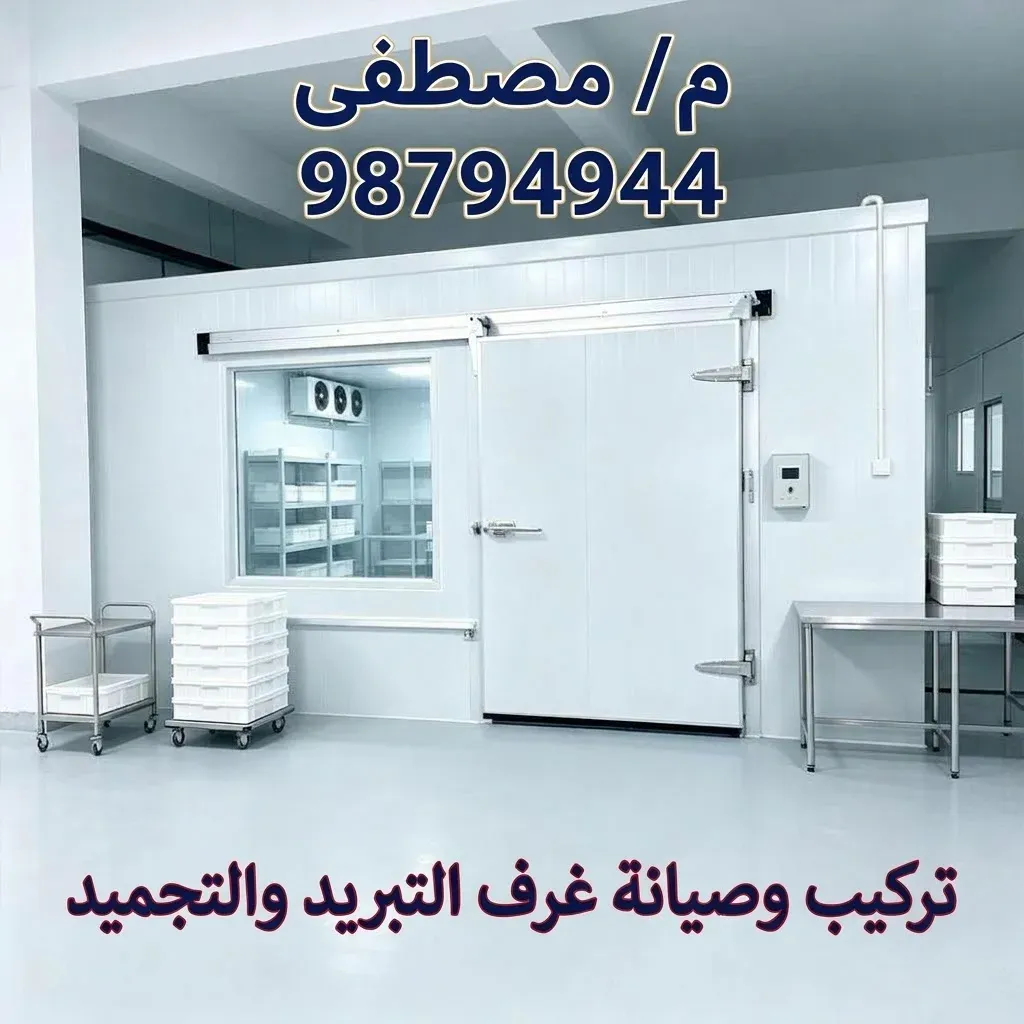
Thermal Insulation Panels: These reduce heat transfer from surrounding areas or hot production zones into the refrigerated room.
-
Compressor and Condensing Unit: Refrigeration capacity is selected after calculating heat loads generated by products, surrounding conditions, and door-opening frequency.
-
Evaporator and Air Circulation Fans: These help distribute refrigerated air throughout the storage room according to the arrangement of products and trays.
-
Thermostat and Control System: These regulate temperatures and manage refrigeration equipment operation.
-
Temperature Sensors: These support storage condition monitoring and help identify unusual temperature changes.
-
Insulated Doors: These reduce warm, humid air infiltration and support efficient refrigerated storage.
-
Shelving and Trolleys: These organize dough trays, cakes, and ingredients according to available space and actual weight requirements.
-
Suitable Flooring: Flooring should accommodate employee movement, trolleys, cleaning procedures, and expected loads.
-
Electrical and Drainage Equipment: These are determined according to equipment specifications, site conditions, and applicable safety requirements.
Is a Bakery Cold Room Different from a Restaurant Cold Room?
The two applications share some refrigeration equipment, but bakery operations may require control over dough fermentation and moisture loss in addition to the refrigerated storage of temperature-sensitive desserts.
Restaurant cold rooms may focus on storing different raw and cooked food products. Technical specifications should therefore be selected according to the actual products and operating procedures rather than assuming that every food business requires an identical cold room design.
Does Every Bakery Need a Separate Walk-In Cold Room?
Not necessarily. Smaller bakeries may be able to use suitable commercial refrigerators or dedicated dough fermentation retarders if these provide sufficient capacity and meet their operating requirements.
As production quantities increase and larger trays and trolleys are introduced, however, installing a commercial walk-in cold room may become an option worth considering.
What Information Is Required Before Installation?
You should identify the types of dough, desserts, and ingredients being stored, their daily quantities, preparation schedules, required storage temperatures, and the dimensions of trays and trolleys.
The key consideration: A bakery cold room should be designed according to production stages and product characteristics rather than simply the available floor area or compressor capacity.
Bakery Dough Cold Room Costs: The Difference Between Cooling and Cold Fermentation
The cost of installing a dough cold room for a bakery depends on the type of dough, preparation procedures, and intended storage duration because cooling dough involves more than lowering its temperature to a particular level. In dough containing yeast, refrigeration is used to slow yeast activity and help control fermentation timing. This process is commonly referred to as cold fermentation or fermentation retardation. However, the effects of refrigeration vary according to yeast quantity, flour type, dough temperature after mixing, and storage duration.
Some bakeries prepare dough toward the end of the working day and need to delay fermentation until the next baking period. Other bakeries use specialized equipment that combines refrigeration and controlled proofing according to a programmed schedule. It is therefore important to clarify whether the business needs a refrigerated storage room for dough or a more advanced system that controls multiple cooling and fermentation stages. This distinction affects the required equipment, technical design, and total installation cost.
What Does Dough Cooling Mean?
Dough cooling involves lowering the temperature of dough to help slow yeast activity or maintain suitable conditions during a particular production stage.
It may be used for bread dough, pastries, and other baked products. However, every recipe requires a temperature and timing program suited to its ingredients and production method.
What Is the Difference Between Dough Cooling and Cold Fermentation?
Cooling is a process used to control product temperature.
Cold fermentation, on the other hand, uses lower temperatures to regulate yeast activity and dough development over a calculated period.
It therefore requires consideration of time, temperature, yeast quantity, and dough development stage rather than the cold room temperature alone.
Recommended Temperature Guidelines for Dough Refrigeration
|
Application |
Approximate Temperature |
Important Considerations |
|
Retarding fermentation in many bread doughs |
Approximately 0–4°C |
Depends on recipe and storage duration |
|
Refrigerating dough before shaping |
According to production recipe |
Internal dough temperature must be considered |
|
Cooling croissant and Danish pastry dough |
Refrigerated temperatures suitable for the dough and fat characteristics |
Helps control consistency and shaping |
|
Final dough proofing |
Higher temperatures according to the recipe |
Requires proofing conditions rather than ordinary refrigeration |
|
Frozen dough storage |
According to product requirements |
Requires freezing equipment instead of a standard cold room |
These temperatures are general guidelines and should not be treated as fixed settings for every dough variety. Each recipe requires an appropriate operating temperature and storage period.
Does Refrigeration Stop Yeast Activity Completely?
No. Refrigeration slows the biological activity of yeast to varying degrees, but it does not necessarily stop fermentation completely.
Dough may continue developing during refrigerated storage. Storage time and yeast quantity should therefore be considered to avoid excessive fermentation.
Why Does Dough Dry Out Inside a Cold Room?
The dough surface may become dry if exposed to unsuitable airflow or left without appropriate covering.
Suitable containers or covers should therefore be used according to production procedures, while humidity and air velocity should also be considered.
Does a Dough Cold Room Need Humidity Control?
Certain fermentation retardation applications may benefit from humidity control to help reduce surface drying.
However, the appropriate equipment and settings depend on the dough recipe, covering method, and storage duration.
If you need a dedicated dough cold room, identify the baked products, dough quantities, mixing schedules, and baking times before selecting the refrigeration system. These details influence the required specifications and installation cost.
Dough Storage Rooms for Commercial Bakeries: Organizing Trays, Trolleys, and Daily Production
A dough storage room for a commercial bakery should be designed to help employees organize production stages, especially when the bakery prepares substantial dough quantities before baking. Increasing the number of trays and trolleys can affect air circulation inside the room. Introducing large quantities of warm dough also creates refrigeration loads that must be calculated to ensure products reach the intended storage conditions within an appropriate period.
A common mistake is choosing a small room that barely accommodates the required trays and then positioning trolleys in ways that obstruct movement or airflow. This can result in uneven cooling and make it difficult to remove production batches in the correct order. The preferable approach is to determine trolley quantities, dimensions, and movement routes before constructing the room. It is also important to remember that dough may continue expanding during fermentation even under refrigerated conditions.
How Should Dough Trays Be Arranged Inside the Room?
-
Assign clearly identified storage locations to individual production batches.
-
Organize trays according to preparation times.
-
Leave suitable spaces for air circulation.
-
Prevent dough from touching inappropriate room surfaces.
-
Use trolleys designed for the actual loads.
-
Avoid blocking evaporator air outlets.
-
Maintain convenient access for employees.
-
Identify products that must be baked first.
Do Dough Trolley Dimensions Affect Cold Room Design?
Yes. Trolley width, length, and height determine the space required for storage and movement.
Door clearances and turning space should also be considered, particularly when the business uses several trolleys simultaneously.
Why Is Measuring the Actual Dough Temperature Important?
The air temperature inside the cold room may differ from the temperature of the dough itself, especially when large batches enter immediately after mixing.
The bakery may therefore need to monitor product temperature as part of its production procedures to confirm that dough reaches the required conditions within an appropriate period.
Can Different Dough Varieties Be Stored Together?
Not always. Dough varieties differ in their ingredients, fermentation periods, required temperatures, and covering methods.
Allergen management and cross-contamination risks must also be considered.
Compatibility between products should therefore be evaluated, and storage should follow the facility's approved food safety procedures.
How Can Production Variations Be Reduced?
Organizing the entry and removal of batches, monitoring temperatures, and controlling fermentation times can help reduce differences between daily production runs.
However, consistent results also depend on maintaining the recipe, ingredient weights, and dough temperature after mixing. A cold room alone cannot guarantee uniform production.
Is a Dough Cold Room Suitable for Finished Products?
This may be possible in certain cases when storage conditions are compatible and appropriate separation is implemented.
However, storing raw dough together with ready-to-eat desserts without evaluating cross-contamination risks is not advisable.
The objective of a dough storage room is not simply to hold the greatest possible quantity. It is to organize production and help the bakery manage preparation batches effectively.
Designing Refrigerated Rooms for Fermented Dough: Temperature, Humidity, and Proofing Time
Designing a refrigerated room for fermented dough requires understanding the relationship between yeast activity, temperature, humidity, and storage duration. Fermented dough remains a biologically active product that changes over time and may continue fermenting more slowly under refrigerated conditions. The design should therefore be appropriate for the recipe and fermentation stage, particularly when dough is prepared several hours before baking or when production is divided into batches for the following day.
It is important to distinguish between a refrigerated dough storage room and specialized equipment known as a retarder-proofer. A refrigerated room maintains particular cooling conditions, while specialized retarder-proofers may support programmed transitions from refrigeration to temperatures and humidity levels suitable for proofing at a specified time. An ordinary cold room should therefore not automatically be considered capable of performing automated fermentation programs without additional equipment and controls.
What Is Fermentation Retardation?
Fermentation retardation involves using low temperatures to slow yeast activity and delay dough development to a particular stage.
This method is used for certain bread and pastry products to organize production schedules. However, the recipe and timing must be adjusted according to the characteristics of the dough.
Is Humidity Control Necessary?
In certain applications involving uncovered dough, suitable humidity can help reduce surface drying and the formation of an excessively firm outer layer.
However, humidity settings should reflect product characteristics, recipe ingredients, and covering methods while preventing unwanted condensation.
What Is the Difference Between a Cold Room and a Retarder-Proofer?
|
Comparison |
Dough Cold Room |
Retarder-Proofer |
|
Main function |
Maintains specified refrigerated conditions |
Controls refrigeration and proofing stages |
|
Automatic temperature changes |
Depends on controller capabilities |
May support multiple programmed stages |
|
Humidity control |
Depends on installed equipment |
May include specialized humidity controls |
|
Main application |
Dough storage or delayed fermentation |
Scheduled fermentation management |
|
Cost |
Depends on dimensions and refrigeration equipment |
Influenced by specialized control functions |
Can I Establish One Fixed Dough Storage Duration?
There is no single duration suitable for every dough variety.
Storage time depends on flour type, yeast quantity, dough temperature, salt, sugar, fat content, and the fermentation stage.
The appropriate holding period should therefore be established through a tested recipe and clear production procedures.
What Happens When Dough Ferments for Too Long?
Dough may develop beyond its ideal baking stage, affecting consistency, volume, and its ability to retain gases.
In certain cases, excessive fermentation may weaken dough structure or produce undesirable results in the finished product.
Can Rapid Temperature Changes Affect Dough?
Poorly controlled temperature changes can affect fermentation consistency and cause undesirable condensation when dough moves between environments.
The procedure for removing dough from refrigeration and completing fermentation should therefore follow the recipe and equipment requirements.
If your bakery relies on cold fermentation, request a design that accounts for dough temperature, storage duration, humidity, and subsequent proofing procedures rather than a room controlled by one fixed temperature setting.
Cooling Equipment for Cake and Torte Production: Storing Cream, Fillings, and Finished Products
Preparing refrigeration for cake and torte production is an important requirement for pastry facilities because many products contain temperature-sensitive ingredients, including fresh cream, dairy products, certain fillings, and cut fruit. Each product should therefore be stored according to its ingredients, preparation methods, and approved shelf life. It should not be assumed that every type of cake requires identical refrigeration conditions.
For example, plain cakes or certain packaged baked products may have different storage requirements from cream-filled tortes and desserts containing highly perishable fillings. The production facility must also distinguish between safely cooling products after baking and maintaining them at the correct temperature after cooling. A room designed for refrigerated storage may not be capable of rapidly cooling large quantities of hot products unless those heat loads were included in its design.
Which Products May Require Refrigerated Storage?
-
Tortes filled with perishable cream.
-
Certain varieties of cheesecake.
-
Desserts containing custard or other highly perishable ingredients.
-
Cakes containing particular fresh dairy products.
-
Refrigerated fillings according to product requirements.
-
Certain desserts containing fresh fruit.
-
Finished pastry products whose recipes require continuous refrigeration.
General Storage Temperature Guidelines for Pastry Products
|
Product Type |
General Storage Conditions |
Important Notes |
|
Tortes with perishable cream |
Commonly 5°C or lower, according to applicable requirements |
Shelf life must be established |
|
Certain cheesecake varieties |
Refrigeration according to the approved recipe |
Depends on ingredients and preparation method |
|
Perishable custard fillings |
Refrigerated storage according to food safety requirements |
Protection against contamination is essential |
|
Plain cakes |
According to the recipe and packaging |
Refrigeration may not always be necessary |
|
Frozen ingredients |
According to product freezing requirements |
Must not be treated as ordinary refrigerated products |
|
Cut fruit used in desserts |
According to product type and safety requirements |
Requires hygienic handling |
Important note: This table provides general guidance and does not establish the shelf life of individual products. The approved recipe, ingredient instructions, and applicable food safety requirements are the primary references.
Can Hot Cakes Be Placed Directly Inside a Storage Cold Room?
A suitable cooling method should be determined according to the product, because introducing large quantities of hot cakes or fillings may raise the room temperature and affect other stored products.
Certain production stages may require dedicated rapid cooling equipment or procedures rather than relying exclusively on the main storage cold room.
How Can the Appearance of Decorated Tortes Be Preserved?
Stable shelves and suitable storage supports should be provided.
Products should not be stacked in ways that damage decorative elements or compress cake layers.
Torte height, box dimensions, and movement space should also be considered when retrieving orders.
Does Humidity Affect Desserts?
Yes. Humidity and condensation can influence certain decorations, chocolate products, packaging materials, and textures.
Suitable conditions should therefore be evaluated for each product, particularly when it is moved from a cold room into a warmer, more humid production environment.
The Importance of Separating Products Containing Allergens
Products containing allergens such as nuts, milk, eggs, and wheat should be organized according to clear procedures that reduce the risk of allergen cross-contact.
If you operate a cake and torte production facility, identify your daily production volume, types of fillings, and storage duration before designing the cold room. These details affect both storage capacity and operating requirements.
Installing Refrigerated Storage for Baking Ingredients: Preserving Raw Materials and Organizing Inventory
Installing refrigerated storage for baking ingredients helps bakeries and pastry facilities organize temperature-sensitive raw materials, including certain dairy products, fresh yeast, liquid eggs, and other refrigerated ingredients. However, not every material used in a bakery requires refrigeration. Flour, sugar, and various dry ingredients need different storage conditions and may be adversely affected by high humidity. The requirements of each ingredient should therefore be identified before approving a shared storage system.
For bakeries receiving substantial quantities of raw materials, expiration dates, packaging arrangements, and how frequently ingredients are used during production must also be considered. A refrigerated ingredient warehouse should allow employees to access materials conveniently without blocking airflow or positioning raw materials above ready-to-eat products in ways that could cause cross-contamination.
Which Baking Ingredients May Require Refrigeration?
-
Milk and dairy products that require refrigerated storage.
-
Fresh cream and refrigerated fillings.
-
Certain types of fresh yeast.
-
Liquid eggs and egg products, according to supplier instructions.
-
Cut or prepared fruit used in fillings.
-
Certain cheeses used in pastries.
-
Perishable raw materials with specified refrigerated storage requirements.
-
Ingredients that must be refrigerated after opening their packaging.
Should Flour and Sugar Be Stored Inside a Cold Room?
Not necessarily. Many dry products should be kept in clean, dry storage environments according to supplier instructions.
Placing them in a high-humidity refrigerated room without a specific reason may lead to moisture absorption or changes affecting product and packaging quality.
How Should a Refrigerated Ingredient Warehouse Be Organized?
-
Classify ingredients according to their type and storage requirements.
-
Use clear product identification labels.
-
Arrange products according to expiration dates.
-
Assign suitable locations for opened and unopened packages.
-
Protect packaging against contamination and water exposure.
-
Maintain appropriate separation between raw materials and finished products.
-
Avoid exceeding shelving load capacities.
-
Preserve airflow routes and cleaning access.
Which Inventory Rotation Method Is Suitable?
The First Expired, First Out (FEFO) system can be used, together with any additional requirements relating to batch traceability.
This approach helps reduce the likelihood of older ingredients being forgotten in storage and improves the organization of production supplies.
Can Ingredients and Dough Be Stored Together?
This depends on temperature compatibility, packaging methods, hygiene risks, and production procedures.
Separating certain ingredients from dough or assigning them dedicated storage locations may be appropriate, particularly when storage requirements differ or cross-contamination risks exist.
Why Is Warehouse Hygiene Important?
Refrigerated warehouses require regular cleaning of shelving, flooring, and drainage areas.
Leaks, damaged packaging, and spilled materials should be handled appropriately.
Before installing a refrigerated bakery ingredient warehouse, prepare a list of materials that actually require refrigeration. Do not automatically include dry ingredients without reviewing their storage instructions.
Cold Rooms for Refrigerated Pastry Products: Display, Storage, and Order Handling
A cold room for refrigerated pastry products has different requirements in some respects from rooms used for dough or raw ingredients. Finished products intended for sale must remain safe and maintain their quality while employees prepare customer orders and arrange distribution. These products may include tortes, cheesecakes, cream desserts, and other pastries with different ingredients and expiration dates. They should therefore be organized according to their specified storage requirements.
In pastry shops that handle daily orders, home deliveries, and special occasions, product movement becomes an important part of cold room design. Frequent door opening or leaving products outside refrigeration while preparing orders can affect storage conditions, particularly in Kuwait's hot climate. Workflows should therefore minimize unnecessary exposure to temperatures outside those required for the products.
How Should Finished Desserts Be Arranged Inside the Room?
-
Assign dedicated locations for finished cakes and tortes.
-
Separate products according to ingredients and storage requirements.
-
Consider package height and decorative features.
-
Avoid stacking cake boxes in ways that cause compression.
-
Label products with preparation and expiration dates.
-
Maintain convenient access to orders approaching dispatch.
-
Keep shelving and storage supports clean.
-
Avoid opening product packaging unnecessarily.
Can a Cold Room Replace a Refrigerated Display Cabinet?
Not necessarily. A storage cold room is designed to organize inventory, while a refrigerated display cabinet is intended to present products to customers under suitable conditions.
Depending on production quantities and sales methods, a pastry shop may require both.
Actual storage temperatures should be verified in each unit.
Can All Dessert Varieties Be Stored at the Same Temperature?
No. Certain desserts require continuous refrigeration for food safety reasons, while others may have different conditions needed to maintain texture and quality.
Recipes, ingredients, packaging, and storage instructions must be considered before placing different products in the same cold room.
How Should Wedding and Special Event Orders Be Handled?
Pastry facilities may need to store substantial quantities of tortes or refrigerated desserts before their scheduled delivery dates.
Peak inventory requirements should therefore be calculated, shelving should be organized appropriately, and a suitable area should be allocated to completed orders.
Product removal and transportation should also be planned.
Does Delivery Affect Product Storage Quality?
Yes. Temperature-sensitive products may be affected when exposed to unsuitable conditions after leaving the cold room.
Transportation and packaging should therefore be planned to maintain the required product conditions throughout delivery.
Does Refrigeration Automatically Extend Dessert Shelf Life?
No. Refrigeration does not automatically guarantee a longer shelf life.
Storage life depends on ingredients, production methods, hygiene, packaging, and any necessary validation or testing.
A product's expiration date should not be extended simply because it is stored in a newly installed cold room.
If your pastry shop handles large orders, choose a room that accommodates product quantities, packaging dimensions, and dispatch schedules while maintaining appropriate food safety requirements.
Central Bakery Cold Room Dimensions and How to Calculate Storage Area
Selecting appropriate cold room dimensions for a central bakery requires evaluating production volume and the arrangement of trays, trolleys, and raw materials. Central bakeries may supply several branches and process substantial production batches throughout the day. Maximum production quantities, preparation and distribution schedules, employee movement, and product handling methods should therefore be identified before determining the room dimensions.
Calculating bakery cold room area also involves more than measuring length and width. Internal height, shelving, trolleys, aisles, and evaporator positioning all affect actual storage capacity. Adequate space must be provided for air circulation and maintenance access. A design that organizes products efficiently may therefore be preferable to one that attempts to occupy every available section through excessive stacking.
Approximate Cold Room Dimensions for Bakeries and Pastry Facilities
|
Room Dimensions |
Floor Area |
Potential Application |
|
2 × 2 metres |
4 square metres |
Small bakery with limited refrigerated inventory |
|
2 × 3 metres |
6 square metres |
Small pastry or dessert shop |
|
3 × 3 metres |
9 square metres |
Storage room for trays and ingredients |
|
3 × 4 metres |
12 square metres |
Medium-sized pastry facility or bakery |
|
4 × 5 metres |
20 square metres |
Commercial bakery with greater production volume |
|
5 × 6 metres |
30 square metres |
Central bakery or distribution facility |
Important note: These dimensions are illustrative examples for comparison only. They do not establish fixed storage capacities because actual use depends on internal height, trolleys, shelving, and refrigeration loads.
How Is Cold Room Volume Calculated?
Geometric volume is calculated by multiplying internal length by width and height.
For example, a room measuring 3 metres long, 4 metres wide, and 2.5 metres high has a geometric volume of 30 cubic metres.
However, the net space available for storage is smaller because shelving, trolleys, aisles, equipment, and airflow clearances occupy part of the internal volume.
Is the Number of Dough Trolleys More Important Than Floor Area?
Trolley quantities and dimensions are among the most important design details because the room must allow them to be moved in and out safely.
Turning areas, door clearances, and trolley storage positions must also be considered without obstructing airflow routes.
What Information Determines the Required Storage Capacity?
-
Maximum quantities of dough or desserts stored during peak production.
-
Number and dimensions of trays and trolleys.
-
Product varieties and required storage temperatures.
-
Times when products enter the refrigerated room.
-
Product temperatures upon arrival.
-
Expected storage duration.
-
Frequency of door opening.
-
Available room height and movement space.
-
Potential future increases in production.
Do Room Dimensions Alone Determine Compressor Capacity?
No. Refrigeration loads also depend on heat transfer through insulation, product quantities, incoming product temperatures, door opening, and internal heat sources.
Two bakeries with cold rooms of identical dimensions may require different refrigeration equipment if their dough quantities, product characteristics, or operating schedules are different.
Is One Large Cold Room Better Than Several Smaller Rooms?
The most suitable arrangement depends on compatible storage requirements, contamination risks, and production workflows.
When dough, raw ingredients, and finished desserts require different storage conditions, separating some products may be preferable to relying on one shared room.
Before requesting a central bakery cold room installation, prepare production figures and information about trolleys, trays, and product varieties. The design should reflect actual operations rather than available floor area alone.
Pastry Facility Cold Room Prices in Kuwait: Factors Affecting Installation Costs
How much does a cold room for a pastry production facility cost in Kuwait? There is no single fixed price for every project because installation costs depend on room dimensions, internal height, insulation material and thickness, compressor and evaporator capacity, controllers, doors, shelving, flooring, and pipework. Specifications may also differ depending on whether the room is intended for delayed dough fermentation, refrigerated ingredients, or finished cakes and tortes. The intended use should therefore be established before comparing prices.
It is important not to rely exclusively on a price per square metre because some quotations may cover only the insulated structure, while others include refrigeration equipment, installation, and commissioning. Certain projects may also require additional temperature or humidity monitoring equipment, electrical modifications, or flooring improvements. A detailed quotation identifying the equipment, specifications, and included work is therefore the best way to understand the likely overall project cost.
Main Factors Affecting Bakery Cold Room Installation Costs
|
Cost Factor |
Effect on the Price |
|
Room length, width, and height |
Determines room volume and insulation quantities |
|
Insulation material and thickness |
Influences structural costs and thermal performance |
|
Compressor and condensing unit |
Depends on refrigeration load and operating temperature |
|
Evaporator and circulation fans |
Determined by capacity and product arrangements |
|
Thermostat and controller |
Varies according to required control functions |
|
Humidity control system |
May add equipment depending on the application |
|
Door type |
Depends on dimensions and movement requirements |
|
Shelving and trolleys |
Influenced by quantity, materials, and load capacity |
|
Flooring and drainage |
Varies according to site conditions and cleaning requirements |
|
Electrical work and pipework |
Depends on equipment loads and installation distances |
|
Commissioning tests |
Determined by the agreed scope of work |
Is a Dough Cold Room More Expensive Than a Cake Storage Room?
Not necessarily. The cost depends on the technical specifications required for the particular application.
However, if a dough storage system requires advanced fermentation controls, humidity management, or multiple operating programs, its cost may differ from that of an ordinary refrigerated storage room.
Does the Price per Square Metre Include the Compressor and Installation?
This should not be assumed.
Some quotations cover insulation panels only, while others include refrigeration equipment, doors, and installation work.
A detailed breakdown of equipment and services should therefore be requested before accepting an agreement.
How Should Installation Quotations Be Compared?
Review insulation specifications, compressor and evaporator capacities, controllers, doors, shelving, electrical work, commissioning tests, and warranty conditions.
Any exclusions or additional site preparation expenses should also be identified.
Does Choosing a Larger Cold Room Save Money in the Long Term?
Not necessarily. Increasing room dimensions can raise construction, equipment, and operating costs.
The preferable approach is to select a room that matches production quantities while evaluating future expansion without unnecessary oversizing.
How Can Project Costs Be Reduced Responsibly?
Costs can be managed by organizing products efficiently, reviewing shelving and trolley space, and defining storage requirements accurately before installation.
However, reducing costs by selecting unsuitable insulation, insufficient refrigeration capacity, or ignoring food safety requirements is not advisable.
Request a Quotation Based on Your Bakery's Requirements
If you are preparing a commercial bakery or pastry facility and want to understand the cost of a suitable cold room, organize the available dimensions, product varieties, production quantities, trays, and trolley specifications.
You can inquire about technical installation solutions through the official website of Cold Room and Display Refrigerator Maintenance:
Bakery and Pastry Cold Room Installation Steps and Why Choose Cold Room and Display Refrigerator Maintenance
Preparing a cold room for a bakery or pastry facility requires a clear process that begins with understanding production activities before purchasing equipment. A dough storage room has different requirements from a refrigerated cake and torte room or a warehouse for raw ingredients. Required temperatures, product quantities, storage arrangements, and employee movement should therefore be identified. Site conditions and refrigeration loads must also be evaluated before approving the final design.
Through Cold Room and Display Refrigerator Maintenance in Kuwait, you can inquire about commercial cold room solutions and explain your bakery's or pastry facility's requirements, including available space, production volume, and equipment needs. A detailed quotation should identify the scope of work, equipment specifications, testing arrangements, and warranty conditions in writing so that different installation options can be compared before an agreement is signed.
Site Inspection and Dimension Measurements
The process begins by measuring the room length, width, and height, then reviewing doors, flooring, ventilation, and electrical connections.
Equipment locations, refrigeration pipework routes, trolley movement, and maintenance accessibility should also be assessed.
Identifying Products and Storage Temperatures
The project should establish whether the room will be used for dough, refrigerated ingredients, finished desserts, or several compatible applications.
Required storage temperatures, receiving schedules, production activities, and product holding periods should also be reviewed.
Calculating Refrigeration Loads
The calculation includes heat entering from outside, product temperatures upon arrival, door movement, and internal heat sources.
Compressors and evaporators should be selected according to these factors and the required operating conditions rather than floor area alone.
Preparing the Technical Design
The design should identify room dimensions, insulation, doors, flooring, refrigeration equipment, shelving, controllers, and sensors.
Humidity requirements, movement routes, and airflow distribution should also be assessed according to the stored products.
Preparing the Quotation
The quotation should clearly describe the equipment, materials, and installation services included, together with any exclusions.
Warranty conditions, maintenance arrangements, and agreed testing procedures should be reviewed before work begins.
Installing Insulation and Doors
The site is prepared, and insulation panels, sealed joints, and doors are installed according to the approved specifications.
Installation quality is important for reducing unwanted air and moisture infiltration.
Installing Refrigeration and Control Equipment
Qualified technicians install compressors, evaporators, refrigeration pipework, and control devices according to manufacturer instructions and relevant safety requirements.
Inspection and Trial Operation
Technical tests should verify the refrigeration connections, controllers, sensors, and the system's ability to reach the required operating conditions.
However, successful operation of an empty room does not prove that the system can handle every actual load when substantial quantities of dough or other products are introduced.
Handover and Operating Instructions
Employees should receive instructions covering temperature monitoring, equipment cleaning, and procedures for responding to faults and alarms.
The operating limitations of the cold room should also be explained, particularly when it is designed for refrigerated storage rather than rapidly cooling large quantities of hot products.
What Criteria Should You Review When Choosing an Installation Company?
|
Evaluation Criteria |
Benefit for the Project |
|
Identifying product characteristics |
Helps determine suitable storage conditions |
|
Refrigeration load calculations |
Establishes appropriate equipment capacity |
|
Insulation specifications |
Clarifies whether the structure is suitable |
|
Air distribution |
Helps maintain consistent storage conditions |
|
Shelving and trolley arrangements |
Organizes production and employee movement |
|
Temperature and humidity controls |
Supports different product requirements |
|
Detailed quotation |
Clarifies included equipment and services |
|
Commissioning tests |
Help evaluate equipment performance |
|
Warranty conditions |
Explain coverage and exclusions |
|
Maintenance arrangements |
Support ongoing operational planning |
What Common Mistakes Should Be Avoided?
-
Using one temperature setting for products with different storage requirements.
-
Storing raw dough alongside ready-to-eat desserts without suitable separation.
-
Introducing large quantities of hot products into a room not designed for rapid cooling.
-
Choosing a room smaller than peak production requirements.
-
Ignoring trolley and tray dimensions when designing doors and aisles.
-
Blocking essential airflow routes through excessive stacking.
-
Overlooking humidity requirements in applications where they matter.
-
Relying exclusively on controller readings without reviewing product conditions.
-
Neglecting routine cleaning and maintenance.
-
Comparing quotations without examining technical specifications and included services.
Does the Company Provide a Cold Room Warranty?
Warranty availability and coverage depend on the agreed terms.
Written clarification should be requested regarding warranty duration, covered equipment, installation work, and exclusions.
A comprehensive warranty or guaranteed emergency response time should not be assumed unless officially confirmed.
How Can a Cold Room Be Maintained After Installation?
Room temperature, condenser and evaporator cleanliness, door condition, gaskets, and sensors should be monitored regularly.
An appropriate maintenance program should be followed according to equipment requirements.
Trays and trolleys should also be arranged without obstructing airflow, and unusual changes in operating conditions should be investigated.
If you want a cold room that supports bakery or pastry production effectively, begin by identifying your products, production quantities, and required dimensions. Request a clear technical quotation before approving the installation.
Frequently Asked Questions About Bakery and Pastry Cold Rooms in Kuwait
What Is the Suitable Temperature for a Dough Cold Room?
Some dough fermentation retardation applications use temperatures of approximately 0–4°C.
However, the appropriate temperature depends on the recipe, yeast quantity, dough temperature, and storage duration.
A single setting should not be applied to every dough variety without reviewing the production requirements.
How Much Does Dough Cold Room Installation Cost for a Bakery in Kuwait?
The cost depends on room dimensions, internal height, insulation, compressors, evaporators, controllers, shelving, doors, humidity requirements, and installation work.
For an accurate quotation, it is preferable to provide information about the production process and installation site and request a detailed technical proposal.
Can a Bakery Cold Room Be Used to Store Cakes and Tortes?
It may be suitable for certain desserts when storage conditions are compatible and appropriate separation, hygiene, and cross-contamination prevention procedures are implemented.
However, perishable products must be stored according to their food safety requirements.
Separating dough from finished products may be preferable.
How Do I Determine the Right Cold Room Size for a Central Bakery?
Dimensions should be determined according to peak production quantities, the number and size of trays and trolleys, internal room height, movement aisles, storage duration, and required temperatures.
Floor area alone is not sufficient to determine actual storage capacity.
Does a Dough Cold Room Require Humidity Control?
Certain fermentation retardation applications may require suitable humidity to reduce dough surface drying, particularly when dough is not adequately covered.
However, requirements vary according to the recipe, storage method, and duration. Not every cold room requires a separate humidification system.
Conclusion: Prepare a Cold Room That Supports Bakery Production and Preserves Pastry Quality in Kuwait
Choosing bakery and pastry cold rooms in Kuwait, including suitable dough cooling arrangements and installation costs, requires careful consideration of product characteristics, production stages, temperatures, and humidity requirements, together with dough and dessert quantities and the arrangement of trays and trolleys. The appropriate cold room is much more than an insulated space equipped with a powerful compressor. It is an integrated refrigeration system that supports daily operations and helps organize production and storage according to actual requirements.
Whether you are researching the cost of a dough cold room for a bakery, planning a refrigerated dough storage room for a commercial bakery, or comparing cold room prices for a pastry production facility, planning before installation helps you select suitable dimensions and equipment. It can also reduce unnecessary additional expenses resulting from unsuitable designs or incompatible storage conditions.
Through Cold Room and Display Refrigerator Maintenance in Kuwait, you can inquire about commercial cold room solutions for bakeries, pastry shops, and central kitchens. By explaining your available space, production quantities, and required operating temperatures, you can obtain information about suitable technical options and their associated installation costs.
Do you own a bakery or pastry production facility and want to know how much a suitable cold room will cost?
Prepare the available room dimensions, types of dough and desserts, number of trays and trolleys, and required storage duration.
Request a detailed quotation identifying the insulation, compressor, evaporator, controllers, shelving, doors, and included installation work.