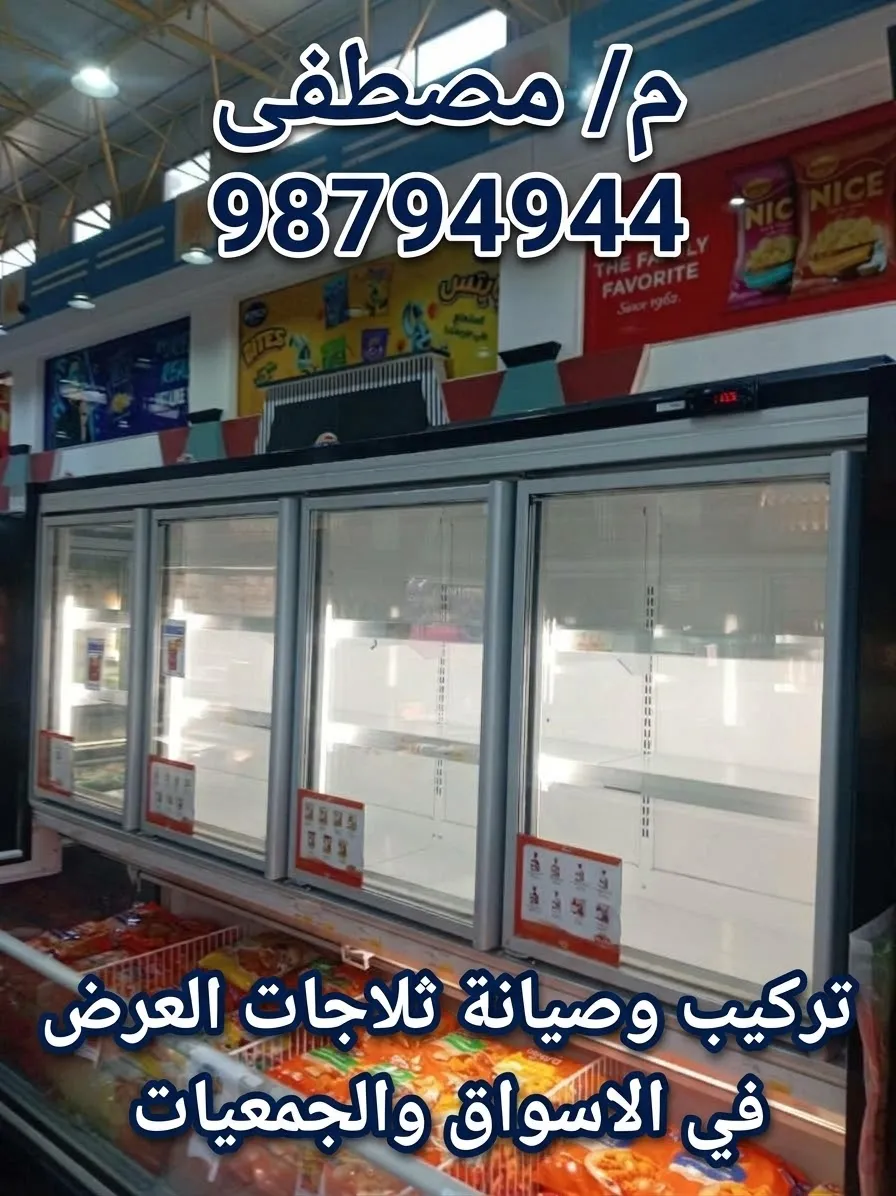
Central Refrigeration Maintenance for Supermarkets in Kuwait
·
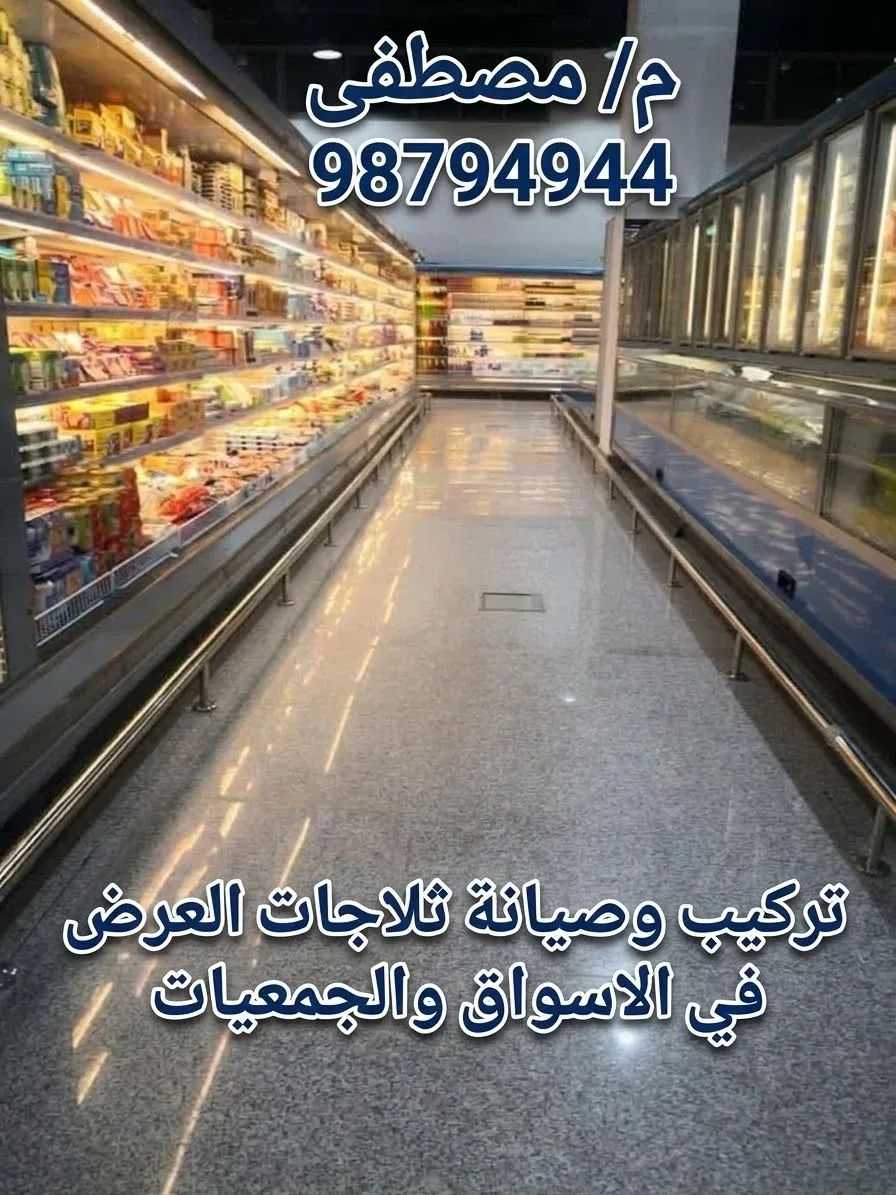
Central Refrigeration Maintenance for Supermarkets and Co-ops
When cooling becomes weak in the dairy section or the temperature rises inside the meat display refrigerators of a cooperative society, the problem may be much bigger than a single malfunctioning refrigerator. This is where central refrigeration system maintenance for supermarkets and cooperative societies becomes essential, as one interconnected system may serve multiple departments through shared refrigeration equipment and control components.
A fault within this system can affect substantial quantities of food inventory and disrupt daily retail operations. Whether the problem involves a compressor rack, refrigeration piping network, or control panel, accurate diagnosis helps identify the underlying cause and avoid unnecessary component replacements.
In this guide from Cold Room and Display Refrigerator Maintenance, we explain the main maintenance procedures, warning signs requiring attention, and how to organize a technical inspection plan that supports system efficiency and stable storage temperatures across supermarket departments.
1. Central Refrigeration Maintenance for Supermarkets in Kuwait: What Is Included?
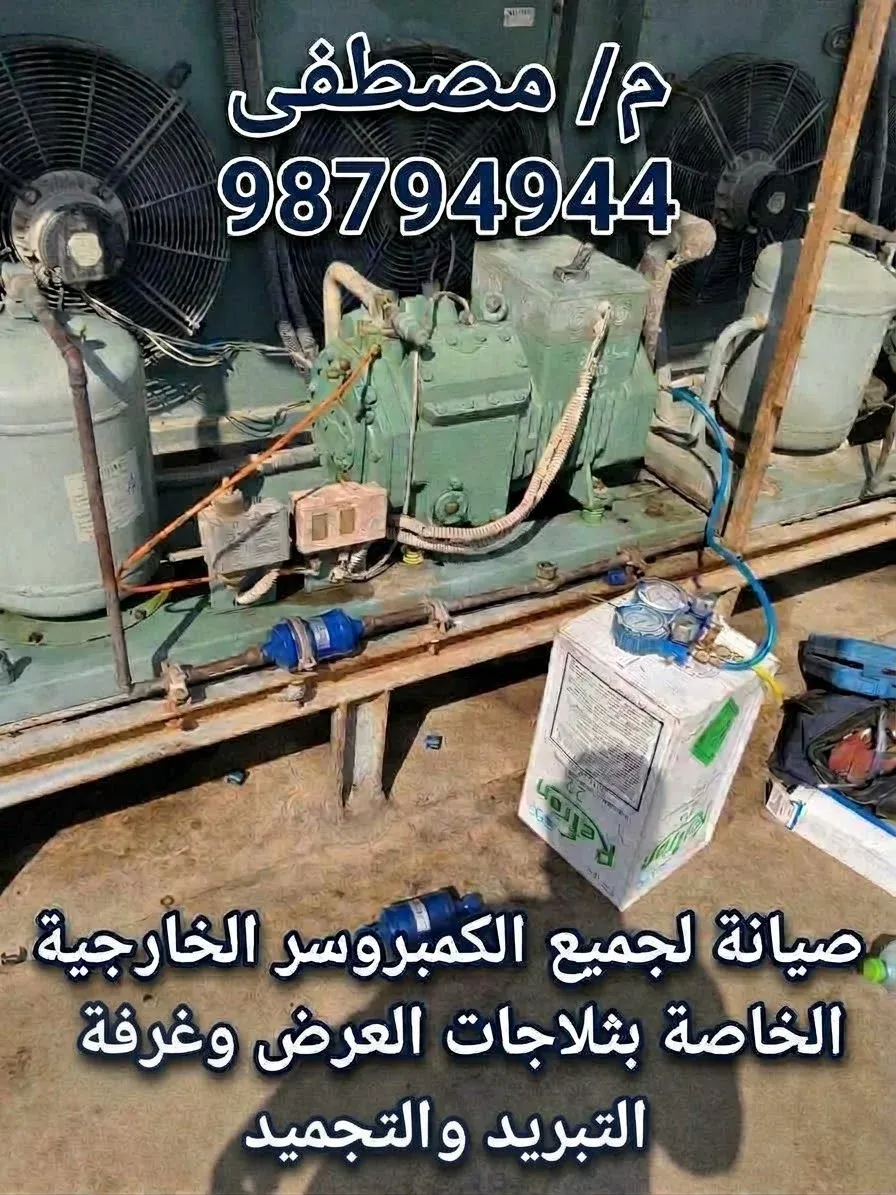
Direct answer: Central refrigeration maintenance for supermarkets includes inspecting compressor racks, condensers, evaporators, piping networks, control valves, sensors, and operating panels. It also involves checking the temperatures of refrigerated display cabinets and storage rooms connected to the system.
The actual scope depends on the refrigeration technology installed at the facility because not every supermarket uses the same system configuration. Some supermarkets operate central compressor racks serving several departments, while others use independent units or a combination of different refrigeration arrangements.
How Does a Central Refrigeration System Work Inside a Supermarket?
In commonly used central refrigeration systems, several refrigerated display cabinets and storage rooms are connected to a shared refrigeration circuit or groups of circuits supplied by common equipment.
The installation may contain multiple compressors that operate according to refrigeration demand, along with condensing equipment, controls, and components that distribute refrigerant to evaporators located in different departments.
Each department requires operating conditions appropriate for the products stored or displayed there. For example, chilled meat storage requirements differ from those of frozen foods or fresh produce sections.
For this reason, central systems may be divided into refrigeration groups operating at different temperature ranges, depending on the facility design and equipment specifications.
Technical guidance from the American Society of Heating, Refrigerating and Air-Conditioning Engineers (ASHRAE) explains that supermarket refrigeration systems range from self-contained units to central refrigeration plants serving multiple display cabinets and storage rooms. Their selection depends on factors including efficiency, cost, and maintenance accessibility.
Which Components Require Periodic Inspection?
-
Compressor racks: These should be inspected for operating conditions, system loads, protective devices, and indications of mechanical or electrical problems.
-
Condensers: Inspection should address ventilation, heat-rejection surfaces, and any obstructions that could affect performance.
-
Evaporators: Maintenance includes checking airflow, fans, coil condition, and defrost systems according to the type of display cabinet or cold room.
-
Refrigeration piping networks: These require inspection for possible leakage indicators, insulation condition, joints, and valves using appropriate technical procedures.
-
Control panels: Sensors, alarms, operating programs, and the equipment's response to control commands should be reviewed.
-
Refrigerated display cabinets: Inspections may include storage temperatures, airflow paths, doors, gaskets, and product-loading arrangements.
-
Storage rooms: These should be evaluated to ensure that refrigeration performance remains appropriate for the products and the facility's receiving and dispatch procedures.
Why Is a Comprehensive Inspection Better Than Treating Every Refrigerator Separately?
If temperatures increase across several display cabinets connected to the same system, the problem may involve a shared component affecting multiple departments.
For example, reduced compressor rack capacity or a central control malfunction may affect the performance of several display units simultaneously.
However, if the temperature problem is limited to one refrigerator, the cause may be local, such as an evaporator fault, control valve problem, or restricted airflow.
This is why understanding the relationship between departments and refrigeration equipment is essential before deciding where to begin repairs.
When Does a Supermarket Refrigeration System Need Maintenance?
Technical inspection becomes necessary when abnormal temperature changes occur, alarms increase, compressors repeatedly shut down, or cooling performance deteriorates.
Preventive maintenance schedules should be established according to manufacturer instructions, equipment condition, operating hours, and site conditions.
There is no single maintenance interval suitable for every central refrigeration system because facility size, operating requirements, and equipment configurations vary.
If several departments are experiencing weak refrigeration, you can contact Cold Room and Display Refrigerator Maintenance and request a technical system inspection to identify the problem before approving repairs.
2. Cooperative Society Refrigeration Maintenance Companies: How to Choose the Right Provider
Cooperative societies require refrigeration maintenance services that account for daily operations, customer movement, and the different refrigerated and frozen food departments within their facilities.
When searching for a cooperative society refrigeration maintenance company, it is therefore better to focus on the technical expertise required to understand the complete system rather than simply finding someone who can repair an individual refrigerator.
A cooperative society may have several departments connected to a central equipment room, while other refrigeration units operate independently. Understanding these arrangements makes it easier to define the inspection scope and avoid addressing only part of a larger problem.
Why Is Cooperative Society Refrigeration Maintenance Different From Small Retail Store Maintenance?
Cooperative societies often operate several types of refrigeration equipment at the same location, ranging from dairy display refrigerators to frozen food cabinets and back-of-store cold rooms.
These systems may operate for extended hours while employees continuously restock products and refrigeration loads change throughout the day.
Maintenance must also account for customers and staff occupying the premises. Work areas and equipment must not be left in conditions that expose people to unnecessary hazards.
For these reasons, maintenance activities should be coordinated with facility management, affected areas should be identified, and appropriate isolation and safety procedures should be implemented.
What Should You Look for in a Refrigeration Maintenance Provider?
It is preferable to choose a provider capable of discussing system specifications and explaining the diagnostic process and proposed work clearly.
You should examine the services offered and whether they are suitable for your equipment, including compressor racks, central controllers, and display refrigerators connected to shared refrigeration networks.
It is also important to ask how faults and completed repairs are documented and how the system is tested after maintenance.
Do not rely solely on promotional descriptions such as "the best company" or "comprehensive warranty" without reviewing the actual service conditions and written technical specifications.
Why Is a Clear Maintenance Report Important?
A maintenance report helps cooperative society management understand what problem was addressed, which components were inspected, and whether any issues require further attention.
Depending on the agreed work, the report may include equipment information, relevant operating readings, repairs performed, and replacement parts used.
If the technician identifies indications of another problem outside the current repair scope, it is helpful to document them rather than ignore them or claim without evidence that they caused the original fault.
Maintaining service records also helps management compare recurring faults and understand the repair history of individual units.
Is a Maintenance Contract Better Than Requesting a Technician After a Breakdown?
The decision depends on the refrigeration system's size, the number of connected appliances, and the importance of uninterrupted operation.
A large cooperative society may benefit from an organized maintenance program that establishes inspection schedules, the responsibilities of both parties, and procedures for reporting faults.
Smaller facilities may prefer different arrangements according to their requirements and budget.
In either case, the contract should clearly identify covered equipment, included work, exclusions, and the procedure for requesting repairs. It should not imply guaranteed immediate response or complete prevention of breakdowns unless specific obligations are explicitly agreed upon.
Why Is Defining Responsibilities Important?
Maintenance of refrigerators connected to the central system may be assigned to one contractor, while electrical infrastructure or building management falls under another provider's responsibility.
If these responsibilities are unclear, resolving a shared problem may be delayed because each party assumes that another contractor is responsible.
It is therefore preferable to specify which activities are included in central refrigeration maintenance and which require coordination with facility management or another contractor.
You can request clarification about the services provided by Cold Room and Display Refrigerator Maintenance before agreeing to inspection or repair work so that both parties understand the requirements.
3. Hypermarket Refrigeration System Maintenance: Managing High Loads and Multiple Departments
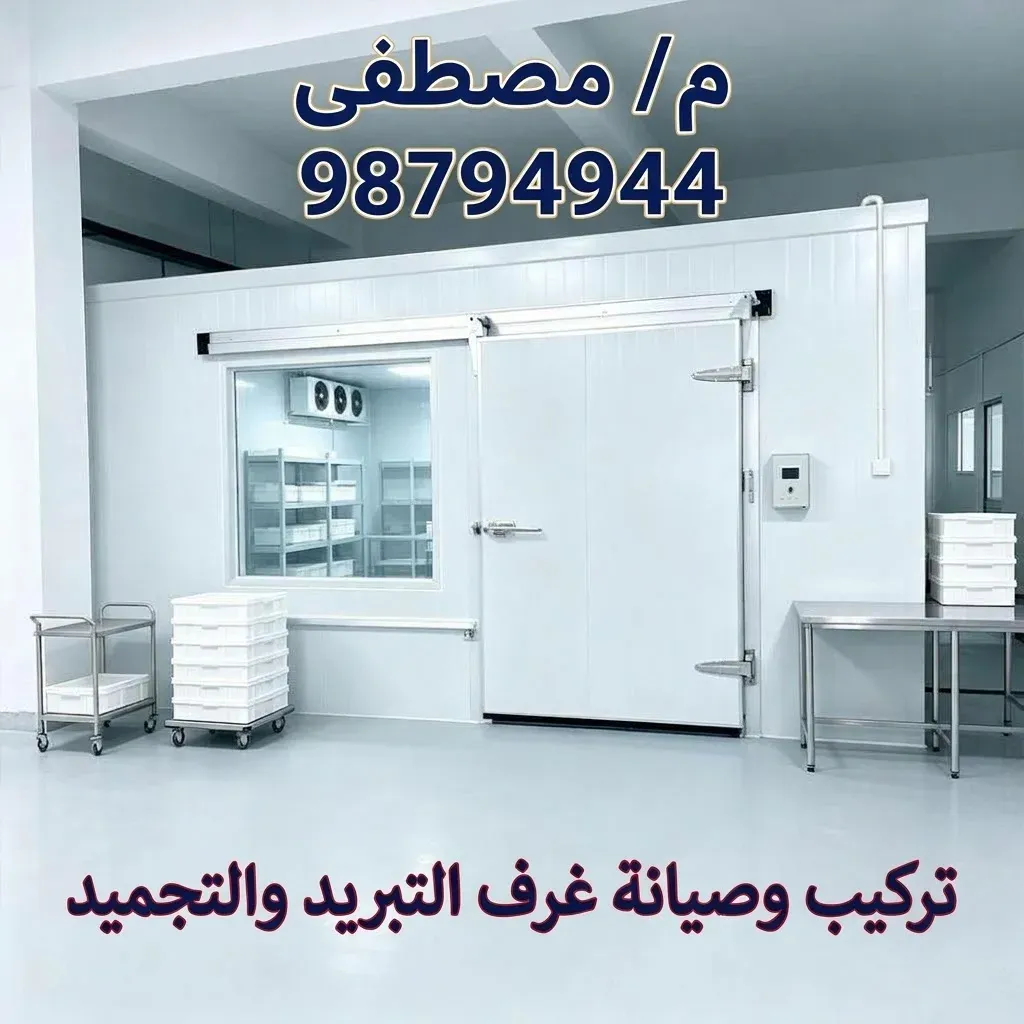
Hypermarkets differ from smaller retail stores in terms of inventory volume, the variety of refrigerated and frozen departments, and the number of appliances that may operate simultaneously.
For this reason, hypermarket refrigeration system maintenance requires an understanding of the relationship between refrigeration equipment, operating loads, and control systems.
A single fault may affect several interconnected display cabinets or storage areas. The priority is to maintain appropriate storage conditions while organizing maintenance in a way that minimizes unnecessary disruption to business operations.
How Changing Refrigeration Loads Affect Central Systems
Refrigeration loads may increase during product deliveries, display cabinet restocking, or periods of higher surrounding temperatures.
Open refrigerated display cabinets can also be affected by air movement, humidity, and the temperature of the retail sales area.
Consequently, evaluating the system using a single reading taken during a quiet operating period is not always sufficient.
The technician may need to review operating records, alarm histories, and equipment behavior under changing loads while considering system design specifications and permitted operating limits.
ASHRAE references explain that the performance of refrigerated food display cabinets is affected by temperature and humidity conditions inside the store, making coordination between refrigeration systems and retail-area air conditioning important in larger facilities.
Maintaining Multi-Compressor Refrigeration Racks
Some central refrigeration systems use compressor racks that start or stop individual compressors according to cooling demand, depending on the control system's design.
This arrangement helps accommodate changing refrigeration loads but requires the compressors and protective devices to respond correctly.
If one compressor repeatedly shuts down, additional demand may be placed on the remaining units, depending on the system configuration and available capacity.
Protective devices must not be bypassed, and the continued operation of some compressors should not automatically be interpreted as proof that the entire refrigeration system is functioning correctly.
Inspecting Condensers in Kuwait's Climate
High surrounding temperatures make condenser condition and ventilation particularly important in commercial refrigeration maintenance.
Dust accumulation, airflow obstructions, or fan failures may reduce the system's ability to reject heat.
However, high condensing pressure does not automatically mean that the condenser is dirty. Other operating conditions may contribute to the problem.
The better approach is to evaluate the equipment using appropriate measurements and compare the results with operating conditions and system specifications before deciding on corrective action.
Monitoring Systems Serving Refrigerated and Frozen Products
A hypermarket may use separate refrigeration groups for chilled and frozen products, with each group operating under conditions suitable for its connected loads.
These circuits should not be confused, and settings intended for one department should not be applied to another without reviewing the technical specifications.
If weak cooling occurs only in the frozen food section, the diagnostic process may differ from that required for a problem affecting every dairy display cabinet.
Some modern refrigeration installations also use different arrangements and technologies from conventional compressor rack systems. The refrigeration system must therefore be identified before selecting maintenance procedures.
Organizing Maintenance Work During Hypermarket Operations
Technical inspection may require access to equipment rooms, rooftops, or areas behind refrigerated display cabinets.
Visits should therefore be coordinated with operations management, and any affected refrigeration units should be identified before work begins.
If a repair requires shutting down part of the system, the potential effects on connected departments must be assessed beforehand.
Customer and employee safety must also be considered, and maintenance areas should be isolated when necessary.
Will Restarting All the Refrigeration Units Solve the Problem?
Randomly restarting equipment is not an appropriate response to central refrigeration faults, particularly when alarms or repeated protective shutdowns are present.
The symptoms may disappear temporarily while the underlying cause remains unresolved.
It is preferable to review fault histories and operating readings and identify the reason for the shutdown before approving any restarting procedure.
The objective of maintenance is to correct the problem and verify system performance, not merely clear an alarm from the control screen.
4. Commercial Central Refrigeration Technician: What Is Inspected in the Equipment Room?
Having a commercial central refrigeration technician who understands the specific system configuration is important because an equipment room may contain several interconnected components. An unsuitable adjustment to one component can affect the performance of other parts of the installation.
A technical inspection should begin with an understanding of the system design and operating method, followed by a review of available data and selection of the tests required for the reported fault or preventive maintenance program.
The same inspection procedures should not automatically be applied to every central refrigeration system. Refrigerant type, circuit configuration, protective devices, and control equipment can differ significantly between facilities.
Inspecting Compressors and Operating Conditions
Compressors require inspection of their operating condition and relevant pressure, temperature, and electrical indicators, following the equipment specifications and appropriate safety procedures.
Some problems may become apparent through repeated shutdowns, abnormal temperature increases, or operating behavior that differs from other compressors within the same rack.
However, these symptoms are not sufficient to conclude that the compressor is defective. The problem may involve another component affecting its operating conditions.
Measurements should therefore be considered together rather than treated as independent findings. Replacing a compressor based on a single reading may lead to unnecessary expenses without resolving the original problem.
Checking Oil Levels and Oil Management Systems
Some central refrigeration racks contain dedicated components that manage compressor oil distribution and return according to the system design.
A fault affecting these components may interfere with equipment operation, but diagnosis must take account of the particular system configuration and technical specifications.
Where applicable, inspection may include checking oil level indicators and components associated with oil management.
Oil should never be added or replaced randomly because different compressors and refrigerants have specific lubricant requirements.
Repeatedly low oil levels may also indicate another problem requiring investigation rather than simply topping up the oil.
Inspecting Safety Valves and Protective Devices
Commercial refrigeration systems contain different protective arrangements depending on their design, refrigerant, and operating conditions.
These may include electrical protection devices, pressure and temperature sensors, and other safety equipment.
Such components are not optional accessories that can be bypassed whenever a problem occurs. They serve important functions in protecting equipment and people.
Every protective shutdown or alarm should therefore be treated as a condition requiring diagnosis rather than an obstacle to be disabled so that cooling can continue.
Inspection or replacement of safety-related components must be carried out by qualified specialists according to manufacturer requirements and applicable regulations.
Checking Refrigeration Pipes and Insulation
Refrigeration piping may extend from the main equipment room to multiple supermarket departments, passing through ceilings and service areas.
The technician should examine visible conditions affecting pipes, joints, and insulation, particularly when moisture damage or indications of leakage are present.
However, condensation on a pipe does not necessarily mean that refrigerant is leaking. It may be associated with damaged insulation or surrounding humidity conditions.
A suspected refrigerant leak requires procedures suitable for the specific substance used. Different refrigerants may present different hazards and must not all be handled in the same way.
Inspecting Electrical Control Panels
The equipment room may contain electrical panels supplying and controlling compressor racks, fans, valves, and protective devices.
Qualified personnel should inspect these panels while applying suitable isolation and energy-control procedures before work that requires electrical access.
Some failures may involve damaged connections, faulty control components, or irregularities in the power supply.
Repeatedly resetting circuit breakers without identifying the underlying problem is not recommended. Electrical panels should also not be opened by unqualified personnel.
When Is Replacing a Component Necessary?
Replacement is justified when technical inspection confirms that a component is defective or no longer meets operating requirements and repair is unsuitable or impractical.
However, some problems originate in the control system or surrounding conditions and can be corrected without replacing major equipment.
The technician should explain why a component needs replacement, its specifications, and its compatibility with the refrigeration system.
Operation should also be tested after the work is completed.
This approach connects maintenance expenses to a clear technical diagnosis rather than replacing components through trial and error.
5. Supermarket Department Refrigeration Network Maintenance: Finding the Source of Weak Cooling
Maintenance of refrigeration networks serving supermarket departments requires an understanding of how cooling is distributed among display cabinets and storage rooms.
A problem may originate in a particular branch of the refrigeration network or in a shared component serving several appliances.
For example, if the dairy department experiences weak cooling while the frozen food section operates normally, the fault does not necessarily involve the entire central refrigeration plant.
However, if temperatures rise in several departments connected to the same refrigeration rack, shared components may need to be inspected before examining each display cabinet separately.
What Is a Supermarket Refrigeration Network?
The network includes piping and associated components that transport refrigerant between the main equipment and connected evaporators, according to the system configuration.
It may contain suction and liquid lines, control valves, isolation valves, insulation, and other components depending on the technology used.
Not every central refrigeration system uses the same network arrangement. Some systems contain different circuit configurations or use indirect refrigeration technology.
For this reason, the actual installation diagrams should be reviewed before selecting inspection points or making modifications.
Why Do Some Departments Cool Properly While Others Do Not?
A problem may be restricted to one refrigeration group because of a faulty valve, sensor, evaporator, or control circuit.
In other situations, several units may be affected by operating pressure problems, reduced compressor rack capacity, or a fault involving a shared component.
Product-loading arrangements can also affect the performance of individual display cabinets even when the main refrigeration network is operating correctly.
The technician therefore needs to compare affected departments with functioning departments and identify the components they share.
How Is Refrigeration Distribution Between Departments Evaluated?
The process usually begins by reviewing the refrigeration system diagram and identifying which equipment group serves each department.
Temperatures, alarms, and available operating data can then be examined, followed by technical measurements appropriate for the equipment.
Inspection may involve valves, evaporators, sensors, piping, and other components associated with the affected branch.
The objective is to locate the fault as accurately as possible and avoid unnecessarily shutting down parts of the system that are operating correctly.
Can Damaged Pipe Insulation Affect Network Performance?
Damaged insulation may increase heat gain or allow condensation and moisture accumulation on certain pipes, depending on their operating temperatures and surrounding conditions.
Employees may notice water stains or deteriorated insulation in service areas or near refrigerated cabinets.
However, the source of moisture must be identified before corrective work begins because water leakage, condensation, and refrigerant leakage are different problems.
Insulation materials and installation methods should also be selected according to pipe requirements, operating temperatures, and environmental conditions.
When Does a Refrigeration Network Need Leak Detection?
If technical evidence suggests refrigerant loss or abnormal refrigeration circuit performance, specialized leak detection may be necessary.
However, weak cooling alone does not prove that refrigerant is escaping because other problems can produce similar symptoms.
Detection and repair methods must be suitable for the refrigerant involved, with appropriate safety precautions.
The source of a confirmed leak should be corrected, and circuit integrity should be verified before the required procedures for returning the system to operation are completed.
Repeatedly adding refrigerant without correcting the underlying problem is not an appropriate maintenance strategy.
How Can Maintenance Disruption to Unaffected Departments Be Reduced?
With a shared refrigeration network, the extent of the affected section should be established before beginning work that requires equipment shutdown or isolation.
Some system designs may allow particular sections to be isolated independently, while others require a more extensive interruption.
It should never be assumed that a department can be disconnected independently without examining the system diagram, isolation valves, and safety requirements.
Maintenance activities should also be coordinated with supermarket management to protect affected products and select suitable working arrangements.
If several departments are experiencing weak cooling, request an inspection of their connected refrigeration network before approving compressor replacement or other expensive work without a clear diagnosis.
6. Repairing Cooperative Society Refrigeration System Faults: From Alarms to Root Causes
Repairing refrigeration system faults in cooperative societies requires an organized diagnostic approach because a single alarm may indicate a problem with an individual component or reflect a wider disturbance within the refrigeration system.
One mistake that can increase maintenance costs is assuming that every temperature increase results from low refrigerant levels or a defective compressor.
It is better to connect the symptoms with operating data, affected departments, and the history of the problem before making repair decisions.
What Are the Most Common Types of Faults in Cooperative Society Refrigeration Systems?
|
Visible fault or symptom |
Potential causes requiring inspection |
|
Rising temperatures across several departments |
Compressor rack capacity, shared controls, or condensing conditions |
|
One compressor stops operating |
Starting circuit, protective devices, or mechanical failure |
|
Unstable temperatures in one department |
Sensors, valves, evaporators, or airflow |
|
Abnormal ice accumulation |
Defrost operation, moisture infiltration, or operating conditions |
|
Repeated pressure alarms |
Several potential causes associated with circuit and operating conditions |
|
Excessive moisture around display cabinets |
Store conditions, condensation, insulation, or drainage |
|
Fans stop operating |
Electrical supply, controls, fan motors, or mechanical obstructions |
This table describes possible causes that may require inspection. It does not provide a final diagnosis for any particular fault.
Faults Appearing After a Large Product Delivery
Cooperative society management may notice temporary temperature increases in some refrigerated sections after receiving substantial quantities of products.
However, it is important to determine whether the goods arrived at their required storage temperature or were warmer than the intended conditions.
Introducing warmer products increases the refrigeration load, and the effect depends on inventory quantities and the rate at which the products enter storage.
If the temperature increase continues abnormally or exceeds acceptable limits, it should not be dismissed as a routine occurrence without evaluation.
It is also important to remember that refrigerated display cabinets are primarily designed to maintain products at suitable temperatures rather than necessarily cooling large deliveries of warm goods rapidly.
Problems Appearing After Previous Maintenance Work
If a problem begins after modifications, component replacement, or changes to operating settings, the recent maintenance history should be reviewed.
The timing may suggest a possible relationship, but it does not automatically prove that the earlier work caused the failure.
The technician needs to examine what was changed, assess the system's response, and review actual operating measurements before reaching a conclusion.
Previous settings should not be restored randomly without understanding why they were changed and what the current operating requirements are.
A Recurring Fault Despite Replacing Components
If the same fault continues after a component has been replaced, the underlying cause may not have been addressed, or another factor may be affecting the replacement component.
For example, repeated component shutdowns may result from unsuitable operating conditions rather than repeated defects in the component itself.
Reviewing repair records, alarm histories, and previous measurements can therefore be valuable.
Continuing to replace the same component without investigating why the problem returns is unlikely to represent an effective maintenance approach.
When Is It Necessary to Shut Down Part of the Refrigeration System?
Some faults require equipment isolation or shutting down part of the refrigeration installation for safety reasons or to complete repairs that cannot be performed during operation.
This decision should be made by a qualified specialist according to the system design and the nature of the problem.
Before shutting equipment down, the possible effects on connected departments should be evaluated, and arrangements should be made to maintain suitable storage conditions for affected products.
Systems using refrigerants with particular hazards require appropriate safety procedures, and unqualified personnel must not attempt to intervene.
How Can Management Verify That the Repair Was Successful?
Completion should not be judged solely by whether the alarm message disappears.
The condition of the equipment should be checked after repair, appropriate operating indicators should be reviewed, and affected departments should be monitored.
It is also preferable to document the components repaired or replaced and any issues requiring further attention.
Some faults may require monitoring under different refrigeration loads because a successful limited test does not necessarily prove that the entire system will perform equally well throughout normal operating hours.
7. Central Refrigeration Control Unit Maintenance: Preventing Incorrect Alarms and Unstable Operation
Control units play an important role in central refrigeration systems. They regulate how equipment responds to cooling demand, receive sensor readings, and display certain operating alarms.
For this reason, central refrigeration control unit maintenance is an essential part of system inspection, particularly when temperatures vary between departments or compressors repeatedly shut down without an obvious explanation.
However, an alarm appearing on a controller does not necessarily mean the control unit itself is defective. The alarm may indicate an actual fault affecting connected equipment or sensors.
What Does the Central Control Panel Do?
The functions of a control panel differ according to the refrigeration system's configuration and design.
Some panels manage compressor rack operation, fans, and valves, while others are responsible for temperature monitoring, defrost operation, or recording alarms.
More complex refrigeration systems may have multiple control units exchanging operating information through a communication network.
The technician must therefore understand the function of each controller and how it interacts with other components before changing its settings.
Danfoss provides technical guidance on control units used in food retail refrigeration, including operation, diagnosis, and common issues affecting electronic refrigeration control systems.
Does a Sensor Reading Represent the Actual Product Temperature?
Not always.
Some sensors measure air temperature at a particular location inside a refrigerated display cabinet or cold room. Others perform functions such as monitoring evaporator conditions or controlling defrost operation.
The actual temperature of a product may differ from an air sensor reading because of the sensor's location, airflow conditions, and the thermal characteristics of the product.
Consequently, a single controller reading should not be used to determine whether every stored product remains safe, especially following a refrigeration failure.
If sensor accuracy is in doubt, the technician should verify the reading using a suitable measurement method and review the sensor's installation position and intended function.
What Causes Repeated Refrigeration Alarms?
Alarms may result from actual temperature increases, abnormal pressure conditions, sensor malfunctions, or communication problems between control units.
In some cases, alarm thresholds or delay settings may be unsuitable for the operating application. However, this requires evaluation according to the system design.
Alarms should not simply be disabled or their limits increased randomly to prevent warning messages from appearing.
Doing so could conceal a problem affecting food storage conditions or equipment safety.
The preferred approach is to identify why the alarm occurred and compare it with operating data before deciding whether any settings need adjustment.
Why Defrost Programs Need Regular Review
Certain evaporators require periodic defrost cycles to remove ice that accumulates during normal operation.
Defrost methods and operating arrangements vary according to equipment type and system conditions.
Unsuitable defrost cycles may contribute to excessive ice accumulation or affect temperatures.
However, defrost schedules or durations should not be changed merely because ice is visible. The underlying problem may involve sensors, airflow, or moisture infiltration.
Refrigerated and frozen storage systems may also use different defrost control methods, making it necessary to review the specifications of each circuit.
How Do Control Systems Affect Electricity Consumption?
The way compressors, fans, and other components operate influences electricity consumption, although the extent of the effect depends on system design and actual refrigeration loads.
Appropriate operating settings may help avoid certain unnecessary operating patterns while maintaining the required temperatures.
However, specific electricity savings should not be promised solely because control settings have been adjusted without reliable measurements and comparisons.
Reducing energy use should also never compromise food safety or cause the refrigeration system to operate outside permitted limits.
When Should a Control Unit Be Replaced?
Replacement may be necessary if testing confirms that the control unit itself is defective or no longer functions appropriately and repair is unsuitable.
Before reaching that decision, the technician should review electrical supply, wiring, sensors, communication links, and connected components.
Some faults that appear to involve the display or control panel may actually originate elsewhere.
When replacing a controller, its compatibility with the existing refrigeration system must be confirmed, and it should be configured and tested according to manufacturer requirements.
Documenting the approved settings and changes is also preferable because it can make future maintenance easier.
8. Refrigerated Food Display Shelf Inspections: Maintaining Suitable Product Temperatures
Inspecting refrigeration systems serving food display shelves requires a different approach from inspecting the central equipment room.
Cooling performance at the product level is affected by conditions within the display cabinet itself and the environment surrounding it.
Even if the central refrigeration plant is operating correctly, one department may experience rising temperatures because of a local airflow problem, sensor fault, or unsuitable product arrangement.
For this reason, technical inspections should combine an assessment of the main refrigeration network with examination of connected display cabinets and shelving areas.
Inspecting Dairy Display Refrigerators
Dairy display refrigerators must maintain storage conditions suitable for the products being displayed while accounting for the cabinet design and airflow arrangement.
Employees may notice temperature differences between shelves or display areas, particularly when packages obstruct air circulation.
Inspection should therefore consider fan condition, airflow paths, sensors, and product loading according to the refrigerator's specifications.
It is also important to ensure that products enter the display cabinet at the required storage temperature.
Refrigerated display equipment should not automatically be treated as a substitute for equipment specifically designed to cool large quantities of warm products.
Inspecting Refrigerated Meat Display Cabinets
Meat products require appropriate storage conditions, making actual product temperature monitoring important alongside cabinet air temperature readings.
The arrangement of packages, overcrowded shelves, and restricted airflow can affect display performance.
Faults in local components may also cause temperature variations in one part of a cabinet while other areas continue operating normally.
Inspection should therefore reflect the type of equipment and the products being displayed.
A single temperature reading from a display screen should not be considered sufficient evidence that every product is being stored safely.
Inspecting Frozen Food Display Cabinets
Freezer systems differ from positive-temperature refrigeration units in their operating conditions, defrost requirements, and certain control arrangements.
Possible faults include rising temperatures, abnormal ice accumulation, restricted airflow, and problems with doors or gaskets.
If frozen products have been exposed to higher temperatures, their condition should be evaluated according to the product type, actual temperature, and exposure history rather than simply restarting the freezer.
Products should also not be stacked beyond the manufacturer's specified loading limits.
How Supermarket Air Conditioning Affects Display Refrigerators
The performance of certain open refrigerated display cabinets may be affected by sales-area temperature, humidity, and air movement from the building's air conditioning system.
Direct air currents or unsuitable humidity conditions can interfere with the air curtain of some display units.
This means that complaints about weak cooling in one department may sometimes require reviewing the surrounding conditions rather than examining only the refrigeration circuit.
ASHRAE references emphasize the importance of coordinating store air conditioning with refrigerated display cabinets because air movement, temperature, and humidity can affect their operating conditions.
Common Product-Loading Mistakes Inside Display Shelves
One mistake that can affect refrigeration performance is positioning cartons or packages directly in front of airflow openings or exceeding the loading limits specified by the manufacturer.
This can alter the distribution of cold air and create areas within the display cabinet that operate at different temperatures.
Employees should therefore understand appropriate product-loading arrangements and avoid blocking supply and return air openings.
Visible empty space should not automatically be treated as permission to add more products if doing so would violate the cabinet's intended loading design.
How Should Supermarket Department Inspections Be Organized?
A register can be created to record the type of each display cabinet, its location, the department it serves, and any operating observations.
It is useful to monitor alarms, temperature readings, and recurring problems according to the facility's procedures.
A distinction should also be made between faults affecting an individual cabinet and symptoms suggesting a shared problem involving several units.
This information helps the maintenance provider focus inspections on the appropriate components and establish priorities.
Is Cleaning Display Refrigerators Enough for Maintenance?
Cleaning is important when performed according to manufacturer instructions, but it is not a substitute for technical inspection.
A display cabinet may also require examination of sensors, fans, drainage, defrost operation, connections, and its relationship with the central refrigeration system.
Cleaning alone should not be assumed to correct every case of weak cooling.
The appropriate approach is to identify the cause of the problem, perform the necessary work, and verify the unit's condition afterward.
9. Central Refrigeration Maintenance Contractors for Commercial Complexes: Procedures and Costs
When searching for a central refrigeration maintenance contractor for commercial complexes, facility management needs to understand the scope of service, the inspection process, and how maintenance costs are calculated.
This becomes particularly important when the refrigeration system contains several compressor racks and networks serving multiple departments.
Central refrigeration maintenance costs depend on more than the number of refrigerators. The type of system, equipment condition, installation size, and required work all influence the overall expense.
The quotation should therefore clearly describe the service, whether the facility requires a specific fault repair or an organized preventive maintenance program.
Step One: Identify All Equipment Connected to the System
Maintenance planning begins by identifying refrigeration racks, compressors, condensers, controllers, and the departments connected to each equipment group.
System diagrams and previous maintenance records are useful when available.
This equipment inventory can help establish inspection priorities and determine which components require attention, particularly in large facilities.
It also prevents confusion between standalone units and equipment connected to a shared central refrigeration network.
Step Two: Review Operating Conditions and Alarm Histories
Before deciding which repairs are necessary, the technician needs information about the current symptoms and any recurring problems.
The review may include temperatures, alarms, compressor rack behavior, and available operating data.
A complaint involving one department should not be evaluated in isolation when the same refrigeration system serves several departments.
Comparing affected areas with those operating normally may help determine the scope of the problem.
Step Three: Perform the Appropriate Technical Inspection
The inspection scope depends on the refrigeration technology and the nature of the fault.
It may involve equipment room components, piping networks, evaporators, sensors, or control units.
Work involving electricity, refrigeration circuits, and systems using refrigerants with particular hazards must be carried out by qualified specialists following appropriate safety procedures.
Facility management should also be consulted if an inspection or repair requires shutting down part of the refrigeration system.
Step Four: Provide a Report Explaining the Required Work
After diagnosing the problem, the maintenance provider should explain the fault, the proposed corrective action, and the components requiring repair or replacement.
Necessary repairs should be clearly distinguished from observations that can be addressed during later preventive maintenance.
Some preventive activities may be useful without being directly responsible for the current malfunction.
Likewise, discovering a defective component does not automatically mean that an entire equipment group needs replacement.
Step Five: Complete Maintenance and Test the System
Once the proposed work has been approved, repairs should be performed according to equipment requirements and suitable safety procedures.
The affected components should then be checked to confirm that the problem has been addressed.
Relevant operating indicators should be monitored according to the system type.
Some faults require testing under different operating loads, especially when symptoms occur intermittently or during periods of increased demand.
The results should preferably be documented, along with any observations or tasks requiring further attention.
What Factors Determine Central Refrigeration Maintenance Costs?
Maintenance expenses differ between facilities, and an accurate fixed price cannot be determined without understanding the system and required work.
Important factors include:
-
Number of refrigeration racks: Inspection requirements may increase with the number of compressor racks and connected equipment.
-
Refrigeration system type: Procedures differ between conventional systems, certain modern commercial refrigeration installations, and circuits using different refrigerants.
-
Nature of the fault: Inspecting a sensor or control problem may require different work from repairing a mechanical fault or refrigeration piping network.
-
Replacement parts: Costs depend on technical specifications, compatibility, and availability. One component should not be assumed suitable for every system.
-
Equipment accessibility: Units installed on rooftops, inside equipment rooms, or in elevated service areas may require different working arrangements.
-
Inspection scope: Examining one department differs from evaluating the entire refrigeration system and preparing a detailed report.
-
Service timing: Charges for after-hours or urgent visits should be confirmed if these services are available.
-
Additional testing and repairs: Certain faults may require specialized tests or further visits depending on the condition of the equipment.
Can a Preventive Maintenance Contract Reduce Repair Costs?
An appropriate maintenance program may help identify some problems earlier and organize ongoing inspections.
However, it cannot guarantee the prevention of every breakdown or a specific amount of financial savings.
Its value depends on the system's size, condition, operating hours, service costs, and the characteristics of stored inventory.
The cost of the maintenance program should therefore be compared with the work included and the facility's operational objectives.
A contract should not promise that the system will never stop operating or that a technician will arrive within a specific period unless those obligations are clearly defined and realistically achievable.
What Should Be Clearly Included in a Maintenance Quotation?
|
Item |
Details that should be clarified |
|
Equipment coverage |
Refrigeration racks, networks, and departments included |
|
Service type |
Preventive inspection, fault repair, or periodic maintenance |
|
Visit schedules |
Agreed inspection timetable and coordination arrangements |
|
Replacement parts |
Components included in the price and those charged separately |
|
Repair work |
Scope of included and excluded activities |
|
Fault response |
Reporting procedure and actual service availability |
|
Maintenance reports |
Information and observations to be documented |
|
Warranty |
Applicable conditions, coverage, and exclusions, if any |
Why Contact Cold Room and Display Refrigerator Maintenance?
If you manage a supermarket or cooperative society, a useful starting point is to provide information about the refrigeration system, the affected departments, and the problem requiring inspection.
You can contact Cold Room and Display Refrigerator Maintenance to inquire about a suitable service, discuss the work involved, and confirm whether an on-site assessment is available.
The diagnostic process, required work, costs, and follow-up conditions should be agreed upon beforehand.
The value of choosing a maintenance provider should be judged by clear technical specifications and an organized approach to diagnosing and repairing faults, not simply promotional claims about speed or quality.
10. Requesting Cooperative Society Refrigeration System Maintenance: From Inspection to Follow-Up
When requesting maintenance for a cooperative society refrigeration system, it is useful to provide a clear description of the fault and identify the equipment involved from the beginning.
This is particularly important when several departments are affected or multiple alarms appear to be connected to the same system.
A service request identifying the equipment and departments involved helps organize the inspection.
A general description such as "the refrigeration is weak" may require additional information before the technician can determine where to begin.
The purpose of the service request is to obtain an accurate diagnosis and appropriate repair while maintaining food safety and minimizing disruption to the facility wherever possible.
Prepare the System Information Before Requesting Maintenance
It is preferable to gather available information about the cooperative society's location, refrigeration system type, and affected departments.
If the facility has a central control panel, visible alarms and their appearance times can be recorded without changing settings or interfering with the equipment.
You should also explain whether the problem began suddenly or developed gradually over several days.
Information about recent maintenance and recurring faults can be helpful when service records are available.
Determine Whether the Problem Is Widespread or Limited to One Department
If several display cabinets are experiencing temperature increases simultaneously, identify the affected departments and whether they share refrigeration equipment, based on available information.
If the problem affects only one refrigerator or storage area, provide its location and the types of products stored there.
These details help establish the extent of the problem, although they do not replace a technical inspection.
Other refrigeration equipment should not be shut down, and central system settings should not be modified in an attempt to identify the fault without the involvement of a qualified specialist.
Protect Products While Awaiting Inspection
If the fault affects food storage temperatures, the facility should follow its established procedures for temperature monitoring and inventory protection.
Some products may be transferred to functioning refrigeration units if sufficient capacity is available and the equipment can maintain the required storage conditions.
However, the appearance or smell of food should not be used to determine whether products remain safe after exposure to inappropriate temperatures.
Affected inventory should be evaluated according to food type, exposure duration, available temperature records, and applicable food safety requirements.
Review the Diagnostic Report Before Approving Repairs
After the inspection, request an explanation of the problem, affected components, and recommended corrective action.
If a replacement part is necessary, its specifications and compatibility with the refrigeration system should be clarified.
If the problem involves control settings or operating conditions, the technician should explain the proposed adjustments and why they are required.
It is also preferable to ensure that additional work requires clear approval before it is performed.
Monitor Department Performance After Maintenance
After repairs are completed, the affected departments should be checked to verify that their temperatures are returning to the required operating conditions.
Some situations may require continued monitoring over an appropriate period, particularly when faults appear under high refrigeration loads or occur intermittently.
The repair record, inspection findings, and any recommendations for follow-up should also be retained.
This information can assist cooperative society management if the problem returns and provide useful context for future maintenance.
How Can You Request the Service?
You can contact Cold Room and Display Refrigerator Maintenance and provide the facility's location, refrigeration system type, affected departments, and a description of the problem.
Ask about technical inspection availability, service coverage, and costs before agreeing to the work.
If the malfunction has exposed products to rising temperatures, explain this when submitting the request so that the provider understands the facility's situation and the risks associated with refrigeration interruption.
Would you like your central refrigeration system inspected before faults become more serious? Contact Cold Room and Display Refrigerator Maintenance to discuss the equipment condition and the possibility of arranging a suitable inspection for your supermarket or cooperative society.
Frequently Asked Questions About Central Refrigeration Maintenance for Supermarkets and Cooperative Societies
What Does Central Refrigeration Maintenance for Supermarkets in Kuwait Include?
It includes inspecting compressor racks, condensers, evaporators, refrigeration piping networks, sensors, and control panels, as well as reviewing the performance of connected display refrigerators and storage rooms.
The actual scope depends on the type and condition of the system, existing faults, and the agreed maintenance requirements.
Why Do Several Refrigerators in a Cooperative Society Become Warm at the Same Time?
The cause may involve a shared component, such as a compressor rack, control system, or part of the main refrigeration network.
However, rising temperatures in several cabinets do not automatically prove that a single central component has failed.
The affected appliances and their connections must be identified and inspected before determining the appropriate repair.
Does Central Refrigeration Maintenance Require Shutting Down Every Supermarket Refrigerator?
Not always.
Some maintenance activities can be performed without completely shutting down the system, while others require individual units or certain sections to be isolated for technical or safety reasons.
The decision depends on the system design, the type of repair, and the arrangements required to protect stored products.
How Much Does Central Refrigeration Maintenance Cost for Cooperative Societies in Kuwait?
Costs vary according to system size, the number of connected units, fault type, replacement parts, inspection scope, and required work.
An accurate price cannot be determined without understanding the equipment's condition.
The best approach is to request a quotation identifying inspection charges, repairs, replacement parts, and included services.
How Can I Request Refrigeration System Maintenance for a Cooperative Society?
Prepare information about the facility's location, refrigeration system, affected departments, temperature readings, and any available alarm messages.
You can then contact Cold Room and Display Refrigerator Maintenance and inquire about arranging a technical inspection according to availability.
The work scope, cost, and service conditions should be agreed upon before repairs begin.
Conclusion: Central Refrigeration Maintenance for Supermarkets and Cooperative Societies
Supermarkets and cooperative societies rely on refrigeration systems serving multiple departments and handling products with different storage temperatures and preservation requirements.
For this reason, central refrigeration maintenance for supermarkets and cooperative societies requires a diagnostic approach that accounts for the relationship between compressor racks, refrigeration networks, control units, refrigerated display cabinets, and cold storage rooms.
Throughout this guide, we have explained the importance of organized technical inspections, how to respond when weak cooling affects several departments, and why compressor racks, condensers, and evaporators require appropriate maintenance.
We have also covered refrigeration network inspections, central control systems, and refrigerated food display shelves.
In addition, we have discussed the factors affecting maintenance costs and the steps facility management can take to request suitable services and monitor repair results.
Do not wait until an entire department loses refrigeration if repeated alarms or abnormal temperature changes begin appearing.
Reviewing early warning signs may help identify certain problems before they become more serious, while continued food temperature monitoring remains essential.
Do You Manage a Supermarket or Cooperative Society That Needs Central Refrigeration Maintenance?
Contact Cold Room and Display Refrigerator Maintenance and explain the refrigeration system type, facility location, and departments requiring inspection or repair.
You can inquire about an on-site assessment and request a detailed quotation for the required work.
Maintaining awareness of your refrigeration system's condition helps you make better-informed maintenance decisions, preserve suitable food storage conditions, and organize department operations in a way that matches your facility's requirements.