Display Fridge Maintenance for Supermarkets in Kuwait
·
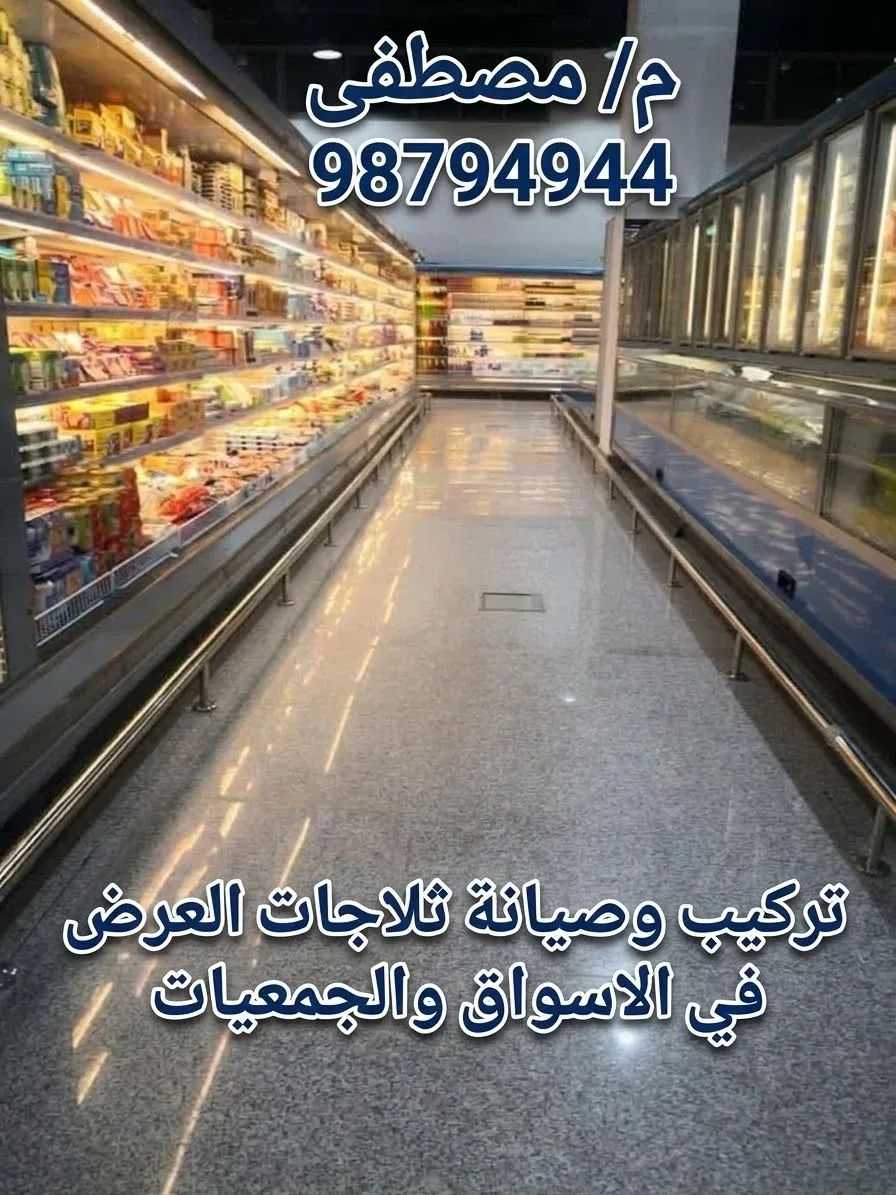
Display Refrigerator Maintenance for Grocery Stores and Supermarkets in Kuwait
If you own a grocery store or supermarket in Kuwait, you know that a display refrigerator is more than just equipment used to chill beverages or dairy products. It is an essential part of your daily sales operations and helps maintain the required storage conditions for your inventory.
When you notice that a refrigerator is no longer cooling as effectively as before, condensation is forming on its glass doors, or the compressor is running continuously, you need to identify the cause before your products are affected.
Display refrigerator maintenance for grocery stores and supermarkets involves understanding common faults, from weak cooling and damaged door gaskets to fan malfunctions, faulty temperature sensors, and water leakage.
In this guide from Cold Room and Display Refrigerator Maintenance, we explain when you need a commercial refrigeration technician, what a technical inspection includes, how to choose the appropriate maintenance service, and how to avoid replacing components unnecessarily.
We also explain repair costs and the steps involved in requesting display refrigerator maintenance services in Kuwait.
1. Display Refrigerator Maintenance for Grocery Stores in Kuwait: What Does the Service Include?
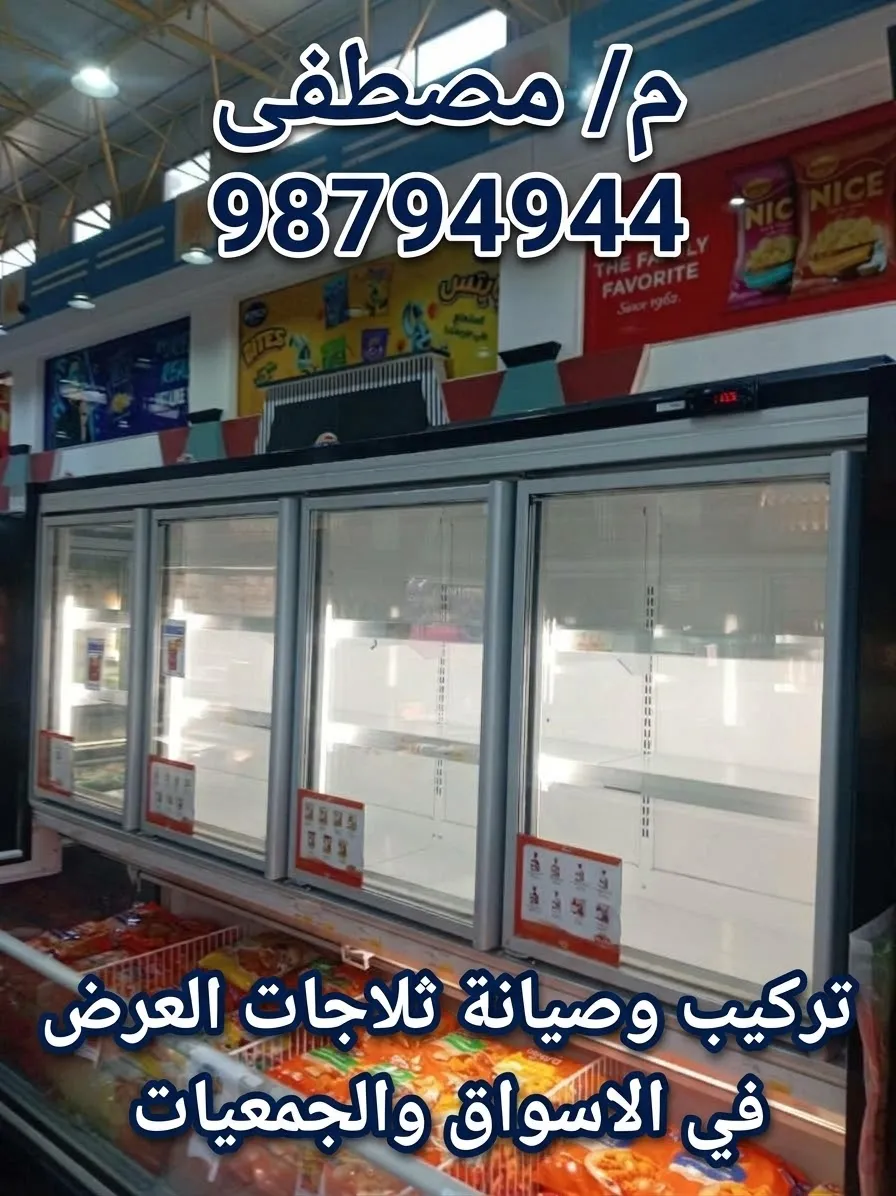
Direct answer: Display refrigerator maintenance for grocery stores in Kuwait includes inspecting refrigeration temperatures, the compressor, condenser, evaporator, fans, temperature sensors, refrigerator doors, drainage systems, and electrical connections. The required repair is determined after identifying the cause of the malfunction, the refrigerator type, and its operating conditions.
A grocery store that depends on one beverage refrigerator has different requirements from a supermarket containing several display refrigerators connected to independent refrigeration units or a central refrigeration system.
If the problem affects only one refrigerator, the inspection may be limited to that unit and its components.
However, when several refrigerators are affected simultaneously, the problem may require investigation of a shared electrical supply or refrigeration system.
What Faults Require Display Refrigerator Maintenance?
Display refrigerator problems appear in several forms. Some become obvious to customers as soon as they open the door or examine the products.
The most important symptoms requiring attention include:
-
Insufficient refrigeration: The temperature remains higher than required even though the refrigerator continues operating.
-
Compressor not starting: The refrigerator lights are on, but the equipment is not producing adequate cooling.
-
Frequent stopping and restarting: The problem may involve operating conditions, controls, or another system component.
-
Water accumulating beneath the refrigerator: This may result from blocked drainage or problems with condensation management.
-
Persistent condensation on glass: This can be associated with humidity, door sealing, or anti-condensation equipment.
-
Loud fan noises: These may be caused by contact with another component, an obstruction, or a mechanical fault.
-
Damaged door gaskets: Deteriorated seals may allow warm air to enter and reduce refrigeration performance.
-
Abnormal ice formation: This may indicate defrost problems, restricted airflow, or sensor faults.
-
Error codes appearing: These must be interpreted according to the controller and equipment specifications.
Not all these symptoms indicate compressor failure, so identifying the actual cause before replacing components is important.
Why Do Grocery Stores Need Regular Refrigerator Monitoring?
Display refrigerators are opened frequently throughout the day. Customers may leave the door open while choosing beverages or other products.
Employees also replenish the shelves with new stock, and the incoming products may be warmer than the required storage temperature.
These conditions add refrigeration loads, especially when products are tightly packed or airflow openings are blocked.
Over time, dust may accumulate on the condenser or door gaskets may deteriorate, creating problems that require maintenance or changes in how the refrigerator is used.
Does Weak Cooling Mean the Refrigerator Is Low on Refrigerant?
No. The problem may result from a dirty condenser, a faulty fan, a poorly sealed door, a temperature sensor problem, or excessive product loading.
An insufficient refrigerant charge caused by leakage is another possibility that requires proper investigation.
Refrigerant should not be added simply because the refrigerator is not cooling properly.
An incorrect refrigerant charge may affect performance, while the original problem may remain unresolved.
If a leak is confirmed, its source must be identified and repaired before the refrigeration circuit is prepared and charged according to the appropriate procedures.
What Can You Safely Check Yourself?
You can confirm that the door closes properly, make sure cartons are not obstructing airflow openings, and check that the refrigerator has not been positioned next to a heat source contrary to its installation instructions.
You can also monitor the displayed temperature and record when the problem first appeared.
However, do not open electrical panels or attempt to touch compressor components or fans while the refrigerator is operating.
If you notice a burning smell, smoke, or repeated electrical tripping, avoid interfering with the equipment and request assistance from a qualified technician.
How Can You Protect Your Products During a Breakdown?
If the refrigerator contains dairy products or other perishable foods, the actual product temperatures and the duration of exposure to elevated temperatures must be assessed.
Products may need to be transferred to another refrigerator capable of maintaining the required storage conditions, provided they remain suitable for continued storage.
Appearance and smell alone cannot establish whether food remains safe.
If your display refrigerator is no longer cooling properly, contact Cold Room and Display Refrigerator Maintenance to inquire about an inspection and identify the cause before approving repairs.
2. Supermarket Refrigeration Maintenance Technician: Diagnosing Faults Before Replacing Parts
When you need a supermarket display refrigerator maintenance technician, it is better to choose a service that begins with a systematic inspection.
Different faults can produce similar symptoms even though their actual causes are unrelated.
For example, rising temperatures in a dairy display refrigerator may result from poor airflow distribution, while a similar problem in another cabinet may involve the compressor or control system.
The correct repair decision depends on the refrigerator type, how it is connected, its required operating temperature, and the technical findings.
What Does the Technician Inspect First?
The inspection usually begins by reviewing the reported problem.
Is the refrigerator completely unable to cool, cooling less effectively than normal, suddenly shutting down, or leaking water?
The technician then reviews the current temperature, the required operating temperature, and when the problem first appeared.
It is also useful to know whether the malfunction developed after cleaning, moving the appliance, or rearranging products.
These details help direct the inspection toward possible causes.
However, component replacement should not be approved based on the description alone.
Inspecting the Compressor and Refrigeration Circuit
The compressor is an important part of the refrigeration cycle, but it is not the only potential cause of rising temperatures.
The technician may need to review electrical operation, refrigeration circuit conditions, and the performance of the condenser, evaporator, and associated components.
Where appropriate, technical measurements are used to determine whether the refrigeration system is operating within its required limits.
Work involving the refrigeration circuit must be carried out by a qualified specialist following procedures suitable for the equipment and refrigerant type.
Inspecting the Condenser and Ventilation
Dust can accumulate on the condenser of certain display refrigerators, especially when it is positioned close to the floor or in an area exposed to airborne dirt.
This buildup may restrict heat rejection and affect the refrigerator's operating conditions.
Inadequate ventilation around the equipment can also reduce performance, particularly when the appliance is placed in a confined space or near other equipment that produces heat.
However, a dirty condenser is not the explanation for every case of weak cooling.
The equipment must be assessed instead of assuming a single cause.
Inspecting Fans and the Evaporator
If one part of the refrigerator is cold while products on other shelves are warmer, airflow distribution may be inadequate.
This can result from fan problems, ice accumulation, or airflow openings blocked by products.
The technician may therefore inspect fan operation, evaporator condition, and air passages while also reviewing how products are arranged inside the refrigerator.
If a fan is defective, the replacement must be compatible with the appliance's specifications.
Inspecting Temperature Sensors and the Control Panel
The temperature sensor communicates readings to the control system according to the refrigerator's design.
If its measurements are inaccurate or its connections are defective, the equipment may respond incorrectly.
However, a high temperature displayed on the controller does not necessarily mean the sensor is faulty. The refrigerator may actually be warmer than required.
The technician must verify the reading using a suitable measuring instrument and review the settings according to the manufacturer's instructions.
Why Does Not Every Fault Require Refrigerant Recharging?
In a correctly designed and properly sealed refrigeration circuit, refrigerant should not be treated as a consumable that normally requires periodic replenishment.
If the charge is low because of leakage, the cause of the refrigerant loss must be addressed.
However, if weak cooling results from a fan, door gasket, control fault, or excessive product loading, adding refrigerant will not correct the underlying problem.
This is one reason why accurate diagnosis is important for controlling maintenance costs.
What Should You Ask the Technician After the Inspection?
Request a clear explanation of the fault, the necessary work, and any components that need replacing.
It is also useful to establish whether the inspection fee is separate from the repair charge, how much the proposed work will cost, and whether the correct replacement part is available.
The technician should explain what tests will be performed after the repair.
Any written warranty and its conditions should also be clarified if warranty coverage is available.
These details help you make a decision based on the refrigerator's actual condition rather than unsupported assumptions.
3. Beverage Display Refrigerator Repairs: Fixing Weak Cooling and Compressor Failures
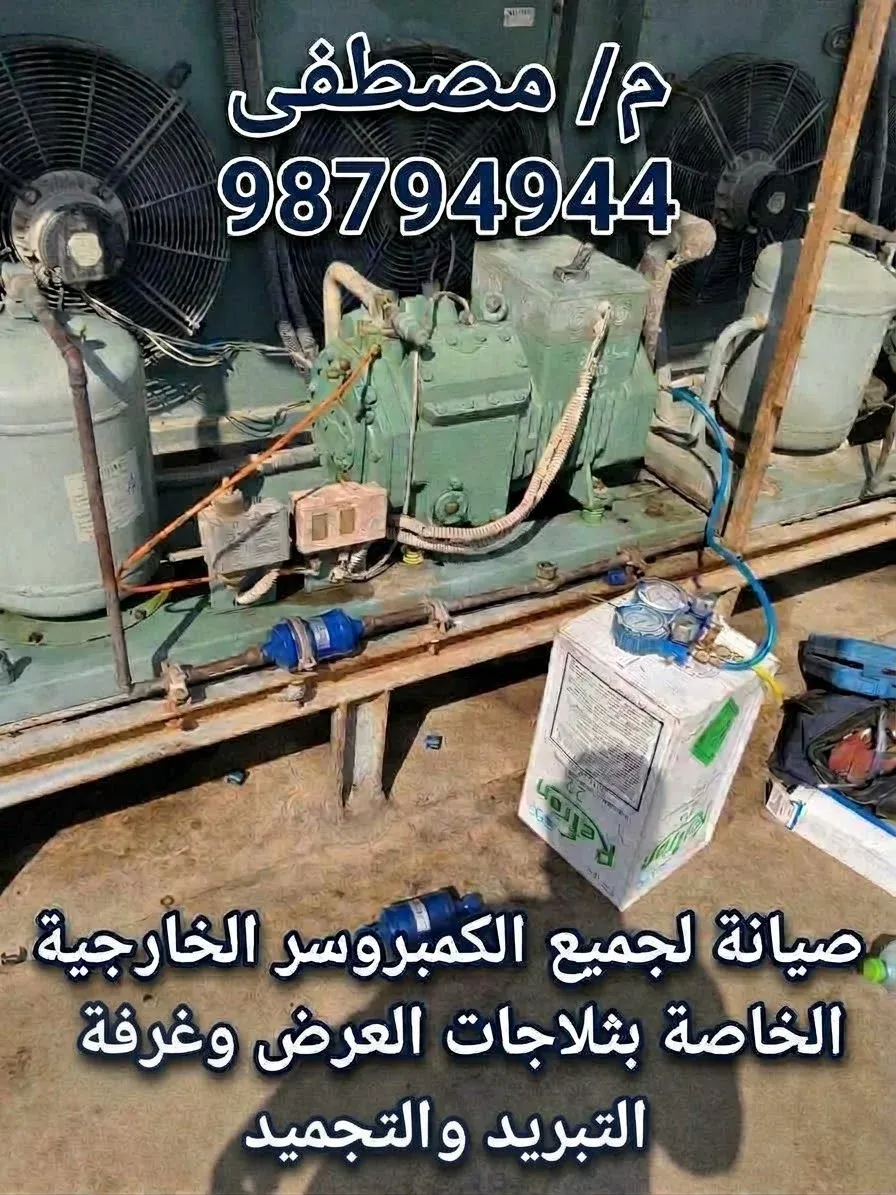
Repairing beverage display refrigerators requires understanding how these appliances are used inside grocery stores and supermarkets because their doors are opened frequently and their shelves are regularly restocked.
Store owners may complain that bottled water and juices are no longer as cold as before, that the compressor runs for extended periods, or that temperatures vary between upper and lower shelves.
Each symptom requires a different assessment and does not necessarily indicate the same underlying fault.
Why Is the Beverage Refrigerator No Longer Cooling Properly?
The problem may be related to a dirty condenser, reduced fan performance, or airflow passages blocked by products.
The temperature of beverages when they are first placed in the refrigerator can also affect how long they need to reach the required display temperature.
If the doors are opened frequently, warm air enters and increases the refrigeration load.
However, if weak cooling continues despite normal use and properly closed doors, a technician should inspect the compressor, controls, and other relevant components.
Drinks on the Upper Shelf Are Cold, but Those on the Lower Shelf Are Warm
If product temperatures differ between shelves, it is important to understand how air is distributed throughout the refrigerator.
Some appliances rely on fans and designated airflow passages to deliver cold air to different display areas.
When bottles or cans are stacked in front of these passages, air circulation may be affected even if the compressor is operating.
The problem may also involve a faulty fan, incorrect shelf positioning, or unsuitable loading arrangements.
Actual temperatures should be compared rather than assuming the refrigerator is working properly simply because products on one shelf feel cold.
The Beverage Refrigerator Starts and Stops Rapidly
Compressor operating patterns differ between appliances according to their control systems and refrigeration loads.
However, unusually frequent stopping and restarting may indicate an electrical supply problem, sensor malfunction, protective device issue, or unsuitable compressor operating conditions.
The refrigerator should not be forced to operate by repeatedly restarting it.
If the problem persists or is accompanied by unusual noises or weak cooling, the cause must be identified before any component is replaced.
Does an Illuminated Beverage Refrigerator Mean It Is Working?
No. Interior lighting indicates that electricity is reaching part of the appliance, but it does not prove that the refrigeration circuit is functioning.
The controller, compressor, or protective devices may have stopped operating.
The fans may also run while the refrigeration circuit fails to provide adequate cooling.
If the refrigerator lights remain on but the beverages are warm, its actual refrigeration operation must be examined rather than relying on the lights as evidence that it is working properly.
How Does the Arrangement of Water and Juice Bottles Affect Cooling?
If bottles and cans are packed so tightly that they restrict airflow, some products may cool more slowly or unevenly.
Introducing a large quantity of warm beverages at once can also increase the refrigeration load.
It is preferable to follow the manufacturer's loading limits and recommended ventilation clearances.
Restocking should be organized rather than pushing products into spaces that obstruct air outlets or return-air openings.
Repairing Water Accumulation Beneath a Beverage Refrigerator
Water accumulation may result from a blocked drain, a problem with the water collection tray, damaged drainage pipes, or condensation.
However, the source of the water must first be identified.
It may be coming from somewhere outside the refrigerator or simply be the result of a spilled beverage.
If the drainage system is confirmed to be responsible, the technician may need to clean or repair the affected component according to the refrigerator's design.
Strong chemicals should not be poured into drainage openings without consulting the manufacturer's instructions because they may damage certain materials or components.
When Does the Compressor Need Replacement?
If an inspection confirms that the compressor has failed and cannot be repaired appropriately, replacement may be necessary.
Before reaching that decision, however, the protective devices, electrical connections, condensing conditions, controls, and other potential causes of interrupted cooling must be reviewed.
A replacement compressor must be compatible with the appliance's specifications and refrigeration circuit.
Replacing the compressor without identifying the cause of the failure can lead to unnecessary expenses or allow the original problem to continue.
How Can You Prevent Beverage Refrigerator Breakdowns During Busy Periods?
Keep beverages properly arranged and avoid blocking airflow openings.
Make sure the doors close correctly.
Monitor the temperature regularly and pay attention to increased fan noise or changes in how the appliance operates.
Cleaning and maintenance should be performed according to the manufacturer's recommendations and the refrigerator's operating conditions.
If beverages begin taking longer than usual to cool, it is preferable to investigate the cause before the problem develops into a complete breakdown.
4. Dairy Display Refrigerator Maintenance: Protecting Product Temperatures and Inventory Safety
Dairy display refrigerator maintenance is particularly important for grocery stores and supermarkets because these appliances contain products that require specified storage conditions.
Yogurt, milk, cheese, and other chilled dairy products differ in packaging and storage requirements. Some may be affected quickly when temperatures rise beyond suitable limits.
Maintenance should therefore focus on the actual temperature of the products, not simply whether the refrigerator is running or whether the air inside feels cold.
What Is the First Sign of Weak Dairy Refrigerator Cooling?
An employee may notice that products on a particular shelf are not as cold as usual or that the temperature reading has risen above the required level.
An alarm may also appear on the control panel, or the compressor and fans may begin operating differently.
However, these symptoms are not enough to determine whether the products are safe or identify the exact fault.
The required storage conditions must be reviewed, temperatures measured appropriately, and the duration of exposure to elevated temperatures established.
Do All Dairy Display Refrigerators Operate at the Same Temperature?
It should not be assumed that every dairy product requires the same temperature without reviewing its storage instructions.
Requirements vary according to the product, manufacturing process, packaging, and storage conditions.
Display refrigerators may also differ in their operating temperatures, door arrangements, and methods of distributing cold air.
The operating settings must therefore suit both the products and the appliance while complying with applicable local food safety requirements.
How Does Dairy Product Arrangement Affect Cooling?
Dairy display refrigerators may have several shelves designed to accommodate substantial quantities of products.
However, stacking products in front of air openings or beyond the intended loading limits can reduce airflow distribution.
In open-front refrigerated cabinets, placing products in the path of the air curtain can interfere with its ability to reduce warm-air infiltration.
ASHRAE technical guidance explains that the performance of open refrigerated display cabinets can be affected by store temperature, humidity, air movement, and the way products are arranged inside the cabinet.
The Open-Front Dairy Refrigerator Is Not Cooling Properly
Open-front refrigerators rely on a specific airflow design that creates an air barrier across the front of the display area.
Air movement from air-conditioning outlets or fans inside the store may interfere with that barrier.
High humidity or obstructions in the return-air openings can also increase the refrigeration load.
For this reason, an inspection does not always begin with the compressor.
The technician may first need to examine the surrounding store conditions and airflow distribution inside the cabinet.
Why Does Water Accumulate Beneath a Dairy Display Refrigerator?
Water may result from normal condensation that should be collected and drained through the designated system.
However, blockages or damaged components can cause it to leak outside the intended drainage path.
The problem may involve the drain tray, piping, or a condensate pump if the appliance uses one.
Water from shelf cleaning or spilled dairy products must also be ruled out.
If water reaches electrical areas, the situation requires particular caution and appropriate technical inspection.
Can a Faulty Temperature Sensor Cause Dairy Products to Spoil?
A defective sensor may produce inaccurate readings or cause the control system to respond incorrectly, depending on the equipment design.
However, the actual effect on products depends on the temperatures they reached and how long they remained under those conditions.
It is not appropriate to assume the products are safe simply because the sensor has been replaced and the controller displays the correct temperature again.
If the products were exposed to temperatures outside their storage requirements, they must be evaluated according to their instructions, time and temperature records, and applicable food safety requirements.
When Should Dairy Products Be Moved to Another Refrigerator?
If the appliance cannot maintain the required storage conditions, products may need to be transferred to another suitable refrigerator, provided they remain safe for continued storage and use.
The alternative refrigerator must not be overloaded beyond its capacity or in a way that obstructs airflow.
Products whose safety is uncertain should be separated until they can be assessed according to the facility's procedures.
Stock should not be returned to display simply because the packages still feel cold when touched.
What Does a Technical Inspection of a Dairy Refrigerator Include?
-
Reviewing the operating temperature and actual readings.
-
Checking temperature sensors and the control panel.
-
Inspecting fans, airflow passages, and the air curtain, where installed.
-
Reviewing the condenser, evaporator, and defrost system.
-
Inspecting drainage arrangements and areas where water accumulates.
-
Reviewing product arrangement and loading limits.
-
Inspecting the refrigeration circuit when symptoms indicate that this is necessary.
-
Testing the refrigerator after the fault has been corrected.
If the dairy refrigerator in your store is running at an elevated temperature or has begun leaking water, request a technical inspection while making product protection a priority before repairs begin.
5. Cooperative Society Display Refrigerator Technicians: Inspecting Cabinets Connected to Central Refrigeration
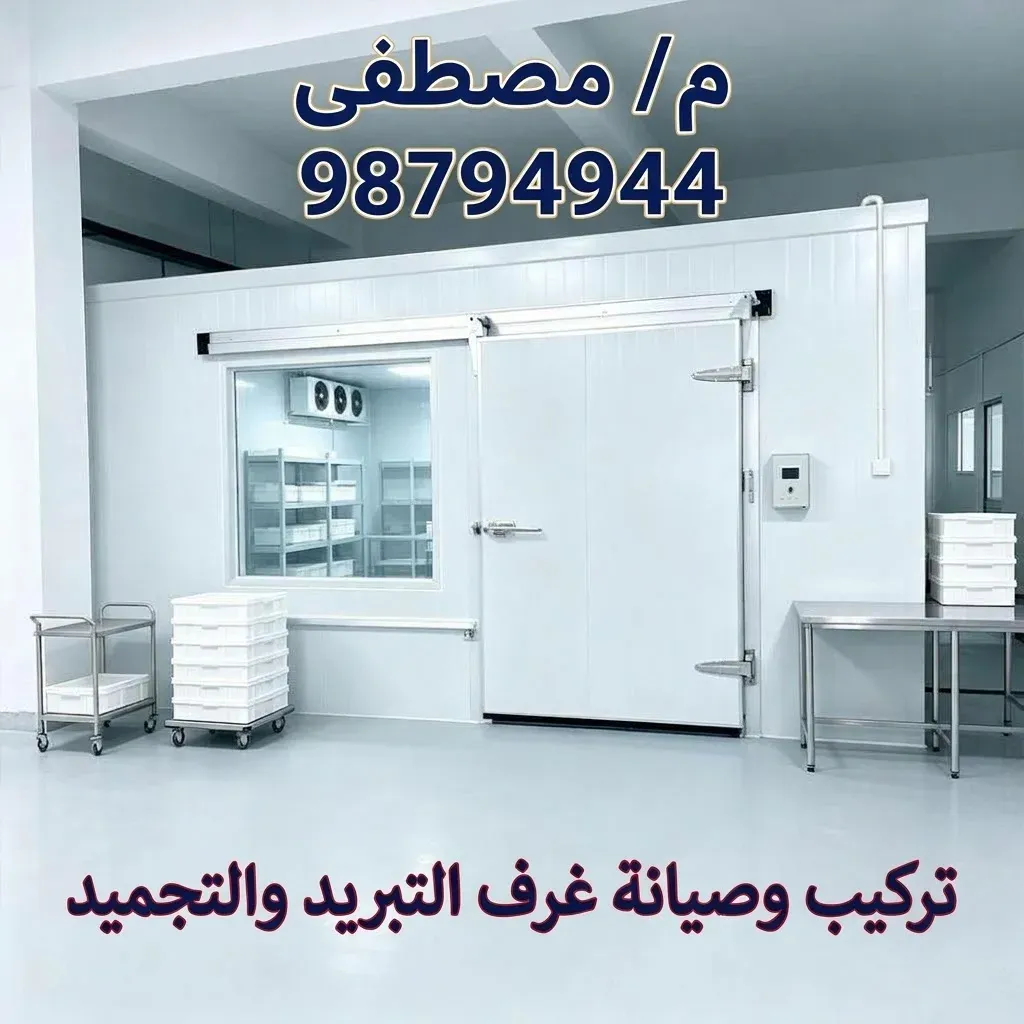
If you manage a cooperative society or large supermarket, you may need a display refrigerator technician for cooperative societies who understands the difference between independent refrigerated cabinets and those connected to a central refrigeration system.
In some facilities, several display refrigerators depend on a shared system, meaning that a single fault may affect multiple departments.
In other locations, the cabinets operate independently even when they are installed along the same aisle.
Understanding this distinction helps establish the scope of the problem before repairs begin.
What Is the Difference Between an Independent Refrigerator and One Connected to Central Refrigeration?
An independent display refrigerator usually contains the refrigeration equipment required for its operation within one appliance or a dedicated arrangement.
Display cabinets connected to a central refrigeration system, however, may rely on shared equipment installed in a service area or machinery room.
The problem may therefore be local to one refrigerator or originate in a shared component affecting several cabinets.
Not every refrigerator in a cooperative society should be treated as technically identical.
Several Refrigerators Become Warmer at the Same Time
If multiple refrigerated cabinets experience rising temperatures simultaneously, it is important to establish whether they share the same refrigeration circuit, electrical supply, or control system.
A shared component may be responsible, but the timing alone does not prove this.
Some cabinets may be affected by store conditions, a power interruption, or a central refrigeration fault.
A proper inspection begins by identifying which cabinets are affected and comparing them with units that continue operating normally.
One Refrigerator Has Weak Cooling While the Others Work Normally
If only one cabinet is affected while nearby refrigerators continue functioning correctly, the problem may involve a sensor, valve, fan, or another local component.
However, the possibilities depend on the system's design.
The affected cabinet must therefore be inspected while considering any connection to shared refrigeration equipment.
The objective is to identify the faulty part without unnecessarily shutting down other systems.
How Is Refrigerator Maintenance Performed While the Cooperative Society Is Open?
The inspection may require access behind or beneath display cabinets or entry into equipment rooms.
Work must therefore be coordinated with the cooperative society's management to protect customers and employees and organize the maintenance area.
If the repair requires disconnecting electricity or interrupting refrigeration to several cabinets, the effect on stored products must be reviewed before work begins.
Customers must also be prevented from entering areas containing exposed tools, wiring, or maintenance equipment.
Must All Display Refrigerators Be Shut Down?
Not necessarily.
The answer depends on the fault, refrigeration system design, and how the equipment is connected.
Certain repairs can be performed on an independent refrigerator without affecting nearby cabinets.
Other work may require safely isolating part of a shared system or temporarily shutting down a particular group of units.
It should not be assumed that every cabinet can be disconnected independently without reviewing the system layout and available isolation arrangements.
Why Is a Maintenance History Important in Cooperative Societies?
Maintenance records help identify refrigerators that experience repeated faults, when problems occurred, and which repairs were previously performed.
If the same cabinet repeatedly experiences rising temperatures, its underlying problem may need investigation rather than treating the same symptom each time.
Records also help compare operating readings and identify faults that appear under particular conditions.
Repaired or replaced components and post-repair test results should preferably be documented.
How Can You Choose a Suitable Maintenance Service for Cooperative Society Refrigerators?
Ask whether the technician's experience is appropriate for the commercial refrigeration equipment and the type of system installed.
The scope of the service should also be clarified, including whether display cabinets, control systems, and shared refrigeration components can be inspected.
Coordination procedures with management, inspection charges, and repair arrangements should be established.
If the cooperative society requires regular maintenance, the covered equipment, visit schedule, and agreed services should be clearly documented.
6. Maintenance of Two-Door and Three-Door Display Refrigerators: Checking Doors, Fans, and Compressors
Maintenance of two-door and three-door display refrigerators differs from some smaller refrigerated cabinets because of their larger display areas, number of doors, airflow arrangements, and the quantities of products stored inside.
These appliances are commonly used in grocery stores and supermarkets to display bottled water, juices, beverages, and certain chilled foods.
Depending on the model, they may contain multiple fans or use different control arrangements.
Sometimes a fault affects only one door or a particular section of the refrigerator, making accurate diagnosis especially important.
Why Does a Three-Door Display Refrigerator Cool Unevenly?
A store owner may notice that products behind the first door are cold while those behind the third door are noticeably warmer.
This may be associated with airflow distribution, product arrangement, a fan malfunction, or differences in measurement conditions.
An improperly sealed door can also affect the area around it.
However, the cause cannot be established simply by identifying which door has warmer products behind it.
An appropriate inspection is necessary.
Does Each Door Have a Separate Effect on Refrigeration?
Every door creates a potential point for warm air to enter when it is opened or does not seal properly.
If one door does not close correctly, it can increase the refrigeration load and affect internal temperatures.
However, the extent of the effect depends on the refrigerator's design, airflow distribution, and door-opening frequency.
Hinges, gaskets, and closing mechanisms should therefore be inspected rather than focusing exclusively on the temperature of products near the door.
Inspecting the Fans in Large Display Refrigerators
Some display refrigerators contain more than one fan to distribute cold air throughout the cabinet.
If one fan stops operating, airflow distribution may change in certain areas.
However, hearing a fan running does not prove that every fan inside the appliance is functioning correctly.
The technician may need to inspect fan movement, motors, and electrical connections according to the refrigerator's design.
Appropriate power isolation procedures must be followed before working on these components.
Condensation on Glass Refrigerator Doors
Fogging or water droplets may appear on glass doors because of temperature differences, humidity, and the refrigerator's operating conditions.
Some appliances include features designed to reduce condensation on glass panels or door frames.
However, condensation does not automatically indicate damaged door gaskets or insufficient refrigerant.
The technician may need to review store conditions, door sealing, and anti-condensation components while confirming that the appliance is operating within its specifications.
Can Adjusting Door Hinges Improve Sealing?
If a door is misaligned or does not return to its closed position correctly, the hinges or closing mechanism may require adjustment or repair.
However, the adjustment must account for the glass door's weight and mounting arrangement.
You should not remove the hinges or attempt to support a heavy glass door without suitable tools and assistance.
The glass may break or the door may fall, creating a safety risk.
The work should be completed by a qualified person, followed by verification that the door closes and seals correctly.
What Is the Difference Between Maintaining Two-Door and Three-Door Refrigerators?
The difference involves more than the presence of an additional door.
Some models also differ in fan arrangements, condenser capacity, control systems, and internal volume.
The inspection time may be affected by the number of components, their condition, and how easily the technician can access them.
However, maintenance costs cannot be determined solely from the number of doors.
Repairing one door gasket is different from diagnosing a refrigeration circuit fault or replacing several fans.
Is It Better to Replace the Refrigerator Instead of Repairing It?
The decision depends on the appliance's age, condition, type of fault, repair cost, and replacement part availability.
If the problem is limited and can be repaired appropriately, replacing the entire refrigerator may be unnecessary.
However, if the appliance has multiple faults or substantial damage to its components or structure, the cost of repair should be compared with the cost of replacement.
It is not appropriate to assume that every old refrigerator is beyond repair or that every possible repair is economically worthwhile without evaluating the equipment.
How Can You Request an Inspection for a Large Display Refrigerator?
Explain the number of doors, the products displayed, the required refrigeration temperature, and the symptoms.
If temperatures vary between sections, identify which areas are affected and whether any doors fail to close properly.
Providing the model number, when available, may also help determine the appliance's specifications.
If you have a two-door or three-door display refrigerator with weak cooling, condensation, or a closing problem, contact Cold Room and Display Refrigerator Maintenance to inquire about the appropriate inspection and repair.
7. Repairing Display Refrigerator Door Gaskets: When Should the Seal Be Replaced?
Repairing display refrigerator door gaskets is an important part of refrigeration maintenance because the gasket helps maintain a proper seal and reduces warm-air and moisture infiltration.
If a gasket becomes cracked, detached, or loses its ability to seal correctly, refrigeration performance may be affected even when the cooling equipment is operating normally.
However, not every door-closing problem requires gasket replacement.
Sometimes the cause is related to the hinges, door alignment, or an obstruction preventing the door from closing.
How Can You Tell Whether a Door Gasket Is Damaged?
Visible signs may include cracks in the gasket, part of the seal becoming detached, or a noticeable gap between the door and refrigerator frame.
In some situations, the store owner may notice condensation around the entrance or reduced cooling near the door.
However, these signs must be evaluated because condensation and rising temperatures can result from other problems.
The gasket, door, and frame should all be inspected before deciding whether a replacement is required.
What Causes Display Refrigerator Door Gaskets to Deteriorate?
Gaskets may deteriorate because of frequent use, repeated friction, or unsuitable cleaning practices.
Pulling the door incorrectly or allowing an obstruction to interfere with closing may also increase pressure on certain sections of the seal.
Sharp tools and unsuitable cleaning chemicals can damage the gasket material.
It is therefore important to clean and maintain the gasket according to the manufacturer's instructions without pulling or bending it forcefully.
Can the Gasket Be Glued Instead of Replaced?
This depends on the type of damage, gasket design, and attachment method.
However, applying adhesive randomly may not restore an effective seal and can make future repairs more difficult.
If the gasket is torn or permanently deformed in a way that affects sealing, replacement with a compatible component may be the appropriate solution.
If the problem involves the mounting position or dirt around the sealing area, a different repair may be suitable.
The correct decision can only be made after identifying the actual cause.
Does Every Refrigerator Model Need a Specific Door Gasket?
Gaskets differ in dimensions, cross-sectional shape, attachment method, and manufacturing materials.
You should not assume that a gasket designed for one refrigerator will fit every appliance with the same number of doors.
The model details, door measurements, and required specifications should be reviewed before choosing a replacement.
It is also important to confirm that the new gasket fits properly and allows the door to close completely.
How Is a Damaged Door Gasket Repaired?
The inspection begins by identifying the affected area and determining whether the door frame, hinges, or door itself is damaged.
The technician then decides whether the gasket can be repaired or requires replacement.
If replacement is necessary, a component compatible with the door's dimensions and mounting method is installed.
Afterward, the door should be checked to ensure the new gasket does not obstruct movement or leave unwanted gaps.
How Does a Damaged Door Gasket Affect the Compressor?
If a damaged gasket continuously allows warm air to enter, the refrigeration load may increase.
Depending on the refrigerator's design, ambient temperature, and extent of air leakage, the compressor may need to operate for longer periods.
However, extended compressor operation alone does not prove that the gasket is responsible.
Other factors, particularly the condenser, fans, product loading, and temperature readings, must also be reviewed.
How Can You Maintain Door Gaskets After Repair?
-
Clean the gasket using methods and products permitted by the appliance manufacturer's instructions.
-
Avoid sharp tools when removing dirt from around the seal.
-
Make sure products are not preventing the door from closing completely.
-
Do not pull the door forcefully or use it to support tools or inventory.
-
Watch for gaps or cracks that develop through frequent use.
-
Inspect the hinges if the door begins to sag or becomes difficult to close.
-
Request an inspection if condensation or weak cooling continues despite the gasket appearing to be in good condition.
How Much Does Replacing a Display Refrigerator Door Gasket Cost?
The cost depends on the door dimensions, gasket type, attachment method, and availability of a compatible replacement.
The required work may also differ if the hinges or door frame need repairs.
For this reason, a single price cannot be given for all display refrigerators without knowing the model and door condition.
It is better to request a quotation explaining the cost of the replacement component and labor, along with verification of proper sealing after the work.
8. Mini-Market Refrigerator Inspection and Maintenance: Solutions for Small Retail Spaces
Mini-market refrigerator inspection and maintenance must take the conditions of smaller retail spaces into account.
Display areas may be limited, and refrigerators may be positioned close to one another or near product shelves.
In some cases, ventilation around the appliances is insufficient, or the condenser is difficult to reach for cleaning and maintenance.
However, every mini-market refrigerator fault should not automatically be attributed to limited space.
Some problems originate in the appliance's components.
What Problems Commonly Affect Refrigerators in Small Stores?
Complaints may involve weak beverage cooling, water accumulation, increased equipment noise, or unusual stopping and restarting.
In certain shops, problems arise because shelves are overloaded or refrigerators are placed where the required ventilation cannot be maintained.
However, the underlying cause may also involve the compressor, fans, sensors, or drainage system.
The problem therefore requires an inspection appropriate for the appliance and its actual operating conditions.
Does the Refrigerator's Position Inside the Store Affect Performance?
Yes. Some display refrigerators require ventilation clearances around the condenser or specific openings through which air is drawn in and discharged.
If the appliance is placed directly against a wall or shelf in a way that obstructs the required ventilation, operating conditions may be affected.
Nearby heat sources can also increase the load on the refrigerator.
However, suitable ventilation clearances differ according to appliance design.
The manufacturer's installation instructions should be followed rather than applying one clearance measurement to every model.
Mini-Market Refrigerator Temperature Rises Around Midday
A temperature increase at a particular time may be associated with higher store temperatures, frequent door opening, or the addition of new beverages.
The problem may become more noticeable if ventilation around the appliance is inadequate or the condenser requires maintenance.
However, the timing of the temperature increase alone cannot establish the cause.
Recording temperatures and comparing them with delivery times, customer activity, and air-conditioning operation may be useful.
Is Cleaning the Inside of the Refrigerator Enough?
Interior cleaning is important for hygiene and presentation, but it does not necessarily correct refrigeration faults.
The appliance may also require inspection of the condenser, fans, drainage system, gaskets, and temperature sensors.
Excessive water or unsuitable cleaning methods should not be used where they could affect electrical components.
It is better to follow the appliance's cleaning instructions and leave technical work involving electrical systems or removal of protective covers to a qualified technician.
Water Accumulating Next to the Refrigerator
Water near a refrigerator may result from drainage problems, condensation, spilled products, or another source inside the store.
The first step is therefore to identify where the water is coming from.
If the refrigerator is responsible, the technician may need to inspect the collection tray, drainage route, or components associated with condensation.
The problem should be addressed before the water creates a slipping hazard for customers or reaches electrical connections.
How Can You Organize Maintenance for Several Refrigerators in a Small Store?
If you operate several refrigerators, it is useful to record the type, location, required operating temperature, and any problems associated with each appliance.
This makes it easier to identify whether cooling problems repeatedly affect the same refrigerator or occur across different units.
Inspections can also be prioritized according to the importance and storage requirements of the products contained in each appliance.
All refrigerators should not be shut down simultaneously if doing so would expose inventory to unnecessary deterioration and there is no technical reason for a complete shutdown.
Are Smaller Refrigerator Repairs Always Cheaper?
Not necessarily.
Some repairs may be straightforward, but the price of a particular component or difficulty accessing it can affect the cost.
Compressor types, control panels, and replacement part availability also vary between appliances.
The repair cost should therefore be established after identifying the fault, model, and required work.
Comparing repair expenses with the appliance's value and overall condition is especially important if it has experienced repeated breakdowns.
9. Preventive Maintenance for Commercial Display Refrigerators: How to Reduce Unexpected Breakdowns
Preventive maintenance for commercial display refrigerators helps monitor equipment condition and identify certain problems before they develop into unexpected breakdowns that affect stored products.
A refrigerator operating normally today may gradually lose efficiency because of dust accumulation, deteriorating door gaskets, or fan problems.
However, preventive maintenance does not mean that breakdowns will disappear completely.
Its purpose is to monitor important components and perform appropriate work according to the condition of each appliance and the manufacturer's instructions.
What Does Preventive Maintenance for Display Refrigerators Include?
A preventive maintenance program may involve several inspection activities:
-
Reviewing temperatures: Confirming that storage conditions are appropriate for the products on display.
-
Inspecting the condenser: Checking cleanliness, ventilation, and obstructions that may affect heat rejection.
-
Inspecting the evaporator: Reviewing its condition, airflow, and abnormal ice accumulation.
-
Checking the fans: Monitoring unusual noises, vibrations, and operating conditions.
-
Inspecting refrigerator doors: Checking gaskets, hinges, and closing mechanisms.
-
Checking drainage: Making sure there are no visible blockages or leaks.
-
Reviewing sensors and controls: Monitoring temperature readings, alarms, and appliance behavior.
-
Inspecting electrical connections: Carrying out safe technical checks of components requiring attention.
-
Reviewing product loading: Confirming that airflow openings are clear and storage limits are respected.
-
Recording observations: Documenting faults, required maintenance work, and replaced components.
How Often Do Display Refrigerators Need Maintenance?
There is no single maintenance interval suitable for every appliance.
Requirements depend on the refrigerator type, operating hours, dust levels, usage patterns, and manufacturer recommendations.
Certain cleaning and routine monitoring activities may need to be performed more frequently than specialized technical inspections.
Refrigerators operating in dusty environments may also require different attention from appliances installed in clean, well-ventilated locations.
It is preferable to establish a maintenance schedule that matches the number of refrigerators, their condition, and the store's activities rather than following a fixed timetable without evaluating the equipment.
Can Regular Cleaning Reduce Electricity Consumption?
Keeping the condenser and ventilation passages clean may help prevent certain unsuitable operating conditions.
Proper door sealing and product arrangement can also affect refrigeration loads.
However, a fixed percentage reduction in electricity consumption should not be claimed without measuring and comparing operating conditions.
Commercial display refrigerator maintenance manuals may recommend checking condensers, door gaskets, and fans and cleaning components according to each appliance's design and usage conditions.
How Can You Identify a Problem Before the Refrigerator Stops Working?
Watch for symptoms that differ from the appliance's normal operation, such as temperatures gradually rising, increasing fan noise, or unusual condensation on glass surfaces.
Water accumulation, repeated alarms, or extended compressor operation may also indicate a problem requiring attention.
However, these symptoms are not a final diagnosis.
They should be recorded and compared with the appliance's maintenance history.
A technical inspection should be requested when they persist or affect the required storage conditions.
Do Older Refrigerators Need More Maintenance?
Certain older appliances may require additional attention because of worn components or recurring faults, but age alone is not a sufficient measure of condition.
Some refrigerators that receive appropriate maintenance continue operating within their intended requirements.
Meanwhile, newer appliances may experience problems caused by installation conditions or operating practices.
Each refrigerator should therefore be evaluated according to its condition, fault history, and maintenance expenses.
If repeated repairs become expensive, replacement can be considered from both technical and financial perspectives.
What Are the Benefits of Maintenance Records for Supermarket Owners?
Maintenance records help you review previous faults, repair work, cleaning activities, and inspections.
You can document each refrigerator's identification, location, temperature readings, reported problem, and action taken.
If the same problem returns, previous records make it easier to review earlier work rather than starting the diagnostic process without any history.
Records are also useful when comparing the maintenance and operating costs of several refrigerators within the same facility.
How Can You Prioritize Refrigerator Maintenance Based on Product Type?
Not every display refrigerator contains products with the same sensitivity to temperature increases.
Dairy refrigerators and units containing perishable chilled foods require particular attention to storage conditions and product safety.
The storage requirements of certain beverages may differ according to the product.
Inspection priorities can therefore be organized according to inventory characteristics and the risks associated with equipment failure.
However, all refrigerators must be monitored, and no electrical or mechanical problem should be ignored simply because the stored products are less temperature-sensitive.
Is a Preventive Maintenance Contract Suitable for Grocery Stores?
This depends on the number of display refrigerators, store size, frequency of faults, and need for scheduled service visits.
A small grocery store may benefit from an inspection arrangement suited to its needs, while a larger supermarket may require a program covering several appliances.
If you choose a preventive maintenance contract, make sure it specifies the number of visits, covered components, repair charges, replacement part arrangements, and exclusions.
Fault-reporting procedures and agreed service availability should also be clarified.
A maintenance contract should not be assumed to prevent every possible equipment breakdown.
10. Requesting a Display Refrigerator Maintenance Technician: Service Steps and Repair Costs
If you need to request a display refrigerator maintenance technician for your store, begin by describing the appliance type, the malfunction, and the symptoms.
Maintaining a small beverage refrigerator differs from repairing a large refrigerated display cabinet or a unit connected to a central refrigeration system.
Repair costs also differ when a problem involves a door gasket, fan, or sensor rather than a compressor or refrigeration circuit.
The quotation should therefore reflect the diagnosis and required components rather than being determined solely by the type of retail store.
Step One: Identify the Display Refrigerator Type
Prepare information about the refrigerator, including its number of doors and the products stored or displayed inside.
If the model number or equipment identification plate is accessible, those details may help establish the correct specifications.
You should also explain whether the refrigerator is independent or connected to a central refrigeration system, if you know this information.
There is no need to open the appliance or remove protective covers to collect these details.
Step Two: Describe the Fault Clearly
Instead of simply saying that the refrigerator is broken, explain the main problem.
Is the refrigerator illuminated but not cooling? Does the compressor run continuously? Is water accumulating? Is the equipment making a loud noise? Does the door fail to close properly?
Mention the temperature reading if it is displayed and explain when the problem first appeared.
This information helps the technician understand the situation, although it does not replace an actual inspection.
Step Three: Protect Products Before the Inspection
If the refrigerator contains products that require a specified storage temperature, their condition must be assessed while the appliance is malfunctioning.
Products may need to be transferred to another suitable refrigerator when necessary and when doing so can be carried out safely.
Door opening should be minimized, and additional products should not be loaded into an appliance that cannot maintain the required storage temperature.
If food may have been exposed to unsafe conditions, it must be handled according to the facility's approved food safety procedures.
Step Four: Review the Technical Inspection
After inspecting the appliance, the technician should preferably provide a clear explanation of the fault and the components requiring repair.
A confirmed fault must be distinguished from causes that remain possibilities.
If the technician recommends replacing a compressor, control panel, or another expensive component, ask which diagnostic findings support that decision.
The objective is to correct the underlying cause and avoid replacing parts through trial and error.
Step Five: Agree on Repair Costs
One price cannot represent every type of display refrigerator maintenance because costs depend on the problem and the appliance's specifications.
Important factors include:
-
Refrigerator type: Independent cabinet, large display refrigerator, or unit connected to central refrigeration.
-
Number of doors and appliance size: These may affect certain inspection and repair tasks but do not determine the price alone.
-
Type of fault: Door gasket repair differs from compressor or refrigeration circuit work.
-
Replacement parts: Costs depend on the model, compatibility, and availability.
-
Accessibility: Certain appliances may need to be moved or require special access arrangements.
-
Inspection fees: Whether these are charged separately from repairs should be clarified.
-
Service timing: Any additional charges for service outside normal working hours should be confirmed if such service is available.
-
Operational testing: Some repairs require further testing or monitoring after completion.
Comparing Repair Costs by Type of Fault
|
Type of fault |
Possible work |
What determines the cost? |
|
Weak cooling |
Inspecting the condenser, fans, and refrigeration circuit |
Actual cause and appliance type |
|
Damaged door gasket |
Checking sealing, repairing, or replacing the gasket |
Gasket dimensions, type, and door condition |
|
Fan failure |
Inspecting the motor and electrical connections |
Fan type and required component |
|
Sensor fault |
Verifying readings, checking connections, and replacing when necessary |
Sensor type and installation arrangement |
|
Water leakage |
Inspecting drainage and condensation systems |
Location of the blockage or damage |
|
Compressor not operating |
Inspecting electrical supply, protective devices, and refrigeration circuit |
Cause of failure and whether replacement is required |
|
Glass condensation |
Inspecting humidity conditions, door sealing, and anti-condensation features |
Door design and affected components |
|
Central refrigeration fault |
Inspecting display cabinets and shared system components |
System size and scope of the malfunction |
This table explains the factors affecting repair costs. It is not a fixed price list or a set of final diagnoses.
Can the Display Refrigerator Be Repaired During the First Visit?
This may be possible when the fault is identified, a compatible replacement part is available, and the work can be performed safely.
However, certain problems require specialized parts, further inspections, or refrigeration circuit procedures.
It is therefore not possible to guarantee that every repair will be completed during one visit before the equipment has been diagnosed.
The inspection appointment, availability of parts, and possible repair costs should be confirmed with the maintenance provider.
What Are the Advantages of Choosing an Appropriate Maintenance Service?
When comparing maintenance providers, focus on practical standards that can be verified:
-
Diagnosing the problem before recommending replacement parts.
-
Clearly explaining the inspection scope and required service.
-
Selecting components compatible with the refrigerator's specifications.
-
Protecting products and customers while maintenance work is performed.
-
Following suitable electrical and refrigeration safety procedures.
-
Testing the appliance after repairs.
-
Explaining prices and exclusions before the work is approved.
-
Providing written warranty conditions if coverage is available.
These are the factors worth discussing when contacting Cold Room and Display Refrigerator Maintenance, rather than relying on unsupported claims about the lowest price or an unspecified warranty.
How Can You Request a Display Refrigerator Technician for Your Store?
Contact Cold Room and Display Refrigerator Maintenance and explain the location of your grocery store or supermarket, the refrigerator type, and the reported problem.
Mention whether the fault affects beverages, dairy products, or other foods requiring particular refrigeration temperatures.
Provide the current temperature reading if available.
You can then inquire about inspection availability, diagnostic fees, repair costs, and the earliest available service appointment.
If your display refrigerator is not cooling, is leaking water, or has a door that will not close properly, request a technical inspection before a larger quantity of inventory is affected or the appliance stops working completely.
Frequently Asked Questions About Display Refrigerator Maintenance for Grocery Stores and Supermarkets
Why Is My Display Refrigerator Running but Not Cooling Beverages?
The problem may involve a dirty condenser, weak fan performance, airflow openings obstructed by products, a faulty sensor, or a refrigeration circuit malfunction.
Adding large quantities of warm beverages may also increase the cooling load.
If the problem persists after products are properly arranged and doors are closed, a technical inspection is necessary to identify the cause before any parts are replaced.
How Much Does Display Refrigerator Maintenance Cost for Grocery Stores in Kuwait?
The cost depends on the appliance type, fault, replacement parts, required work, and inspection fees.
Repairing a door gasket or temperature sensor is different from repairing a compressor or refrigeration circuit.
A single fixed price cannot be provided for every display refrigerator without inspection.
It is therefore better to request a diagnosis and a quotation explaining the repair costs and what is included.
Can a Damaged Door Gasket Cause Weak Cooling in a Display Refrigerator?
Yes. If the gasket does not provide an effective seal, warm air and moisture may enter, increasing the refrigeration load.
However, weak cooling can also result from other problems.
The gasket, hinges, and door frame should be inspected before deciding whether the seal requires repair or replacement.
Can a Dairy Display Refrigerator Be Repaired Without Moving the Products?
This depends on the fault, the work required, and whether suitable storage temperatures can be maintained during maintenance.
Certain inspection procedures may be completed without an extended shutdown, while other repairs require the appliance to be disconnected.
If suitable storage conditions cannot be maintained, the products must be assessed and those that remain safe for storage transferred to an appropriate alternative refrigerator.
How Can I Request a Supermarket Display Refrigerator Maintenance Technician?
Identify the number and type of refrigerators, their door arrangements, and the reported problems.
Provide the facility location and available temperature readings.
Then contact Cold Room and Display Refrigerator Maintenance to ask about inspection appointments, diagnostic fees, and the scope of service.
If several refrigerators are affected, explain whether they are connected to a central refrigeration system, if that information is available.
Conclusion: Display Refrigerator Maintenance for Grocery Stores and Supermarkets to Protect Inventory and Keep Sales Running
If you own a grocery store or supermarket in Kuwait, display refrigerator maintenance for grocery stores and supermarkets is more than repairing equipment after it stops working.
It is an important measure for maintaining appropriate storage conditions and keeping products displayed in an organized and reliable manner.
Throughout this guide, we have explained the possible causes of weak cooling in beverage and dairy display refrigerators, the importance of inspecting compressors, condensers, fans, and temperature sensors, and the problems associated with drainage, glass condensation, and damaged door gaskets.
We have also explained the differences between maintaining independent refrigerated cabinets and display units connected to central refrigeration systems in cooperative societies and supermarkets.
In addition, we discussed how the maintenance requirements of two-door and three-door refrigerators can differ from those of smaller appliances.
Most importantly, you should not replace a compressor or add refrigerant simply because a display refrigerator is not cooling properly.
Correct diagnosis begins with reviewing the symptoms, operating conditions, and components that may be associated with the problem.
Regular maintenance, temperature monitoring, proper product loading, and effective door sealing can also help identify certain problems early.
However, these practices do not replace a professional technical inspection when an actual fault appears.
Repair costs depend on the refrigerator type, the affected component, and the amount of work required.
It is therefore preferable to agree on the inspection scope and pricing before maintenance begins.
If the refrigerator contains dairy products or other perishable foods, product safety must be considered independently of whether the equipment has been repaired successfully.
Products exposed to unsuitable storage conditions should not be returned to display without an appropriate safety assessment.
Need a Display Refrigerator Maintenance Technician for Your Grocery Store or Supermarket in Kuwait?
Contact Cold Room and Display Refrigerator Maintenance and provide the refrigerator type, number of doors, current malfunction, and store location.
You can then inquire about technical inspection availability, repair costs, and the earliest available service appointment.
Do not wait until your display refrigerator stops working completely. Monitoring early signs of weak cooling and requesting the appropriate diagnosis can help you make better repair decisions, protect products from unnecessary exposure to elevated temperatures, and reduce the likelihood of replacing working components without a valid reason.