Copeland and Bitzer Cold Room Units in Kuwait: Costs and Comparison
·
Copeland and Bitzer Refrigeration Unit Installation for Cold Rooms in Kuwait: Differences and Prices
If you are preparing a new cold room or freezer room for a restaurant, food warehouse, or supermarket in Kuwait, choosing the right refrigeration unit is essential for maintaining the required temperature and operating reliably throughout the year.
This is where Copeland and Bitzer refrigeration unit installation in Kuwait becomes an important consideration. Which brand is better for your project? How much does a complete refrigeration unit cost? Does the installation price include the compressor, condenser, evaporator, piping, and commissioning?
Direct answer: Neither Copeland nor Bitzer can be considered universally better than the other. Both manufacturers offer commercial refrigeration solutions, and the correct choice depends on the room's cooling load, required storage temperature, refrigerant type, installation environment, and specific model specifications.
The final price depends on the unit's capacity, included components, piping, electrical installations, labor, and testing.
It is also essential to distinguish between a condensing unit, which generally includes a compressor, condenser, and supporting components depending on the design, and a complete refrigeration system, which also requires an evaporator inside the room, piping, controls, and suitable insulation.
Purchasing a condensing unit does not necessarily mean that you have purchased everything required to operate a cold room.
Copeland offers various condensing unit ranges for commercial refrigeration, including applications involving cold rooms and freezer rooms.
Bitzer also provides units featuring semi-hermetic reciprocating compressors, capacity-control solutions, and configurations for medium- and low-temperature refrigeration applications.
In Kuwait's hot climate, choosing a compressor based solely on horsepower or room size is insufficient. Cooling loads must be calculated, and the condenser's ability to reject heat must be evaluated under the design ambient temperature.
In this guide from Cold Room and Display Refrigerator Maintenance, we explain the differences between Copeland and Bitzer, the price of a complete refrigeration unit, condensing unit installation costs, and how to select the right equipment for cold storage and freezer rooms.
We also explain what should be included in the quotation and warranty before your project begins.
Copeland and Bitzer Refrigeration Unit Installation in Kuwait: How Do You Choose the Right System for Your Room?
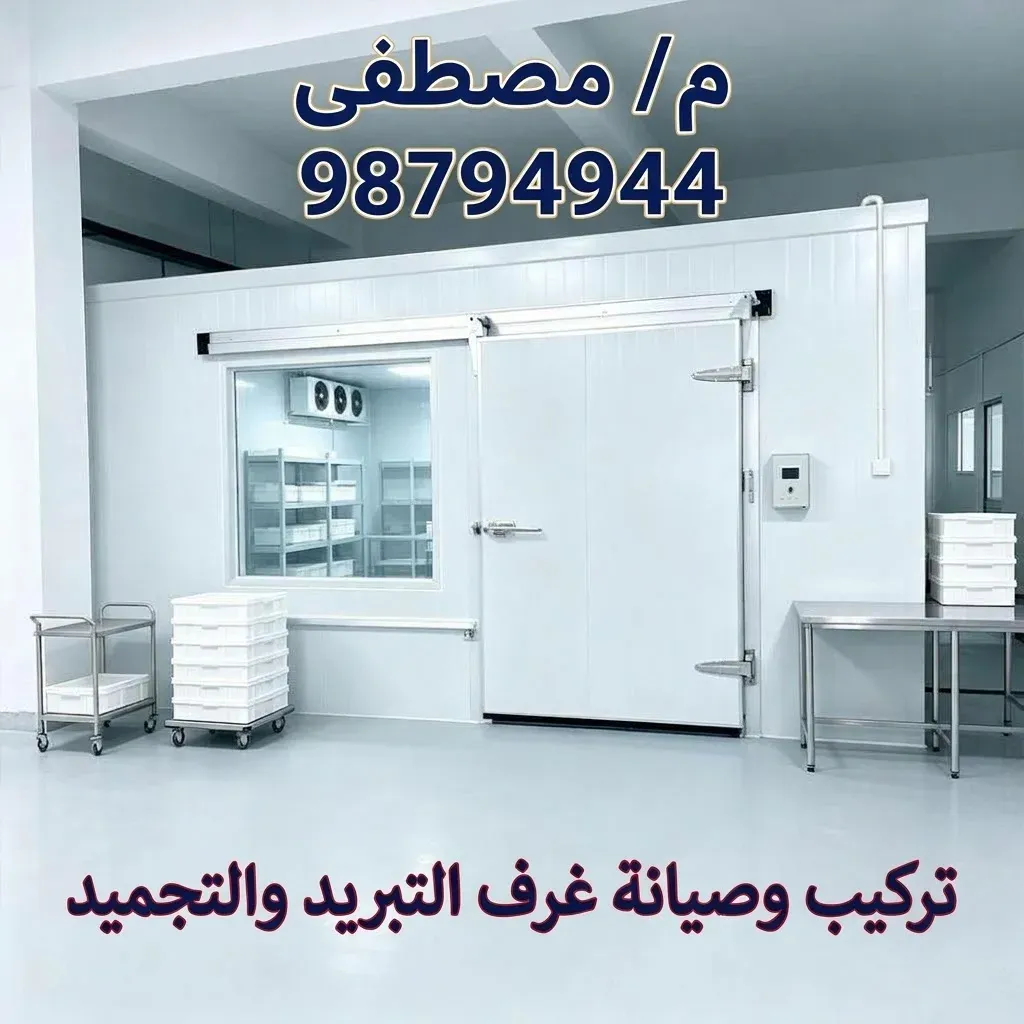
When requesting Copeland and Bitzer refrigeration unit installation in Kuwait, the correct starting point is to identify the room's purpose, product quantities, and required temperature before choosing the compressor manufacturer's brand.
A vegetable storage room may require different refrigeration conditions from a chilled meat storage room, while a freezer room needs a system designed for lower operating temperatures.
A condensing unit intended for an ordinary cold room should therefore not be installed in a freezer room without confirming its technical suitability.
What Is a Cold Room Refrigeration Unit?
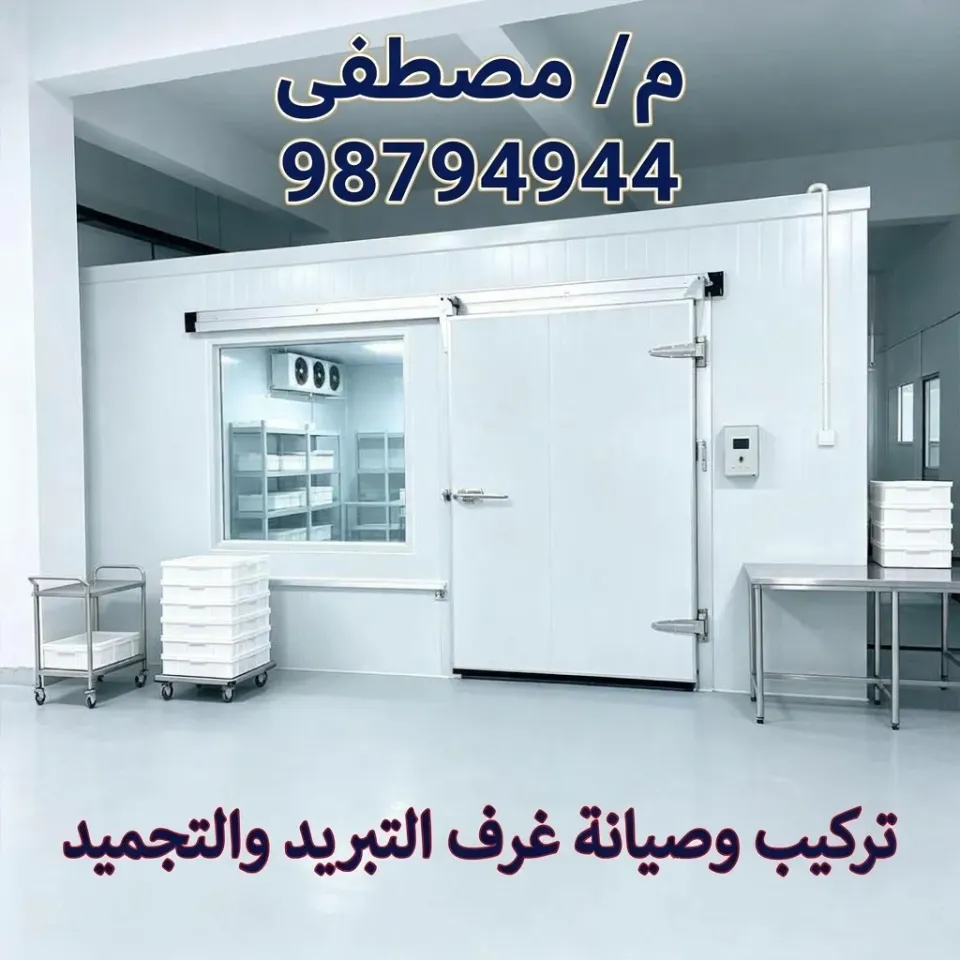
A refrigeration system consists of equipment that works together to remove heat from inside the room and release it outside.
Depending on its design, the system includes the compressor, condenser, evaporator, controls, piping, and protective devices.
The condensing unit is one part of this system and does not necessarily represent the complete installation.
The components included must therefore be confirmed whenever a supplier offers a "complete refrigeration unit."
Do Copeland and Bitzer Manufacture the Same Types of Units?
Both manufacturers provide multiple commercial refrigeration solutions, but their product ranges, compressor technologies, and equipment configurations differ.
Copeland offers condensing units incorporating various technologies, including scroll compressors and hermetic compressors in certain ranges.
Bitzer's products include condensing units with semi-hermetic reciprocating compressors, capacity-control options, and other solutions for medium- and low-temperature applications.
However, a meaningful comparison should involve two models suitable for the same application rather than comparing the manufacturers' names in general.
Does a Cold Storage Room Require a Different Unit From a Freezer Room?
Yes. A room intended for chilled products requires different evaporating conditions and refrigeration capacity from a freezer room.
Freezing applications may also need special defrosting arrangements, controls, and compressor protection.
It is important to distinguish between storing products that have already been frozen and freezing large quantities of new products.
Freezing new products introduces an additional cooling load that must not be ignored.
Are Room Dimensions Enough to Determine Compressor Capacity?
No. Room length, width, and height are important factors, but they do not determine the entire cooling load.
Two rooms of identical dimensions may have different insulation, storage temperatures, product quantities, and door-opening frequencies.
Products entering the room at higher temperatures also require additional heat removal.
Copeland's technical guidance explains that condensing unit selection is related to the total refrigeration load and evaporating and condensing temperatures, not room dimensions alone.
Does Kuwait's Ambient Temperature Affect Refrigeration Unit Selection?
Yes. Condensers and condensing units must be selected according to the surrounding conditions in which the system will operate.
A condenser installed in an excessively hot or poorly ventilated location may experience reduced performance.
Installing a unit where discharged hot air cannot escape may also increase condensing conditions and place additional load on the compressor.
The outdoor unit's location and ventilation clearances must therefore be established before the model is approved.
Can the Unit Be Installed on a Building Rooftop?
Rooftop installation may be suitable for certain projects if structural support, mounting, ventilation, and safe maintenance access requirements are met.
Exposure to sunlight, dust, rain, and environmental conditions must also be considered according to the equipment's rating.
Refrigeration piping length and the height difference between the condenser and evaporator are important as well.
The location should not be selected simply because it saves indoor floor space.
Must the Evaporator Be Selected Together With the Condensing Unit?
Yes. The system components must be compatible in terms of capacity, operating conditions, and refrigerant type.
An unsuitable evaporator may affect cold air distribution inside the room.
Installing a larger condenser or compressor without technical evaluation does not guarantee better performance.
The entire system should therefore be evaluated together rather than purchasing individual components solely because their prices are lower.
Are Refrigeration Units Ready for Immediate Installation?
The level of factory assembly varies according to the model.
Some condensing units come with certain controls and protective devices, while others require additional components and installation work.
The project may also need refrigeration piping, an evaporator, a control panel, refrigerant, and electrical installations.
The unit's component list must therefore be reviewed before signing the contract.
What Project Information Should You Prepare Before Requesting a Unit?
Prepare the following details:
-
Room length, width, and height.
-
Intended application: chilling or freezing.
-
Types of products being stored.
-
Required storage temperature.
-
Quantity of products entering daily.
-
Product temperature when entering the room.
-
Frequency of door opening.
-
Insulation thickness and specifications.
-
Outdoor unit location.
-
Estimated refrigeration piping length.
-
Available electrical supply.
-
Required project commissioning date.
If you are preparing a new cold room in Kuwait, request a Copeland or Bitzer unit selected according to the actual cooling load and operating conditions, rather than choosing based on horsepower or brand alone.
Complete Copeland Refrigeration Unit Price: What Is Included and How Do You Compare Offers?
When researching the price of a complete Copeland refrigeration unit, you may encounter different quotations even when all the equipment carries the Copeland name.
This happens because one quotation may cover only the condensing unit, while another includes the evaporator, control panel, piping, installation, and commissioning.
Direct answer: There is no single reliable fixed price for a complete Copeland unit covering every cold room in Kuwait.
The price depends on the model, refrigeration capacity, operating temperature, refrigerant type, additional components, and installation work.
A detailed quotation is necessary to avoid comparing offers that do not include equivalent equipment or services.
Does a Copeland Unit's Price Depend on Horsepower?
The compressor's nominal horsepower may influence the price, but it does not provide enough information to determine performance or overall cost.
Actual refrigeration capacity varies according to evaporating and condensing conditions and refrigerant type.
A unit with a particular nominal horsepower rating may be suitable for a chilled storage room but unsuitable for a freezer room.
Refrigeration capacity must therefore be compared at the required design conditions.
Do All Copeland Units Include a Compressor and Condenser?
Included components differ according to product range and model.
Copeland offers condensing units with different designs for commercial refrigeration, including ranges intended for indoor and outdoor applications.
However, the components included in the selected model must be confirmed.
An internal evaporator, room control panel, and all protective devices should not automatically be assumed to be included.
Does Compressor Type Affect the Unit's Price?
Yes. Compressor technology, capacity, and control methods vary between models.
Costs may also differ depending on the unit's equipment, condenser, fans, and electronic components.
However, one compressor technology should not automatically be considered more expensive or better without comparing actual models.
Performance at the required load, efficiency, and operating conditions should be reviewed.
Is an Outdoor Copeland Unit More Expensive Than an Indoor Unit?
Prices may differ because of cabinet construction, weather protection, ventilation arrangements, and control equipment.
However, no fixed price difference can be applied to all indoor and outdoor units.
The selected unit must also be approved for the proposed installation location.
An indoor unit should not be installed outdoors without suitable manufacturer-approved arrangements.
Does the Price Include the Evaporator Inside the Cold Room?
That depends on the supplier's quotation.
The condensing unit may be sold separately from the evaporator, while a complete refrigeration system may be included in a single supply-and-installation contract.
The evaporator's specifications, capacity, fan arrangement, and defrosting method must be identified if it is included.
The quotation should also clarify whether the evaporator's installation and connection inside the room are covered.
Are Refrigeration Pipes Included in the Unit Price?
Piping may be charged separately from the equipment price.
Its cost depends on the route length, pipe diameter, insulation materials, accessories, and mounting method.
Height differences and oil return requirements must also be considered according to the system design.
The unit price should therefore not be accepted without reviewing its installation location and the required piping route.
Are the Control Panel and Protective Devices Included?
Some units contain control and protective components, while the cold room may require an additional control panel to manage operation, temperature, defrosting, and alarms.
It is important to establish whether sensors, circuit breakers, contactors, and other necessary components are included.
Their compatibility with the refrigeration system must also be confirmed.
Missing details may result in unexpected additional expenses during installation.
Is There a Price Difference Between Chilling and Freezing Applications?
Costs may differ because of refrigeration capacity, system components, operating temperatures, and defrosting requirements.
However, the difference is not determined solely by whether the application is called chilling or freezing.
A large chilled room with a substantial load may require a more complex installation than a small freezer room, and vice versa.
Actual cooling loads must therefore be compared before drawing conclusions about price.
Components That Should Be Clarified in a Copeland Unit Quotation
|
Item |
Required details |
Why it matters for pricing |
|
Condensing unit |
Model, capacity, and included components |
Identifies the actual equipment offered |
|
Compressor |
Technology and operating range |
Confirms compatibility |
|
Condenser |
Type and ventilation specifications |
Assesses outdoor operating conditions |
|
Evaporator |
Model, capacity, and fans |
Identifies internal room equipment |
|
Controls |
Control panel, sensors, and protection |
Clarifies operating functions |
|
Refrigeration piping |
Lengths, diameters, and insulation |
Establishes installation route costs |
|
Refrigerant |
Type and required charge |
Clarifies circuit requirements |
|
Electricity |
Connections and electrical components |
Identifies additional work |
|
Installation |
Mounting and connections |
Allows labor costs to be compared |
|
Testing |
Leak-tightness, evacuation, and commissioning |
Defines acceptance conditions |
|
Warranty |
Components, labor, and exclusions |
Explains coverage |
What Should You Ask Before Approving the Unit Price?
Ask whether the quotation covers only the condensing unit or the complete refrigeration system.
Request the model numbers and refrigeration capacities at the specified design conditions.
Electrical requirements, delivery, installation, testing, and warranty conditions should also be clarified.
If you want the price of a complete Copeland refrigeration unit, do not rely only on the compressor or outdoor unit price. Request an itemized list covering all cold room components and installation work so you understand the total project cost.
Bitzer Condensing Unit Installation Cost: What Increases the Price and What Does the Work Include?
The cost of installing a Bitzer condensing unit varies according to the unit model, compressor type, condenser capacity, equipment location, piping length, and electrical and control requirements.
Installing a factory-assembled unit on a suitable existing base may cost differently from a project requiring long refrigeration piping, a new mounting platform, or connections to a cold room that has not yet been equipped.
It is therefore essential to distinguish between the purchase price of the Bitzer condensing unit and the cost of installing and commissioning it as part of a complete refrigeration system.
What Is a Bitzer Condensing Unit?
It is a refrigeration assembly containing a compressor, condenser, and other components depending on the model and design.
Bitzer offers condensing units using different technologies, including units based on semi-hermetic reciprocating compressors and models featuring advanced capacity-control arrangements.
The company also provides product ranges suitable for medium- and low-temperature applications.
The specific product series and its specifications must be identified before preparing a quotation.
Does Installation Cost Vary by Bitzer Model?
Yes. Unit dimensions, weight, mounting requirements, electrical specifications, and controls may differ.
Some models may require additional protective or operating-monitoring equipment.
However, a particular product series cannot automatically be considered more or less expensive to install without reviewing the actual requirements.
Site conditions and project specifications also affect costs.
Does Rooftop Installation Increase the Price?
The scope of work may increase if a rooftop installation requires a suitable base, lifting equipment, or special arrangements for safe access.
Vibration, noise, and ventilation clearances may also need consideration.
Long piping routes between the roof and the cold room can increase material, insulation, and labor requirements.
However, not every rooftop installation is necessarily more expensive. The actual site conditions determine the difference.
Does the Unit Need a Mounting Base?
Condensing equipment requires suitable support and mounting according to manufacturer instructions and site conditions.
A base capable of supporting the weight may be needed to provide stability and sufficient space for operation and maintenance.
Vibration transmission into the building may also need to be evaluated.
The unit must not be installed on an unstable base or a structure unsuitable for its load.
Are Copper Refrigeration Pipes Included in Installation Labor?
Refrigeration piping may be included in a comprehensive contract or charged separately, depending on the agreement.
Pipe lengths, diameters, insulation, connections, and required accessories must be specified.
The route must also satisfy oil return and refrigerant velocity requirements according to the refrigeration system design.
Pipe diameters should not be selected from distance alone without appropriate calculations.
Does a Bitzer Unit Require a Special Electrical Supply?
Requirements depend on the compressor type, unit model, capacity, and control system.
Some systems may need electrical supply and protective arrangements different from those used by other equipment.
The electrical nameplate and wiring diagram must therefore be reviewed before preparing the site.
Connections and inspections must be performed by qualified specialists.
Does the Price Include Initial Commissioning?
Not necessarily.
One quotation may cover mounting and connections only, while another includes leak-tightness testing, evacuation, refrigerant charging, and trial operation.
Certain models may also require controller and protective device settings to be checked before startup.
Testing and commissioning must therefore be explicitly included in the agreement.
Does the Technician Need to Adjust Protective Settings After Installation?
Protective and control settings must be checked against the approved system specifications.
The required settings may differ according to refrigerant type, operating temperature, and compressor model.
Protective devices must never be bypassed or altered simply to start the unit more quickly.
Important technical settings should also be documented when the project is handed over.
Which Items Affect the Cost of Installing a Bitzer Unit?
Major factors include:
-
Condensing unit model and weight.
-
Installation location and accessibility.
-
Mounting base and support arrangements.
-
Lifting and transportation.
-
Piping length and height difference.
-
Pipe insulation.
-
Electrical equipment and protection.
-
Connection to the internal evaporator.
-
Refrigerant type.
-
Testing and evacuation procedures.
-
Controller programming when necessary.
-
Trial operation and documentation of results.
Is the Cheapest Installation Offer Better for the Project?
Not necessarily. A lower price may exclude essential work or involve equipment that differs from the required specifications.
Skipping certain tests may also affect system reliability.
The scope of work, installation quality, and acceptance conditions must therefore be compared.
If you need the cost of installing a Bitzer condensing unit in Kuwait, request a site inspection that identifies the equipment location, piping route, electrical requirements, and commissioning work. Then compare prices based on equivalent specifications.
Supplying a Copeland Refrigeration Unit for a Cold Room: What Should You Check Before Approving the Model?
When requesting the supply of a Copeland refrigeration unit for a cold room, it is better to calculate the project's requirements before selecting equipment simply because it is available from a supplier.
Your project may involve a vegetable warehouse, a dairy storage room, or a restaurant cold room. Each application has different loading and operating conditions.
Two units may also look similar externally while delivering different refrigeration capacities at the required temperatures.
Equipment supply should therefore be approved according to technical specifications rather than product photographs or price alone.
Does a Vegetable Storage Room Need the Same Unit as a Meat Storage Room?
Not necessarily. Storage temperatures, airflow distribution, humidity, and product characteristics may differ.
Certain products also require particular conditions to reduce drying or preserve quality.
The stored products must therefore be identified before selecting the evaporator and condensing unit.
One standard design should not be applied to every commercial cold room.
What Are the Most Important Copeland Unit Specifications Before Purchase?
Preferably review:
-
Original model number.
-
Refrigeration capacity at design conditions.
-
Compressor type and technology.
-
Permitted operating temperature range.
-
Approved refrigerant type.
-
Electrical voltage and frequency.
-
Condenser performance and ambient air conditions.
-
Fan type and control equipment.
-
Operating limits and protective devices.
-
Unit dimensions and weight.
-
Installation location requirements.
-
Maintenance requirements and replacement parts.
Is a Unit Offered in the Market Compatible With Kuwait's Electrical Supply?
The project's actual electrical supply specifications must be compared with the unit's identification plate.
Equipment may differ in voltage, phase configuration, and frequency requirements.
Compatibility must not be assumed merely because the equipment is intended for commercial refrigeration.
The electrical circuit capacity and protective devices must also be reviewed before startup.
Can You Buy an Oversized Unit as a Precaution?
Arbitrarily increasing capacity does not guarantee better performance.
An imbalance between the compressor, evaporator, and actual refrigeration load may produce unsuitable operating conditions or frequent operating cycles.
Costs and energy consumption may also be affected.
The better approach is to calculate the load and select a suitable capacity with an appropriately evaluated design margin based on actual conditions.
Does Unit Selection Depend on Insulation Thickness?
Yes, because insulation affects how much heat enters the cold room.
The ceiling, floor, doors, and panel joints also contribute to the refrigeration load.
A well-insulated room may have different refrigeration requirements from another room of the same size with poorer insulation.
Insulated panel specifications must therefore be reviewed before approving the refrigeration unit.
Is Door-Opening Frequency Important When Choosing a Unit?
Yes. Opening the door allows warmer, more humid air to enter.
The load may increase in facilities receiving several deliveries or requiring frequent employee access.
The project may also need equipment to reduce air infiltration, depending on its design.
Actual usage must therefore be estimated rather than selecting a unit solely for a continuously closed room.
Must You Know Product Temperatures When They Enter the Room?
Absolutely. Warmer products require additional heat removal before reaching their required storage temperatures.
The load may be substantial when large product quantities are introduced daily.
It is also essential to distinguish between storing products that are already chilled and chilling newly received products.
Copeland's refrigeration load calculation methodology highlights the importance of accounting for different heat loads before selecting condensing unit capacity.
Is a Copeland Unit Suitable for Outdoor Operation?
Copeland provides product ranges designed for certain outdoor applications, but this does not mean every unit bearing the brand is suitable for direct exposure to weather conditions.
The model's rating, ventilation requirements, and protective arrangements must be checked.
Safe maintenance access must also be available.
The equipment and its location should therefore be selected together before purchase.
Is a Warranty Certificate Enough to Approve the Supply?
No. Warranty coverage is important, but the equipment specifications must also match the project.
The source, condition, included components, and operating requirements of the unit must be established.
Certain warranties may contain exclusions relating to installation or operation that does not follow manufacturer instructions.
Technical and commercial documents should therefore be collected before the order is approved.
What Should You Receive With the Refrigeration Unit?
It is appropriate to request:
-
Invoice or supply document.
-
Unit model number.
-
Compressor and condenser specifications.
-
Available installation and operating manuals.
-
Refrigerant information.
-
Electrical requirements.
-
Operating limits and ambient condition requirements.
-
Warranty conditions.
-
List of included components.
-
After-sales service contact details.
If you are considering supplying a Copeland refrigeration unit for a new cold room, approve the model only after reviewing the calculated load, insulation, electricity, and evaporator requirements—not simply because a supplier has the unit in stock.
Bitzer Condenser Unit Installation: What Are the Proper Mounting, Connection, and Commissioning Steps?

Bitzer condenser unit installation requires coordination between the outdoor unit location, the evaporator inside the cold room, refrigeration piping, electricity, and control devices.
A condensing unit may have the correct nominal capacity, but inadequate ventilation, unsuitable piping routes, or connection errors may affect its performance.
Proper installation therefore involves more than securing the unit and starting the compressor. It includes tests confirming system integrity and its ability to achieve the required temperature.
Step One: Confirm That the Unit Is Suitable for the Project
The model, refrigeration capacity, refrigerant, and operating requirements must be reviewed.
Compatibility between the condenser, evaporator, and controls must also be confirmed.
A unit is not automatically suitable for every cold room simply because it is manufactured by Bitzer.
The selection depends on the refrigeration load and intended temperature.
Step Two: Choose the Installation Location
The location should provide suitable airflow around the condenser and access to components requiring maintenance.
The floor or rooftop must also be capable of supporting the equipment.
Noise, vibration, and proximity to surrounding buildings or equipment may need consideration.
The unit must not be placed where it repeatedly draws in its own discharged hot air in a way that affects performance.
Step Three: Prepare the Base and Mounting
The unit must be mounted according to manufacturer instructions.
Suitable mounting bases or supports may be necessary to provide stability and control unwanted vibration.
Required maintenance clearances must also be maintained.
Equipment must not be installed on an uneven surface or unsuitable base.
Step Four: Install Refrigeration Piping
Piping must follow the diameters and routes approved in the design.
Height differences, oil return requirements, and appropriate pipe insulation must also be considered.
Certain installations may require additional components because of piping distance or operating arrangements.
Pipe sizes and accessories must not be chosen randomly based only on their apparent dimensions.
Step Five: Connect the Internal Evaporator
The evaporator must be suitable for the required refrigeration capacity and the products being stored.
Its position inside the room must also allow proper airflow without shelving or inventory obstructing circulation.
Defrosting and drainage requirements may differ between chilled and frozen storage rooms.
The evaporator design must therefore be reviewed before mounting and connecting it to the outdoor unit.
Step Six: Complete Electrical and Control Connections
Electrical connections and protective devices must follow the equipment wiring diagrams and requirements.
Temperature controls, fans, and protective functions must also be reviewed.
Adjustment procedures may differ according to the Bitzer model and its installed equipment.
Protective devices must not be bypassed, and unapproved connections must not be used to speed up commissioning.
Step Seven: Perform Leak-Tightness and Leak Detection Tests
After the piping is completed, suitable tests must be carried out to confirm circuit integrity according to its specifications.
Any leaks must be repaired before commissioning proceeds.
Refrigerant type and safety requirements must also be considered.
Testing pressures or gases unsuitable for the system must not be used.
Step Eight: Evacuate the Circuit and Prepare the Refrigerant Charge
Suitable evacuation procedures are carried out to remove air and moisture from the refrigeration circuit.
The refrigerant is then handled according to the approved quantity and servicing procedures.
The exact stages may differ depending on system components and refrigerant type.
The system must not be charged by guesswork without reviewing the operating conditions.
Step Nine: Start the Unit and Monitor Performance
Following startup, the condensing unit, evaporator, fans, controls, and protective devices must be checked.
Room temperatures and any alarms should also be monitored.
Some installations may require a testing period before operating conditions stabilize.
The compressor starting does not mean the cold room is immediately ready to receive products.
Step Ten: Hand Over Documentation and Instructions
The project owner should preferably receive information identifying the unit, its essential components, and warranty conditions.
Cleaning, maintenance, and temperature monitoring procedures should also be explained.
Important settings and operating instructions should be documented.
When installing a Bitzer condenser unit, confirm that the scope of work includes mounting, connections, testing, and commissioning, and that both the unit and evaporator are suitable for the cold room's operating conditions.
Bitzer Refrigeration Unit for a Freezer Room: What Specifications Are Required for Sub-Zero Operation?
Choosing a Bitzer refrigeration unit for a freezer room differs from selecting a unit for a room used only to store chilled products.
Low-temperature operation requires particular consideration of the compressor, evaporator, controls, and defrosting system.
It is also essential to establish whether the room will store products that have already been frozen or will freeze newly introduced products.
This difference directly affects the required capacity. Ignoring it may result in weak freezing performance or equipment operating continuously without achieving the expected results.
Are All Bitzer Units Suitable for Freezing Applications?
No. A model approved for the required low-temperature application must be selected.
Bitzer provides product ranges designed for low-temperature refrigeration, including certain two-stage compressor condensing units, along with other models supporting refrigeration and freezing applications.
However, not every low-temperature unit is suitable for every freezer room.
Selection depends on actual performance at the design conditions.
Does a Freezer Room Always Need a Higher-Horsepower Compressor?
Not necessarily. The required capacity depends on the cooling load and operating temperatures rather than horsepower alone.
The available refrigeration capacity of certain compressors may decrease as evaporating and condensing conditions change.
Official performance data must therefore be consulted.
A freezer room compressor should not be selected solely from its horsepower rating.
Is Storing Frozen Meat Different From Freezing Fresh Meat?
Yes. If products are already frozen, the room primarily needs to handle the heat loads entering during storage and normal operation.
Freezing fresh or warm products introduces an additional load associated with reducing product temperatures and the freezing process itself.
Large production quantities may require dedicated blast freezing equipment.
The room's actual purpose must therefore be established before designing the system.
Why Is Evaporating Temperature Important?
Evaporating temperature affects system capacity, efficiency, and component selection.
It is not necessarily equal to the required air temperature inside the room.
The temperature difference between the evaporator and room air also influences heat transfer and product conditions.
Evaporating temperature must therefore be determined through technical calculations rather than guesswork.
Does a Freezer Room Need a Special Evaporator?
It may require an evaporator designed for low-temperature operation, with suitable defrosting and drainage arrangements.
Airflow distribution must also match the room layout and product storage arrangement.
An evaporator designed for a different application should not be installed without reviewing its specifications.
The evaporator has a significant influence on overall system performance, just as the condensing unit does.
Does Ice Accumulation Affect Freezer Room Efficiency?
Ice accumulating on the evaporator may obstruct airflow and reduce heat transfer.
Many freezing applications therefore require an appropriate defrost system.
However, the system type and defrost cycle timing differ according to the design.
Defrost settings should not be changed randomly in an attempt to correct weak freezing.
Do Freezer Room Doors Affect Unit Capacity?
Yes. Opening the door may allow warm, humid air to enter, increasing the refrigeration load and contributing to ice formation.
The load also varies according to entry frequency and how long the door remains open.
The project may need equipment designed to limit air infiltration.
Employee and product movement must therefore be considered when calculating the cooling load.
Does the Floor Require Special Preparation?
Freezer room floors may need appropriate insulation and protection against problems associated with low temperatures, depending on the location and design.
Certain applications may require measures to reduce the risk of moisture freezing beneath the floor.
However, requirements differ between facilities.
Structural design and insulation must therefore be reviewed before approving the freezing system.
Are Electrical Requirements Different for a Freezer Room?
They depend on the selected equipment capacity, condensing unit type, evaporator, defrost heaters, controls, and protective devices.
Electrical installation requirements may be greater than those of certain simple chilled storage applications.
However, the electrical load cannot be determined from the required freezing temperature alone.
The specifications of all selected equipment must be collected and the project electrical design reviewed.
What Are the Most Important Criteria for Selecting a Bitzer Freezer Room Unit?
Review the following:
-
Required storage temperature.
-
Total cooling load.
-
Refrigeration capacity at design conditions.
-
Approval of the model for low-temperature operation.
-
Refrigerant type.
-
Oil and protective device requirements.
-
Evaporator and defrost system.
-
Outdoor condenser operating conditions.
-
Refrigeration piping and height difference.
-
Electrical supply and controls.
-
Maintenance access and parts availability.
-
Commissioning and acceptance tests.
If you are preparing a new freezer room, request a Bitzer unit designed for the actual cooling load and operating temperature. Do not rely on an ordinary refrigeration unit simply because it can temporarily reach a low temperature.
Difference Between Copeland and Bitzer Refrigeration Units: Which Is Better for Cold Rooms in Kuwait?
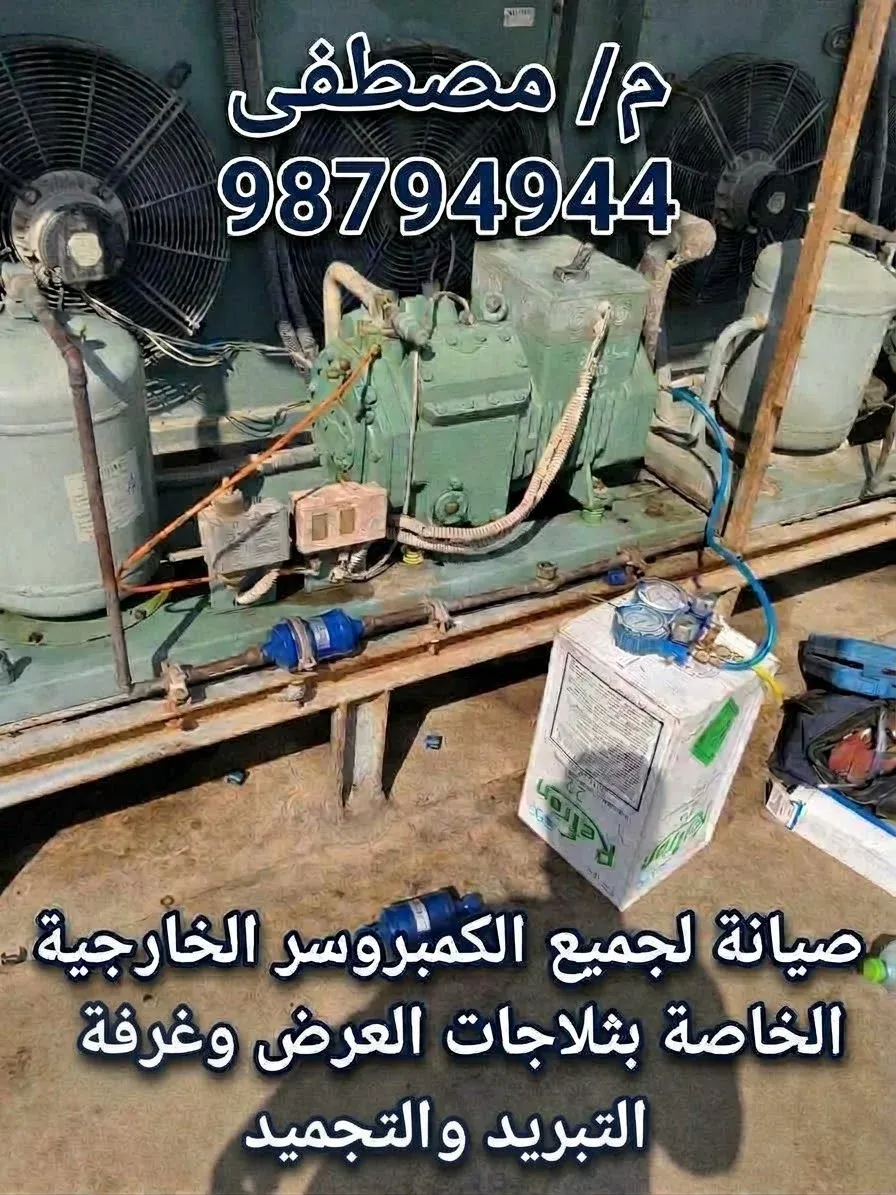
When comparing the differences between Copeland and Bitzer refrigeration units, some project owners focus on brand reputation or compressor price.
However, selecting the right equipment requires reviewing the unit type, capacity, and suitability for the cold room.
Both companies manufacture commercial refrigeration products, but individual models differ in compressor design, control methods, operating ranges, and included components.
Direct answer: Both Copeland and Bitzer can be considered for cold rooms and freezer rooms. Neither manufacturer is universally superior.
The better unit is the one that provides the required refrigeration capacity under actual operating conditions, matches the available electrical supply, refrigerant, and installation environment, and offers suitable supply and maintenance costs for the project.
Is Copeland Better for Small Cold Rooms?
Copeland offers condensing units across different capacity ranges, including solutions for smaller commercial refrigeration applications.
However, it would be inaccurate to claim that Copeland is better for every small room.
A suitable Bitzer unit may also be available for the same cooling load, although it may use a different design.
Approved models should therefore be compared instead of brands alone.
Is Bitzer Better for Large Cold Rooms?
Bitzer provides multiple capacities and application options, including units with semi-hermetic compressors and capacity-control systems.
These may suit certain medium-sized and large projects.
However, room size alone does not determine which manufacturer or compressor type should be chosen.
Copeland solutions may also be suitable after the cooling loads have been calculated.
What Is the Difference in Compressor Technologies?
Certain Copeland units use scroll or hermetic compressors depending on the product range.
Bitzer's commercial condensing units include configurations with semi-hermetic compressors and different capacity-control technologies.
Both manufacturers offer multiple product ranges, so neither brand should be reduced to one compressor type.
The priority is selecting the technology appropriate for the specific application.
Is a Semi-Hermetic Compressor Better Than a Hermetic Compressor?
Each design has its own characteristics and maintenance and operating requirements.
Some semi-hermetic compressors allow internal servicing procedures that differ from those possible with hermetically sealed compressors.
However, this does not automatically mean higher efficiency or lower operating costs under every condition.
Actual model performance, servicing requirements, and overall cost must be reviewed.
Which Uses Less Electricity, Copeland or Bitzer?
No general conclusion can be drawn from the manufacturer name alone.
Efficiency varies according to the model, compressor technology, capacity controls, load conditions, and condensing temperatures.
Performance is also affected by evaporator and condenser selection, piping, and insulation.
It is therefore preferable to request energy consumption or performance data that can be compared at identical design conditions.
Are Units Available That Adjust Their Capacity According to Load?
Yes. Refrigeration equipment is available with different methods of capacity control, depending on the model.
Bitzer offers product series supporting capacity control or variable-speed operation.
Copeland also provides various control and diagnostic technologies across its product ranges.
However, the availability of these functions does not mean they are economically suitable for every small cold room.
Are Spare Parts Available in Kuwait for Both Brands?
The availability of every model and replacement component cannot be confirmed without checking local suppliers.
Certain parts may be readily available, while others may require a special order.
It is therefore important to ask about the critical spare parts for the exact model being considered.
The party responsible for warranty support and after-sales service should also be identified.
Is Routine Maintenance Different for Copeland and Bitzer?
Maintenance procedures differ according to the unit model, compressor design, and control equipment rather than the brand name alone.
Maintenance may involve checking condensers, fans, protective devices, connections, and operating conditions.
Some systems may require additional inspections specified by the manufacturer.
The model's operating manual and a suitable maintenance plan should therefore be followed.
Copeland vs. Bitzer Refrigeration Unit Comparison
|
Comparison criterion |
Copeland |
Bitzer |
|
Applications |
Commercial refrigeration, cold rooms, and freezer rooms depending on model |
Commercial refrigeration, cold rooms, and freezer rooms depending on model |
|
Compressor technologies |
Includes scroll and hermetic compressors in specified ranges |
Includes semi-hermetic compressors in specified ranges |
|
Condensing units |
Indoor and outdoor options depending on series |
Air-cooled and water-cooled options depending on series |
|
Capacity control |
Available in certain models and solutions |
Available in certain models and solutions |
|
Low-temperature applications |
Dedicated solutions available according to model |
Dedicated solutions available according to model |
|
Electrical efficiency |
Must be evaluated under specified operating conditions |
Must be evaluated under the same conditions |
|
Replacement parts |
Depends on model and local market |
Depends on model and local market |
|
Price |
Depends on specifications and quotation scope |
Depends on specifications and quotation scope |
|
Warranty |
Depends on supplier and product conditions |
Depends on supplier and product conditions |
|
Best choice |
Determined through system design and comparison |
Determined through system design and comparison |
What Questions Help You Make the Final Choice?
Before deciding, ask:
-
Does the unit's capacity match the calculated cooling load?
-
Is the model approved for the required operating temperature?
-
Is it suitable for the outdoor installation conditions?
-
Are the evaporator and condenser compatible?
-
Is the required electrical supply available?
-
What is the expected energy consumption under project conditions?
-
Are essential replacement parts available?
-
What is the full equipment supply and installation cost?
-
What warranty and maintenance conditions apply?
-
What acceptance tests will the contractor perform?
The real difference between Copeland and Bitzer cannot be determined by manufacturer name alone. Compare two suitable models for your cold room based on performance, total cost, operating requirements, and warranty coverage.
Installing a Condensing Unit for a Commercial Cold Room: From Site Inspection to Commissioning and Handover
Installing a condensing unit for a commercial cold room begins with evaluating the room and its cooling loads, selecting suitable equipment, and then completing mechanical work, electrical installations, and technical tests.
The project may involve a new restaurant cold room, dairy warehouse, or vegetable storage room inside a supermarket.
Although these applications have different requirements, successful installation depends on the compatibility of the complete system with actual operating conditions.
Step One: Inspect the Cold Room and Installation Site
The room dimensions, insulation specifications, doors, and floor construction must be identified.
Product types, entry and exit activity, and the outdoor unit location should also be reviewed.
Electrical supply, ventilation, and piping routes must be assessed.
This information influences the calculations and specifications before equipment is purchased.
Step Two: Calculate the Cooling Load
An appropriate calculation includes heat entering or being generated inside the room, depending on the project.
This may include heat transfer through walls, ceiling, and floor, air infiltration through doors, heat from products, fans, lighting, and people.
Operating schedules and defrost cycles should also be considered when relevant.
The unit's capacity should not be chosen from room volume alone.
Step Three: Select the Condensing Unit and Evaporator
The model must be selected according to the required refrigeration capacity at the specified design conditions.
Compatibility between the evaporator, condenser, controls, and refrigerant must then be reviewed.
All components should also suit the installation environment and available electricity.
Certain applications may require specialized freezing or humidity-control equipment.
Step Four: Prepare Mounting Bases and Piping
Equipment must be positioned on suitable bases, and piping routes installed according to the approved design.
Insulation, environmental protection, and maintenance access should also be considered.
Piping routes that may interfere with operation or create oil return problems must be avoided.
Pipes must not be left without appropriate support or protection.
Step Five: Complete Electrical and Control Installations
Electrical supply, loads, protective devices, and connections must be reviewed.
Sensors, controllers, fans, and evaporator components must be connected according to the design.
The system may include high-temperature or equipment fault alarms.
This work must be performed by qualified specialists following equipment and safety requirements.
Step Six: Test the Refrigeration Circuit
Suitable leak-tightness and leak detection tests must be performed after the connections are completed.
Any fault must be corrected before proceeding.
Evacuation and charging are then performed according to the refrigeration system specifications.
Necessary tests must not be ignored, and unapproved procedures must not be used simply to accelerate handover.
Step Seven: Perform Initial Commissioning
The system is started only after all required preparation and safety measures have been completed.
Compressor, condenser, evaporator, and control functions are then checked.
Settings may need verification according to manufacturer and system design requirements.
The room should not be loaded with products before its readiness has been confirmed.
Step Eight: Test the Room's Ability to Reach Its Required Temperature
The room must be checked to confirm that it can achieve the required storage conditions.
Testing duration may differ according to room size, initial temperature, and site conditions.
Temperature distribution, fan operation, and doors should also be monitored.
The goal is to verify that the refrigeration system performs its intended function, not merely that the compressor runs.
Step Nine: Inspect Alarms and Protective Devices
The protective and control functions included in the system should be checked.
Alarm settings and temperature monitoring arrangements must also be reviewed.
Protective devices should not be disabled to reduce the frequency of compressor shutdowns.
These components form part of the system's safe operation.
Step Ten: Receive Documentation and Recommendations
The customer should preferably receive:
-
Models of the installed equipment.
-
Condensing unit and evaporator information.
-
Available piping layout drawings.
-
Electrical and control information.
-
Refrigerant type.
-
Agreed test results.
-
Operating instructions.
-
Basic maintenance plan.
-
Warranty conditions.
-
Contractor contact details.
When Is the Cold Room Ready for Acceptance?
The room is ready when the agreed work has been completed, the required tests have been passed, and suitable operating conditions have been achieved.
There should also be no unresolved leaks or abnormal alarms preventing proper operation.
Additional testing under a suitable load may be required depending on the project.
Do not accept a cold room simply because the refrigeration unit starts. Request testing that demonstrates the system's ability to reach the required temperature and operate consistently.
Copeland Refrigeration Unit Price With Installation: How Do You Calculate the Complete Project Budget?
When searching for the price of a Copeland refrigeration unit with installation, project owners need to understand the final cost of equipping the cold room, rather than the price of the condensing unit alone.
The main equipment may initially appear to fit the budget, but additional expenses can arise from longer piping routes, electrical installations, a different evaporator, or an outdoor mounting base.
Direct answer: The total price of a Copeland unit with installation includes the equipment and related components, transportation, lifting, mounting, piping, electrical work, testing, commissioning, and agreed warranty coverage.
An accurate figure in Kuwaiti dinars cannot be provided without knowing the room dimensions, cooling load, selected model, and scope of work.
Are There Fixed Prices Based on Cold Room Size?
Some suppliers may offer ready-made packages for rooms of specified dimensions, but these should not automatically be considered suitable for every application.
A room of a particular size may be used for chilled storage, while another room of identical dimensions is intended for frozen products.
Heat entering through doors, insulation, and daily product deliveries also varies.
The proposed price must therefore be based on the project's actual operating requirements.
Does the Room Price Include Insulation and Doors?
Not necessarily. A quotation may cover only the refrigeration unit.
Another quotation may include insulated panels, the door, flooring, and complete cold room construction.
The items must be separated clearly so you know whether the project will be ready for operation after handover.
Insulation specifications, rather than dimensions alone, must also be verified.
Is Electrical Work Included With the Unit?
Electrical connections may be the responsibility of the same contractor or another party, depending on the agreement.
The project may require a protective control panel, new electrical connections, or a suitable power supply.
Responsibility for each task must therefore be specified.
The unit price should not be approved before the electrical requirements have been established.
Does Longer Piping Increase the Cost?
Longer routes may increase materials, labor, and insulation costs.
Pipe length and height differences also affect technical calculations.
Certain arrangements may require additional components to maintain proper operation.
The outdoor unit's location should therefore be determined before the final quotation is issued.
Does Rooftop Installation Involve Additional Expenses?
Costs may include preparing a base, lifting equipment, mounting the unit, or installing specialized piping routes.
However, this depends on accessibility and building conditions.
The roof's load-bearing capacity and safety requirements must also be reviewed.
It should not be assumed that every rooftop project involves identical costs.
Does the Evaporator Type Change the Budget?
Yes. Evaporators differ in refrigeration capacity, dimensions, number of fans, and defrosting equipment.
A freezer room may need components different from those used in a chilled storage room.
The product arrangement inside the room also affects evaporator selection.
Its specifications must therefore be included in the quotation.
Is Warranty Coverage Included in the Price?
A quotation may include certain warranties according to the supplier's and installation contractor's conditions.
However, it must be established whether coverage applies to the refrigeration unit, installation work, or specific components.
Exclusions and operating and maintenance requirements must also be explained.
Comprehensive coverage should not be assumed without a written document.
Should You Set Aside a Budget for Routine Maintenance?
It is preferable for project owners to include maintenance expenses in their operating plans.
The system may need condenser cleaning and inspections of fans, sensors, and protective devices according to manufacturer requirements.
Doors, insulation, and temperatures should also be monitored.
Regular maintenance does not mean that every breakdown can be prevented, but it helps maintain suitable operating conditions.
Complete Copeland Unit and Installation Cost Breakdown
|
Cost item |
What it includes or requires |
What to ask before signing |
|
Copeland unit |
Compressor, condenser, and unit components |
What is the actual model and capacity? |
|
Internal evaporator |
Evaporator coil, fans, and equipment |
Is it suitable for the load and operating temperature? |
|
Refrigeration piping |
Pipes, joints, and accessories |
What route and length are included? |
|
Insulation |
Pipe insulation and other design requirements |
What materials and specifications are used? |
|
Electrical work |
Power supply, protection, and connections |
Who is responsible for preparing them? |
|
Controls |
Sensors, panels, and alarms |
Which functions are included? |
|
Mounting |
Bases, transportation, and lifting |
Are there separate fees? |
|
Testing |
Leak-tightness, evacuation, and commissioning |
What are the acceptance conditions? |
|
Warranty |
Components and labor according to the agreement |
What are the duration and exclusions? |
|
Maintenance |
Follow-up service where agreed |
Is there a separate plan or contract? |
How Can You Compare Two Quotations With the Same Price?
One quotation may be better in terms of included work or equipment compatibility even when both have the same price.
The models, capacities at operating conditions, and scope of installation must therefore be compared.
Warranty conditions and maintenance service availability should also be reviewed.
Do not rely solely on the invoice total.
When Is Choosing the Cheapest Quotation Unwise?
A low-cost quotation may be unsuitable if it does not specify refrigeration capacity, uses unidentified equipment, or excludes essential tests.
You should also be cautious of pricing based only on room size without considering application, insulation, and cooling loads.
Selecting unsuitable equipment may lead to more expensive modifications later.
If you want the price of a Copeland refrigeration unit with installation, request a final quotation covering equipment, evaporator, piping, electrical work, testing, and commissioning. This helps prevent unexpected additional charges during the project.
Requesting a Bitzer or Copeland Refrigeration Unit Quote: Service Steps and Why Contact Us
When requesting a quotation for a Bitzer or Copeland refrigeration unit, it is better to prepare clear details about the new cold room so the technical provider can understand the requirements and define the scope of design, equipment supply, and installation.
You may need an independent condensing unit only, a complete refrigeration system with an evaporator, controls, and piping, or a new cold room built and equipped from the beginning.
The type of request must therefore be established before equipment prices are compared.
Step One: Identify the Business Activity
Begin by explaining whether the project is for a restaurant, food warehouse, supermarket, factory, or other commercial facility.
Then identify the products that will be stored inside the room.
Product types affect required temperatures, operating methods, and cooling loads.
One generic design should not be used for every business.
Step Two: Specify Room Dimensions and Insulation
Prepare the room's length, width, and height in meters.
Mention the insulation thickness and panel type if the room already exists.
The number of doors and how they will be used should also be explained.
If the room is new, its design should preferably be reviewed before insulated panel manufacturing begins.
Step Three: Identify the Required Temperature
Explain whether the room will be used for chilling or freezing.
Then specify the storage temperature required for your products.
The unit should not be chosen before operating conditions have been established.
The temperature of products entering the room must also be known.
Step Four: Explain Daily Inventory Quantities
Mention the quantity of products entering the room daily and whether they are already chilled or require substantial temperature reduction.
Also clarify whether the room will be used only for storage or for actual product freezing.
This information is essential for calculating the cooling load.
The unit's capacity cannot be accurately estimated from room dimensions alone.
Step Five: Identify the Outdoor Unit Location
Explain whether the condensing unit will be installed on the roof, in an outdoor yard, or inside a dedicated equipment area.
Also mention the approximate distance to the room and any height difference.
Photographs may help explain the piping route and mounting arrangements.
However, final measurements must be confirmed before installation.
Step Six: Select a Model After Calculations
The cooling load, operating temperature, location, and electrical supply must be reviewed before selecting the unit.
Suitable Copeland and Bitzer models can then be compared.
Technical performance data at the design conditions should be used rather than relying on nominal ratings that cannot be compared directly.
It may be useful to assess several options based on capacity and cost.
Step Seven: Prepare a Technical and Financial Quotation
The quotation should include:
-
Proposed unit model and brand.
-
Refrigeration capacity at design conditions.
-
Refrigerant type.
-
Condenser and compressor specifications.
-
Internal evaporator specifications.
-
Control and protective components.
-
Piping and insulation.
-
Included electrical work.
-
Transportation, mounting, and installation.
-
Leak detection, leak-tightness testing, and evacuation.
-
Trial operation and acceptance.
-
Agreed installation schedule.
-
Warranty conditions.
-
Total cost and excluded items.
Step Eight: Agree on Project Execution
Once the design and price have been reviewed, the required work and responsibility for site preparation must be agreed upon.
The room may need structural or electrical work before the unit arrives.
Any changes to the specifications should also be documented in writing.
Equipment ordering should preferably not begin until the main models have been confirmed.
Step Nine: Install, Test, and Hand Over the System
The work is carried out according to equipment requirements and safety procedures.
Suitable technical tests are then completed, and the room's ability to reach its required temperature is reviewed.
Important observations must be documented before final acceptance.
Operating and maintenance instructions should also be explained to the customer.
Step Ten: Contact Cold Room and Display Refrigerator Maintenance
The Cold Room and Display Refrigerator Maintenance website describes the installation and maintenance of chilled and frozen storage rooms, external compressors, evaporators, and centralized refrigeration systems.
It also explains a service process beginning with receiving the request details and coordinating inspection, followed by explaining and approving the proposed work, performing the service, and verifying operation.
The website lists service coverage across Kuwait's six governorates.
However, the reviewed website page does not provide a confirmed catalog of available Copeland and Bitzer models, their prices, or their warranties.
You should therefore inquire directly about the availability and installation of the particular unit you require.
Why Contact Cold Room and Display Refrigerator Maintenance?
The website lists services relevant to new cold room project owners, including:
-
Commercial cold room installation.
-
Freezer room installation.
-
Centralized refrigeration system maintenance.
-
External compressor maintenance.
-
Evaporator installation and replacement.
-
Receiving project descriptions and equipment details.
-
Coordinating site inspections.
-
Explaining proposed work before approval.
-
Checking operation after completing the service.
-
Advertised service coverage across Kuwait's six governorates.
These are advertised services. They do not mean that every Copeland or Bitzer model is available or that one fixed price or warranty applies to all projects.
What Advantages Should You Compare Before Choosing an Installation Provider?
|
Selection criterion |
Why it matters for a new cold room |
|
Cooling load calculation |
Helps determine a suitable unit capacity |
|
Comparing Copeland and Bitzer models |
Supports selecting the right solution, not just a brand |
|
Reviewing room insulation |
Reduces design mistakes |
|
Evaporator and condenser compatibility |
Supports overall refrigeration performance |
|
Selecting a unit for the ambient temperature |
Considers Kuwait's operating conditions |
|
Specifying piping and electrical work |
Helps prevent unexpected additional work |
|
Explaining quotation components |
Clarifies what the price includes |
|
Commissioning tests |
Confirms that the room reaches its required temperature |
|
Clear documentation and warranty |
Supports maintenance and follow-up |
|
Maintenance and service plan |
Supports operation after handover |
What Information Should You Send When Requesting a Quotation?
Prepare:
-
Business name and location in Kuwait.
-
Room type: chilled storage or freezing.
-
Length, width, and height.
-
Required temperature.
-
Types of products stored.
-
Daily product quantities.
-
Insulation and door condition.
-
Condensing unit installation location.
-
Available electrical supply.
-
Whether you need equipment supply only or full installation.
-
Whether you prefer Copeland or Bitzer.
-
Photographs or a layout drawing, if available.
How Can You Request a Copeland or Bitzer Refrigeration Unit Quotation in Kuwait?
You can contact Cold Room and Display Refrigerator Maintenance at 98794944 or submit a request through the official website.
Explain that you need a refrigeration or condensing unit quotation for a new room, including its dimensions, required temperature, and stored products.
Then ask about site inspection, available models, supply and installation scope, costs, and warranty conditions.
If you are undecided between Copeland and Bitzer for your new cold room, begin with a technical quotation comparing models suitable for the cooling load and operating temperature. Then choose according to total cost, specifications, and installation terms.
Frequently Asked Questions About Copeland and Bitzer Refrigeration Units in Kuwait
Which Is Better for Cold Rooms in Kuwait: Copeland or Bitzer?
Neither brand is universally superior. Both provide commercial refrigeration solutions.
The right choice depends on the cooling load, storage temperature, surrounding conditions, refrigerant type, available electricity, and replacement part availability.
It is better to compare two specific models at identical operating conditions, taking equipment supply, installation costs, and warranty into consideration.
How Much Does a Complete Copeland Refrigeration Unit Cost With Installation?
The price depends on the unit capacity and model, compressor and condenser type, evaporator, controls, piping length, electrical work, installation, and commissioning.
A quotation may cover only the condensing unit or an entire refrigeration system.
The required scope of work and room specifications must therefore be established before a reliable price in Kuwaiti dinars can be provided.
Is a Bitzer Unit Suitable for a Sub-Zero Freezer Room?
Yes. Bitzer offers models designed for low-temperature refrigeration applications, but not every model is suitable for every freezer room.
The unit must be selected according to cooling load, evaporating and condensing temperatures, and refrigerant type, together with a suitable evaporator and defrost system.
Storing products that are already frozen must also be distinguished from freezing newly introduced products.
Can You Choose a Cold Room Compressor Based on Horsepower?
Horsepower alone is not sufficient.
The cooling load must be calculated, and actual refrigeration capacity at design conditions must be reviewed.
Room insulation, product temperatures, loading quantities, and door opening must also be considered.
Two units with similar nominal horsepower may deliver different refrigeration performance at the required operating temperatures.
How Can I Request a Copeland or Bitzer Unit Installation Quote in Kuwait?
Prepare the room dimensions, required temperature, product types, daily quantities, insulation details, available electricity, and outdoor unit location.
Then request a quotation identifying the unit model, refrigeration capacity, evaporator, piping, installation, testing, and warranty conditions.
You can contact Cold Room and Display Refrigerator Maintenance to inquire about available models and services for your project.
Conclusion: Copeland and Bitzer Refrigeration Unit Installation Begins With Selecting the Right Capacity
If you are preparing a new cold room or freezer room for a restaurant, warehouse, supermarket, or food factory in Kuwait, Copeland and Bitzer refrigeration unit installation in Kuwait requires an appropriate technical assessment before choosing the brand or approving the price.
Both manufacturers provide commercial refrigeration solutions, but project success depends on selecting a model compatible with the cooling load, storage temperature, refrigerant type, electrical supply, and installation conditions.
As explained throughout this guide, the price of a condensing unit does not necessarily represent the cost of a complete refrigeration system.
Your room may also require an evaporator, piping, controls, protective devices, electrical work, testing, and commissioning.
We have also discussed the differences between selecting units for cold rooms and freezer rooms, the importance of accounting for product temperatures and door-opening loads, and why insulation and Kuwait's high ambient temperatures must be considered.
When comparing Copeland and Bitzer, the better choice is not determined by the manufacturer's name alone.
It depends on the particular model's actual capacity at the required operating conditions, system design efficiency, installation and maintenance costs, and spare part availability.
It is important not to approve a cheaper quotation without reviewing the equipment, piping, electrical work, testing, and warranty details.
Otherwise, additional expenses may arise, or the refrigeration system may require modifications after installation.
Are You Preparing a New Cold Room and Unsure Whether to Choose Copeland or Bitzer?
Contact Cold Room and Display Refrigerator Maintenance at 98794944 or through the official website.
Provide your room dimensions, product types, required storage temperature, and project location.
Request information about site inspection, suitable refrigeration units, and an itemized quotation covering equipment, installation, commissioning, and available warranty conditions.
Do not choose a refrigeration unit based solely on horsepower or brand, and do not compare prices before confirming equivalent specifications.
Correct system design, appropriate refrigeration capacity, and thorough acceptance testing help you prepare a cold room or freezer room that meets your business requirements and operates under the intended storage conditions.