Food Authority-Compliant Cold Room Installation in Kuwait
Food Authority-Compliant Cold Room Installation in Kuwait: Specifications and Regulatory Inspections
If you own a restaurant, grocery store, food shop, or commercial warehouse in Kuwait and are planning to install a new cold room or upgrade an existing one, you probably want to understand the requirements for food storage cold rooms in Kuwait.
You may also be wondering whether the flooring, insulation, storage temperature, and shelving meet the requirements of the Public Authority for Food and Nutrition, and which details you should check before a regulatory inspection.
Direct answer: Preparing a cold room for a food business requires identifying the products and their appropriate storage temperatures, selecting refrigeration equipment capable of maintaining those temperatures, and providing cleanable surfaces, properly sealed doors, suitable shelving, temperature measuring equipment, monitoring records, and procedures that prevent contamination and support safe food storage.
However, official approval depends on the regulations currently applicable to the business activity and location, together with approvals from the relevant authorities. Installing refrigeration equipment alone does not establish legal compliance.
It is important to distinguish between official regulatory requirements and technical recommendations.
Kuwait's Public Authority for Food and Nutrition publishes regulations covering health licensing and food inspections, along with requirements for particular business activities.
For example, its school canteen regulations published in 2025 include specific requirements for refrigeration, shelving, and temperature records. However, dimensions or conditions specifically established for school canteens should not automatically be applied to every restaurant or warehouse without reviewing the regulations governing that particular activity.
In Kuwait's hot climate, even a well-insulated cold room may experience rising temperatures if the condensing unit is unsuitable, ventilation is inadequate, or doors are opened frequently.
In this guide from Cold Room and Display Refrigerator Maintenance, we explain how to prepare food storage cold rooms, from selecting the installation location and technical specifications to storage temperatures, flooring, shelving, and temperature records.
We also explain how to prepare for regulatory inspections and request a clear project quotation, without making unsupported promises of official approval.
Food Storage Cold Room Requirements in Kuwait: What Are the Essential Conditions?
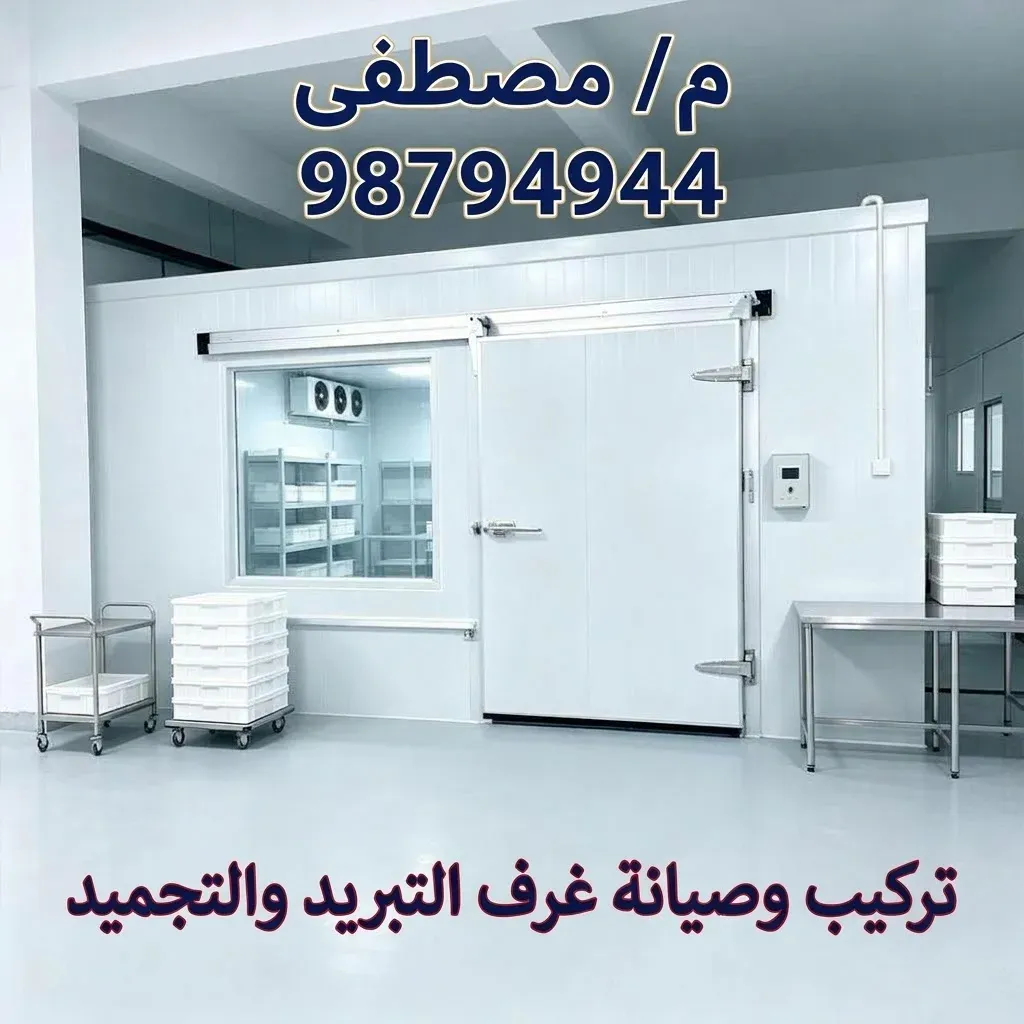
When researching food storage cold room requirements in Kuwait, you need to understand that a cold room is more than a compressor that produces cooling and insulated sandwich panels that preserve low temperatures.
It is part of the establishment's food safety system, and product safety may be affected by unsuitable storage arrangements, unstable temperatures, or walls and floors that are difficult to clean.
Most importantly, the type of business determines which requirements apply.
A licensed food warehouse, restaurant, school canteen, and facility handling imported food may each be subject to different conditions.
Which Authority Is Responsible for Food Cold Room Requirements in Kuwait?
The Public Authority for Food and Nutrition is responsible for regulating aspects of food safety, inspections, and health licensing within its jurisdiction.
The Authority publishes regulations relating to licensing, inspections, and different food business activities.
However, a project may also require approvals from other authorities depending on the property, business activity, and structural or electrical work involved.
A refrigeration technician's inspection must therefore not be treated as a substitute for official licensing procedures.
Is There One Regulation for All Cold Rooms?
You should not assume that one checklist applies to every food business.
Requirements may differ between restaurants, school canteens, warehouses, and food import activities.
The official regulations page includes separate decisions covering food inspections, health licensing, school canteens, and imported food.
You should therefore identify your business classification first and then review the applicable regulations.
Is Installing a Cold Room Enough to Achieve Compliance?
No. Successful technical operation does not automatically establish that the room meets all health and regulatory requirements.
The temperature may be suitable, but there could still be problems with product organization, cleanliness, records, or licensing.
Similarly, surfaces may be easy to clean while the refrigeration system cannot handle the actual cooling load.
The location, operating procedures, and management arrangements must therefore be assessed alongside the equipment.
Must the Doors Be Properly Sealed?
Proper door sealing is important for reducing the entry of warm air and moisture and limiting opportunities for contamination and pest entry.
Damaged door gaskets may also affect temperature stability and increase the refrigeration load.
Published storage requirements include provisions relating to properly sealed closures and preventing insects and rodents from entering.
However, the specific door type and equipment must be determined according to the cold room design and business activity.
Must the Walls and Ceiling Be Easy to Clean?
It is advisable to select smooth internal surfaces suitable for food storage environments, which do not easily retain dirt and can withstand approved cleaning procedures.
Joints and connections should also be constructed in ways that minimize moisture penetration and dirt accumulation.
Choosing attractive-looking panels is not sufficient if joints remain open or certain areas are difficult to access.
The official material and finishing requirements for the site must be checked before approval.
Does a Cold Room Need a Thermometer?
Temperature measurement and monitoring are essential elements of chilled food storage management.
The 2025 school canteen regulations require covered refrigeration equipment to have a thermometer and an on-site monitoring record, along with a specified temperature limit for that activity.
However, recording methods, frequency, and additional requirements may differ according to the type of business.
Temperature measuring equipment should therefore be supported by a clear monitoring procedure appropriate for the activity.
Are Shelves Necessary Inside a Cold Room?
Suitable shelving helps keep food away from the floor, facilitates cleaning, and makes it easier to inspect products.
Shelves should also be suitable for the intended loads, resistant to corrosion, and easy to clean.
The school canteen regulations include specific minimum shelving clearances from the floor, but those figures must not automatically be applied to every type of warehouse without checking the relevant requirements.
Products must also not be stored in ways that obstruct airflow.
Does Food Arrangement Affect Compliance?
Yes. Disorganized storage may cause incompatible products to come into contact, obstruct airflow, or make expiry dates difficult to monitor.
Raw foods should preferably be separated from ready-to-eat products according to the approved food safety procedures.
Incoming inventory and stock movement should also be organized so that products and their dates can be monitored.
A newly installed cold room cannot resolve poor food handling practices on its own.
Is Maintenance Required After Installation?
Yes. Refrigeration performance may deteriorate because of a dirty condenser, damaged door gasket, or stopped fan.
Drainage or control problems may also arise, affecting cleanliness and temperature.
Preventive maintenance supports the monitoring of these conditions, but it cannot guarantee that every breakdown will be prevented.
Temperature records must continue to be maintained between technical maintenance visits.
Preliminary Food Cold Room Inspection Checklist
-
Identify the business activity and required license.
-
Establish product types and storage temperatures.
-
Choose a suitable room location.
-
Install surfaces that can be cleaned effectively.
-
Ensure that doors and joints are properly sealed.
-
Provide suitable thermal insulation.
-
Select refrigeration capacity according to the cooling load.
-
Install temperature measuring equipment.
-
Establish a procedure for monitoring records.
-
Use suitable shelving.
-
Avoid stacking products in front of the evaporator.
-
Organize cleaning and pest prevention procedures.
-
Prepare procedures for responding to temperature increases.
-
Keep equipment and maintenance information.
-
Verify the official requirements applicable to the business.
If you need a food storage cold room in Kuwait, begin by identifying the requirements applicable to your specific business before purchasing insulation panels or a compressor. This can help prevent costly modifications after installation.
Preparing a Cold Room for Food Establishments: How Do You Choose the Right Design for a Restaurant or Shop?
When preparing a cold room for a food establishment, priorities differ according to the type of project.
A restaurant may need to store meat, vegetables, and dairy products while employees enter the room frequently.
A wholesale warehouse, on the other hand, may receive large quantities of food stored on shelving or pallets.
Selecting a large room with a powerful compressor is therefore not enough.
A suitable design must consider storage temperature, cooling load, cleaning accessibility, employee movement, and the way products are stored.
What Is the First Step in Designing a Food Storage Cold Room?
Begin by identifying the establishment's business activity and the food products to be stored inside the room.
Then review the appropriate storage temperature for each product and the maximum quantities expected during busy periods.
The temperature of incoming deliveries and the frequency of door opening must also be established.
These details help determine room size and the required cooling load.
Is a Restaurant Cold Room Different From a Grocery Store Cold Room?
It may differ in the types of products stored, access frequency, and shelving arrangements.
Some restaurants receive raw ingredients and use them throughout the day, while grocery stores may mainly store packaged products ready for sale.
Requirements for product separation and cleaning procedures may also differ.
A design used in one establishment should therefore not be copied into another without reviewing how the space will be used.
Can One Cold Room Be Used for Every Type of Food?
That depends on whether the products have compatible storage requirements and whether cross-contamination can be prevented.
Frozen products may require a separate room from chilled foods.
Certain fresh products may also need different temperatures or humidity levels.
Incompatible foods should not be combined in one room simply to reduce construction costs.
Does Room Size Determine Compressor Capacity?
No. Room size is important, but it is not enough.
The cooling load is also influenced by insulation, ambient temperature, door movement, incoming products, fans, and lighting.
A small room used frequently may have a higher cooling load than a larger room opened only occasionally.
The required capacity must therefore be calculated before selecting the compressor and evaporator.
Do Kuwait's High Temperatures Affect the Design?
Yes. High air temperatures around the condensing unit may make heat rejection more difficult.
Inadequate ventilation or recirculation of discharged hot air may also reduce performance.
Site conditions and equipment capacity at the design ambient temperature must therefore be reviewed.
Choosing a well-known compressor brand is insufficient without confirming that the complete condensing unit is suitable.
Must the Condensing Unit Be Installed Outside the Cold Room?
Refrigeration systems vary between integrated and remote-unit designs.
However, the heat generated during condensation must be rejected in a suitable location that does not compromise system performance or site safety.
Some sites may need additional piping or ventilation arrangements.
Equipment that discharges heat should not be installed in an enclosed, poorly ventilated area without appropriate technical assessment.
Is Door Position Important in the Design?
Yes. Door position affects product movement, employee access, and the amount of warm air entering the room.
The opening must allow products to be transferred safely.
A suitable internal release mechanism must also be provided when the room is large enough for people to enter.
Doors must not obstruct access routes or emergency equipment.
Does Cold Room Lighting Require Special Specifications?
Lighting should be suitable for the room's temperature, humidity, and cleaning conditions.
Electrical connections must also be protected appropriately for the environment.
Lighting should preferably illuminate products and movement areas without obstructing maintenance.
Final electrical requirements must follow the relevant specifications and project design.
Can Stainless Steel Shelves Be Installed?
Stainless steel shelving or other suitable corrosion-resistant materials may be used according to the business requirements.
The shelves must be able to support the intended weight and be easy to clean.
They should also be arranged so that they do not block evaporator openings or interfere with airflow.
Shelving should not be positioned only after the room is completed without considering equipment locations.
What Does a Food Cold Room Installation Project Include?
Depending on the agreement, it may include:
-
Site inspection.
-
Review of requirements applicable to the business.
-
Determination of internal and external dimensions.
-
Preparation of a room layout.
-
Cooling load calculations.
-
Selection of insulated panels.
-
Flooring and door preparation.
-
Selection of the compressor, condenser, and evaporator.
-
Refrigerant piping.
-
Electrical connections and controls.
-
Temperature sensors and required alarms.
-
Refrigeration circuit integrity testing and commissioning.
-
Operating and maintenance instructions.
If you are preparing a restaurant or food shop, request a cold room design based on the products and applicable health requirements—not merely the dimensions of the available space.
Food Cold Storage Warehouse Requirements in Kuwait: How Do Warehouses Differ From Restaurants?
When researching food cold storage warehouse requirements in Kuwait, you need to distinguish between a cold room serving a restaurant kitchen and an independent commercial warehouse that receives large quantities of food and distributes them to several shops or branches.
A warehouse may have different licensing, operating, and inspection requirements, particularly if it handles imported food or stores products for other businesses.
A mistake some business owners make is preparing the premises as an ordinary warehouse and only asking about the required documents and approvals after the refrigeration installation has been completed.
Does a Food Warehouse Need a Health License?
Regulations published by Kuwait's Public Authority for Food and Nutrition address health licensing and the inspection of food establishments.
The Kuwait Municipality portal also provides a published procedure for applying for a health license for a food storage warehouse, including documents, inspections, and approvals from relevant authorities.
However, the authority and procedures currently responsible for a particular application must be verified according to the business classification.
The publication of a procedure on a government portal does not mean that it overrides subsequent regulatory updates or changes.
It is preferable to review licensing requirements before leasing a warehouse or installing equipment that would be difficult to modify later.
Does a Refrigerated Food Warehouse Need a Specific Floor Area?
The appropriate area depends on the business activity, product quantities, storage arrangements, and licensing requirements.
An establishment may need access aisles for workers and carts, together with suitable clearances around shelving and equipment.
Importantly, a warehouse floor-area requirement appearing in the 2025 school canteen regulations applies within the scope of those regulations.
It must not be treated as the universal minimum area for all food warehouses in Kuwait.
The licensing requirements applicable to the particular warehouse must therefore be reviewed.
Should Food Storage Be Separated From Chemicals?
Storage must be organized to prevent food from being exposed to substances that may contaminate it.
Cleaning products, pesticides, and hazardous chemicals should not be stored alongside food products inside the cold room.
Products that could cause odor transfer or cross-contamination must also be separated according to the business's requirements.
If the establishment stores several categories of materials, clearly defined separate areas should preferably be included in the layout.
Do Warehouses Need Doors That Prevent Pest Entry?
Properly sealed doors and openings are important for preventing insects and rodents from entering.
There should also be no gaps around pipes, cables, or joints that allow pests to reach storage areas.
The establishment may have a pest control program designed to comply with food safety requirements.
However, pest control procedures must not contaminate food or violate the conditions governing the use of approved products.
Is Storing Food Directly on the Floor Acceptable?
Storing food directly on the warehouse floor may make cleaning and inspection more difficult and increase the risk of contamination or exposure of packaging to water.
The 2025 school canteen regulations prohibit floor-level storage and establish specific shelving and clearance requirements within their regulatory scope.
For other warehouses, the provisions applicable to their activities must be reviewed, including any prescribed elevation and spacing requirements.
In practice, organizing products on suitable shelving or storage platforms helps facilitate cleaning and monitoring.
Does a Warehouse Need a Separate Receiving Area?
A dedicated receiving area may help prevent cold room congestion and facilitate product inspection before storage.
It also supports checking packaging, expiry dates, and temperatures before products are brought inside.
A large warehouse may need organized movement routes to minimize the time temperature-sensitive foods spend outside suitable storage conditions.
However, the necessary layout depends on the business activity, operating scale, and relevant requirements.
Does a Cold Room Need Backup Power During Electricity Outages?
The effect of electricity interruptions on stored products should be assessed, and an appropriate contingency plan should be prepared.
Certain types of refrigerated or frozen food warehouses may be subject to backup power requirements under regulations applicable to them.
An older Kuwaiti decision relating to food warehouses and refrigerated or frozen storage includes a requirement for a backup generator for cold and freezer warehouses.
However, whether and how that provision applies to a current project must be confirmed with the relevant authorities instead of assuming that it applies to every small cold room inside a restaurant.
From an operational perspective, someone should be responsible for receiving high-temperature alarms and implementing procedures to protect the inventory.
Is There a Difference Between a Food Storage Warehouse and an Imported Food Warehouse?
Imported food may be subject to additional procedures involving documents, inspections, storage, and regulatory controls.
The 2023 imported food regulations refer to storage in warehouses that meet the storage requirements approved by the Authority.
However, their application depends on the nature of the import business, shipments, and relevant procedures.
Every restaurant cold room should not automatically be classified as an imported food warehouse.
Should Incoming and Outgoing Products Be Documented?
Documenting product deliveries, dates, and identifying information helps maintain inventory traceability and manage recalls or damaged goods.
Stock rotation can also be organized according to product expiry dates rather than placing older items behind newer stock.
Records should reflect actual products and transactions, not simply documents prepared when an inspection is approaching.
Specific documentation requirements may apply depending on the business activity.
Food Cold Storage Warehouse Inspection Checklist
|
Inspection area |
What should you verify? |
Why is it important? |
|
Licensing |
Warehouse activity and required approvals |
Regulatory clarity |
|
Location |
Space, access, and intended use |
Operational suitability |
|
Structure |
Walls, ceiling, and flooring |
Cleanliness and protection |
|
Doors |
Proper closure and sealed openings |
Reduces pest and warm air entry |
|
Refrigeration |
Capacity and operating temperature |
Maintains storage conditions |
|
Shelving |
Materials, load capacity, and arrangement |
Inventory organization |
|
Products |
Separation, packaging, and labeling |
Prevents contamination and supports traceability |
|
Records |
Temperature, receiving, and monitoring |
Documents operating procedures |
|
Electricity |
Protective devices and outage planning |
Reduces shutdown risks |
|
Maintenance |
Schedules, work completed, and reports |
Supports equipment monitoring |
If you operate a commercial food warehouse in Kuwait, do not purchase the compressor or insulated panels before establishing the licensing category and storage conditions applicable to your business, particularly if the facility serves several branches or handles imported food.
Public Authority for Food and Nutrition Requirements for Warehouses: What Must Be Reviewed Before Construction?
When reviewing the Public Authority for Food and Nutrition requirements for warehouses, the most important point is not to rely on a checklist circulated among contractors and treat it as one universal law for every project.
The Authority publishes different regulations according to the activity, including health licensing regulations, food inspection regulations, and imported food regulations, along with provisions governing specific establishments such as school canteens.
A restaurant or warehouse owner must therefore review the requirements applicable to their activity while complying with other approvals concerning the building, electricity, and safety.
Which Regulations Should a Food Business Owner Review?
Begin by reviewing the health licensing regulations and the requirements for the licensed business activity.
Then review the relevant food inspection requirements concerning storage and handling.
If the business imports food, additional requirements related to shipments and warehouses may apply.
Published regulations can be accessed through the Authority's official regulations page.
Does the Authority Approve the Engineering Design Before Installation?
Review and approval procedures depend on the activity, the nature of the project, and the authorities responsible.
Business owners may need to submit drawings or documents or undergo inspections according to the applicable requirements.
However, a cold room installed inside a restaurant should not automatically be assumed to follow the same procedure as the construction of an independent warehouse.
The required documents should therefore be confirmed before contracting for the work.
Does Installing a New Cold Room Guarantee Approval?
No. A newly installed room may still be unsuitable because of product arrangements, temperature, cleanliness, or site requirements.
There may also be issues concerning the establishment's license or operating procedures, even when the equipment is in good condition.
Technical acceptance of the refrigeration installation must therefore be distinguished from passing an official health inspection.
A promise of guaranteed Authority approval should not be accepted merely because particular equipment is purchased.
Does the Authority Inspect the Products Inside the Room?
Food inspections are not limited to the physical appearance of the equipment.
They also concern the safety of products and the conditions under which they are handled and stored.
Depending on the inspection and applicable requirements, the review may include temperatures, storage organization, expiry dates, and cleanliness.
An installation certificate alone is therefore not sufficient to demonstrate that every product stored inside is safe.
Daily operating procedures must also be suitable for the food actually being stored.
Is the Temperature Display Reading Sufficient?
The displayed temperature is useful, but the accuracy of the measurement and sensor location must be verified.
Suitable monitoring and records should also be maintained according to the business requirements.
Temperatures may differ between areas of a room if shelves obstruct airflow or fans are not operating effectively.
The refrigeration system and airflow distribution must therefore be tested rather than relying on a single controller reading.
Do All Food Products Require the Same Storage Temperature?
No. Refrigerated and frozen foods require different storage temperatures, and requirements may also differ between products within the refrigerated category.
The new school canteen regulations state that each food product must be stored under conditions appropriate to its characteristics and refer to the relevant Gulf standard for transporting and storing chilled and frozen foods.
Operating every cold room in a facility using one temperature setting without reviewing product requirements is therefore incorrect.
Should There Be a Written Cleaning Plan?
A suitable cleaning plan helps an establishment organize responsibilities and cleaning frequency.
It may cover flooring, shelving, doors, gaskets, and drainage areas.
Cleaning products and procedures must be suitable for the surfaces and foods present, while preventing chemicals from coming into contact with products.
Official documentation requirements differ according to the activity, so the cleaning plan must align with the applicable conditions.
Does Pest Control Remove the Need for Properly Sealed Doors?
No. Pest control procedures do not eliminate the need to prevent pests from entering.
Gaps around doors and service penetrations, together with accumulated waste, may increase the likelihood of insects and rodents entering.
Structural and operational causes should preferably be addressed alongside a suitable pest management program.
Pesticides must not be used inside a food storage room in a manner that could contaminate products.
What Are the Contractor's Responsibilities and the Business Owner's Responsibilities?
The contractor is responsible for the work agreed under the contract, such as insulation, equipment installation, and testing, according to the contractual terms.
The business owner is responsible for managing the activity, licensing requirements, product monitoring, and daily operations according to their legal obligations.
Certain work or documents may involve both parties, but responsibilities should be clearly defined in writing.
A refrigeration technician should not make regulatory promises beyond their professional responsibilities or supporting documentation.
Official Requirements vs. Technical Recommendations
|
Subject |
Regulatory basis to review |
Technical recommendation for cold room preparation |
|
Licensing |
Business activity regulations and approval procedures |
Review requirements before purchasing |
|
Temperature |
Applicable limits for the product and activity |
Select sufficient capacity to maintain them |
|
Surfaces |
Applicable health specifications |
Use finishes that are easy to clean |
|
Doors |
Relevant sealing and safety requirements |
Maintain effective gaskets and inspect regularly |
|
Shelving |
Material and clearance requirements where applicable |
Design for load capacity and cleaning access |
|
Records |
Documentation required by the activity |
Use consistent measurements and clear monitoring |
|
Electricity |
Requirements approved by relevant authorities |
Provide appropriate protection and alarms where needed |
|
Approval |
Decision of the competent regulatory authority |
Carry out technical tests and provide handover documents |
If you want a cold room suitable for Kuwait Food Authority requirements, confirm the regulations applicable to your particular activity before work begins, and ask the contractor to identify the technical aspects included in the quotation.
Food Storage Cold Room Specifications: How Do You Select the Compressor, Evaporator, and Controls?
When searching for food storage cold room specifications, you will notice that many quotations emphasize insulated sandwich panel thickness and compressor brand.
However, these details alone do not establish that a cold room has been designed correctly.
The room needs a complete refrigeration system capable of maintaining the required storage temperature during product deliveries, door opening, and changes in ambient temperature, with appropriate airflow distribution and access for equipment cleaning and maintenance.
A compressor may be excellent, but if the evaporator or condenser is unsuitable, warmer areas may develop inside the room or electricity consumption may increase.
What Are the Basic Specifications for Insulated Panels?
Panels should have insulation properties suitable for the required temperature and installation conditions.
Their internal surfaces must also be appropriate for food storage use and easy to clean according to the business requirements.
Joint sealing and vapor barrier quality are no less important than panel thickness.
You should therefore request technical panel specifications instead of relying only on a description such as "premium sandwich panels."
Is 10 cm Insulation Thickness Mandatory for Every Cold Room?
A single insulation thickness should not be applied to all cold rooms without reviewing the relevant regulation and business activity.
An older Kuwaiti decision concerning refrigerated and frozen storage warehouses refers to polyurethane insulation measuring 10 cm thick for walls and ceilings, or specified alternative insulation systems.
However, the current validity and application of this provision, together with any newer requirements, must be confirmed before treating it as a mandatory limit for every cold room.
Technically, insulation thickness is selected according to the cooling load, temperature differences, and insulation specifications.
Does Compressor Type Determine Cold Room Quality?
The compressor is an essential component, but it is not the only factor.
It must be compatible with the required refrigeration capacity, refrigerant type, and operating conditions.
The condenser, evaporator, fans, electrical equipment, and controls must also be reviewed.
A particular compressor brand should not be considered suitable for every food establishment without calculating the cooling load.
Does a Larger Compressor Provide Better Food Protection?
Not necessarily. Excessive capacity without proper design may cause unbalanced operation or unsuitable operating cycles in some systems.
Poor insulation or frequent door opening may also increase the cooling load even when a large compressor is installed.
The better approach is to select a calculated capacity that matches the application.
A powerful compressor does not remove the need for temperature measurements and product monitoring.
What Is the Role of the Evaporator Inside a Cold Room?
The evaporator removes heat from the air inside the room and distributes cooled air through fans, according to the refrigeration system design.
It must be positioned so that shelving and packaging do not obstruct airflow.
Cleaning, drainage, and maintenance requirements must also be considered.
The evaporator design may differ according to product type, operating temperature, and required humidity.
Does a Cold Room Need Defrosting Equipment?
The need for a defrost system and its operating method depend on the temperature, evaporator type, and humidity conditions.
Ice may accumulate when moisture condenses and freezes on cold surfaces under certain conditions.
Excessive accumulation may obstruct airflow and affect refrigeration performance.
The defrost system must therefore be selected and configured according to the installed equipment rather than using the same arrangement for every cold room.
Must the Condenser Be Outside the Warehouse?
The installation must provide a location where condensation heat can be rejected efficiently.
The condensing unit may be separate or integrated, depending on the refrigeration system design.
However, it must not discharge heat into an enclosed area where it would create operating problems.
In Kuwait, reviewing outdoor temperatures and ventilation is particularly important when selecting equipment.
Maintenance and cleaning access must also be provided.
Is a Digital Control Display Enough?
A display helps users monitor readings and adjust operating settings, but it does not replace verification of sensor accuracy and component condition.
A particular displayed temperature does not by itself establish that all stored products are being maintained correctly.
The business may need temperature recording, alarms, or independent monitoring depending on its activity.
Required control functions should therefore be specified when preparing the quotation.
Does a Cold Room Need an Alarm System?
An alarm may be useful when temperatures increase or refrigeration stops, particularly in warehouses that are not staffed continuously.
Specific regulatory or operational requirements may also apply to certain projects.
However, the alarm's operation, the person receiving notifications, and the required response must all be established.
An alarm system provides little value if no one is responsible for monitoring it.
Essential Technical Specifications for a Food Storage Cold Room
|
Component |
Specifications to review |
Purpose |
|
Insulated panels |
Insulation type, thickness, and internal finish |
Reduces heat transfer and facilitates cleaning |
|
Joints |
Sealing and vapor barrier |
Reduces moisture and air infiltration |
|
Flooring |
Loading capacity, finish, and moisture resistance |
Supports safe storage and cleaning |
|
Door |
Insulation, gaskets, and safe internal release |
Reduces air infiltration and protects employees |
|
Compressor |
Model, capacity, and operating limits |
Meets the required cooling load |
|
Condenser |
Capacity, ventilation, and location |
Rejects heat effectively |
|
Evaporator |
Capacity, fans, and position |
Distributes cooled air |
|
Drainage |
Drainage route and cleaning access |
Reduces water accumulation |
|
Controls |
Sensors, settings, and protective devices |
Supports stable operation |
|
Monitoring |
Temperature measurement, records, and alarms |
Tracks storage conditions |
|
Electricity |
Supply, breakers, and connections |
Supports safety and compatibility |
What Should You Request From the Supplier Before Approving Specifications?
Request a drawing showing dimensions and components, together with compressor and evaporator model information and performance capacity under the site's operating conditions.
The proposal should also specify panels, flooring, doors, controls, and testing procedures.
If you need a cold room with suitable food storage specifications, compare the entire refrigeration system rather than relying only on insulated panel thickness or compressor brand.
Setting Up a Commercial Chilled Food Warehouse: How Do You Organize Storage and Prevent Contamination?
When setting up a commercial chilled food warehouse, achieving the required room temperature is not enough if products are stored in a disorganized manner or the premises are difficult to clean and inspect.
A warehouse may receive large quantities of meat, dairy products, vegetables, and packaged food, and requires a clear system for receiving, distributing, and monitoring expiry dates.
The design must therefore include how the warehouse will be operated, not merely the construction of a refrigerated enclosure around the products.
Is It Better to Organize Storage by Product Type?
Yes. Products differ in their characteristics, storage requirements, and cross-contamination risks.
Storage groups should preferably be identified before shelving is arranged.
Certain products may require separate rooms according to regulations and temperature requirements.
Raw foods and ready-to-eat products must not be placed together in ways that allow contamination to spread between them.
Is Arranging Stock by Expiry Date Important?
Organizing stock according to appropriate expiry dates helps reduce the risk of older products remaining in storage until they expire.
A business may use a first-expiring, first-out stock rotation system where suitable.
Labels and receiving dates must also be reviewed.
Date organization does not remove the need to inspect packaging condition and storage environments.
Should Space Be Left Around the Evaporator?
Yes. Technically, the evaporator's air inlet and outlet paths must remain unobstructed.
Stacking products in front of fans may reduce airflow distribution across the room.
This can cause different storage temperatures to develop between shelving areas.
The room design must therefore specify suitable clearances according to equipment requirements.
Are Wooden Shelves Suitable for Food Warehouses?
The approved material requirements for the business activity must be followed.
Certain specific regulations, including the new school canteen regulations, require corrosion-resistant materials and prohibit wood in particular storage applications.
However, those provisions should not automatically be applied word for word to every activity without checking the applicable regulations.
In practice, materials should be easy to clean, withstand moisture and loads, and avoid contaminating stored products.
Does a Warehouse Need Water Drainage?
That depends on the design, cleaning activities, condensation removal, and equipment type.
Certain evaporators may require suitable drainage for condensation or defrost water.
However, whether a floor drain is necessary, along with its position and design, requires health and engineering consideration.
Water must not be allowed to accumulate around products or electrical equipment.
Is Washing the Floor With Water Enough to Maintain Cleanliness?
No. Cleanliness depends on the surfaces, substances that come into contact with them, and the appropriate cleaning and sanitizing program.
Cleaning chemicals must be prevented from contacting food, and packaging should be protected during cleaning.
Shelving, door gaskets, and drainage areas may require special attention.
A washable floor does not automatically mean that it is being cleaned correctly.
Should Food Products Be Kept Away From the Walls?
Suitable clearances may facilitate cleaning, inspections, and airflow.
The 2025 school canteen regulations specify shelving distances within their scope.
However, the exact measurements required for another commercial warehouse must be checked against the regulations applicable to that activity.
Packaging must not be stacked in ways that obstruct air openings or prevent access to walls.
Does the Receiving Area Need Suitable Temperature Conditions?
The time that temperature-sensitive products spend outside their required storage conditions during receiving and inspection should be minimized.
Shipment condition and temperature should be checked according to the establishment's procedures and applicable requirements.
Larger facilities may need an organized receiving area.
However, its design depends on project scale, product characteristics, and delivery activity.
Can Old and New Inventory Be Stored in the Same Room?
Incoming products can be organized according to dates and product types, but shipments should not be mixed in ways that make traceability difficult.
Products that are on hold or do not meet requirements must also be identified and separated according to the establishment's procedures.
Products suspected of being unsafe should not be returned for sale simply because refrigerated space is available.
Steps for Organizing a Chilled Food Warehouse
-
Identify product categories and required storage temperatures.
-
Separate storage zones according to product compatibility.
-
Choose shelving suitable for the expected loads.
-
Maintain clear movement aisles.
-
Keep airflow routes unobstructed.
-
Record shipment information.
-
Rotate inventory according to expiry dates.
-
Monitor packaging condition and leakage.
-
Establish procedures for nonconforming products.
-
Maintain a documented cleaning program where required.
-
Monitor storage temperatures.
-
Prepare a refrigeration failure contingency plan.
-
Maintain doors, fans, and condensers.
-
Train employees to report problems.
If you are setting up a chilled food warehouse in Kuwait, include shelving arrangements, product organization, and temperature records in the project from the beginning. Storage quality depends on operating procedures as much as the cold room itself.
Food Storage Temperature Requirements: What Temperatures Are Suitable for Meat, Dairy, and Vegetables?
When researching food storage temperature requirements, you may hear that every refrigerator must operate at 4°C or that all frozen products must be stored at −18°C.
However, it is important to understand where these figures come from and the situations in which they apply.
Some limits appear in regulations governing specific activities, while others relate to product transportation. Different foods may also require different storage temperatures according to their characteristics, manufacturer instructions, and applicable standards.
Is 4°C Required for Every Cold Room in Kuwait?
The 2025 school canteen regulations specify that the internal temperature of covered refrigeration equipment must not exceed 4°C, together with a requirement for a thermometer and monitoring record.
This is a clear official requirement within the scope of the school canteens covered by those regulations.
However, it must not automatically be applied to every warehouse, restaurant, or food product without reviewing the requirements governing that activity.
Is There a Reference Temperature for Frozen Foods?
Many food standards and guidelines use −18°C or below as a reference for frozen food storage.
This temperature also appears in published Kuwaiti provisions relating to the transportation of frozen foods.
However, the type of product, relevant standard, and intended storage conditions must be considered.
A freezer room's temperature setting alone must not be treated as proof of product safety if the products were previously exposed to elevated temperatures.
Does All Chilled Meat Require One Storage Temperature?
Storage requirements for meat differ according to the type, condition, preparation method, packaging, and handling requirements.
Relevant regulations concerning meat products must also be considered.
One universal temperature should therefore not be assigned to all chilled meat based solely on general advice.
The important point is that the cold room must maintain the temperature required for the products being stored.
Do Dairy Products Need Continuous Monitoring?
Chilled dairy products require compliance with their specified storage instructions.
Depending on the product, temperature increases or prolonged exposure to unsuitable conditions may create quality or safety problems.
Temperatures should therefore be monitored during receiving and storage.
If a problem is suspected, the control display alone may be insufficient.
Expiry dates and packaging integrity must also be monitored.
Do Fruits and Vegetables Require the Same Temperature?
No. Agricultural products differ in their temperature, humidity, and chilling sensitivity requirements.
Some products may be damaged when temperatures fall below their recommended levels, even if they do not freeze.
Fruit and vegetable types should therefore be identified before temperature settings are selected.
Separating certain products into different storage areas may be more appropriate.
Is Cold Room Air Temperature the Same as Product Temperature?
Not necessarily.
Air temperature may increase temporarily when a door is opened, while the product temperature changes differently according to size, packaging, and exposure duration.
Temperature readings may also vary across the room due to airflow distribution.
Storage conditions must therefore be monitored according to the business activity, and suitable product temperature measuring equipment should be used when required.
Does a Thermostat or Controller Display Count as a Temperature Record?
A display shows a reading or setting according to the device, but it does not necessarily retain historical measurements.
The business may need to maintain manual or electronic temperature records.
It is important to establish whether the device stores measurements and alarm events and how those records can be retrieved.
Someone must also be responsible for reviewing readings and responding to deviations.
Does an Alarm Replace Temperature Recording?
No. An alarm helps identify when a specified limit has been exceeded or a fault has occurred, but it may not provide a complete history of previous storage conditions.
An alarm may also fail to reach the responsible person if there is an electricity or communication problem.
Suitable monitoring, documentation, and response procedures should therefore be combined.
An alarm should not be installed without defining who receives it and what action is required.
Guide to Understanding Food Storage Temperatures
|
Storage type |
Reference to review |
Important note |
|
Refrigeration equipment covered by the 2025 school canteen regulations |
School canteen provisions |
A 4°C limit is published for this activity |
|
Frozen foods |
Product standards and relevant regulations |
−18°C or below is a commonly used reference |
|
Chilled meat |
Product type and handling requirements |
Do not apply one temperature without verification |
|
Chilled dairy products |
Product instructions and applicable requirements |
Monitor temperature and expiry dates |
|
Fruits and vegetables |
Requirements of individual varieties |
Suitable temperatures and humidity levels differ |
|
Imported foods |
Import and storage standards and procedures |
Additional requirements may apply |
|
Mixed products |
Compatibility of storage conditions |
Product separation may be necessary |
What Should You Confirm Before Setting the Cold Room Temperature?
Identify the stored product categories and the required temperature for each.
Then determine whether the products can safely be stored together.
The room's operating temperature, monitoring arrangements, and refrigeration capacity can then be established.
If you want a cold room suitable for your food establishment, do not select a temperature arbitrarily. Follow the requirements for the products and business activity, and test whether the room can maintain those conditions during operation.
Flooring and Insulation Specifications for Food Cold Rooms: Which Materials Support Cleanliness and Safety?
Flooring and insulation specifications for food cold rooms are among the most important details to review before installation.
Correcting flooring problems or moisture penetration after the warehouse begins operating may be more complicated than addressing them during the initial construction.
The refrigeration equipment may be excellent, but the floor may collect water, wall joints may allow moisture to enter, or surfaces may be difficult to clean.
Insulation, finishes, flooring, and doors must therefore be considered as an integrated system, taking into account products, loads, and cleaning requirements.
What Are the Appropriate Specifications for Food Cold Room Flooring?
Flooring should be suitable for the expected loads, moisture conditions, cleaning procedures, and movement of employees and equipment.
Surfaces should be easy to clean and should not allow dirt to collect in damaged joints or cracks.
Slip resistance should also be considered according to the intended use.
The final material choice must be based on official requirements and the project design.
Are Ceramic Tiles Suitable for Cold Room Floors?
A suitable ceramic finish may work in certain applications if it is approved for the site and can withstand the operating conditions.
However, joints, moisture resistance, loads, and temperature changes must be reviewed.
Other flooring solutions may be more suitable depending on the business activity.
Ceramic tiles should not be described as universally suitable or prohibited for all cold rooms without reviewing the specific requirements and design.
Is Epoxy Flooring Suitable for Food Cold Rooms?
Certain industrial coating or flooring systems may be appropriate for food storage environments, but their specifications and compatibility with operating temperatures and cleaning procedures must be checked.
The condition of the substrate, coating adhesion, slip resistance, and resistance to cleaning chemicals must also be considered.
A product should not be selected simply because it is marketed as "food-grade epoxy."
Product documentation and the required specifications must be reviewed before approval.
Does the Floor Need Thermal Insulation?
The floor may require insulation depending on the room design and the temperature difference between the refrigerated space and its surroundings.
Moisture transfer and vapor barrier requirements must also be assessed.
Flooring details are particularly important in low-temperature and freezing applications.
The flooring design for a freezer room must therefore not automatically be treated as suitable for an ordinary chilled cold room, or vice versa.
Do Walls Need Moisture-Resistant Materials?
The insulation system should be appropriate for the intended conditions, with sealed joints and connections.
Air and moisture leakage may cause condensation or damage to parts of the structure.
Moisture accumulation in corners may also make cleaning more difficult.
Joints around doors, ceilings, and pipe penetrations must therefore be inspected.
Are Sandwich Panels Suitable for Food Cold Rooms?
Insulated panels designed for this purpose may be used when their specifications, surface coatings, and finishes are appropriate for the application.
However, panels that look similar are not necessarily equivalent.
Thermal insulation performance, surfaces, joints, and other characteristics may differ.
Written technical specifications should therefore be requested and assessed against the project's requirements.
Must the Ceiling Be Easy to Clean?
The internal ceiling should not contain areas where dirt or moisture can accumulate and become difficult to remove.
Connections with walls and equipment openings must also be inspected.
Lighting and evaporator locations may require arrangements that allow cleaning and maintenance.
Accessibility should therefore be considered before the ceiling is enclosed with panels.
Is the Door Part of the Insulation System?
Yes. The door is one of the parts of a cold room most affected by frequent use.
Damaged gaskets or poor closure may allow air to enter and increase the cooling load.
Hinges, frames, and suitable opening mechanisms must also be maintained.
When the room is large enough for people to enter, the design must provide a safe internal release mechanism.
Is Drainage Part of the Flooring Specifications?
The room may require drainage for condensation or cleaning water depending on the application.
However, drainage location and construction must support hygiene and prevent pest entry, odors, and other problems.
Water must not collect near doors or electrical equipment.
Adding a drain without reviewing the establishment's health and engineering requirements is not recommended.
Flooring and Insulation Inspection Table
|
Element |
What should be reviewed? |
Effect on the project |
|
Flooring |
Load capacity, finish, and cleanliness |
Safe use |
|
Joints |
Sealing and cleanability |
Reduces dirt accumulation |
|
Floor insulation |
Technical requirements according to operating temperature |
Controls heat transfer |
|
Vapor barrier |
Continuity and connections |
Reduces moisture problems |
|
Wall panels |
Material, thickness, and surface coating |
Insulation performance |
|
Ceiling |
Insulation, joints, and cleanability |
Protects the refrigerated space |
|
Door |
Gaskets and closure |
Temperature stability |
|
Corners |
Finishing and accessibility |
Facilitates cleaning |
|
Drainage |
Route and hygiene |
Prevents water accumulation |
|
Service penetrations |
Sealing around openings |
Reduces air and moisture leakage |
If you want to prepare a food cold room from the beginning, request written flooring, insulation, and door specifications before construction. Correcting mistakes after warehouse operations begin may cause additional costs and disruption.
Preparing Cold Rooms for Regulatory Inspections: What Should You Check Before an Inspector's Visit?
If you operate a restaurant, food shop, or warehouse, preparing cold rooms for regulatory inspections requires reviewing the room's actual condition and daily management procedures, not simply cleaning it before the inspection date.
Food regulation concerns the conditions under which products are stored and whether they remain safe.
Problems may be identified because of high temperatures, poor storage practices, or missing documents, even when the cold room has only recently been installed.
The establishment should therefore remain inspection-ready throughout normal operations instead of organizing records and shelving only after learning that an inspection is approaching.
Is Cleaning the Cold Room Before Inspection Enough?
Cleaning is important, but it is only one part of the process.
The floor may be clean while products are stacked in front of the evaporator or temperature monitoring is inadequate.
A door gasket may also be damaged, or water may have accumulated beneath shelving.
Health, technical, and operational conditions must therefore be reviewed together.
Does the Inspector Review Storage Temperatures?
Food storage temperature is an important element of product safety inspections.
The cold room must be capable of maintaining the conditions required for the products inside.
Appropriate temperature measurement and monitoring must also be provided according to the business requirements.
The temperature setting selected by an employee on the control panel is not sufficient if the actual conditions are unsuitable.
Are Temperature Records Important?
Records help businesses monitor storage conditions and identify recurring problems.
Recording requirements are explicitly included in certain activity-specific regulations, including the 2025 school canteen regulations.
However, recording frequency and methods must comply with the requirements applicable to your establishment.
Historical records should not be filled with estimated or unmeasured values when preparing for an inspection.
Should Door Gaskets and Doors Be Checked?
Yes. Door closure, hinges, and gaskets should be inspected.
Poor sealing may allow air and moisture to enter, causing unstable temperatures.
Obstructions preventing the door from closing must also be removed.
The internal opening mechanism must be safe and functional in rooms that people can enter.
Does Product Arrangement Affect Inspection Results?
Product arrangement may form part of the assessment of safe storage, particularly if it creates cross-contamination risks, obstructs airflow, or makes inventory difficult to access.
Packaging integrity, expiry dates, and shelving arrangements should be checked.
Damaged products or those suspected of being unsafe must be handled according to appropriate procedures.
Nonconforming products must not be concealed behind acceptable inventory.
Can Water on the Floor Lead to Inspection Findings?
Water accumulation may indicate a drainage problem, condensation, or incomplete cleaning.
It may also increase slip hazards or affect hygiene.
The cause must therefore be identified and corrected rather than merely wiping the floor and leaving the underlying problem unresolved.
The evaporator, drainage system, or door may need inspection.
Is a Maintenance Report Necessary?
Keeping equipment and maintenance records helps document completed work and monitor faults.
However, the types of documents formally required depend on the business activity and applicable regulations.
In practice, recording fault dates, repairs, replaced components, and test results is preferable.
A private technical maintenance report must not be presented as an approval certificate issued by the Authority.
Is a Contractor's Certificate Sufficient for Cold Room Approval?
No. A contractor may issue a report covering installation work and operational testing, but cannot issue a health license on behalf of the competent authority.
A technical report may form part of the establishment's documentation when required or useful.
Final regulatory compliance is determined through the approved official procedures.
Commercial certificates must therefore not be represented as regulatory approvals.
What Should You Do if an Inspection Identifies Problems?
Review the finding and identify its nature.
Is it a technical problem involving the equipment, a hygiene issue concerning food storage, or an administrative matter involving documents?
The person or organization responsible for correcting it must then be identified.
Some problems require technical repairs, while others involve changes to operating procedures or completing documentation.
A cosmetic correction should not be considered sufficient when the underlying cause remains unresolved.
Internal Checklist Before a Regulatory Inspection
|
Inspection item |
Question to answer |
Action if a problem is found |
|
Licensing |
Are the required activity documents complete? |
Review with the competent authority |
|
Temperature |
Does the room maintain appropriate storage temperatures? |
Inspect operation or modify procedures |
|
Records |
Are actual measurements documented? |
Organize monitoring without inventing data |
|
Doors |
Do they close properly? |
Adjust or replace gaskets |
|
Flooring |
Is it clean and free from accumulated water? |
Correct the source and clean |
|
Walls |
Are surfaces and joints in good condition? |
Repair damage |
|
Shelving |
Are products stored appropriately and systematically? |
Rearrange storage |
|
Products |
Are packaging and expiry dates acceptable? |
Handle nonconforming products |
|
Evaporator |
Is airflow unobstructed? |
Remove obstructions and inspect |
|
Condenser |
Are ventilation and maintenance suitable? |
Clean or maintain as needed |
|
Safety |
Are the door and internal exit arrangements safe? |
Correct hazards |
|
Maintenance |
Are faults and corrective actions documented? |
Update factual maintenance records |
Does an Internal Review Guarantee Passing the Official Inspection?
No. An internal review helps identify problems and prepare the establishment, but it does not replace the inspector's decision or any required approvals.
Specific requirements may also apply to certain activities that are not included in a general technical checklist.
If you are preparing for a regulatory inspection in Kuwait, regularly review temperatures, cleanliness, records, doors, shelving, and product safety, and confirm the official requirements applicable to your establishment.
Requesting Cold Room Installation Under Food Safety Requirements: Prices, Installation Steps, and Why Contact Us
When requesting a cold room installation that meets food safety requirements, it is better to begin by identifying the business activity, products, and installation location.
The official requirements relevant to the project should then be reviewed before agreeing on insulated panels and refrigeration equipment.
You may need a small cold room for a restaurant, a larger room for a food warehouse, or several rooms for different departments.
Costs vary according to design, flooring, insulation, refrigeration capacity, controls, and required work. One fixed price cannot therefore represent every establishment.
Step One: Identify the Business Activity and Applicable Requirements
Begin by explaining whether the project is for a restaurant, warehouse, grocery store, or another food business.
Then review the licensing and inspection requirements relevant to that activity.
It is preferable to establish whether approvals or drawings are needed before construction begins.
This step helps avoid choosing a design that must later be modified.
Step Two: Provide Site Dimensions
Prepare the available length, width, and height.
Columns, doors, equipment, and building services that may affect the design should also be identified.
A site inspection may be needed to verify measurements, flooring, and electricity.
A final design should not be approved using unconfirmed measurements.
Step Three: Identify Product Types and Storage Temperatures
Specify the foods to be stored inside the room and their appropriate temperatures.
Daily inventory quantities and maximum stock levels during busy periods should also be established.
You must explain whether products arrive already chilled or need to be cooled inside the room.
This information affects refrigeration capacity selection.
Step Four: Prepare the Design and Technical Specifications
The positions of the door, evaporator, shelving, and access aisles are determined.
Flooring, insulation, vapor barriers, and cleaning requirements are also reviewed.
Refrigeration equipment is then selected according to the cooling load and site conditions.
The quotation should preferably include a clear drawing showing the components.
Step Five: Determine Temperature Monitoring Arrangements
The method of measuring, monitoring, and documenting temperatures must be established.
The project may require an alarm or electronic recording according to the business requirements.
Someone must also be responsible for reviewing measurements and responding to temperature increases.
Installing measuring equipment that nobody checks is not sufficient.
Step Six: Receive an Itemized Quotation
Depending on the project scope, the quotation should include:
-
Site inspection and design.
-
Internal and external dimensions.
-
Insulated panel type and thickness.
-
Flooring and finishing.
-
Door, gaskets, and safety features.
-
Compressor and condenser.
-
Evaporator and fans.
-
Refrigeration piping and installation materials.
-
Electrical supply, breakers, and controls.
-
Sensors and alarms.
-
Shelving and lighting, if included.
-
Transportation and installation.
-
Testing and commissioning.
-
Technical documentation.
-
Warranty and conditions.
-
Any excluded work.
Step Seven: Complete Insulation and Installation Work
Panels, flooring, and the door are installed according to the approved specifications.
Piping and electrical connections are also completed in accordance with the design.
Site safety must be considered, and joints or leaks that could compromise insulation must not be left untreated.
Products and food preparation areas must also be protected if work takes place inside an operating establishment.
Step Eight: Test Performance
After installation is complete, the electrical system, refrigeration circuit, controls, and protective devices must be inspected.
Fans, doors, and airflow distribution are also reviewed.
The cold room is then monitored to confirm that it reaches and maintains the required temperature under suitable testing conditions.
Inventory should not be introduced before the room's readiness has been verified.
Step Nine: Receive Documentation and Training
It is preferable to receive equipment information and operating and maintenance instructions.
Employees should also be shown how to monitor temperatures and respond to alarms or equipment faults.
The establishment's responsibility for records, cleaning, and product management must be explained.
Receiving an installation report does not replace completing official licensing and inspection procedures.
Step Ten: Contact Cold Room and Display Refrigerator Maintenance
The Cold Room and Display Refrigerator Maintenance website advertises installation and maintenance services for cold rooms and freezer rooms, together with centralized refrigeration systems, compressors, and evaporators.
It also identifies restaurants, cooperative societies, supermarkets, warehouses, and food factories among the sectors served.
The published service process begins with receiving a description of the request, coordinating an inspection, diagnosing the condition, explaining and approving proposed work, completing the service, and checking operation.
However, the website does not publish a guarantee of approval from the Public Authority for Food and Nutrition or fixed prices for food cold room installation projects.
You should therefore inquire about the provider's ability to carry out your project and its technical requirements while addressing regulatory compliance and licensing with the relevant authorities.
How Much Does Food Storage Cold Room Installation Cost in Kuwait?
Direct answer: The cost depends on room dimensions, required storage temperature, insulation thickness, flooring, door, refrigeration equipment, monitoring system, electrical work, and installation.
An independent food warehouse may require work and equipment different from a small cold room inside a restaurant.
There is no single reliable price suitable for every establishment without inspecting the location and establishing the work scope.
|
Cost item |
What affects the price? |
What should you confirm? |
|
Design |
Dimensions and site complexity |
Is the drawing included? |
|
Panels |
Surface area, type, and thickness |
What are the insulation specifications? |
|
Flooring |
Finish, loads, and moisture |
Is complete preparation included? |
|
Door |
Dimensions, type, and gaskets |
Are safety features included? |
|
Refrigeration unit |
Cooling load, model, and Kuwait's ambient conditions |
What is the capacity at design conditions? |
|
Evaporator |
Capacity and position |
Will it provide suitable airflow? |
|
Controls |
Sensors and alarms |
Is recording required and included? |
|
Electrical work |
Supply and protection |
Who is responsible for preparation? |
|
Shelving |
Quantity, material, and load capacity |
Is it included in the quotation? |
|
Testing |
Commissioning scope |
Will a handover document be provided? |
|
Warranty |
Parts, labor, and conditions |
What is actually covered? |
Why Contact Cold Room and Display Refrigerator Maintenance?
Relevant services advertised on the website include installing and maintaining cold rooms and freezer rooms, as well as inspecting problems involving compressors, evaporators, and centralized refrigeration systems.
The website also describes procedures for receiving project details, coordinating inspections, and explaining proposed work before approval.
Service coverage is advertised across Kuwait's six governorates.
It is preferable to evaluate any cold room installation provider using the following criteria:
-
Clear dimensions and design.
-
Refrigeration equipment suited to the cooling load.
-
Appropriate insulation, flooring, and door specifications.
-
Cleanable surfaces and maintenance access.
-
Temperature measurement and monitoring equipment.
-
Clear electrical requirements and responsibilities.
-
Operational testing before handover.
-
Component lists and technical documentation.
-
Written warranty coverage.
-
No unsupported promises concerning regulatory approval.
How Can You Request Cold Room Installation for a Food Establishment in Kuwait?
You can contact Cold Room and Display Refrigerator Maintenance at 98794944 or through its official website.
Explain your business activity, location, dimensions, products, and required storage temperature.
Then ask about the possibility of a site inspection and technical quotation covering insulation, refrigeration equipment, electricity, and testing.
If you want to install a cold room for a food establishment, begin with accurate project information and the requirements applicable to your business. Request a clear installation quotation without assuming that equipment installation alone provides official approval.
Frequently Asked Questions About Food Authority Cold Room Requirements in Kuwait
What Are the Requirements for Food Storage Cold Rooms in Kuwait?
Requirements depend on the establishment, business activity, and products.
Important considerations include maintaining appropriate storage temperatures, providing cleanable surfaces, properly sealed doors, temperature measuring equipment, and arranging products to prevent contamination.
Specific requirements for records, shelving, dimensions, and licensing may also apply depending on the relevant regulations.
The Public Authority for Food and Nutrition and the requirements applicable to the activity should therefore be consulted before installation.
Must a Cold Room Operate at 4°C?
The school canteen regulations published in 2025 specify that the temperature of refrigeration equipment covered by those regulations must not exceed 4°C, with a thermometer and monitoring record.
However, this does not mean that the same figure automatically applies to every activity and food product.
Storage temperatures must be established according to the current official requirements and the instructions for the products being stored.
Do Food Cold Rooms Need Special Flooring and Shelving?
Yes. Suitable flooring and shelving specifications must be reviewed for the establishment, including cleanliness, moisture resistance, load capacity, and finishing materials.
Certain activity-specific regulations also contain detailed requirements for shelving and clearances.
However, those measurements should not be applied to all restaurants and warehouses without checking the relevant regulations.
Can a Cold Room Installation Company Guarantee Approval From the Public Authority for Food and Nutrition?
Official approval cannot be guaranteed simply because refrigeration equipment has been installed.
Compliance may involve the building, licensing, food handling, cleanliness, and records, as well as the refrigeration system.
An installation provider may carry out work and supply technical specifications and reports according to the agreement.
However, regulatory decisions and licensing procedures remain the responsibility of the competent authorities.
How Much Does It Cost to Install a Food-Compliant Cold Room in Kuwait?
The price depends on room dimensions, insulation type, flooring, doors, compressor and evaporator capacity, controls, alarms, electrical work, installation, and testing.
The requirements of a large warehouse may differ from those of a small cold room serving a restaurant.
It is therefore better to request a site inspection and an itemized quotation while verifying the regulatory requirements before approving specifications and costs.
Conclusion: Food Cold Room Installation in Kuwait Begins With Regulatory Requirements Before Equipment Selection
If you own a restaurant, grocery store, food shop, or commercial warehouse in Kuwait, installing a cold room that complies with the requirements of the Public Authority for Food and Nutrition begins with understanding your business activity, product requirements, and the relevant regulatory authorities.
It does not begin with selecting the largest compressor or the cheapest insulated sandwich panels.
A successful refrigeration project requires an integrated design that considers appropriate storage temperatures, cooling loads, insulation, flooring, doors, shelving, temperature monitoring, cleanliness, and contamination prevention.
Throughout this article, we have explained the differences between requirements for food establishments, warehouses, and school canteens, and why provisions specifically established for one activity must not automatically be applied to all businesses.
We have also explained how to choose technical cold room specifications, organize products, monitor and record temperatures, and prepare the facility for regulatory inspections.
Importantly, having a new and clean cold room does not replace licensing procedures.
Likewise, receiving a technical report from a contractor does not mean that the establishment has obtained official approval from the Authority.
Compliance does not end after installation.
Maintaining food safety requires ongoing monitoring of temperatures, expiry dates, and cleanliness, together with maintenance of equipment, doors, and fans and appropriate action when refrigeration stops.
Installation costs also vary between projects.
You should therefore request a quotation covering materials, refrigeration equipment, flooring, electricity, controls, testing, and warranty rather than relying only on the price per square meter.
Do You Want to Install a Cold Room for Your Restaurant or Food Warehouse in Kuwait?
Contact Cold Room and Display Refrigerator Maintenance at 98794944 or through the official website.
Provide the type of establishment, its location, available space, products, and required storage temperature. Then inquire about site inspection, design, installation, and pricing.
To verify the regulatory requirements, consult the Authority's official regulations and the government bodies responsible for licensing your business activity.
Do not begin constructing a food storage cold room before checking the correct requirements for your business.
Combining suitable technical design, organized operation, and compliance with official requirements provides the strongest foundation for preparing a storage facility that protects products and supports readiness for regulatory inspection.