Pharmaceutical Cold Rooms in Kuwait | Costs & Requirements
Medicine and Pharmacy Cold Rooms in Kuwait: Rules and Costs
If you own a pharmacy, pharmaceutical warehouse, or medical product distribution company in Kuwait, you probably understand that protecting temperature-sensitive medicines involves much more than operating a refrigerator and adjusting its temperature setting. Choosing medicine and pharmacy cold rooms in Kuwait, including their required conditions and installation costs, requires a careful evaluation of the products, the storage temperatures specified by their manufacturers, the temperature monitoring system, alarm arrangements, and emergency procedures for power failures. Any temperature increase or decrease outside the permitted limits may require the affected medicines to be quarantined and assessed for continued suitability, even when their packaging appears completely normal and there are no visible signs of damage.
Whether you are preparing a refrigerated medicine storage room for a new pharmacy, expanding an existing pharmaceutical distribution warehouse, or planning a cold room operating between 2°C and 8°C, selecting appropriate equipment begins with identifying the products, storage capacity, and environmental monitoring requirements. Refrigerated medicines have different requirements from pharmaceutical products stored at controlled room temperatures. Certain vaccines and biological preparations also need additional precautions to prevent exposure to freezing or excessive heat. For this reason, room dimensions and compressor capacity alone are not sufficient considerations when planning pharmaceutical cold storage.
Through Cold Room and Display Refrigerator Maintenance in Kuwait, you can inquire about technical refrigeration solutions intended for pharmaceutical storage applications. This comprehensive guide explains suitable storage temperatures, insulation and compressor specifications, temperature recording and alarm systems, thermal qualification requirements, installation procedures, and the factors affecting project costs. It also clarifies the difference between technically preparing a cold room and obtaining regulatory approval. Understanding these distinctions can help you plan your project carefully and request a clearly defined quotation before installation begins.
Pharmaceutical and Pharmacy Cold Room Installation in Kuwait: What Does the Service Include?
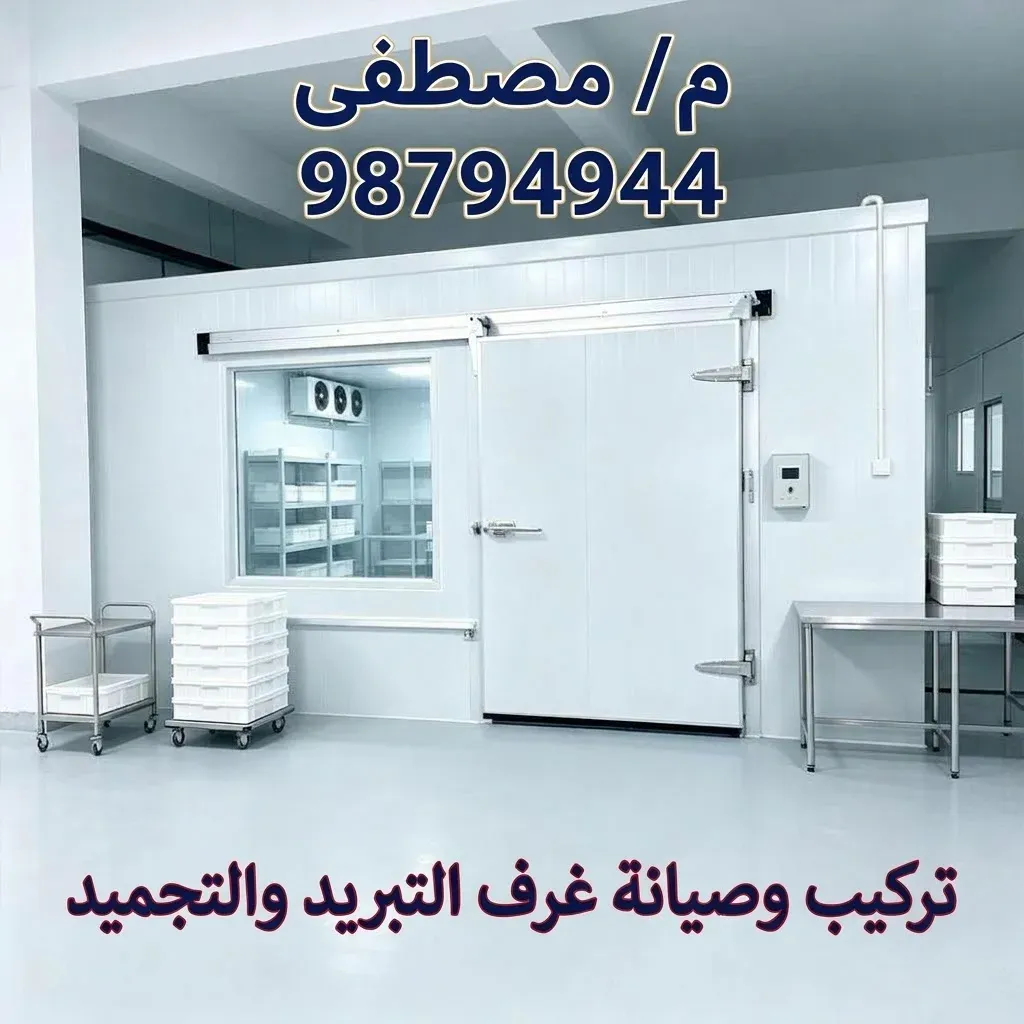
Installing pharmaceutical and pharmacy cold rooms in Kuwait requires equipment and design considerations that differ from those used in ordinary refrigerated food storage. Pharmaceutical products have specific storage conditions associated with their stability, quality, and approved shelf life. Some medicines require refrigerated storage within a narrow temperature range, while other products must be frozen or maintained under different environmental conditions. It is therefore essential to identify the medicines and pharmaceutical preparations that will be stored before choosing a refrigeration system. A single temperature range should never be assumed suitable for every medical product.
In smaller pharmacies, a dedicated pharmaceutical refrigerator may provide sufficient capacity for limited quantities of refrigerated medicines, provided it satisfies the applicable storage requirements. Pharmaceutical warehouses and distribution companies, however, may require larger cold rooms with continuous recording systems and multiple temperature monitoring points, particularly when storing substantial quantities of high-value products. As inventory volume and receiving and distribution activities increase, careful consideration of airflow distribution, refrigeration capacity, and sensor positioning becomes increasingly important for maintaining the specified storage conditions.
Essential Components of a Pharmaceutical Cold Room
-
Thermal Insulation Panels: These reduce heat transfer from the surrounding environment. The insulation material and thickness should be selected according to the required operating temperature and site conditions.
-
Compressor and Condensing Unit: Refrigeration capacity should be determined according to calculated cooling loads, stored quantities, and surrounding environmental conditions.
-
Evaporator and Air Circulation Fans: These help distribute refrigerated air throughout the storage room while reducing temperature variations between different storage areas.
-
Thermostat and Control System: These regulate operating temperatures and control the refrigeration equipment.
-
Temperature Monitoring Sensors: These measure storage conditions at appropriate locations inside the cold room.
-
Temperature Data Logger: This records temperature readings and makes historical information available for review when required.
-
Alarm System: This provides alerts when temperatures rise above or fall below established limits, or when specified equipment faults occur, depending on system capabilities.
-
Insulated Doors: These reduce external air infiltration and help maintain stable storage conditions.
-
Shelving and Storage Platforms: These organize pharmaceutical packages while preserving airflow routes and facilitating inspection and inventory control.
-
Electrical and Protective Equipment: These should be selected according to equipment loads, safety requirements, and operational continuity planning.
Are Pharmaceutical Cold Rooms Different from Restaurant Cold Rooms?
Yes. A pharmaceutical cold room may require documented evidence demonstrating temperature stability and distribution throughout the storage area, together with calibrated sensors, recorded temperature data, and procedures for responding to temperature excursions.
Food cold rooms are subject to different requirements associated with food safety and product characteristics. Equipment suitable for one application should not automatically be considered suitable for the other.
Does Every Pharmacy Need a Large Cold Room?
Not necessarily. The choice between a dedicated pharmaceutical refrigerator and a larger cold room depends on inventory quantities, product characteristics, business activities, and the requirements of the relevant authorities.
A pharmacy storing limited quantities may have very different needs from a distribution company receiving large shipments and operating separate storage zones.
The key consideration: Pharmaceutical cold room preparation begins with the product specifications and regulatory requirements. Room dimensions, refrigeration equipment, environmental controls, and monitoring systems should then be selected according to those needs.
Pharmaceutical Cold Rooms Operating at 2–8°C: How to Maintain the Required Temperature
Preparing a pharmaceutical cold room operating between 2°C and 8°C is a common requirement for medicines specifically classified for refrigerated storage within this range. However, not every medicine requires identical storage conditions, and this temperature range must never be applied to a product without checking its approved labeling and manufacturer instructions. Certain medicines, biological preparations, and vaccines may require different conditions. Their storage requirements should be determined from their actual specifications rather than applying one standard setting to all products.
It is also important to understand that setting the controller to 4°C or 5°C, for example, does not prove that every location inside the cold room remains within the permitted limits. Some areas may become colder near the evaporator, while locations close to the entrance or certain shelving positions may become warmer. Pharmaceutical cold rooms therefore require suitable airflow design, evaluation of temperature distribution, and monitoring sensor locations determined according to technical testing results.
Temperature Ranges Used in Pharmaceutical Storage
|
Storage Category |
Temperature Range |
Important Considerations |
|
Refrigerated medicines |
2–8°C |
For products whose approved instructions specify this range |
|
Medicines stored at controlled temperatures |
According to product labeling |
Some products may specify ranges such as 15–25°C |
|
Frozen pharmaceutical products |
According to approved specifications |
Require suitable freezing equipment |
|
Special vaccines |
According to vaccine type |
May require refrigeration, freezing, or ultra-low temperatures |
|
Freeze-sensitive products |
According to approved labeling |
Must be protected against temperatures that could damage them |
Technical note: The 2–8°C range is not appropriate for every medicine or vaccine. The final reference is the approved storage instructions for each product together with the applicable regulatory requirements.
Why Can Temperatures Below 2°C Be a Problem?
Some pharmaceutical preparations and vaccines are sensitive to freezing. Their effectiveness or stability may be affected if they are exposed to temperatures below their permitted limits.
It is therefore incorrect to assume that making a storage room colder will always provide greater protection.
Is the Controller Display Enough to Confirm Temperature Compliance?
No. The controller displays the temperature measured by its connected sensor, which may not represent the highest or lowest temperatures in the entire room.
Suitable monitoring equipment and temperature distribution studies may therefore be necessary, together with temperature recording and regular review procedures.
How Can Temperature Fluctuations Be Reduced?
-
Select refrigeration capacity suitable for the actual cooling load.
-
Arrange stored products without blocking airflow routes.
-
Avoid placing pharmaceutical packages directly in excessively cold air streams.
-
Maintain effective door sealing.
-
Minimize unnecessary door opening.
-
Keep condensers and evaporators properly maintained.
-
Use independent temperature monitoring when required.
-
Ensure measuring instruments are calibrated according to the approved program.
Can Medicines With Different Temperature Requirements Be Stored in One Room?
This depends on whether their approved storage requirements are compatible.
When products require different temperature ranges or special conditions, separate storage equipment or dedicated areas may be necessary.
The most important objective is to keep every pharmaceutical product within its specified storage limits throughout the storage period, rather than simply achieving the desired temperature when the refrigeration system first starts.
Preparing Cold Rooms for Temperature-Sensitive Vaccines: Storage and Protection Requirements
Preparing a cold room for temperature-sensitive vaccines requires additional care because certain vaccines can lose effectiveness when exposed to unsuitable temperatures or freezing. Damage may occur without visible changes to the packaging. Vaccine storage requirements differ according to the product and its manufacturer's instructions, and it is therefore inappropriate to assume that one temperature is suitable for all vaccines.
Vaccines requiring refrigerated storage between 2°C and 8°C need equipment capable of maintaining this range, together with regular monitoring and clear procedures for responding to temperature excursions. Vaccines intended for frozen or ultra-low-temperature storage require entirely different equipment. Some products may also be sensitive to light, making it necessary to follow their specific packaging and handling instructions.
What Are the Main Requirements for Preparing a Vaccine Cold Room?
-
Identify the approved storage temperature range for each vaccine.
-
Use equipment specifically suitable for the products being stored.
-
Provide continuous temperature monitoring and recording.
-
Use appropriate and calibrated temperature sensors.
-
Establish alerts for temperatures outside permitted limits.
-
Maintain suitable airflow distribution throughout storage areas.
-
Prevent freeze-sensitive vaccines from exposure to damaging low temperatures.
-
Establish clear procedures for receiving, storing, and distributing vaccines.
-
Prepare an emergency plan for transferring inventory if equipment fails.
-
Train responsible employees to recognize and respond to alarms.
Why Do Freeze-Sensitive Vaccines Need Special Attention?
Certain vaccines, particularly some containing specific adjuvants, may experience permanent damage when frozen.
It is therefore necessary to monitor temperatures below the permitted range as well as temperatures above it.
Preventing excessive heat exposure alone is not sufficient.
Can an Alarm System Replace Employee Monitoring?
No. Installing alarms does not automatically guarantee that employees will take the correct action when a problem occurs.
A responsible person should be assigned to review readings, receive notifications, and implement established procedures when temperatures move outside the specified limits.
What Should Happen if Vaccines Experience a Temperature Excursion?
Affected vaccines should not be used until their suitability has been assessed by the appropriate authority or qualified responsible personnel.
They should generally be clearly identified and separated from usable inventory while remaining under the required storage conditions, pending assessment.
The duration of the excursion and recorded temperatures should be documented. The responsible pharmaceutical professional, manufacturer, or relevant health authority should be consulted before deciding whether the products can be used or must be discarded.
Does a Vaccine Cold Room Need Backup Electrical Power?
Continuity of electrical power is an important planning consideration. A suitable backup power arrangement may be necessary depending on the risks and applicable requirements.
If a generator or alternative power source is installed, its electrical load capacity, transfer arrangements, and routine testing procedures should be evaluated to ensure the emergency plan can be implemented.
The fundamental principle: Preparing a vaccine cold room involves more than refrigeration equipment. It requires an integrated system of storage, monitoring, documentation, and emergency response procedures.
Installing a Pharmaceutical Warehouse Temperature Monitoring System and Recording Data Continuously
Installing a pharmaceutical warehouse temperature monitoring system helps track conditions inside the cold room and document readings during working hours and outside normal business hours. Certain refrigeration faults may begin after employees leave the warehouse and continue unnoticed if monitoring depends exclusively on manually checking the controller display. Temperature data loggers therefore play an important role in identifying what happened inside the storage area and when a temperature change began.
In pharmaceutical warehouses, maintaining clear temperature records helps responsible personnel review storage conditions and investigate excursions. However, the effectiveness of the monitoring system depends on selecting suitable sensors, calibrating them, choosing appropriate installation locations, and determining how data will be stored and protected. The organization must also identify who is responsible for reviewing the records and taking action when problems are detected.
What Is the Difference Between a Thermostat and a Temperature Data Logger?
A thermostat primarily controls the refrigeration system according to the selected temperature setting.
A temperature data logger, on the other hand, records readings over time and may provide information about minimum and maximum temperatures, together with reports identifying periods outside established limits.
A pharmaceutical warehouse may therefore require an independent monitoring system in addition to its primary refrigeration controller.
Essential Features of a Temperature Recording System
-
Record temperatures at regular intervals.
-
Associate each reading with an accurate date and time.
-
Use sensors with suitable measurement accuracy.
-
Maintain valid calibration certificates according to applicable requirements.
-
Allow authorized users to review historical readings.
-
Protect stored records against loss or untraceable modification.
-
Provide backup copies when necessary.
-
Generate reports suitable for review.
-
Clearly identify recorded temperature excursions.
-
Define user access permissions when using advanced electronic systems.
What Is the Benefit of Continuous Temperature Recording?
If the room temperature increases during the night and later returns to normal, the problem may not be visible when employees check the controller the following morning.
A continuous recording system helps establish when the excursion occurred, how long it lasted, and the highest or lowest temperatures reached.
This information can be important when evaluating the potential impact on stored pharmaceutical products.
How Frequently Should Temperature Readings Be Recorded?
The recording interval depends on the organization's requirements, product characteristics, and applicable standards.
For vaccine storage, guidance from the US Centers for Disease Control and Prevention recommends digital data loggers capable of recording temperatures at least every 30 minutes.
Any stricter requirements established by the relevant authority or product manufacturer must also be followed.
Are Paper Temperature Logs Sufficient?
Paper records may form part of a temperature monitoring program, but they do not necessarily provide continuous historical information during periods when employees are absent.
For this reason, a suitable digital recording system should be considered according to the business activity and applicable regulatory requirements.
The Importance of Reviewing Temperature Data
Recording readings without examining them reduces the practical value of the monitoring system.
A responsible employee should regularly review records, identify unusual trends, investigate excursions, and respond to alarms.
If you are preparing a new pharmaceutical warehouse, identify temperature monitoring and data recording requirements during the design stage rather than waiting until installation is complete.
Pharmaceutical Cold Room High-Temperature Alarm Systems: Protection During Equipment Failures and Power Outages
A pharmaceutical cold room high-temperature alarm system is an important consideration for warehouses storing temperature-sensitive medicines, particularly when facilities operate outside normal working hours or hold substantial quantities of valuable products. Compressor failures, doors left open, and electrical power interruptions can cause storage temperatures to change gradually. Without suitable monitoring and notifications, employees may only discover the problem after a considerable period.
An effective alarm system involves more than an audible warning inside the warehouse. Alarm thresholds, notification methods, and responsible personnel should be defined in advance. Potential risks associated with different alarm conditions should also be assessed. Some pharmaceutical products can be damaged by excessively low temperatures, so both upper and lower temperature limits should be considered.
Main Types of Alarms to Consider
|
Alarm Type |
Purpose |
|
High-temperature alarm |
Alerts when temperatures exceed the specified upper limit |
|
Low-temperature alarm |
Alerts when temperatures fall below the permitted lower limit |
|
Power failure alarm |
Reports the loss of electrical power |
|
Door-open alarm |
Alerts when a door remains open beyond the permitted duration |
|
Temperature sensor fault |
Identifies missing readings or sensor malfunctions |
|
Communication failure |
Indicates loss of connection with the monitoring system |
|
Refrigeration equipment fault |
Reports specified equipment problems according to system capabilities |
How Should Alarm Thresholds Be Determined?
Alarm thresholds should be based on the permitted product temperature ranges, the results of thermal qualification, and the facility's operating procedures.
It may be appropriate to establish early-warning limits before temperatures reach the actual storage limits.
However, the final values require technical assessment and approval from the responsible quality personnel.
Can Alarm Notifications Be Sent to Mobile Phones?
Some systems support notifications through telephone calls, text messages, or online monitoring platforms.
Other systems provide only local audible or visual alarms.
These capabilities must be confirmed in the equipment specifications and quotation. Remote monitoring should not automatically be assumed to be included in every installation.
What Happens During a Power Outage?
The facility should have a clear emergency plan for monitoring room conditions, assessing the duration of the interruption, and providing backup power or suitable alternative storage when necessary.
Repeatedly opening the cold room door during an outage should be avoided unless essential because it may allow additional warm air to enter.
Does Installing an Alarm Guarantee Complete Protection for Stored Medicines?
No. An alarm detects or reports a problem but does not necessarily correct it automatically.
If a notification is issued and nobody responds, temperatures may continue moving outside the acceptable range even though the alarm system is functioning correctly.
Testing Alarm Systems Regularly
It is important to confirm that alarms operate correctly and that notifications reach the designated personnel.
Alarm limits, settings, and communication methods should be reviewed as part of a documented testing program.
The most effective alarm arrangement combines early problem detection, reliable notification, and clearly established response procedures to protect pharmaceutical inventory.
Pharmaceutical Cold Room Qualification Requirements: Temperature Testing and Distribution Mapping
Pharmaceutical cold room qualification requirements involve more than verifying that the compressor operates and the room reaches its temperature setpoint. Technical qualification is intended to provide documented evidence that the storage system meets its defined requirements under approved testing and operating conditions. Depending on the project, qualification may include installation verification, equipment function testing, thermal performance assessment, and review of monitoring systems, alarms, and technical documentation.
Temperature mapping is another important consideration. This involves measuring temperatures at multiple locations throughout the room to identify warmer and colder areas. Temperatures may vary between shelves near the entrance, locations close to the evaporator, upper storage levels, and room corners. The results can help establish appropriate storage locations and determine where permanent temperature monitoring sensors should be positioned.
What Does Cold Room Qualification Mean?
Qualification is a documented process used to verify that equipment and systems are suitable for their intended purpose according to an approved protocol and predefined acceptance criteria.
The process may include different stages depending on the project requirements, including installation, operation, and performance verification.
Differences Between Qualification Stages
|
Qualification Stage |
Primary Objective |
|
Design Qualification (DQ) |
Verify that the proposed design is suitable for its intended use |
|
Installation Qualification (IQ) |
Confirm that equipment has been installed according to specifications |
|
Operational Qualification (OQ) |
Test system functions, controls, and alarms |
|
Performance Qualification (PQ) |
Verify performance under representative operating conditions |
|
Temperature Mapping |
Identify warmer and colder areas inside the storage room |
These stages are determined according to the organization's quality system, risk assessment, and applicable regulatory requirements.
They do not mean that every pharmaceutical cold room must follow one identical qualification protocol.
What Is the Purpose of Temperature Mapping?
Temperature mapping documents how temperatures are distributed throughout the storage area during a defined testing period.
The results may identify locations where airflow arrangements need modification, shelving positions should be changed, or additional monitoring may be necessary.
Should Temperature Mapping Be Performed With an Empty Cold Room?
A mapping program may include different conditions, such as an empty room, a loaded room, or representative operating arrangements.
The appropriate conditions depend on the purpose of the study and the approved protocol.
Successful mapping of an empty room alone should not automatically be considered proof of suitable performance under every future storage load.
Is Requalification Necessary After Equipment Changes?
Changes that may affect thermal performance can require reassessment or appropriate requalification.
Examples include replacing refrigeration equipment, significantly changing shelving layouts, modifying insulation, or altering control systems.
The extent of requalification should be determined through risk assessment and the organization's change-control and quality procedures.
Technical Documents That Should Be Organized
It is useful to maintain a technical file containing equipment specifications, drawings, test reports, calibration records, alarm records, and operating and maintenance procedures.
However, regulatory approval is not automatically granted simply because technical qualification has been performed.
The facility must also satisfy the requirements and approval procedures established by the relevant authorities.
Designing Refrigerated Warehouses for Pharmaceutical Distribution Companies: Shelving, Dimensions, and Cold Chain Management
Designing a refrigerated warehouse for a pharmaceutical distribution company requires careful planning of product movement from receiving and storage to order preparation and dispatch. The warehouse may receive substantial shipments containing different pharmaceutical products and must organize them in ways that prevent mix-ups while supporting inventory checks and withdrawal according to expiration dates. Certain products may also require rapid transfer into suitable refrigerated conditions immediately after arrival to avoid exposure outside their approved limits.
Maintaining the cold chain throughout the entire distribution process is essential. Preserving medicines correctly inside the warehouse is not sufficient if they are exposed to unsuitable temperatures during loading or transportation. Receiving and dispatch areas, refrigerated shipment preparation methods, and connections between operational areas and the main storage facility should therefore be included in the planning process.
Main Operational Areas in a Pharmaceutical Warehouse
-
Shipment receiving and documentation inspection area.
-
Approved product storage area.
-
Dedicated area for quarantined products awaiting assessment.
-
Separate handling area for returned or damaged medicines.
-
Organized storage locations according to product type and expiration date.
-
Order preparation area that maintains required storage conditions.
-
Movement routes for employees and handling equipment.
-
Suitable locations for monitoring and recording equipment.
Organizing Medicines Inside the Cold Room
Shelving should be arranged to permit appropriate airflow and convenient product access.
Evaporators and essential air circulation routes should remain unobstructed, and products should not be placed in locations where they may experience unsuitable temperatures.
Shelving load limits must also be respected, and cartons should not be stacked in ways that interfere with inspection or inventory control.
Which Inventory Distribution Method Is Suitable?
One commonly used method is First Expired, First Out (FEFO), in which products with the earliest expiration dates are prioritized for distribution.
This approach should be implemented together with appropriate quality procedures and batch traceability.
It helps organize inventory movement and reduce the likelihood of older products remaining in storage unnecessarily.
Why Should Quarantined or Unsuitable Products Be Separated?
The facility should have clear procedures to prevent the distribution of products awaiting assessment, exposed to temperature excursions, or past their expiration dates.
These products should be managed according to the organization's quality system and applicable regulatory instructions.
Does Warehouse Size Determine Compressor Capacity?
Floor area alone is not sufficient to determine refrigeration capacity.
The calculation must consider internal height, insulation, product quantities, incoming temperatures, door movement, and surrounding environmental conditions.
Shelving arrangements and their impact on airflow should also be assessed.
Approximate Dimensions for Refrigerated Pharmaceutical Warehouses
|
Cold Room Dimensions |
Floor Area |
Potential Application |
|
2 × 2 metres |
4 square metres |
Limited refrigerated inventory, subject to business requirements |
|
2 × 3 metres |
6 square metres |
Small room for organized refrigerated storage |
|
3 × 3 metres |
9 square metres |
Small pharmaceutical warehouse |
|
3 × 4 metres |
12 square metres |
Medium-sized facility requiring shelving and access aisles |
|
4 × 5 metres |
20 square metres |
Distribution warehouse with greater inventory movement |
|
5 × 6 metres |
30 square metres |
Larger commercial warehouse, subject to capacity assessment |
Important note: These dimensions are preliminary examples for comparison only. They do not represent regulatory approval or officially required dimensions for pharmacies and pharmaceutical warehouses.
If you are preparing a pharmaceutical distribution facility, determine storage capacity, operational areas, and shipment receiving and dispatch routes before approving the cold room layout.
Pharmaceutical Warehouse Cold Room Costs in Kuwait: What Determines the Installation Price?
How much does a pharmaceutical warehouse cold room cost in Kuwait? There is no single fixed price because the final cost depends on room dimensions, insulation specifications, required temperatures, compressor capacity, monitoring systems, alarms, shelving, and electrical work. Costs may also differ when the project requires temperature mapping, qualification documentation, or backup power arrangements compared with a basic commercial cold room that does not include these requirements.
When requesting a quotation for preparing refrigerated medicine storage for pharmacies, it is important to clarify whether the project involves refrigeration equipment installation only or includes continuous monitoring, technical tests, and documentation. Some quotations may cover insulated panels and refrigeration equipment but exclude temperature data loggers, alarms, calibration, and qualification studies. For this reason, quotations should be compared according to their technical specifications and included services rather than the final amount alone.
Main Factors Affecting Pharmaceutical Cold Room Costs
|
Cost Component |
Effect on the Quotation |
|
Room length, width, and height |
Determines insulation quantities and storage volume |
|
Insulation panels |
Varies according to material, thickness, and specifications |
|
Compressor and condensing unit |
Depends on refrigeration load and operating conditions |
|
Evaporator and fans |
Determined by capacity and air distribution requirements |
|
Control system |
Varies according to control capabilities |
|
Temperature sensors |
Depends on quantity, accuracy, and calibration requirements |
|
Data logging system |
Varies according to recording capacity, functions, and data management |
|
Alarm system |
Depends on alarm types and communication features |
|
Shelving and doors |
Varies according to materials, dimensions, and design |
|
Electrical work |
Depends on loads, connections, and protective systems |
|
Backup power system |
Determined by continuity planning and project requirements |
|
Thermal qualification |
Depends on testing and documentation scope |
Are Pharmaceutical Cold Rooms More Expensive Than Ordinary Cold Rooms?
They may cost more when the project requires independent monitoring systems, continuous data recording, alarms, qualification studies, or additional documentation.
However, there is no fixed price difference because the final specifications depend on the business activity, inventory volume, and quality requirements.
Does the Price per Square Metre Include Temperature Monitoring Equipment?
Not necessarily.
A price per square metre may cover insulated panels or the structural enclosure without including refrigeration equipment, monitoring devices, and controllers.
The detailed quotation should therefore be reviewed before accepting an agreement.
Is Thermal Qualification Included in the Installation Cost?
This depends on the scope of the contract.
Installation and commissioning tests may be priced separately from temperature mapping, qualification, and documentation services.
The party responsible for each activity and the applicable acceptance criteria should be identified before the project begins.
How Can Project Costs Be Reduced Responsibly?
Begin by identifying pharmaceutical products, inventory quantities, available dimensions, and quality requirements.
Then select equipment appropriate for the actual operating needs without unnecessary oversizing.
However, reducing costs by removing essential monitoring equipment, required testing, or safety arrangements is not advisable when these measures are necessary to protect inventory or satisfy the applicable requirements.
Request a Detailed Quotation
If you are preparing a pharmaceutical cold room for a pharmacy or distribution warehouse in Kuwait, organize the site dimensions, required temperature range, storage quantities, and monitoring and qualification requirements.
You can inquire about refrigeration equipment and technical installation solutions through Cold Room and Display Refrigerator Maintenance:
Steps for Preparing Refrigerated Pharmacy Storage and Why Choose Cold Room and Display Refrigerator Maintenance
Preparing refrigerated medicine storage for pharmacies requires a clear process that begins with identifying business requirements and applicable regulatory conditions before purchasing equipment. Installing a commercial cold room capable of producing low temperatures does not automatically mean that it is suitable for temperature-sensitive pharmaceutical products or that it has received official approval. The required specifications, quality procedures, installation responsibilities, and testing arrangements should therefore be established at the beginning, taking into account product characteristics, inventory volume, and daily operating conditions.
Through Cold Room and Display Refrigerator Maintenance in Kuwait, you can begin by inquiring about cold room solutions and available technical specifications. Your request should clearly explain the required temperature range, dimensions, monitoring system, and documentation needs. It is also important to confirm which services the installation provider can actually deliver. Responsibilities for specialized qualification work and regulatory approvals must be determined according to the facility's requirements and the relevant authorities.
Site Inspection
The process begins by measuring dimensions and reviewing flooring, doors, aisles, ventilation, and electrical connections.
The proposed locations of refrigeration equipment, pipework routes, and maintenance access points should also be assessed.
Identifying Product Requirements
The medicines to be stored, their quantities, and their required temperatures should be identified according to manufacturer instructions.
The project must also establish whether it requires refrigerated storage, frozen storage, or separate temperature-controlled zones.
Preparing the Technical Design
The design should cover room dimensions, insulation, compressors, evaporators, shelving arrangements, sensors, recording devices, and alarms.
Power requirements, backup arrangements, and operational continuity should also be reviewed.
Preparing the Quotation
The quotation should identify the equipment, materials, and installation services included in the project, together with any exclusions.
Responsibilities for installation, testing, qualification, calibration, and maintenance should preferably be documented clearly.
Completing Installation Work
Qualified technicians install insulation panels, doors, refrigeration pipework, equipment, and control systems according to the agreed specifications and manufacturer instructions.
Electrical safety requirements and safe handling of refrigerant systems should be observed.
Technical Testing
This stage includes verifying equipment condition, controller functions, sensor operation, alarm functionality, and the ability to achieve the required operating temperatures.
Additional tests may be necessary according to the approved qualification protocol.
Temperature Mapping and Qualification
When required, these activities should be performed according to the project's quality requirements and approved procedures.
The results should be documented, and suitable permanent monitoring locations should be identified.
Acceptance criteria should be established before testing begins.
Handover and Staff Training
Employees should receive instructions covering equipment operation, temperature monitoring, alarm response, and procedures for dealing with refrigeration failures.
The documentation agreed upon in the contract should also be provided.
Temperature-sensitive pharmaceutical products should not be placed into storage until the necessary technical and regulatory requirements have been satisfied.
What Criteria Should You Review When Choosing an Installation Company?
|
Evaluation Criteria |
Benefit for the Project |
|
Clear specifications |
Supports suitable equipment selection |
|
Refrigeration load calculations |
Determines the required cooling capacity |
|
Insulation quality |
Helps maintain stable storage conditions |
|
Air distribution |
Reduces temperature variations |
|
Monitoring systems |
Provide information about storage conditions |
|
Alarms |
Help identify temperature excursions |
|
Technical testing |
Helps verify equipment performance |
|
Warranty conditions |
Clarify coverage and responsibilities |
|
Maintenance arrangements |
Support ongoing operational planning |
|
Documentation |
Identifies the required and provided records |
Why Is a Detailed Quotation Better Than a Single Price?
A detailed quotation clarifies the difference between a cold room equipped with refrigeration only and a project that also includes recording systems, alarms, and additional testing.
It also helps identify the party responsible for each technical activity and required document.
Is the Installation Company Responsible for Obtaining Ministry of Health Approval?
Regulatory approval is subject to the procedures and requirements of the relevant authorities.
It should not be assumed that the installation company guarantees regulatory approval.
The scope of the provider's responsibilities must be established, including who will handle licensing procedures, qualification, and regulatory review.
If you want to prepare a pharmaceutical cold room with clearly defined specifications, begin by identifying product and regulatory requirements. Request a technical quotation explaining the equipment, monitoring systems, testing arrangements, and included services.
Frequently Asked Questions About Pharmaceutical and Pharmacy Cold Rooms in Kuwait
What Temperature Is Required for a Pharmaceutical Cold Room?
Many medicines classified for refrigerated storage require temperatures between 2°C and 8°C.
However, not every pharmaceutical product is stored within this range.
The approved storage instructions for each product and the applicable regulatory requirements must always be followed.
How Much Does Pharmaceutical Warehouse Cold Room Installation Cost in Kuwait?
Costs depend on room dimensions, insulation, refrigeration equipment, controllers, temperature sensors, data loggers, alarms, electrical work, and required technical testing.
For an accurate quotation, it is advisable to define the project requirements and request a detailed technical proposal.
Is a Temperature Data Logger Required Inside a Pharmaceutical Cold Room?
Temperature recording and monitoring are important elements of controlling storage conditions for temperature-sensitive products.
The type of equipment, recording method, calibration requirements, and record retention procedures depend on the products, the organization's quality system, and applicable regulatory requirements.
What Does Pharmaceutical Cold Room Qualification Mean?
Qualification is a documented process used to verify that a cold room and its equipment meet the specified requirements under defined operating conditions.
It may include installation verification, operational testing, performance qualification, and temperature mapping according to an approved protocol and acceptance criteria.
Can Vaccines Be Stored in Any Cold Room Operating Between 2°C and 8°C?
No. Vaccine storage must follow the requirements of each product, including temperature monitoring, protection against freezing when necessary, and established procedures for responding to temperature excursions.
Some vaccines require different freezing conditions, so the controller temperature alone is not enough to determine whether a cold room is suitable.
Conclusion: Prepare a Pharmaceutical Cold Room That Protects Your Inventory and Fits Your Budget in Kuwait
Choosing pharmaceutical and pharmacy cold rooms in Kuwait, including the required conditions and installation costs, requires careful evaluation of product characteristics, approved storage temperatures, monitoring systems, recording procedures, and technical qualification requirements. A suitable pharmaceutical cold room is much more than an insulated enclosure with a compressor capable of producing low temperatures. It is an integrated storage system that combines refrigeration equipment, temperature controls, alarms, documentation, and operating procedures to help the facility maintain the required storage conditions.
Whether you are researching the cost of a pharmaceutical warehouse cold room, planning refrigerated medicine storage for a pharmacy, or considering temperature monitoring and alarm equipment for pharmaceutical inventory, identifying the technical and regulatory requirements before installation helps you plan your budget and avoid purchasing unsuitable equipment or discovering additional requirements after construction.
Through Cold Room and Display Refrigerator Maintenance in Kuwait, you can inquire about commercial cold room solutions and explain your project's requirements, including room dimensions, storage temperatures, and equipment specifications. The available technical services and their scope should be clarified before entering into an installation agreement.
Do you own a pharmacy or pharmaceutical warehouse and want to know how much a suitable cold room will cost?
Prepare the available dimensions, the list of pharmaceutical products, the required storage temperatures, and expected inventory quantities.
Request a quotation identifying the insulation, refrigeration equipment, controllers, monitoring systems, alarms, and technical tests included in the proposed project.