Commercial Refrigeration Compressor Prices in Kuwait Installed
·
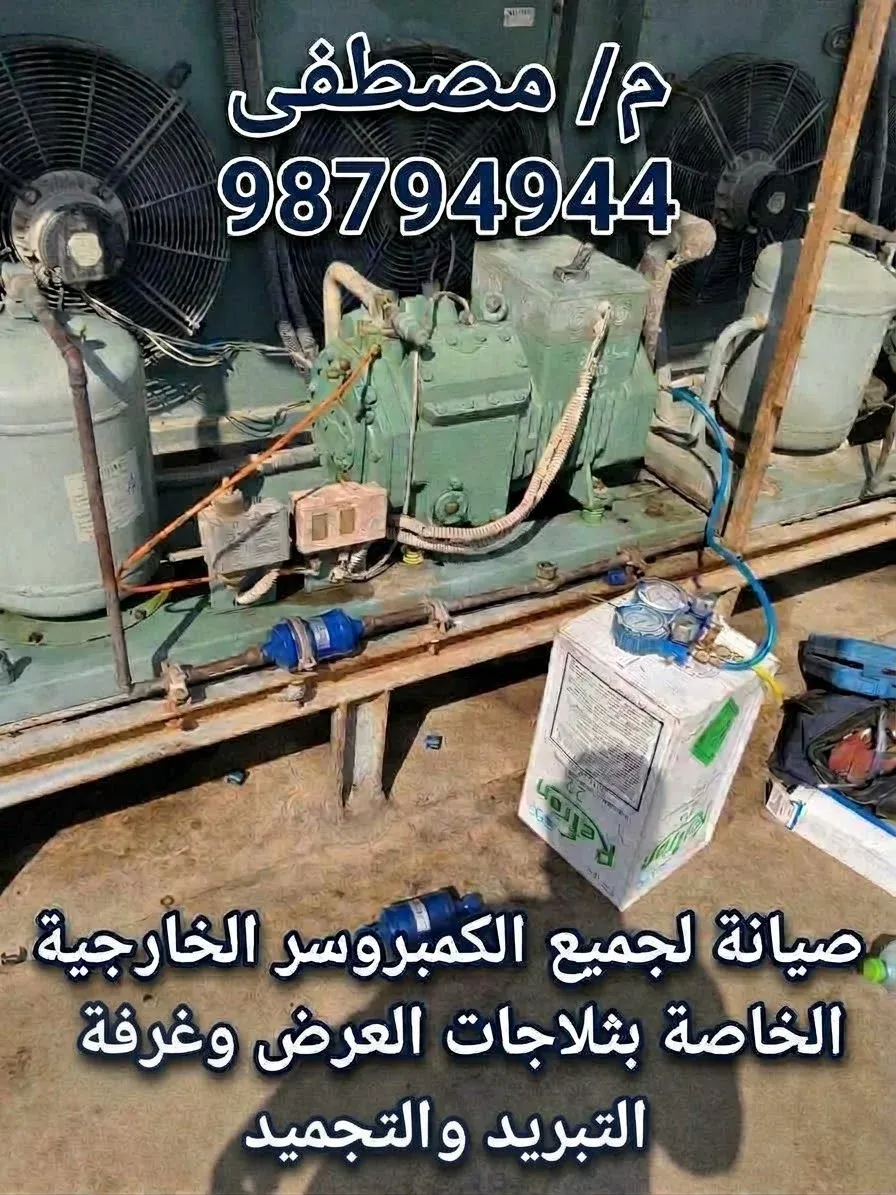
Commercial Refrigeration Compressor Prices in Kuwait With Installation
If you own a cold room, freezer warehouse, or commercial refrigerator in Kuwait and the compressor has stopped working or refrigeration performance has become weaker than usual, your first question is probably: How much does a new compressor cost with installation, and is it better to replace the compressor or repair the existing fault?
Commercial refrigeration compressor prices in Kuwait with installation vary according to compressor capacity, type, operating temperature, refrigerant specifications, and electrical requirements, in addition to removal, installation, and inspection work.
The price of a compressor used in a cold room that stores products above freezing may differ from that of a compressor designed for a freezer room operating at subzero temperatures.
In this guide from Cold Room and Display Refrigerator Maintenance, we explain how to compare compressor prices, which factors determine replacement costs, the differences between compressor capacities, and what should be inspected before purchasing a new motor.
The objective is to help you avoid installing an incompatible component or paying extra for repairs your refrigeration system does not actually need.
1. Commercial Refrigeration Compressor Prices in Kuwait: How Much Does Installation Cost?
Direct answer: There is no single standard price for commercial refrigeration compressors in Kuwait. The final cost depends on the compressor model, capacity, refrigeration or freezing application, and refrigerant type, as well as technician labor, installation materials, and the necessary tests. You must distinguish between the price of the compressor itself and the total cost of replacing it and restoring the refrigeration system to proper operation.
Online marketplaces offering products to customers in Kuwait display considerably different prices for imported refrigeration compressors. However, these prices should not be treated as established local quotations for installation in Kuwait.
For example, one shopping platform lists refrigeration compressors from a particular manufacturer at published prices starting at approximately KWD 210.900, with certain listings reaching KWD 329.100.
However, these listings represent different products. They are not comparisons between identical compressor models or confirmed installation quotations. Import charges, delivery expenses, and availability may also vary.
Therefore, no published figure should be considered a fixed price for a particular cold room or freezer compressor without matching the technical specifications and obtaining an actual quotation.
What Is Included in the Compressor Price With Installation?
The replacement cost generally consists of several components, including:
-
New compressor price: Determined by the model, capacity, application, and manufacturer.
-
Inspection charges: To confirm that the compressor genuinely needs replacement.
-
Removal of the existing compressor: Including isolation procedures and safe refrigerant handling.
-
Installation parts and materials: Such as filter driers, connections, and other components required by the situation.
-
Refrigeration circuit inspection: To investigate leaks, contamination, or the cause of the original failure.
-
Evacuation and dehydration: Performed according to the technical requirements of the system.
-
Refrigerant: When a suitable new charge or refrigerant replenishment is required according to specifications.
-
Operational testing: Reviewing compressor operating conditions and refrigeration performance after the repair.
-
Additional work: Such as repairing a leak or replacing another damaged component when inspection confirms that it is necessary.
Not all these items are required in exactly the same way for every compressor replacement. The work must therefore be determined according to the condition of the refrigeration system.
Does the Compressor Price Include Refrigerant Charging and Installation?
Not necessarily. A supplier may quote a price for the compressor as a replacement part only, with technician labor and installation materials charged separately.
Another quotation may include the compressor and installation but exclude leak repairs or refrigeration circuit cleaning following an internal electrical motor burnout.
It is therefore preferable to request a written quotation that clearly identifies every item.
Most importantly, ask whether final testing is included, because installing the compressor alone is not enough to establish that the refrigeration system has returned to appropriate operating conditions.
Why Do Two Compressors With the Same Capacity Have Different Prices?
The price may differ because of compressor design, operating technology, and the temperature range for which each unit was designed.
Electrical specifications, refrigerant compatibility, oil requirements, and control arrangements may also differ.
For this reason, two compressors with similar nominal capacities may not be interchangeable.
The cheaper option should not be selected before confirming that it matches the cold room's application and the refrigeration system's specifications.
Does Weak Refrigeration Mean You Need a New Compressor?
No. The problem may involve the condenser, fans, temperature sensors, expansion valve, airflow, or refrigerant charge.
Excessive refrigeration loads and doors being opened continuously may also cause the room temperature to rise.
The fault should therefore be diagnosed before a new compressor is ordered.
If you have a cold room or freezer and want to know the cost of compressor replacement, contact Cold Room and Display Refrigerator Maintenance to inquire about an inspection and matching the correct compressor to your system's specifications.
2. Cold Room Compressor Price With Installation: Choosing the Right Compressor for Your Room
When asking about the price of a cold room compressor with installation, you need to distinguish between the physical size of the room and the refrigeration capacity actually required.
Room dimensions alone are not enough to select a compressor.
Two cold rooms may have identical dimensions, but one may store products that arrive already chilled, while the other receives warm goods throughout the day.
This difference affects the heat load that the system must handle and, consequently, the specifications and cost of the refrigeration equipment.
What Factors Determine the Required Cold Room Compressor Capacity?
The appropriate compressor capacity depends on several factors, including:
-
Room dimensions and actual storage volume.
-
The required temperature inside the room.
-
The type of products and their temperature when loaded.
-
Daily inventory quantities and loading frequency.
-
Insulation thickness and door condition.
-
The frequency and duration of door openings.
-
The temperature surrounding the condensing unit.
-
The characteristics of the evaporator, condenser, and remaining refrigeration components.
Compressor capacity should therefore not be determined from the room's floor area alone.
Does a Cold Room Operating Above Freezing Need a Different Compressor?
It may require a compressor designed for an application and evaporating temperatures different from those used in freezer rooms.
The selection depends not only on the room temperature but also on the refrigeration circuit's operating conditions.
Manufacturer performance data must be reviewed at the required operating points.
It is also essential to verify that the compressor is suitable for the evaporator, condenser, and refrigerant used in the system.
Is It Better to Replace the Compressor With the Same Model?
If the original model is suitable for the system's design and the operating conditions are correct, installing an identical compressor or an approved replacement may be appropriate.
However, if compressor failures have occurred repeatedly or there is a problem with the original equipment selection, the underlying cause should be reviewed before purchasing the same part again.
The old compressor model may also be unavailable, in which case a substitute must be selected using appropriate technical compatibility information.
Similar capacity ratings or external appearance are not sufficient grounds for approving a replacement.
What Is the Difference Between Buying a Compressor and Replacing the Entire Condensing Unit?
The compressor is one component of the refrigeration system.
A complete condensing unit may contain the compressor, condenser, fans, and associated controls and protective components.
If the fault is limited to the compressor and the remaining components are in suitable condition, the entire unit may not need replacement.
However, if the unit is old or has several faults, comparing the cost of repair with the cost of replacing the complete unit may be an important financial consideration.
The decision requires an actual inspection rather than simply comparing two prices.
Does Installation Require Shutting Down the Cold Room?
Compressor replacement normally requires equipment isolation and technical procedures that prevent unsafe operation while work is being performed.
Alternative refrigeration may be needed if the room contains products that are sensitive to temperature increases.
The work must therefore be coordinated with the warehouse owner before the equipment is shut down.
It is also important not to assume that products exposed to elevated temperatures remain safe simply because the room's air temperature eventually returns to the required level.
How Can You Tell Whether the Quotation Is Suitable?
Ask for the model number and essential specifications of the new compressor.
The quotation should explain whether installation, refrigeration circuit materials, and technical inspections are included.
You should also ask how the old compressor will be handled and whether the cause of its failure requires additional repairs.
If a warranty is offered, clarify its duration, coverage, and written exclusions.
This allows you to compare quotations for technically similar services instead of relying solely on the final amount.
3. Commercial Refrigeration Compressor Replacement Cost: Removal, Installation, and Inspection
The cost of replacing a commercial refrigeration compressor differs from the purchase price of the new component because replacement involves working with a sealed refrigeration circuit and electrical and mechanical equipment that require specialized procedures.
The compressor itself may be available at a reasonable price, but additional work may be necessary if the failure resulted from an internal electrical burnout, refrigeration circuit leakage, or an oil return problem.
For this reason, a compressor replacement quotation should cover diagnosis of the original failure and the procedures needed to return the refrigeration system to appropriate operating conditions.
When Is Compressor Replacement Necessary?
Replacement becomes an option when an inspection confirms an internal, mechanical, or electrical failure that makes continued operation unsuitable.
However, a compressor that does not operate is not necessarily damaged. Protective devices, the control system, or the electrical supply may be preventing it from starting.
Some equipment designs may also experience faults in their starting components.
The actual cause must therefore be confirmed before removing the existing compressor.
What Are the Main Steps in Compressor Replacement?
The procedures vary according to the refrigeration circuit and refrigerant type, but the work may include:
-
Disconnecting and isolating equipment from energy sources safely.
-
Handling and recovering refrigerant using appropriate equipment and procedures.
-
Removing the damaged compressor from the refrigeration circuit.
-
Inspecting the oil and components to assess possible internal contamination.
-
Investigating the cause of failure, such as ventilation problems, electrical supply issues, or unsuitable operating conditions.
-
Installing a replacement compressor that meets the required specifications.
-
Replacing filters or other components when their condition requires it.
-
Performing appropriate tests to verify the integrity and tightness of the circuit.
-
Evacuating, dehydrating, and charging the system with the correct refrigerant and quantity when necessary.
-
Testing operation, measuring performance indicators, and documenting the results.
Manufacturer technical guidance explains that replacing a compressor after an electrical motor burnout may require special procedures to remove contaminated oil residues and other harmful materials from the refrigeration circuit.
Simply installing a new compressor may not be sufficient.
Why Is Oil Inspection Important After a Compressor Burnout?
When a compressor experiences an internal electrical burnout, some products of the failure may spread to other components in the refrigeration circuit.
This may require appropriate treatment of contaminated oil, other impurities, and filters according to the compressor and system manufacturer's instructions.
If the fault was mechanical or caused by an external component, the required procedures may differ.
The nature of the failure must therefore be established before selecting a circuit cleanup procedure.
Must the Filter Drier Be Replaced With the Compressor?
The decision depends on the refrigeration system's specifications, the type of repair, and the circuit's condition. However, filter drier replacement forms part of many refrigeration compressor replacement procedures.
Following an internal burnout, the circuit may require additional treatment, specialized filtration, and monitoring after the equipment is restarted.
Copeland's technical guidance explains that cleaning the refrigeration circuit after certain compressor failures requires systematic handling of filters and contaminants.
The same filter type or cleanup procedure should not automatically be applied to every refrigeration system without reviewing the relevant instructions.
Does Replacing the Compressor Require Adding Refrigerant?
Compressor replacement may require recovering the existing refrigerant charge and preparing the refrigeration circuit again according to the system's specifications.
However, recharging should not be treated as randomly adding refrigerant until the room begins cooling.
The correct refrigerant type, system requirements, and testing conditions must be established.
Any confirmed leak must also be repaired before the refrigeration system is returned to service.
What Increases the Cost of Compressor Replacement?
Costs may increase when the compressor is large, difficult to access, or requires suitable lifting and handling equipment.
Additional work may also be necessary when the refrigeration circuit is contaminated, leaks are present, or other components have been damaged.
Some commercial systems require more extensive commissioning and testing procedures than smaller refrigeration units.
However, the additional cost cannot be estimated accurately without understanding the actual requirements.
Can the Replacement Be Completed on the Same Day?
Same-day replacement may be possible if the correct compressor, qualified technician, and required equipment are available and the site allows the work to be performed safely.
However, certain cases require a component that is not immediately available, repairs to other faults, or additional testing.
Completing every compressor replacement on the same day cannot therefore be guaranteed before diagnosis.
The replacement part's availability, scope of work, and service schedule should be confirmed when requesting assistance.
4. Freezer Room Compressor Prices in Kuwait: Freezing Versus Standard Refrigeration
When researching freezer room compressor prices in Kuwait, you need to understand that a compressor designed for freezing applications may differ from a compressor used in a standard cold room, even when their nominal power ratings are similar.
A freezer room requires equipment capable of operating under evaporating temperatures, pressures, and other conditions appropriate for the frozen products and required storage temperature.
Installing an incompatible compressor may therefore result in poor performance or unsuitable operating conditions, even if the compressor starts successfully.
Is the Compressor for a -18°C Freezer Room the Same as One for -25°C?
Not necessarily. The actual refrigeration capacity of a compressor may differ considerably between operating conditions, while the system requirements also change according to room design and heat load.
A compressor therefore cannot be selected based only on the room's target temperature.
Performance data must be reviewed for the required evaporating and condensing temperatures and refrigerant type.
The suitable compressor capacity and other refrigeration components may differ between applications.
Why Do Refrigeration and Freezer Compressor Prices Differ?
The compressors may differ in internal specifications, operating ranges, oil requirements, protection arrangements, and intended applications.
Available capacities and compressor designs may also vary across different categories.
For this reason, a uniform price list based exclusively on nominal power is not a reliable way to compare refrigeration and freezer compressors.
A meaningful comparison must involve compressors technically compatible with the required freezing conditions.
Does a Freezer Room That Is Not Freezing Need a New Compressor?
Not always. Weak freezing may result from ice accumulation on the evaporator, faulty fans, poor defrost operation, or condenser problems.
The cause may also be a door that does not seal properly or large quantities of unfrozen products being introduced beyond the system's intended capacity.
In some cases, the compressor itself is faulty.
However, the complete refrigeration system should be inspected before purchasing a replacement.
How Can You Protect Inventory During Freezer Compressor Replacement?
If the freezer room contains meat, fish, or other frozen products, their temperatures and the duration of exposure to elevated temperatures must be assessed.
Alternative frozen storage may be necessary if the work will cause an extended refrigeration shutdown.
Products should not automatically be considered safe simply because the room's air temperature returns to the required level.
The temperature inside the products may differ from the surrounding air temperature, so inventory safety needs to be assessed separately.
Can a Refrigeration Compressor Be Installed Instead of a Freezer Compressor?
The decision should not be based solely on a similar compressor size or power rating.
Certain compressor models are designed for specific operating ranges and may be unsuitable for the required freezing conditions.
Manufacturer performance data, refrigerant compatibility, electrical requirements, evaporating and condensing temperatures, and other system components must all be reviewed.
A compressor may meet the requirements of one application without being suitable for another.
What Should You Review Before Approving the Price?
Ask whether the compressor is designed for the required freezing application and whether its technical specifications are compatible with the existing refrigeration system.
Request clarification of installation labor, circuit cleaning, filters, refrigerant handling, and testing procedures.
It is also important to understand the expected shutdown period and whether additional work would require separate approval.
If your freezer room cannot achieve its required freezing temperature, request a diagnosis before purchasing a new compressor so that any replacement is based on a confirmed fault.
5. Refrigeration Compressor Prices by Horsepower: Does Power Rating Alone Determine the Cost?

When comparing refrigeration compressor prices by horsepower, you may find suppliers advertising compressors with ratings such as half a horsepower, one horsepower, two horsepower, or higher capacities.
However, horsepower alone is not enough to establish the price or select an appropriate compressor.
There is an important distinction between motor power and the actual refrigeration capacity produced under specific operating conditions.
Compressor types and applications also differ, so a replacement should not be selected solely from its horsepower rating.
What Does Compressor Horsepower Mean?
Horsepower is used in some product listings to indicate a motor power category or nominal rating.
However, the refrigeration capacity produced by a compressor varies according to operating conditions, refrigerant type, and equipment specifications.
Two compressors within the same horsepower category may therefore provide different refrigeration capacities at different evaporating and condensing temperatures.
Technical selection depends on performance data rather than the abbreviated commercial rating alone.
Can a Fixed Price Be Assigned to Each Horsepower Rating?
There is no fixed price that can be applied to every compressor based on horsepower.
Prices may differ between reciprocating, scroll, semi-hermetic, and other compressor types, as well as between different applications and models.
A compressor designed for medium-temperature refrigeration may also be different from one designed for low-temperature freezing.
The compressor type and application must therefore be identified before prices can be meaningfully compared.
Comparing Horsepower Categories and Selection Requirements
|
Horsepower category advertised in the market |
Potential application |
Most important consideration |
|
0.5 HP |
Certain small commercial refrigeration appliances |
Performance data and refrigerant type |
|
1 HP |
Some commercial refrigerators and refrigeration units |
Operating temperature compatibility and actual capacity |
|
2 HP |
Commercial applications depending on the load |
Compatibility with the refrigeration circuit and electrical supply |
|
3–5 HP |
Certain larger refrigeration units |
System design and evaporating and condensing conditions |
|
Higher ratings |
Larger commercial rooms, warehouses, and refrigeration systems |
Heat load calculations and the complete equipment configuration |
This table is illustrative only. It does not mean that each horsepower rating is suitable for a fixed category of cold room or that horsepower alone is sufficient for compressor selection.
How Can You Identify Your Existing Compressor's Capacity?
The compressor's nameplate or model number can be consulted when it is safely accessible.
A technician should identify the technical information if the nameplate is difficult to reach or located near electrical connections.
The data may include electrical requirements, refrigerant type, model number, and operating specifications.
However, an unclear number should not be relied upon, and compressor capacity should not be estimated simply from its external size.
Should You Install a Larger Compressor to Achieve Stronger Refrigeration?
Not necessarily. Installing an oversized compressor may create incompatibility with the evaporator, condenser, control components, or refrigeration circuit operating conditions.
Starting characteristics, protective requirements, and electrical loads may also change.
Increasing compressor capacity is therefore not recommended simply because the room cannot reach its required temperature.
The first step is to determine whether the problem involves an equipment fault, unsuitable original system design, or an increase in the actual refrigeration load.
Does the Electrical Supply Type Affect Compressor Prices?
Models may differ in voltage, number of electrical phases, frequency, and starting requirements.
These differences are important when comparing replacement parts because they affect compatibility with the available electrical supply, control panel, and protective devices.
Some compressor models may be offered with several electrical configurations, while others are available with more limited options.
The electrical specifications must therefore be matched before purchasing.
What Is the Correct Way to Compare Two Compressor Prices?
Request the complete model number and performance data for each compressor under the required operating conditions.
Then compare refrigerant type, oil compatibility, electrical requirements, operating range, and refrigeration capacity.
After technical suitability has been established, review the price, availability, and warranty.
If the specifications are not comparable, a price-only comparison may be misleading.
6. Buying a Commercial Cold Room Compressor: Choosing an Original or Compatible Replacement
If you are considering buying a commercial cold room motor, it is important to establish exactly which component you mean.
The word "motor" is sometimes used to refer to the complete refrigeration compressor, while other people use it to describe a fan motor or another component.
The damaged component must therefore be identified accurately before purchasing.
It is also important not to rely on similar external dimensions or matching power ratings alone, because compressors differ in their operating ranges and installation requirements.
Is Every Cold Room Motor a Compressor?
No. A cold room may contain a compressor, evaporator fans, condenser fans, and other motors depending on the refrigeration equipment design.
If the fault involves a fan, purchasing a new compressor will not correct the problem.
For this reason, it is better to identify the component by name or model number when contacting a supplier or technician.
If you do not know which part is faulty, describe the symptoms rather than requesting a "motor" without further details.
What Is the Difference Between an Original Compressor and a Compatible Alternative?
An original compressor matches the model originally specified for the refrigeration system or a replacement identified by the manufacturer.
A compatible alternative must be evaluated for refrigeration performance, operating range, refrigerant type, oil requirements, electrical specifications, and other relevant characteristics.
A lower price or identical nominal power rating is not sufficient.
Some replacements may also require additional components to be reviewed if their specifications differ from the original equipment.
Is a New Compressor Always Better Than a Reconditioned One?
The decision depends on the project, technical requirements, availability, and warranty conditions.
However, a clear distinction must be made between new, reconditioned, and used components.
Customers need to understand the compressor's actual condition and, where it is not new, its previous history if that information is available.
A low price alone does not establish component quality or suitability.
It is preferable to request written clarification of the compressor's condition, source, and available warranty coverage before purchasing.
How Can You Verify the Model Number?
Begin by reading the compressor's nameplate or obtaining a clear photograph when this can be done safely.
Then match the number with the approved technical specifications.
Additional codes within the model number may identify differences in electrical supply, operating application, or component configuration.
Parts of the model number should therefore not be omitted when requesting a replacement.
Is the Oil Type Important When Purchasing a Compressor?
Yes. The compressor requires oil suitable for its design, refrigerant type, and operating conditions.
Oil requirements can differ between systems, so a substitute oil should never be selected randomly.
If replacement involves changing the refrigerant or oil, additional compatibility requirements may apply to the refrigeration circuit.
Technical guidance recommends reviewing compressor compatibility, system components, oil requirements, and performance before changing the refrigerant used in an existing refrigeration system.
Should You Buy the Compressor Before the Technician Arrives?
If the fault has not been confirmed, it is preferable to wait for diagnosis before purchasing an expensive replacement part.
The technician may discover that the problem involves another component and does not require compressor replacement.
Even when compressor failure is confirmed, the substitute must be selected according to the required specifications.
If you already have a verified technical report identifying the correct model, that information can be used to inquire about availability and pricing.
What Should You Ask the Supplier About the Compressor?
-
Is the compressor new, reconditioned, or used?
-
What is its complete model number?
-
What application was it designed for?
-
Which refrigerant and oil types are compatible with it?
-
What are its electrical requirements?
-
Are technical specification documents available?
-
Does installation require any additional accessories?
-
What is the expected availability or delivery period?
-
What are the warranty and replacement conditions?
-
Does the price cover the component only, or are other services included?
If you need to purchase a cold room compressor, begin by matching the model number and operating specifications before approving the price. This helps you avoid buying an incompatible component.
7. Cold Storage Warehouse Compressor Installation Cost: How Location and Piping Affect the Price
The cost of installing a compressor in a cold storage warehouse varies according to equipment location, design, and the work required to access and replace it.
A condensing unit may be located next to the warehouse at ground level, while equipment at another facility may be installed on a roof or in a machinery area that is difficult to access.
Differences in compressor size, weight, and connection arrangements can also change the installation requirements and total cost.
Installation labor should therefore not be estimated from compressor capacity alone.
Does the Compressor's Location Affect Installation Costs?
Yes. Location can affect the cost when special handling or access equipment is required.
Installing a compressor in an easily accessible unit may differ from replacing a large compressor positioned at height or inside a confined area.
Access safety and movement routes must also be reviewed before work begins.
A heavy compressor should not be moved or handled without equipment appropriate for its weight and the site conditions.
Does the Length of the Refrigerant Piping Increase Costs?
Pipe length may affect certain repair activities, particularly when compressor replacement is associated with a piping problem or requires piping modifications.
However, replacing a compressor does not automatically mean that all refrigeration pipes need replacement.
The existing piping may be suitable and require only the work associated with the compressor connection.
The quotation should therefore clarify whether piping modifications or additional leak repairs are included.
Why Is It Important to Inspect Compressor Mountings and Vibration?
The compressor must be secured in a manner appropriate for the unit's design.
If mounting components or vibration-reduction devices are damaged, they may require repair or replacement.
However, unusual vibration noise does not necessarily mean that the compressor has failed.
The cause may involve piping, fans, or other mounting components.
The condition should therefore be inspected before additional work is added to the invoice.
Does the Entire Warehouse Need to Be Disconnected From Electricity?
Isolation requirements depend on the electrical circuit and refrigeration system design.
It may be possible to isolate the affected unit safely without shutting down every piece of equipment in the facility.
However, this must not be assumed before the connections have been reviewed.
Isolation must be performed by a qualified person following appropriate safety procedures.
Work should also be coordinated with warehouse management to protect stored products during the shutdown.
What Increases the Installation Cost of a Large Compressor?
Certain large compressors may require lifting equipment, additional labor, or more extensive handling arrangements than smaller units.
The refrigeration system may also require more extensive technical tests or special site preparations.
However, compressor size alone does not determine the cost.
A large compressor in an easily accessible location may require relatively straightforward work, while a smaller compressor in a difficult position may need more complex procedures.
A quotation should therefore be obtained after reviewing the equipment and work area.
Can a Compressor Be Installed Without Replacing Any Other Components?
That may be possible in certain cases, depending on the refrigeration circuit's condition and manufacturer instructions.
However, compressor replacement should not automatically be assumed to involve only the compressor itself.
Filters, starting components, and protective devices may also require inspection.
In cases involving internal electrical burnout, additional procedures may be necessary to address contamination.
These tasks should be explained in the technical report and quotation before work begins.
How Can You Reduce Unexpected Installation Expenses?
Prepare information about the unit's location, height, and accessibility.
A photograph of the compressor nameplate may also be useful if it can be taken safely.
Explain whether the warehouse contains other refrigeration equipment and whether there are restrictions on when the system can be shut down.
It is helpful to request a quotation that distinguishes essential work from items that cannot be priced until the inspection is completed.
This makes it easier to plan the costs, protect inventory, and organize the repair schedule.
8. Supplying a New Commercial Refrigeration Compressor: Availability, Specifications, and Warranty
When supplying a new commercial refrigeration compressor, finding a unit that is available for purchase is not enough.
The compressor must also match the refrigeration system's specifications and operating range, and the supply and warranty conditions must be clear.
A cold room may require a particular model, while a freezer warehouse may use a different compressor with distinct performance and operating requirements.
Selecting an incompatible component can cause technical problems even when its purchase price is lower.
What Information Is Required Before Ordering?
It is preferable to provide the existing compressor's model number, power rating, electrical specifications, refrigerant type, and refrigeration application.
The required operating temperature and system conditions should also be explained, especially if the proposed replacement differs from the original model.
The supplier may need further technical information from the technician to confirm compatibility.
The purchase should not be approved when essential specifications remain unclear.
Is Every New Compressor Ready for Immediate Installation?
New compressors may be supplied with different specifications and accessories depending on the product.
Installation may require additional parts or preparation according to the refrigeration system's design.
The package contents should therefore be reviewed, together with components that must be purchased separately.
Transportation, storage, and installation instructions for the particular model must also be followed.
What Is the Difference Between a Hermetic and a Semi-Hermetic Compressor?
A hermetic compressor contains its motor and compression mechanism within a sealed shell.
A semi-hermetic compressor has a different construction, allowing access to certain internal components for maintenance according to the manufacturer's design.
However, these differences do not mean one type is always better than the other.
Selection depends on capacity, operating conditions, maintenance requirements, cost, and system design.
Each compressor type may be suitable for different commercial refrigeration applications.
Is a Scroll Compressor Better Than a Reciprocating Compressor?
Neither design can be considered universally superior without identifying the application.
Scroll and reciprocating compressors differ in their compression methods, operating characteristics, maintenance requirements, and areas of use.
Several designs may be suitable for a particular project, but the decision must be based on technical performance data and system requirements.
The two types should not be substituted for one another solely because their nominal capacities are similar.
How Can You Check the Compressor's Condition Upon Delivery?
Review the model number, identification details, packaging condition, and any visible damage caused during transportation.
Confirm that the delivered part matches the purchase order and required specifications.
Protective covers should not be removed, and compressor connections should not be opened improperly before installation.
It is also useful to retain the invoice, technical specifications, and warranty documents.
What Warranty Conditions Are Important?
Ask about the warranty period, covered components, excluded faults, and installation and operating requirements.
The responsibilities of the supplier and installer may differ, so these should be clarified before an agreement is reached.
You should also understand the procedure to follow if a fault occurs during the warranty period.
The phrase "comprehensive warranty" is not sufficient without written terms and conditions.
Is Immediate Availability Guaranteed?
No. Certain compressor models may be available locally, while others require special ordering or additional delivery time.
The specifications of available models may also differ from those required.
The part number, stock availability, and delivery date should therefore be confirmed before the equipment is shut down or installation work is scheduled.
An incompatible replacement should not be selected simply to speed up the repair.
Why Is Coordination Between the Supplier and Technician Important?
Component selection, installation, and testing are interconnected stages.
If a customer purchases an unsuitable compressor before technical inspection, installation problems may occur, or the part may need to be returned or replaced.
Coordinating in advance helps confirm compatibility and identify the necessary installation materials.
You can contact Cold Room and Display Refrigerator Maintenance to inquire about compressor inspection and the possibility of supplying a suitable replacement within the available services, while confirming price and availability before agreeing.
9. Commercial Refrigeration Unit Compressor Replacement Price: Repair or Replace the Entire Unit?

If you are researching the price of replacing a compressor in a commercial refrigeration unit, it is important to assess the condition of the entire condensing unit because the compressor is one component within a group of interconnected equipment.
The compressor may be the only damaged component while the remaining parts are in suitable condition.
However, other units may have recurring problems involving the condenser, fans, controls, or electrical connections.
In such cases, comparing the cost of replacing the compressor with the cost of replacing the entire unit becomes important.
What Is a Commercial Refrigeration Unit?
A condensing unit may include the compressor, condenser, fans, and other control and protective components.
These components operate with the evaporator and the rest of the refrigeration circuit to provide the required cooling.
The performance of the complete system therefore does not depend on the compressor alone.
If another component is faulty, installing a new compressor may not solve the problem unless the underlying cause is also addressed.
When Is Replacing Only the Compressor Appropriate?
Replacing the compressor alone may be appropriate when inspection confirms compressor failure and the rest of the unit can continue operating within the required specifications.
The replacement compressor must also be compatible with the existing components.
The cause of the original failure should be investigated to reduce the risk of the same problem affecting the new compressor.
The replacement cost can then be compared with the condition of the unit and its expected continued operation.
When Should You Consider Replacing the Entire Unit?
Complete replacement may be worth considering when several components have failed, the condenser is seriously damaged, or the unit's overall condition has deteriorated.
Replacement may also be economically reasonable when the unit is old, suitable parts are difficult to obtain, or repeated repairs have become expensive.
However, a complete unit replacement should not be recommended simply because the compressor has stopped working.
The decision requires a thorough inspection and a comparison of both options.
Does a New Condensing Unit Automatically Provide Stronger Refrigeration?
Not necessarily. The unit's capacity must match the actual refrigeration load, evaporator type, and required operating temperature.
A unit that is oversized or undersized may create operating problems or become incompatible with the existing system.
Piping, electrical connections, and controls must also be reviewed before a different unit is approved.
The replacement should therefore be selected using system design information rather than its external dimensions.
Comparing Compressor Replacement With Complete Condensing Unit Replacement
|
Comparison factor |
Replacing the compressor only |
Replacing the complete condensing unit |
|
Scope of work |
Replacing the compressor and associated components |
Replacing a group of refrigeration components according to the design |
|
When appropriate |
When the remaining unit is in suitable condition |
When technical or financial considerations justify complete replacement |
|
Compatibility |
Matching the compressor to the existing circuit |
Matching the new unit to the entire refrigeration system |
|
Cost |
Depends on the compressor, associated repairs, and testing |
Depends on the unit, installation work, and connections |
|
Installation time |
Depends on availability and the type of fault |
Depends on supply arrangements and installation requirements |
|
Testing |
Checking the compressor and circuit after replacement |
Testing the complete refrigeration system after the unit is replaced |
It cannot be assumed that replacing the compressor is always the least expensive option or that purchasing an entirely new unit is always more economical.
Is It Better to Repair an Older Unit Before Summer?
If the unit has experienced recurring problems, inspecting it before periods of high refrigeration demand may be useful.
This may help identify ventilation, fan, condenser, or control problems before they become more serious.
However, preventive inspection does not guarantee that future faults will not occur.
It also does not mean that every older unit needs a new compressor before summer.
What Should You Request in a Financial Comparison?
Ask for a quotation explaining the cost of compressor replacement and any required additional work.
If replacing the entire unit is recommended, its specifications, installation cost, and compatibility with the existing system should be provided.
Warranty conditions, availability, downtime, and testing requirements should also be reviewed.
This information allows you to select the more suitable option based on clear technical and financial considerations.
10. Requesting a Refrigeration Compressor Quotation by Capacity: Inspection Steps and Final Pricing
When requesting a refrigeration compressor quotation according to capacity, it is preferable not to begin by asking only for the price of a one-horsepower or two-horsepower compressor.
Instead, identify the cold room or appliance type, the specifications of the existing compressor, and the current problem.
A supplier may otherwise quote a component that does not meet your operating temperature, electrical, or refrigerant requirements.
The more accurate the information you provide, the more closely the quotation can reflect the actual needs of your project.
Step One: Prepare Information About the Cold Room
Identify whether the equipment serves a cold room operating above freezing, a freezer room, or a commercial display refrigerator.
Mention the required operating temperature, the current temperature, and the problem that has appeared.
If the room contains temperature-sensitive inventory, explain this when requesting an inspection.
Room dimensions, product types, and loading frequency may also be useful when the system's capacity needs to be reassessed.
Step Two: Collect the Existing Compressor's Specifications
Important information includes:
-
Complete model number.
-
Manufacturer's name.
-
Power rating or advertised capacity category.
-
Refrigerant type.
-
Electrical supply specifications.
-
Unit identification number or equipment nameplate details, where available.
-
Intended application, whether refrigeration or freezing.
-
Any available information about previous repairs.
Do not attempt to reach a nameplate in a dangerous location or open an electrical enclosure simply to obtain these details.
Step Three: Confirm Why Replacement Is Necessary
If the compressor is not operating or refrigeration performance is weak, its actual condition must be confirmed.
Electrical problems or faults in other components may be responsible.
The compressor may also be running while the refrigeration system's operating conditions prevent it from achieving the required cooling.
Inspection findings should therefore be used to determine whether a replacement part is necessary.
Step Four: Request a Detailed Quotation
The quotation should preferably include:
-
Compressor type and model.
-
Component price and condition, whether new or otherwise.
-
Confirmation of compatibility with the system.
-
Removal and installation labor.
-
Necessary repair materials and filters.
-
Refrigerant handling procedures.
-
Circuit integrity, evacuation, dehydration, and operational testing.
-
Any additional repairs confirmed to be necessary.
-
Availability and installation schedule.
-
Warranty, coverage, and exclusions, if provided.
Step Five: Compare the Total Cost, Not Just the Component Price
A quotation for purchasing the compressor alone may appear cheaper than one covering complete replacement and testing, but the two offers do not include equivalent services.
It is better to understand the total amount required to restore appropriate refrigeration system operation.
Confirmed work should also be distinguished from additional work that depends on inspection findings.
This helps reduce disagreements over costs after repairs begin.
Step Six: Review the Installation Procedures
The service must address the underlying cause of the failure rather than simply replace the compressor.
If the previous fault involved contamination, oil problems, or unsuitable operating conditions, the necessary technical procedures must be performed according to the system type.
Refrigerant handling must also be carried out by a qualified specialist.
Copeland's technical guidance emphasizes the importance of inspecting controls and filters and cleaning the circuit when necessary after compressor failure, helping prevent the original problem from affecting the replacement compressor.
Step Seven: Confirm That the System Is Tested After Replacement
After installation, the compressor's operation, refrigeration circuit conditions, and the room's temperature reduction must be checked appropriately.
Fans, the condenser, evaporator, protective devices, and controls may also require inspection.
The purpose is to confirm that the repair has restored suitable operating conditions according to the system specifications.
However, a successful compressor test alone cannot establish whether inventory exposed to elevated temperatures during the breakdown remains safe.
Why Choose a Service That Begins With Diagnosis?
The real value of professional commercial refrigeration maintenance lies in identifying the cause of a problem and determining the necessary repairs before charging customers for unnecessary replacement parts.
Inspection also helps verify compatibility between the new compressor and the rest of the system.
It is useful to choose a provider that explains the work procedures, testing, pricing, and warranty conditions.
These are standards customers can ask about and verify before approving a service. They are not automatic promises that every fault can be repaired immediately.
How Can You Contact Cold Room and Display Refrigerator Maintenance?
If your cold room or freezer compressor has stopped working, you can contact Cold Room and Display Refrigerator Maintenance to describe the fault and inquire about inspection, suitable replacement compressor availability, and installation within the services offered.
Prepare the compressor model number, room type, location, and required operating temperature.
Then request clarification of the inspection fee, repair scope, and costs following diagnosis.
Do not purchase a new compressor without confirming the cause of the problem and checking technical compatibility. The correct choice begins with inspecting the refrigeration system and ends with operational testing after installation.
Frequently Asked Questions About Commercial Refrigeration Compressor Prices in Kuwait
How Much Does a Cold Room Compressor Cost in Kuwait With Installation?
There is no fixed price for every cold room because the cost depends on compressor capacity, model, refrigerant type, and installation requirements.
The work may also include replacing filters, repairing leaks, or performing additional tests.
It is therefore better to request an inspection and a quotation that specifies the compressor price, installation labor, and all required components and services.
Is a Freezer Room Compressor More Expensive Than a Refrigeration Compressor?
Not necessarily in every case. However, compressors designed for freezing applications operate under different conditions and specifications from many medium-temperature refrigeration compressors.
You should therefore compare models that are technically compatible with the required application rather than relying solely on nominal power.
The price ultimately depends on the model, availability, and technical specifications.
Can a Two-Horsepower Compressor Replace a One-Horsepower Compressor?
Capacity should not be increased simply to achieve stronger cooling.
Installing an incompatible compressor may create problems involving the evaporator, condenser, controls, and electrical supply.
The heat load, compressor performance data, and system specifications must be reviewed before approving any change in capacity or model.
Does Compressor Replacement Require Changing the Refrigerant?
This depends on the refrigeration circuit's condition, compressor type, technical compatibility, and replacement procedures.
The process may require recovering refrigerant, preparing the circuit again, and charging it with the correct refrigerant type and quantity.
Any confirmed leak must also be repaired.
A different refrigerant should not be introduced without verifying compatibility with the entire system.
How Can I Request a Commercial Refrigeration Compressor Quotation in Kuwait?
Prepare the compressor model number, room type, required operating temperature, fault description, and facility location.
Then contact Cold Room and Display Refrigerator Maintenance to inquire about inspection, availability of the appropriate compressor, and installation costs.
It is preferable to request a written quotation specifying the compressor price, repair materials, testing, and warranty conditions.
Conclusion: Choose the Right Refrigeration Compressor Before Paying Replacement Costs
If you own a cold room, freezer warehouse, or commercial refrigeration equipment, understanding commercial refrigeration compressor prices in Kuwait with installation can help you compare repair and purchasing options more clearly.
However, that does not mean the cheapest compressor is the most suitable or that the model with the highest power rating is necessarily the best choice for your system.
Prices are influenced by the compressor model, capacity, design, operating range, refrigerant type, and electrical supply requirements.
Removal and installation work, filters, refrigerant circuit procedures, and operational testing also affect the final cost.
Throughout this guide, we have explained the differences between compressors used in cold rooms and freezer rooms, and why selecting a compressor based solely on horsepower is not appropriate.
We have also discussed when compressor replacement may be necessary and when repairing another component or replacing the complete condensing unit should be considered.
Most importantly, weak refrigeration or a compressor that will not start does not automatically prove that a new compressor is required.
The problem may involve the electrical supply, protective devices, fans, condenser, or the system's operating conditions.
Accurate diagnosis therefore helps avoid replacing working components and confirms whether the cause of the original failure has been addressed.
Chilled and frozen products must also be protected while refrigeration equipment is out of service.
The room returning to its required temperature should not, by itself, be considered proof that products exposed to higher temperatures remain safe.
The final compressor replacement price cannot be determined accurately from horsepower or room size alone.
The specifications must be reviewed, the actual condition assessed, and the necessary work identified.
Need to Replace a Cold Room or Freezer Compressor in Kuwait?
Contact Cold Room and Display Refrigerator Maintenance and provide the room type, location, operating temperature, and compressor model number if available.
You can then inquire about an inspection and the possibility of supplying and installing a suitable replacement within the services offered.
Before approving a compressor quotation, make sure the replacement is compatible with your refrigeration system and that the price clearly covers installation, necessary materials, testing, and warranty conditions. A carefully assessed choice can help you avoid unnecessary replacement expenses and make a more informed repair decision.