Copeland vs Bitzer vs Danfoss: Which Compressor Fits Your Shop?
·
Copeland, Bitzer, or Danfoss Compressor: Which Is Best for Your Business in Kuwait?
If you own a commercial cold room, freezer room, or display refrigerator in Kuwait and are considering replacing an old compressor or installing a new refrigeration unit, you have probably asked yourself: Copeland, Bitzer, or Danfoss compressor: which one is suitable for your business? Does choosing the most expensive brand guarantee stronger cooling? And what are the differences in electricity consumption, spare parts availability, and installation costs?
Direct answer: There is no single compressor brand that is best for every business. Copeland, Bitzer, and Danfoss manufacture compressors for commercial refrigeration, but the right choice depends on the cooling load, the required chilling or freezing temperature, refrigerant type, electrical specifications, ambient temperature, and condensing unit design. A proper comparison must involve specific compressor models operating under equivalent conditions.
For example, a Copeland scroll compressor may be suitable for a particular cold room, while a Bitzer semi-hermetic reciprocating compressor may be better suited to a different project. A compatible Danfoss compressor may also be an appropriate choice for a commercial display refrigerator.
The manufacturers' technical catalogs demonstrate the diversity of their products. Copeland offers ranges for medium- and low-temperature refrigeration, Bitzer provides ECOLINE compressors for different refrigeration and freezing applications, and Danfoss manufactures reciprocating and scroll compressors with fixed-speed and variable-speed options.
In Kuwait's hot climate, an unsuitable condenser, inadequate ventilation, or poor insulation can affect system performance, even when the compressor comes from a well-known manufacturer.
In this guide from Cold Room and Display Refrigerator Maintenance, we explain the differences between the three brands, how to choose a compressor for a cold room, freezer room, or shop display refrigerator, and the differences between scroll and reciprocating compressors.
We also explain how to determine the correct refrigeration capacity, compare energy efficiency, understand purchasing and installation costs, and review warranty conditions.
Differences Between Copeland, Bitzer, and Danfoss Compressors: What Makes Each Brand Different?
When researching the differences between Copeland, Bitzer, and Danfoss compressors, you may hear that Copeland is better for display refrigerators, Bitzer is better for warehouses, and Danfoss is better for small commercial refrigerators.
However, these general assumptions are not enough to make a technically sound decision.
Each manufacturer offers products with different specifications and technologies, and some compressor ranges are designed for several applications.
The refrigeration equipment type, cooling load, and required temperature must therefore be identified before selecting a compressor.
What Makes Copeland Compressors Different?
Copeland manufactures commercial scroll compressors in different product ranges, including models designed for medium-temperature refrigeration and others intended for low-temperature applications.
For example, the company offers certain ZB models for medium-temperature refrigeration and ZF models for low-temperature applications, with specifications varying within each compressor family.
These products may be suitable for cold rooms, display refrigerators, or freezer rooms when the selected model matches the cooling load and refrigerant type.
However, not every Copeland scroll compressor is suitable for freezing applications or all operating conditions in Kuwait.
What Makes Bitzer Compressors Different?
Bitzer is well known for its semi-hermetic reciprocating compressors, including the ECOLINE series.
The manufacturer explains that this series covers medium- and low-temperature applications and offers multiple options in terms of capacity, capacity control, and equipment configuration.
These compressors may be suitable for projects requiring particular maintenance or operating characteristics.
However, it would be inaccurate to assume that every Bitzer compressor is automatically the best option for a large cold storage facility.
What Makes Danfoss Compressors Different?
Danfoss supplies reciprocating and scroll compressors for commercial and light-commercial refrigeration, including certain fixed-speed and variable-speed products.
The company identifies applications such as cold rooms, commercial display refrigerators, ice machines, and glass-door beverage coolers.
One Danfoss model may be suitable for a small refrigerator, while another may serve a larger refrigeration application.
The brand name alone should therefore not be associated with one particular equipment size without reviewing the compressor model.
Do All Three Brands Manufacture Compressors for Freezer Rooms?
Yes. All three manufacturers provide solutions approved for certain low-temperature refrigeration applications.
However, this does not mean that every compressor model produced by each company can be used for freezing.
A compressor designed for chilled product storage may have different operating limits and protection requirements from one intended for a freezer room.
Manufacturer specifications must therefore be reviewed before purchasing.
Is a Semi-Hermetic Compressor Better Than a Hermetic Compressor?
That depends on the application.
A semi-hermetic compressor may allow certain internal servicing procedures, while a hermetically sealed compressor has a different construction and maintenance approach.
However, the ability to dismantle a compressor does not necessarily mean lower costs or higher efficiency.
Spare parts availability, technician expertise, and total repair costs must also be considered.
Does a More Expensive Compressor Brand Mean Stronger Cooling?
No. Actual refrigeration capacity depends on the compressor model, evaporating and condensing conditions, and refrigerant type.
A more expensive compressor may be unsuitable for a particular refrigeration system.
Likewise, purchasing more capacity than necessary may create operating problems without guaranteeing better performance.
Capacity, efficiency, and compatibility should therefore be compared before price.
Do Warranty Conditions Differ Between Brands?
Warranty conditions may vary according to the product, supplier, installation method, and market.
Compressor coverage may also differ from warranties for welding, piping, and installation labor.
Requirements concerning oil, refrigerant, and protective equipment may affect warranty validity.
A universal warranty period or comprehensive coverage should therefore never be assumed without written documentation.
Comparison of Copeland, Bitzer, and Danfoss Compressors
|
Comparison criterion |
Copeland |
Bitzer |
Danfoss |
|
Available technologies |
Includes scroll compressors |
Includes semi-hermetic reciprocating compressors |
Includes reciprocating and scroll compressors |
|
Cold room applications |
Depends on model |
Depends on model |
Depends on model |
|
Freezer room applications |
Dedicated low-temperature models |
Dedicated low-temperature models |
Dedicated low-temperature models |
|
Capacity control |
Options vary by series |
Options vary by series |
Options vary by series |
|
Maintenance |
Depends on design |
Depends on design |
Depends on design |
|
Efficiency |
Based on performance data |
Based on performance data |
Based on performance data |
|
Pricing |
Depends on model and supply conditions |
Depends on model and supply conditions |
Depends on model and supply conditions |
|
Spare parts in Kuwait |
Requires local verification |
Requires local verification |
Requires local verification |
What Is the Most Important Question Before Buying Any Brand?
Ask about the compressor's refrigeration capacity in kilowatts under the required operating conditions, its refrigerant compatibility, electrical consumption, and electrical and protective requirements.
Then request an explanation of why the proposed model was selected over the alternatives.
If you are undecided between Copeland, Bitzer, and Danfoss, compare the technical specifications of models suitable for the same application rather than relying only on the manufacturers' names.
Best Commercial Refrigeration Compressor for Shops: Choosing According to Your Business Activity
Searching for the best commercial refrigeration compressor for shops means something different to the owner of a small grocery store than to the operator of a restaurant, supermarket, or food warehouse.
A grocery store may have independent beverage and dairy display refrigerators, while a restaurant may need a cold room and stainless steel refrigerators. A supermarket may operate a centralized refrigeration system serving several display cabinets.
The best choice is therefore a compressor compatible with the appliance's function and required cooling load, rather than one brand for every business.
Which Compressor Is Suitable for Grocery Stores?
The choice depends on the types of display refrigerators installed.
If the refrigerator operates independently, it normally requires a compressor compatible with the refrigeration circuit for which it was designed.
The original model, electrical voltage, refrigerant type, and operating capacity should be reviewed.
A larger compressor should not be installed simply because the grocery store operates for long hours.
Which Compressor Is Suitable for Restaurants?
Restaurant requirements differ according to the equipment being used.
A chilled meat storage room has different requirements from a dessert display refrigerator or a freezer for frozen ingredients.
Kitchen temperature, frequent door opening, and product loading must also be considered.
The compressor should therefore be chosen after identifying the purpose and condition of each appliance.
Does a Supermarket Need a Different Compressor Type?
A supermarket may require a multiple-compressor system or independent refrigeration units, depending on its design.
Centralized systems may also need capacity control to accommodate changes in cooling demand across different departments.
Faults involving shared components may affect several display refrigerators.
The entire refrigeration system must therefore be assessed before replacing one compressor.
Does the Type of Products Affect Compressor Selection?
Yes. Storage requirements differ for dairy products, vegetables, chilled meat, and frozen foods.
The quantity of products and their temperature when placed inside the refrigerator also influence the required refrigeration load.
A warehouse receiving already chilled products has different requirements from a room that must reduce the temperature of newly delivered products.
The load calculation must therefore reflect the actual products being stored.
Do Long Business Hours Require a Particular Compressor Brand?
Not necessarily. Commercial refrigeration equipment may operate for long periods according to demand and cooling load.
However, the selected compressor must operate within its approved limits and have suitable protection and ventilation.
Cleaning, maintenance, and insulation are also important for stable operation.
No brand can be expected to tolerate poor installation or operation outside its specifications without consequences.
Does Compressor Selection Change During Kuwait's Summer?
Yes. Ambient temperature affects the condenser's ability to reject heat.
Condensing conditions may become more demanding when the outdoor unit has inadequate ventilation or repeatedly draws in its own discharged hot air.
Compressor selection should therefore not rely on capacity data obtained under conditions that do not match the installation design.
The condenser, fans, and equipment location must also be evaluated.
Is a Higher-Capacity Commercial Compressor Always Better?
No. Excessive capacity may result in short operating cycles in certain systems or unsuitable control conditions.
It may also increase the initial cost unnecessarily.
The better approach is to select a calculated capacity that meets the required cooling load through a properly designed system.
Are Technician Availability and Spare Parts Important?
Absolutely. Waiting for an unavailable component may affect business continuity.
It is therefore important to ask about local suppliers and critical replacement parts for the specific compressor model.
Any special maintenance requirements should also be understood.
Availability of every model from the three manufacturers cannot be guaranteed throughout Kuwait at all times.
Commercial Compressor Selection Checklist
-
Business activity.
-
Refrigeration appliance type.
-
Cold room or refrigerator size.
-
Required operating temperature.
-
Types of products.
-
Calculated cooling load.
-
Refrigerant type.
-
Available electrical supply.
-
Condensing unit location.
-
Spare parts availability.
-
Expected electricity consumption.
-
Purchase price, installation, and warranty.
The best commercial refrigeration compressor for a shop is the one that meets the appliance's requirements under actual operating conditions, with suitable costs and accessible servicing—not simply the most famous brand.
Copeland or Bitzer Compressor for a Cold Room: Which Should You Choose?
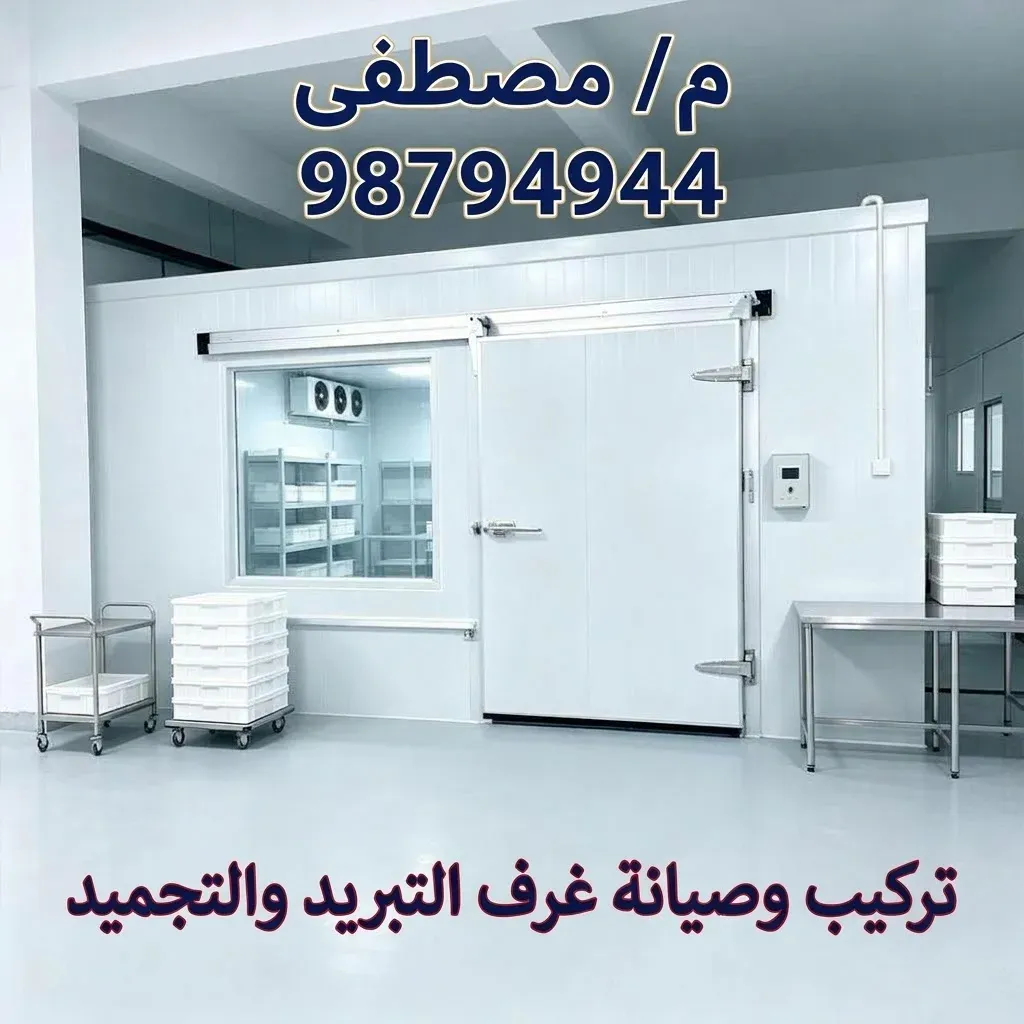
If you have a commercial cold room and need to replace the compressor or install a new refrigeration unit, it is natural to ask: Should I choose a Copeland or Bitzer compressor for my cold room?
Some business owners make their decision based on previous experience, while others rely on their supplier's recommendation. However, compressor selection requires clear technical information.
A Copeland scroll compressor may be appropriate for one refrigeration system, while a Bitzer semi-hermetic compressor may be better suited to another.
Is Copeland Suitable for Small Cold Rooms?
Copeland offers medium-temperature scroll compressor ranges, including models used in certain small and medium-sized cold rooms and display refrigerators.
However, the actual refrigeration capacity and operating envelope of each model must be reviewed.
The condenser and evaporator must also be compatible with the compressor.
The popularity of a compressor series does not mean that every model in it is suitable for all cold rooms.
Is Bitzer Suitable for Large Cold Storage Facilities?
Bitzer supplies semi-hermetic compressors covering a variety of refrigeration capacities.
Some models may be appropriate for commercial warehouses with substantial cooling loads.
However, the manufacturer cannot be selected from the room's size alone.
A small, heavily used cold room may have a greater cooling load than a larger room with effective insulation and limited product movement.
Are Room Dimensions Enough to Select a Compressor?
No. Insulation, doors, product temperatures, and the amount of inventory entering the room must all be considered.
Heat generated by fans, lighting, and personnel may also contribute to the calculation, depending on the design.
Two rooms with identical dimensions may require different refrigeration capacities.
A compressor should therefore not be purchased using length, width, and height alone.
Does the Type of Existing Compressor Matter?
Yes, particularly when replacing an existing compressor.
The refrigeration system may have been designed around a specific compressor in terms of performance, electrical connections, piping, oil, and refrigerant.
Changing to another compressor technology may require additional components to be reviewed.
The existing compressor's identification plate should therefore be photographed and its details provided to the technician.
Can a Copeland Compressor Be Replaced Directly With a Bitzer?
Not always. Dimensions, connection positions, compressor technology, and operating specifications may differ.
Changes to controls or protective devices may be necessary, and condenser and evaporator suitability must also be checked.
Refrigerant and oil compatibility must be confirmed.
Changing compressor brands based solely on similar horsepower ratings is not recommended.
Is a Bitzer Compressor Easier to Maintain?
Some semi-hermetic compressors allow internal servicing procedures, but that does not mean repair costs are lower in every case.
Specific components and specialist labor may be required.
Other types of compressors may sometimes be easier to replace completely, depending on the fault.
The total cost of ownership and maintenance must therefore be compared using actual models.
Is Copeland More Energy Efficient?
This cannot be determined from the brand name alone.
Refrigeration capacity and electricity consumption must be compared under equivalent operating conditions.
Condensing temperature and control methods also influence performance.
Comparing models with different capacities would not provide a fair conclusion.
Does Replacing the Compressor Always Solve Weak Cooling?
No. The problem may involve insulation, the evaporator, condenser, fans, or controls.
The compressor may be operating correctly while the system experiences a load greater than originally designed.
A complete inspection is therefore necessary before approving replacement.
How Do You Make the Final Decision?
Ask the technician to identify the proposed compressor model, its capacity under the room's operating conditions, the reason for recommending it, and any modifications required.
Installation costs, warranty coverage, and spare parts availability must also be clarified.
If you are deciding between a Copeland and Bitzer compressor for your cold room, request a written technical comparison of two compatible models instead of relying on general impressions.
Comparing Bitzer and Danfoss Compressors: Differences in Design, Application, and Maintenance
When comparing Bitzer and Danfoss compressors, it is important to understand that both companies manufacture refrigeration compressors with different specifications rather than offering only one technology.
Bitzer may offer a semi-hermetic reciprocating compressor for a particular commercial application, while Danfoss may provide a hermetic reciprocating or scroll compressor for another.
The comparison therefore depends more on the cooling load and system requirements than on the manufacturer's name.
What Is the Main Difference in Design?
Bitzer offers several semi-hermetic reciprocating compressor models within its ECOLINE series.
Danfoss, meanwhile, manufactures reciprocating and scroll compressors, including fixed-speed and variable-speed models.
Refrigeration capacity, application, connections, and service requirements may differ.
The compressor category must therefore be identified first.
Is Bitzer Better for Larger Refrigeration Equipment?
Certain Bitzer models may be suitable for large commercial systems, but this is not a universal rule.
Compressor size depends on the required refrigeration capacity and the application.
Danfoss also offers commercial refrigeration compressors across different capacity ranges.
Their refrigeration capacities must therefore be compared under equivalent conditions.
Is Danfoss Suitable for Small Commercial Refrigerators?
Danfoss offers products for light-commercial refrigeration and display refrigerators.
A particular compressor may be suitable for a small appliance if its specifications match the system.
However, a replacement cannot be selected simply because the brand is available.
Refrigerant compatibility, electrical requirements, and refrigeration capacity must all be checked.
Is Bitzer Easier to Repair?
Semi-hermetic compressors may allow inspection and replacement of some internal components, depending on their construction.
However, repairability depends on the type of damage, technical expertise, and replacement parts availability.
Repair costs may also be uneconomical in certain situations.
The ability to service a compressor should therefore not be treated as a guarantee of long-term financial savings.
Does Danfoss Offer Better Speed Control?
Danfoss manufactures compressor models and solutions with variable-speed capabilities, but not every Danfoss compressor has this feature.
Speed control may help match compressor capacity to changing refrigeration loads in suitable applications.
However, the outcome depends on the system design, controls, and operating conditions.
Actual compressor models must be compared before drawing conclusions about efficiency.
Does Bitzer Manufacture Only Fixed-Speed Compressors?
No. Bitzer offers capacity-control options in certain product ranges, including mechanical and electronic solutions and variable-speed operation, depending on the model.
These features are not automatically included in every compressor.
The equipment supplied with the quotation must therefore be identified.
Do the Compressors Require Different Oils?
Suitable compressor oils may differ according to the compressor, refrigerant, and manufacturer specifications.
Oil must not be added solely on the basis of the compressor brand.
Proper oil return must also be considered when designing refrigeration piping.
The model's technical documentation should therefore be consulted.
Are Bitzer and Danfoss Spare Parts Available Locally?
Availability depends on the specific model and supplier.
Some components may be readily available, while others may require advance ordering.
Critical spare parts and warranty conditions should therefore be discussed before purchasing.
Which Brand Should You Choose for Your Shop?
Select a model that matches the cooling load, operating temperature, electrical supply, refrigerant, and maintenance requirements.
Bitzer may be appropriate for one project and Danfoss for another.
The difference between Bitzer and Danfoss cannot be determined from brand reputation alone. The performance, compatibility, and total cost of each specific compressor must be examined.
Choosing a Suitable Compressor for a Freezer Room: How Is It Different From a Cold Room Compressor?

When choosing a suitable compressor for a freezer room, you must distinguish between a system that keeps products chilled and a system that operates below freezing temperatures to store frozen products.
Some compressors are designed for medium-temperature refrigeration, while others are intended for lower operating temperatures.
Using an unsuitable compressor may result in operation outside its approved limits, even if it can temporarily reduce the room temperature.
Can Every Refrigeration Compressor Be Used for Freezing?
No. The compressor must be approved for low-temperature applications under the required operating conditions.
Some Copeland ZF models are designed for freezing applications, while Bitzer and Danfoss also offer low-temperature solutions depending on the model.
However, this does not mean that every compressor from these three manufacturers is suitable for freezing.
Does a Freezer Room Operating at −18°C Need a Special Compressor?
It needs a refrigeration system designed to maintain the required storage temperature, taking into account the necessary evaporating temperature and the compressor's operating limits.
A suitable evaporator and an appropriate defrosting arrangement must also be selected.
Simply choosing a compressor that can theoretically reach a low temperature is not sufficient.
The system must be capable of handling the refrigeration load continuously within its approved operating conditions.
Is Storing Frozen Meat Different From Freezing Fresh Meat?
Yes. A storage room receiving products that are already frozen differs from a room intended to freeze large quantities of warm products.
Freezing newly introduced products requires additional heat removal and may need specialized equipment.
Food safety requirements must also be considered.
A frozen food storage room should not automatically be used as a substitute for a blast freezer.
Is Horsepower Enough to Select a Freezer Room Compressor?
No. Actual refrigeration capacity must be determined at the required evaporating and condensing temperatures.
The compressor's effective capacity may differ considerably from what a customer expects based on its horsepower rating.
Manufacturer performance tables must therefore be reviewed.
Does a Larger Compressor Freeze Products Faster?
Not necessarily. If the compressor is not compatible with the evaporator, condenser, and control system, performance may not improve.
The system may also require suitable airflow distribution and equipment designed for the products being frozen.
Freezing performance does not depend on the compressor alone.
Is a Scroll Compressor Suitable for Freezing?
Scroll compressors designed for low-temperature applications are available.
However, certain models may require specific protective devices or injection arrangements according to the manufacturer's design.
The appropriate model must therefore be selected, and the specifications of one scroll compressor should not be applied to all scroll compressors.
Is Bitzer Suitable for Frozen Food Warehouses?
Bitzer offers low-temperature compressors within its product ranges, and certain models may be considered for frozen food warehouses.
However, the choice depends on the refrigeration load, refrigerant type, and operating conditions.
Supporting components and controls must also be reviewed.
Is Danfoss Suitable for Commercial Freezing?
Danfoss manufactures compressors for low-temperature applications, depending on the model.
Compressor technologies and sizes vary according to the intended use.
The operating envelope and refrigeration capacity must therefore be verified rather than relying only on the brand.
Does the Outdoor Installation Location Affect Compressor Selection?
Yes. Higher ambient temperatures around the condenser may affect system performance and efficiency.
Poor ventilation also makes heat rejection more difficult.
The condenser design and installation location must therefore be evaluated, particularly during Kuwait's summer.
What Information Is Required About the Freezer Room?
-
Room length, width, and height.
-
Required storage temperature.
-
Quantity of products.
-
Product temperature when entering the room.
-
Types of products.
-
Insulation and door specifications.
-
Frequency of room access.
-
Condensing unit location.
-
Piping length and height differences.
-
Available electrical supply.
-
Evaporator and defrost system type.
-
Existing compressor information when replacing equipment.
If you want to choose a compressor for a freezer room in Kuwait, first confirm the cooling load and low-temperature application requirements. Then compare suitable Copeland, Bitzer, and Danfoss models.
Which Compressor Is Suitable for Your Shop Display Refrigerator?
Determining which compressor is suitable for your shop display refrigerator differs from choosing a compressor for a large cold room.
Display refrigerators may use built-in refrigeration systems, independent condensing units, or connections to a centralized refrigeration system.
You may have a glass-door beverage refrigerator, dairy display cabinet, meat display refrigerator, or dessert showcase.
The required temperature, evaporator design, electrical specifications, and refrigerant type therefore vary from one appliance to another.
Does a Beverage Display Refrigerator Need a Different Compressor?
That depends on the refrigerator's design and specifications.
A beverage refrigerator may use a hermetic compressor intended for medium-temperature refrigeration.
However, a compressor should not be selected simply because it has a similar physical size.
Refrigeration capacity, voltage, and refrigerant compatibility must be confirmed.
Does a Dairy Display Refrigerator Need More Compressor Capacity?
Not necessarily because of the product type alone.
The cooling load also depends on refrigerator size, insulation, airflow distribution, and usage patterns.
The refrigeration system must maintain the temperature required for the products.
The appliance specifications and actual load must therefore be reviewed.
Is a Dessert Display Refrigerator Different From a Juice Refrigerator?
Temperature, humidity, and airflow requirements may differ.
Designs also vary between closed display refrigerators and open refrigerated showcases.
The display arrangement may affect the cooling load.
The compressor must therefore be selected as part of the refrigerator's complete system design.
Can a Display Refrigerator Compressor Be Replaced With Another Brand?
An approved, technically compatible alternative may be considered, but matching horsepower is not sufficient.
Refrigeration capacity, refrigerant type, oil, electrical requirements, mounting dimensions, and starting circuit specifications must be reviewed.
The replacement must also be compatible with the condenser and evaporator.
Does Weak Cooling Mean That the Compressor Has Failed?
No. The fault may involve a fan, condenser, sensor, controller, or defrost system.
There may also be a problem with the doors or product arrangement.
Diagnosis is therefore necessary before approving compressor replacement.
Does a New Compressor Require New Refrigeration Pipes?
Not always. This depends on compatibility, circuit condition, and the type of replacement.
Some replacements may require connection modifications or treatment of contamination inside the refrigeration circuit.
The filter drier and other components related to the repair must also be reviewed according to the appropriate technical procedures.
Must the Same Refrigerant Be Used?
Only a refrigerant approved for the compressor and refrigeration system should be used.
A system must not be converted to another refrigerant merely because it is available or cheaper.
Some refrigerants have different safety requirements, including flammability considerations.
The appliance and compressor specifications must therefore be reviewed before any modification.
Can a Larger Compressor Be Installed to Make the Refrigerator Colder?
This is not a guaranteed solution.
An imbalance between components may create operating problems.
Performance may also remain unsuitable despite an increase in nominal capacity.
The better approach is to identify the cause of weak cooling and choose an identical or approved replacement when necessary.
What Information Is Needed When Replacing a Shop Refrigerator Compressor?
It is useful to provide photographs of the appliance and compressor identification plates, together with a description of the problem, temperature readings, and product types.
The technician should explain the proposed replacement specifications and the work required.
If your shop refrigerator is not cooling and you are considering compressor replacement, do not choose Copeland, Bitzer, or Danfoss based on the brand name alone. Begin with fault diagnosis and ensure that the replacement matches the appliance.
Scroll vs. Reciprocating Compressors: Which Is Better for Commercial Refrigeration?
When researching the differences between scroll and reciprocating compressors, you may hear that scroll compressors are quieter and reciprocating compressors are easier to maintain.
However, this comparison needs clarification.
The two technologies use different methods of compressing refrigerant, and their models vary in capacity, efficiency, vibration, maintenance requirements, and operating limits.
Neither technology is superior in every application and under all operating conditions.
What Is a Scroll Compressor?
A scroll compressor uses two interlocking spiral-shaped elements to compress refrigerant through movement within the compressor mechanism.
It is used in various refrigeration and air-conditioning applications, depending on the model.
Certain designs may offer smooth operation and reduced vibration, but actual noise levels depend on the equipment and installation method.
What Is a Reciprocating Compressor?
A reciprocating compressor uses pistons moving within cylinders to compress refrigerant.
Both hermetic and semi-hermetic designs are available.
Capacities, applications, and control methods vary between models.
All reciprocating compressors should therefore not be treated as one category with identical prices or maintenance requirements.
Is a Scroll Compressor Quieter Than a Reciprocating Compressor?
Certain scroll compressor models may produce lower noise and vibration levels, but an accurate comparison depends on model, capacity, and mounting.
Vibration may also be transmitted through piping, equipment bases, or condensers.
Noise performance data should therefore be reviewed when noise is important at the installation site.
Is a Reciprocating Compressor Easier to Repair?
Certain semi-hermetic reciprocating compressors allow internal maintenance procedures that differ from those possible with hermetic compressors.
However, hermetically sealed reciprocating compressors also exist and may require replacement when certain types of damage occur.
The term "reciprocating" alone is therefore not enough to determine repairability.
Does a Scroll Compressor Use Less Electricity?
Not always. Certain models may perform better under particular conditions, but efficiency depends on capacity, application, operating temperatures, and controls.
Performance information must be compared under the same conditions.
Comparing a small scroll compressor with a large reciprocating compressor would not support a valid general conclusion.
Is a Scroll Compressor Suitable for Low-Temperature Refrigeration?
Yes. Models specifically designed for low-temperature applications are available.
However, they may have special equipment requirements or operating restrictions.
Manufacturer instructions must be followed, particularly regarding protective devices.
Is a Reciprocating Compressor Suitable for Continuous Operation?
Suitable reciprocating compressors can be used in commercial refrigeration systems within their approved operating ranges.
However, continuous operation depends on system design, lubrication, protective devices, and maintenance.
The compressor technology does not mean that it can tolerate any operating condition.
Can a Reciprocating Compressor Be Replaced With a Scroll Compressor?
This may be possible as part of a system redesign, but it is not always a direct replacement.
Piping, mounting bases, condensers, controls, and protective devices may need modification.
Refrigeration capacity, refrigerant type, and oil compatibility must also be reviewed.
Scroll vs. Reciprocating Compressor Comparison
|
Criterion |
Scroll compressor |
Reciprocating compressor |
|
Operating principle |
Spiral compression mechanism |
Pistons and cylinders |
|
Available designs |
Multiple models |
Hermetic and semi-hermetic |
|
Noise |
Depends on model |
Depends on model |
|
Efficiency |
Depends on operating conditions |
Depends on operating conditions |
|
Internal maintenance |
Depends on construction |
Possible in certain semi-hermetic designs |
|
Freezing applications |
Available in specified models |
Available in specified models |
|
Capacity control |
Options vary by product |
Options vary by product |
|
Price |
Depends on capacity and model |
Depends on capacity and model |
Which Is Better for Your Shop?
If you are replacing an existing compressor, compatibility with the refrigeration system is the priority.
If you are designing a new refrigeration system, both technologies can be compared after calculating the required cooling load.
Scroll and reciprocating compressors are not simply a question of one being better than the other. The choice depends on model performance and compatibility with the commercial refrigeration system.
Selecting Compressor Capacity Based on Cooling Load: How Do You Avoid Choosing the Wrong Size?
Selecting compressor capacity based on the cooling load is one of the most important steps when installing a cold room or replacing a condensing unit.
Some business owners choose compressors based on room dimensions or the horsepower rating of the old equipment.
However, this approach may be inaccurate if the room's usage, door-opening frequency, or incoming product temperatures have changed.
Direct answer: The correct capacity is determined by calculating the cooling load and then selecting a compressor that provides the required refrigeration capacity at the design evaporating and condensing temperatures using the approved refrigerant.
What Is a Cooling Load?
The cooling load is the amount of heat that the refrigeration system must remove under the specified operating conditions.
Heat sources include transfer through walls, the ceiling, and the floor, air entering through doors, heat introduced by products, and other internal sources.
The required refrigeration capacity therefore cannot be determined from room volume alone.
Do Room Dimensions Determine Compressor Horsepower?
No. Room volume provides preliminary information, but it is insufficient for a complete calculation.
A small room with frequent door opening may have a greater cooling load than a larger room with excellent insulation.
The temperature of products entering each day also affects requirements.
Using a fixed rule such as "one horsepower for a certain number of cubic meters" for every project is therefore incorrect.
Does Insulation Thickness Matter?
Yes. Insulation specifications affect the amount of heat entering the cold room.
Doors, panel joints, ceilings, and flooring also contribute to heat transfer.
The cooling load may increase when there are gaps or damaged door gaskets.
Insulation should therefore be assessed before selecting a compressor.
Does the Temperature of Incoming Products Affect the Calculation?
Absolutely. Warm products require additional heat removal.
Products that have already been chilled may introduce a different load.
Likewise, freezing new products differs from maintaining products that are already frozen.
Product quantities and temperatures on arrival must therefore be identified.
Is Door-Opening Frequency Important?
Yes. Opening a door allows warmer, more humid air to enter.
This may have a significant effect in busy warehouses.
The load also varies according to how long the door remains open and how frequently employees enter.
Actual operating patterns must therefore be established.
Why Are Evaporating and Condensing Temperatures Important?
Both temperatures affect the compressor's actual refrigeration capacity and efficiency.
The same compressor may provide different capacities under different operating conditions.
Manufacturer performance tables must therefore be compared using equivalent conditions.
Nominal capacity should not be used without understanding the conditions under which it was measured.
Is Compressor Horsepower the Same as Refrigeration Capacity in Kilowatts?
They should not be treated as the same measurement.
The horsepower used to describe certain compressors is not a substitute for actual refrigeration capacity.
Electrical power consumption in kilowatts is also different from refrigeration capacity expressed in kilowatts.
Motor power, electrical input, and refrigeration output must therefore be distinguished.
Should You Add a Large Safety Margin?
An appropriate design margin may be necessary, but excessive oversizing is not always beneficial.
It may affect cost, control performance, and compressor cycling.
The margin should therefore be based on calculations and identifiable operating conditions.
What Information Does the Technician Need?
-
Room dimensions.
-
Required temperature.
-
Ambient design conditions.
-
Insulation type and thickness.
-
Number of doors.
-
Frequency of entry and exit.
-
Types of products.
-
Daily loading quantities.
-
Product temperatures on arrival.
-
Fan and lighting loads.
-
Evaporator type.
-
Refrigerant type.
-
Operating system and electrical supply.
How Can You Confirm That the Selected Capacity Is Suitable?
Request performance data for the proposed model under the design conditions, together with an explanation of the required capacity and system components.
The technical provider may use manufacturer selection tools to verify performance.
Bitzer offers software for selecting its compressor models, while Danfoss provides Coolselector2 to help technical specialists calculate and select refrigeration components.
If you are replacing a compressor or installing a new cold room, compressor selection should begin with a cooling load calculation—not the horsepower rating alone.
Commercial Refrigeration Compressor Electricity Consumption: Which Is More Economical to Operate?
Business owners are interested in commercial refrigeration compressor electricity consumption because electricity is an ongoing operating expense, particularly in facilities running cold rooms or freezer rooms throughout the day.
However, comparing Copeland, Bitzer, and Danfoss in terms of electricity consumption requires information about the actual models and operating conditions.
It is impossible to conclude that one manufacturer is universally more energy efficient because capacity, technology, control methods, and ambient temperature influence the results.
Does the Brand Name Determine Electricity Consumption?
No. Efficiency varies even between products manufactured by the same company.
Two compressors from one brand may have different power requirements and performance characteristics.
The compressor also operates as part of a complete refrigeration system that affects overall efficiency.
Specific performance data must therefore be compared.
What Is the Difference Between Electrical Power and Refrigeration Capacity?
Electrical power describes the rate at which the compressor consumes electrical energy during operation.
Refrigeration capacity describes the rate at which heat is removed from the cooled space.
The relationship between them varies with operating conditions.
Electrical input alone is therefore not enough to determine refrigeration performance.
What Is the Refrigeration Coefficient of Performance (COP)?
The coefficient of performance is the ratio of refrigeration capacity to the electrical power used under specified conditions.
When consistent units are used, it can help compare equipment efficiency.
However, it is important to establish whether the comparison refers to the compressor alone or the entire refrigeration system.
Values measured at different operating temperatures must not be compared as though the conditions were identical.
Does a Variable-Speed Compressor Save Electricity?
It may help reduce consumption in certain applications where the load changes and the system has been designed with suitable controls.
However, no fixed percentage of energy savings can be guaranteed for every project.
The cost of control devices and additional components must also be considered.
Does a Dirty Condenser Increase Electricity Consumption?
A dirty condenser may interfere with heat rejection and make compressor operating conditions more demanding.
This may affect efficiency and refrigeration capacity.
Condenser cleanliness and ventilation are therefore important maintenance considerations.
However, the condenser must be cleaned using procedures appropriate for the equipment and by qualified personnel when necessary.
Does Kuwait's Hot Weather Increase Electricity Consumption?
Higher ambient temperatures may result in higher condensing temperatures, affecting the efficiency of certain refrigeration systems.
However, the extent of the effect depends on condenser design, fan operation, and cooling load.
Equipment should therefore be selected for the site's operating conditions.
Purchasing a compressor advertised as efficient under different test conditions is not enough.
Does a Larger Compressor Always Consume More Electricity?
Certain larger compressors may have higher electrical input, but annual energy consumption also depends on operating hours, control methods, and the cooling load.
Selecting unsuitable capacity may result in uneconomical operation.
Expected annual energy consumption should therefore be evaluated instead of relying only on nominal power ratings.
How Do You Calculate Electricity Consumption?
Electrical energy consumption can be estimated by multiplying average power consumption in kilowatts by operating hours.
For example, if a particular appliance consumes an average of 2 kilowatts over 10 actual operating hours, its energy consumption is 20 kilowatt-hours.
This is an illustrative example only. It does not represent the electricity consumption of any specific compressor because actual power varies according to the equipment and operating conditions.
How Much Does Electricity Cost in Kuwaiti Dinars?
Costs depend on the electricity tariff applicable to the facility, its service category, and any relevant charges.
A residential electricity tariff should not automatically be applied to a commercial project without verification.
An accurate estimate therefore requires expected electricity consumption and the applicable tariff.
Factors Affecting Commercial Refrigeration Electricity Consumption
|
Factor |
Potential effect |
What should you review? |
|
Compressor efficiency |
Affects the electrical energy required |
Performance data |
|
Cooling load |
Determines how much heat must be removed |
Cooling load calculation |
|
Condensing temperature |
Affects compressor performance |
Condenser and ventilation |
|
Evaporating temperature |
Affects refrigeration capacity and efficiency |
Design conditions |
|
Insulation |
Reduces heat transfer into the room |
Panels and doors |
|
Door opening |
Increases air infiltration |
Operating patterns |
|
Fans |
Affect operation and power consumption |
Performance and controls |
|
Capacity control |
May help under variable loads |
Technology and suitability |
|
Maintenance |
Supports suitable operating conditions |
Condenser, evaporator, and sensors |
If your goal is to choose a compressor that uses less electricity, compare efficiency under equivalent operating conditions and calculate the total refrigeration system costs—not simply the manufacturer's name.
Comparing Cold Room Compressors Before Buying: Prices, Installation, and Why Contact Us
Before comparing cold room compressors before buying, it is important to establish whether you need to replace the compressor alone, replace the entire condensing unit, or modify a refrigeration system that is unsuitable for the room's cooling load.
A business owner may request a new compressor because the cold room is not cooling properly, only to discover after inspection that the problem lies in the condenser, fans, or controls.
The purchase decision should therefore begin with diagnosis or technical design rather than selecting the cheapest available compressor.
Step One: Inspect the Existing Compressor
If the project involves a repair, the first step is to review the fault, operating measurements, and electrical conditions according to the refrigeration system type.
It is also necessary to confirm that another problem is not causing the compressor to stop.
Compressor failure should not be diagnosed from sound alone.
Step Two: Identify the Cause of the Previous Failure
If compressor failure is confirmed, possible causes should be investigated before a replacement is installed.
The problem may involve refrigeration conditions, protective devices, electrical connections, or contamination inside the circuit.
Failing to address the cause may result in another compressor failure.
Step Three: Determine the Required Specifications
The cooling load, required temperature, refrigerant type, and electrical supply must be reviewed.
Compatible compressor models can then be selected from the appropriate manufacturers.
Any necessary modifications to piping and controls must also be explained.
Step Four: Request a Technical Comparison
Ask for refrigeration capacity and electricity consumption under equivalent operating conditions.
The operating envelope, compressor technology, and protective requirements must also be identified.
Matching horsepower numbers between two models are not sufficient.
Step Five: Compare Prices
There is no single reliable price for all Copeland, Bitzer, and Danfoss compressors in Kuwait. Costs differ according to model, capacity, availability, supplier, and warranty.
The comparison should include the compressor itself, installation labor, materials, testing, and any necessary modifications.
|
Cost item |
What it covers |
Important question |
|
Compressor price |
Compressor of the specified model |
Is it new and compliant with the required specifications? |
|
Transportation and supply |
Delivering the component to the site |
Is delivery included? |
|
Removal work |
Safely removing the old compressor |
Is this included in the price? |
|
Installation materials |
Required connections and accessories |
Exactly what is included? |
|
Refrigeration circuit work |
Repairs, inspection, evacuation, and charging when necessary |
Which procedures are required? |
|
Electrical and controls |
Necessary modifications |
Are additional charges involved? |
|
Trial operation |
Performance checks and verification of refrigeration |
Is this included? |
|
Warranty |
Component and labor coverage |
What are the duration and exclusions? |
Step Six: Review Compatibility Before Installation
The compressor must be compatible with the refrigeration circuit, refrigerant, and oil.
Electrical requirements, protective devices, condenser, and evaporator must also be reviewed.
A replacement must not be approved simply because its physical dimensions or nominal capacity are similar.
Step Seven: Carry Out the Technical Installation
Replacement work must follow manufacturer instructions and applicable safety requirements.
It may include safe refrigerant handling, circuit testing, evacuation, and charging where necessary.
Procedures vary according to the fault and the refrigeration system.
Step Eight: Test Operation
Operation, pressure conditions, temperatures, electrical current, and protective devices should be checked according to the equipment requirements.
It is also important to confirm that the cold room or refrigerator returns to the required storage conditions.
The compressor running does not, by itself, mean that the repair has been completed.
Step Nine: Receive Warranty and Equipment Information
It is preferable to obtain an invoice specifying the compressor model, installed component, and work performed.
Warranty conditions and follow-up service procedures must also be understood.
Important inspection results should be retained when available.
Step Ten: Contact Cold Room and Display Refrigerator Maintenance
If you need a compressor inspection for a cold room, freezer room, or display refrigerator, you can contact Cold Room and Display Refrigerator Maintenance and inquire about equipment inspection and the possibility of supplying a suitable compressor model.
Available brands and models, component prices, installation charges, and warranty coverage must be confirmed before reaching an agreement.
It should not be assumed that every Copeland, Bitzer, or Danfoss model is available or that a particular completion time is guaranteed.
For inquiries, visit the official website.
Why Choose a Service Provider That Follows a Clear Inspection Process?
The difference between one quotation and another is not limited to the compressor's price.
It is preferable to evaluate the provider's ability to offer:
-
Diagnosis before compressor replacement.
-
Identification of the cause of failure where possible.
-
Selection of a compressor model compatible with the refrigeration system.
-
Explanation of capacity and operating conditions.
-
Clear details of required parts and materials.
-
Defined installation and testing costs.
-
Review of electrical supply and protective devices.
-
Refrigeration performance testing after installation.
-
Clear documentation of parts and completed work.
-
Written warranty conditions.
These are criteria to verify when requesting service, not benefits or guarantees that should automatically be assumed to apply to every quotation.
What Information Is Needed to Request a Quotation?
Prepare:
-
Type of business and location in Kuwait.
-
Cold room or refrigerator type.
-
Room dimensions where applicable.
-
Required operating temperature.
-
Product types.
-
Existing compressor model.
-
Refrigerant type.
-
Description of the fault.
-
Safe photographs of the equipment identification plate.
-
Whether repair or replacement is required.
-
Electrical and condensing unit information.
If you want to buy a Copeland, Bitzer, or Danfoss compressor, request an appropriate diagnosis or technical assessment before purchasing. Then compare the compressor price, installation costs, expected performance, and warranty coverage.
Frequently Asked Questions About Copeland, Bitzer, and Danfoss Compressors in Kuwait
Which Is the Best Commercial Refrigeration Compressor for Shops: Copeland, Bitzer, or Danfoss?
There is no single compressor brand that is best for every application.
The choice depends on the refrigerator or cold room type, cooling load, required temperature, refrigerant type, and electrical specifications.
A particular Copeland model may suit one cold room, while Bitzer or Danfoss may be more appropriate for another appliance.
The best approach is to compare specific models under equivalent operating conditions and review their prices, compatibility, and warranty terms.
Is a Copeland Compressor Better Than a Bitzer Compressor for Cold Rooms?
Not necessarily. Copeland manufactures scroll compressors for commercial refrigeration, while Bitzer offers semi-hermetic reciprocating compressors and other solutions.
Either may be suitable depending on the cooling load and system design.
Horsepower or brand reputation alone cannot determine which is better.
Actual refrigeration capacity, efficiency, operating requirements, and installation conditions must be compared.
Can a Danfoss Compressor Replace a Copeland or Bitzer Compressor?
This may be possible if a technically compatible model is available, but replacement is not always straightforward.
Refrigeration capacity, refrigerant type, oil, electrical specifications, connections, and operating limits must be reviewed.
Certain system components may also require modification.
Changing compressor brands without a technical inspection is therefore not recommended.
How Much Does a Copeland, Bitzer, or Danfoss Compressor Cost in Kuwait?
The price varies according to the compressor model, capacity, technology, refrigerant type, local availability, and warranty.
The compressor's purchase price also differs from the complete replacement cost, which may include labor, materials, inspection, evacuation, and refrigerant charging where necessary.
There is no single fixed price for all compressors.
A quotation should therefore be requested for the specific model and required work.
Which Uses Less Electricity: A Scroll or Reciprocating Compressor?
Neither technology can be considered universally more efficient.
Efficiency depends on the compressor model, cooling load, evaporating and condensing temperatures, and capacity-control method.
Condenser cleanliness, insulation, and door-opening frequency also affect the refrigeration system's electricity consumption.
It is better to compare energy and refrigeration capacity data for suitable models under equivalent operating conditions.
Conclusion: Choosing Copeland, Bitzer, or Danfoss Starts With Technical Specifications, Not the Brand Name
If you own a shop, restaurant, supermarket, cold room, or freezer room in Kuwait, the question "Copeland, Bitzer, or Danfoss compressor: which one is suitable for your business?" does not have one answer that applies to every project.
All three manufacturers provide commercial refrigeration compressors with different technologies and capacities.
The correct choice depends on the cooling load, operating temperature, refrigerant type, electrical supply, and condenser and evaporator design.
Throughout this guide, we have explained the differences between the manufacturers, how to choose a compressor according to your business activity, the requirements of cold rooms, freezer rooms, and display refrigerators, and the differences between scroll and reciprocating technologies.
We have also explained why horsepower alone is insufficient for selecting refrigeration capacity and why electricity consumption must be compared under equivalent operating conditions rather than according to brand names.
If you are replacing a defective compressor, diagnosing the fault and identifying its cause before installing a replacement is essential.
This helps avoid paying to replace a working compressor or experiencing the same failure again because the underlying problem was not corrected.
As for prices, they differ according to model, availability, installation work, testing, and warranty conditions.
It is therefore preferable to request a clear quotation covering the total cost rather than comparing component prices alone.
Do You Want to Know Which Compressor Is Suitable for Your Cold Room, Freezer Room, or Display Refrigerator?
Contact Cold Room and Display Refrigerator Maintenance through the official website.
Provide the appliance or cold room details and the existing compressor model, then inquire about inspection, the possibility of supplying a suitable replacement, and installation costs.
Do not choose Copeland, Bitzer, or Danfoss based only on the manufacturer or horsepower rating.
A proper technical comparison, diagnosis before replacement, and operating tests after installation are essential steps in selecting a compressor suited to your business and capable of operating within the required refrigeration conditions.