Meat and Poultry Display Fridge Installation in Kuwait: Costs
·
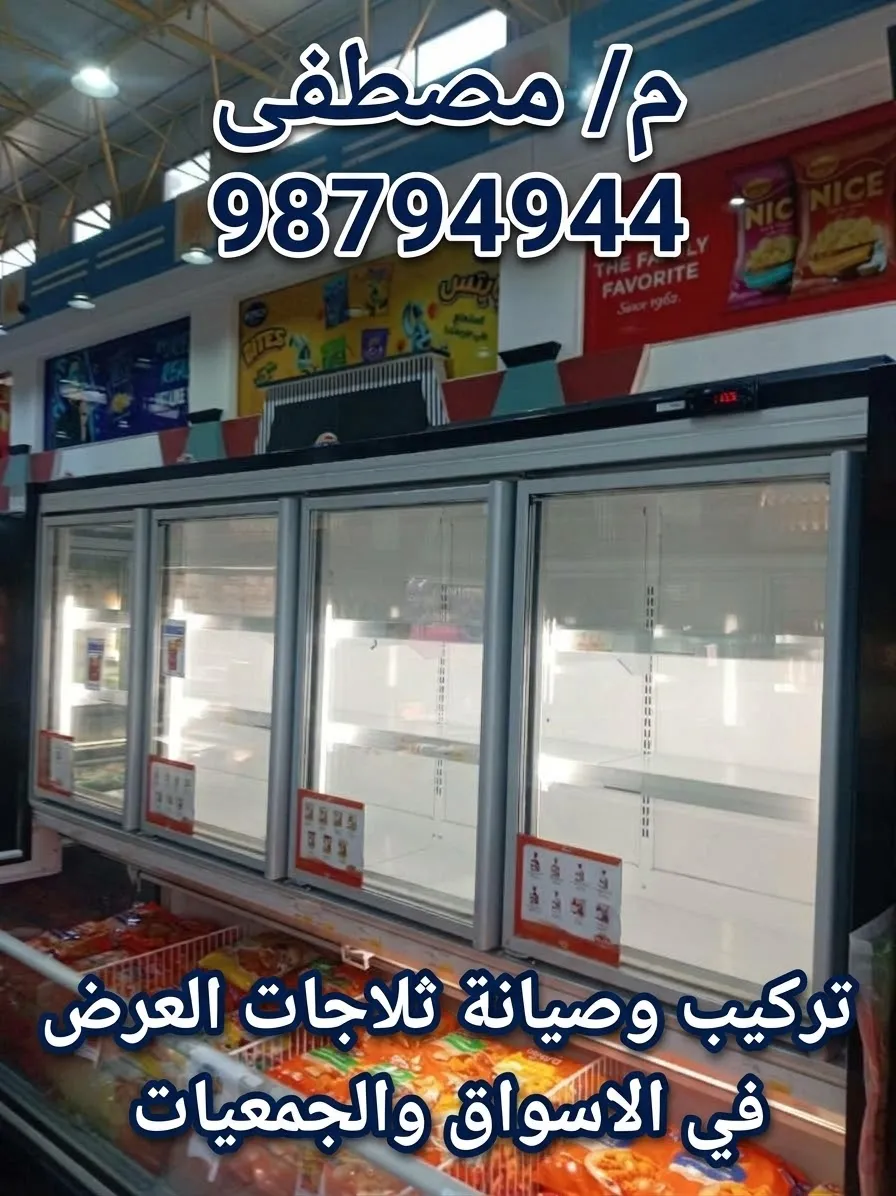
Meat and Poultry Display Refrigerator Installation for Butcher Shops in Kuwait: Sizes and Prices
If you are preparing a new butcher shop or expanding the meat and poultry section of a grocery store or supermarket in Kuwait, meat display refrigerator installation in Kuwait requires careful consideration of the dimensions, refrigeration system, display design, and ease of cleaning.
The right refrigerator is not simply a glass-fronted cabinet that displays meat to customers. It is commercial equipment designed to help maintain the required temperature, organize products, and make daily sales and food preparation more convenient.
Direct answer: The price of a meat display refrigerator for a butcher shop depends on the length and depth of the display, glass type, stainless steel specifications, refrigeration capacity, condensing unit type, and whether the refrigerator is ready-made or custom-built for the available shop space.
The appropriate dimensions depend on the sales area, quantity of meat being displayed, butcher's working space, and movement of customers and employees. A reliable fixed price cannot be provided without identifying these specifications.
It is also essential to distinguish between a refrigerated display refrigerator for fresh meat and a display freezer for frozen products. These appliances do not perform the same function.
The operating temperature must be selected according to food type and applicable safety requirements. Product temperature should not be assessed solely from the refrigerator's air temperature display.
A temperature of 5°C or below is used as a general reference for certain foods requiring time and temperature control in some international guidance. However, this does not override stricter product-specific requirements or regulations applicable in Kuwait.
Cross-contamination between raw meat, poultry, and ready-to-eat foods must also be prevented.
In this guide from Cold Room and Display Refrigerator Maintenance, we explain meat display refrigerator prices, how to select a suitable poultry display refrigerator, when a custom stainless steel counter may be needed, and what to consider regarding glass, insulation, fans, and refrigeration.
We also cover installation and acceptance procedures so that you can request a clear quotation that meets your business requirements from the beginning.
Meat Display Refrigerator Installation in Kuwait: What Does the Service Include and How Do You Choose the Right Type?
When requesting meat display refrigerator installation in Kuwait, it is important to understand that preparing a meat display begins with evaluating the products, available space, and customer service arrangements before selecting the refrigerator's appearance or compressor capacity.
A butcher shop may require a counter through which the butcher serves customers, while a grocery store may need an enclosed refrigerator displaying prepackaged meat.
A larger business may require several display units connected to a centralized refrigeration system.
These differences affect the refrigerator type, dimensions, cleaning requirements, and final cost.
What Types of Meat Display Refrigerators Are Available for Shops?
Several designs may be considered depending on the business, including:
-
Horizontal meat display refrigerators with glass fronts.
-
Refrigerated butcher service counters.
-
Upright meat display refrigerators with glass doors.
-
Display units for prepackaged meat in grocery stores.
-
Straight refrigerated display counters for customer service areas.
-
Display units suitable for certain corners and customized layouts.
-
Display refrigerators with independent condensing units.
-
Display cabinets connected to centralized refrigeration systems.
However, no design should be selected before determining whether products will be exposed or packaged and how employees and customers will handle them.
What Is the Difference Between a Meat Display Refrigerator and a Backroom Storage Refrigerator?
A display refrigerator is designed to present products clearly and make them accessible under its specified refrigeration conditions.
A backroom refrigerator or cold storage room is used to hold inventory that does not need to be displayed directly to customers.
Door-opening loads, employee movement, and product arrangement may differ between the two systems.
A display refrigerator should therefore not be used to store the butcher shop's entire inventory if it is designed for a limited load.
Is Every Display Refrigerator Suitable for Raw Meat?
No. The appliance must be designed or approved for the intended food display application according to its manufacturer's specifications.
Raw meat may have different requirements from desserts or beverages regarding temperature control, cleaning, liquid collection, and cross-contamination prevention.
Surfaces that come into contact with food must be suitable for food use and easy to clean.
An ordinary display refrigerator should not be converted into a meat display simply because it can produce cold air.
Is a Glass-Fronted Counter Better Than an Enclosed Refrigerator?
That depends on the sales method.
A glass-fronted service counter may help customers view and select meat cuts, while enclosed refrigerators may be appropriate for packaged products or another type of retail operation.
However, the glass specifications and opening arrangements affect cleaning, employee access, and heat transfer.
The two designs should therefore be compared according to product requirements and customer service procedures rather than appearance alone.
Does Refrigerator Installation Require a Special Electrical Supply?
Electrical requirements vary according to the refrigerator model, compressor, fans, lighting, and control devices.
Some appliances may have different power supply requirements, particularly large units or those connected to central refrigeration systems.
The equipment's electrical nameplate and connection diagrams must therefore be reviewed before installation.
Unsuitable electrical extensions or sockets must not be used to operate commercial equipment with substantial electrical loads.
Does the Refrigerator's Location Inside the Shop Affect Cooling?
Yes. Placing the appliance next to an oven, in an excessively hot area, or in direct sunlight may increase its refrigeration load.
Blocking ventilation openings around the condenser can also affect performance.
Installation guidance for commercial meat display refrigerators emphasizes the importance of a level floor capable of supporting the equipment, avoiding heat sources, maintaining adequate ventilation, and providing access for maintenance.
The location must therefore be reviewed before the final dimensions are approved.
Does Installation Include Connecting and Testing the Refrigerator?
The work may include transporting the appliance, positioning it, connecting it, and testing operation. However, the exact scope depends on the contractor's quotation.
Some projects may also require additional electrical work, drainage preparation, or refrigeration piping.
All included and excluded work must therefore be specified in writing.
A functioning temperature display alone does not mean the refrigerator is ready to store and display meat.
How Can You Tell Whether the Meat Refrigerator Is Ready for Products?
Installation, electrical supply, ventilation, drainage, and controls must be checked.
The refrigerator should also be tested to confirm that it can reach its required operating conditions according to manufacturer instructions and product requirements.
A suitable stabilization period may be necessary before products are introduced.
Meat should not be placed inside a newly installed refrigerator while the cabinet remains warmer than its required storage conditions.
If you are preparing a butcher shop or a new meat section, begin by identifying the products, available space, and sales method. Then request the display refrigerator's technical specifications before agreeing on the price.
Meat Display Refrigerator Prices for Butcher Shops: What Determines Costs in Kuwait?
When researching the price of a meat display refrigerator for a butcher shop, you may find significant differences between quotations for appliances that appear similar in length and appearance.
This is because the price depends on more than the glass dimensions or linear length. Internal design, refrigeration type, stainless steel components, insulation, evaporators, condensing units, and controllers may all differ.
Direct answer: There is no fixed price for meat display refrigerators in Kuwait that applies to every butcher shop.
It is better to request a quotation identifying the length, depth, appliance type, refrigeration capacity, included equipment, installation, and warranty, then compare offers based on equivalent specifications.
Is the Price of a Meat Display Refrigerator Calculated per Meter?
Some suppliers may use a price per linear meter when discussing display counters, but this is not an accurate pricing rule for every design.
A two-meter refrigerator may cost considerably more than another refrigerator of the same length if the depth, glass, or refrigeration system differs.
Custom counters may also require additional components not found in ready-made models.
The specifications included in any price-per-meter quotation must therefore be established before relying on it.
What Are the Most Important Factors Affecting Price?
Key factors include:
-
Display refrigerator length, width, and height.
-
Internal depth and usable meat display area.
-
Glass type and opening or lifting mechanism.
-
Stainless steel specifications for internal and external components.
-
Independent or centralized refrigeration system.
-
Compressor capacity and evaporator specifications.
-
Fan type and airflow distribution.
-
Insulation quality and cabinet construction.
-
Control panel and temperature sensors.
-
Drainage and cleaning arrangements.
-
Lighting and its positioning.
-
Additional storage beneath the counter, if included.
-
Transportation, installation, and testing.
-
Warranty, replacement parts, and service conditions.
The refrigerator's quality should not be judged solely by its glass and external appearance.
Is a Ready-Made Refrigerator Cheaper Than a Custom-Built One?
A ready-made appliance may cost less in certain situations if its dimensions are suitable and it does not need modifications.
A custom refrigerator may be more appropriate when the location includes corners or columns or requires a particular counter layout.
However, customization may increase costs because of special dimensions and additional manufacturing work.
It is better to compare the complete installed cost and suitability of both options.
Does Price Change According to Refrigeration System Type?
Yes. Some display refrigerators have independent condensing units, while others are connected to centralized refrigeration systems.
The equipment, piping, electrical work, and commissioning requirements differ between these arrangements.
The cost of a central system also cannot be calculated from the price of an individual display cabinet when shared equipment is involved.
The quotation must therefore clarify whether it covers the refrigerator alone or all associated refrigeration system work.
Is Curved Glass More Expensive Than Straight Glass?
Costs may differ according to glass type, display design, manufacturing method, and opening mechanism.
However, one fixed price difference cannot be applied to every product.
The decision should not depend solely on appearance because cleaning and access to products are also important for the butcher.
Available options should therefore be compared according to their practical use rather than aesthetic appearance alone.
Does Stainless Steel Affect the Refrigerator's Price?
Yes. Metal components differ in material grade, thickness, finish, and manufacturing method.
Surfaces that contact meat or undergo frequent cleaning are particularly important.
However, simply describing a refrigerator as "stainless steel" is insufficient to establish its technical specifications.
It is better to identify the material grade, where it is used, and how it should be cleaned.
Is Installation Included in the Purchase Price?
That depends on the supplier's or contractor's quotation.
One offer may cover equipment supply only, while another includes transportation, lifting, installation, electrical connection, and testing.
Certain sites may also need additional electrical installations or preparation work not included in the original price.
It is therefore important to establish the total cost of delivering the refrigerator ready for operation, not simply its purchase price.
Is There a Fixed Price for a Two-Meter or Three-Meter Meat Display Refrigerator?
A reliable price cannot be determined from length alone.
Two refrigerators of the same length may differ in depth, refrigeration system, components, and manufacturing method.
Installation location may also affect the final cost.
Dimensions and required specifications must therefore be supplied before requesting a meaningful quotation.
What Questions Should You Ask Before Approving the Price?
Ask about:
-
External and internal dimensions.
-
Refrigerator type and its intended application.
-
Operating temperatures achievable under the design conditions.
-
Glass type and opening mechanism.
-
Specifications of food-contact surfaces.
-
Refrigeration capacity and airflow distribution.
-
Required electrical supply.
-
Supply and installation details.
-
Testing and acceptance conditions.
-
Warranty coverage.
-
Potential additional work costs.
If you want to know the price of a meat display refrigerator for your butcher shop, request a detailed technical quotation covering dimensions, equipment, and installation so that prices can be compared fairly and clearly.
Commercial Poultry Display Refrigerator Installation: What Specifications Are Suitable for Fresh Chicken?
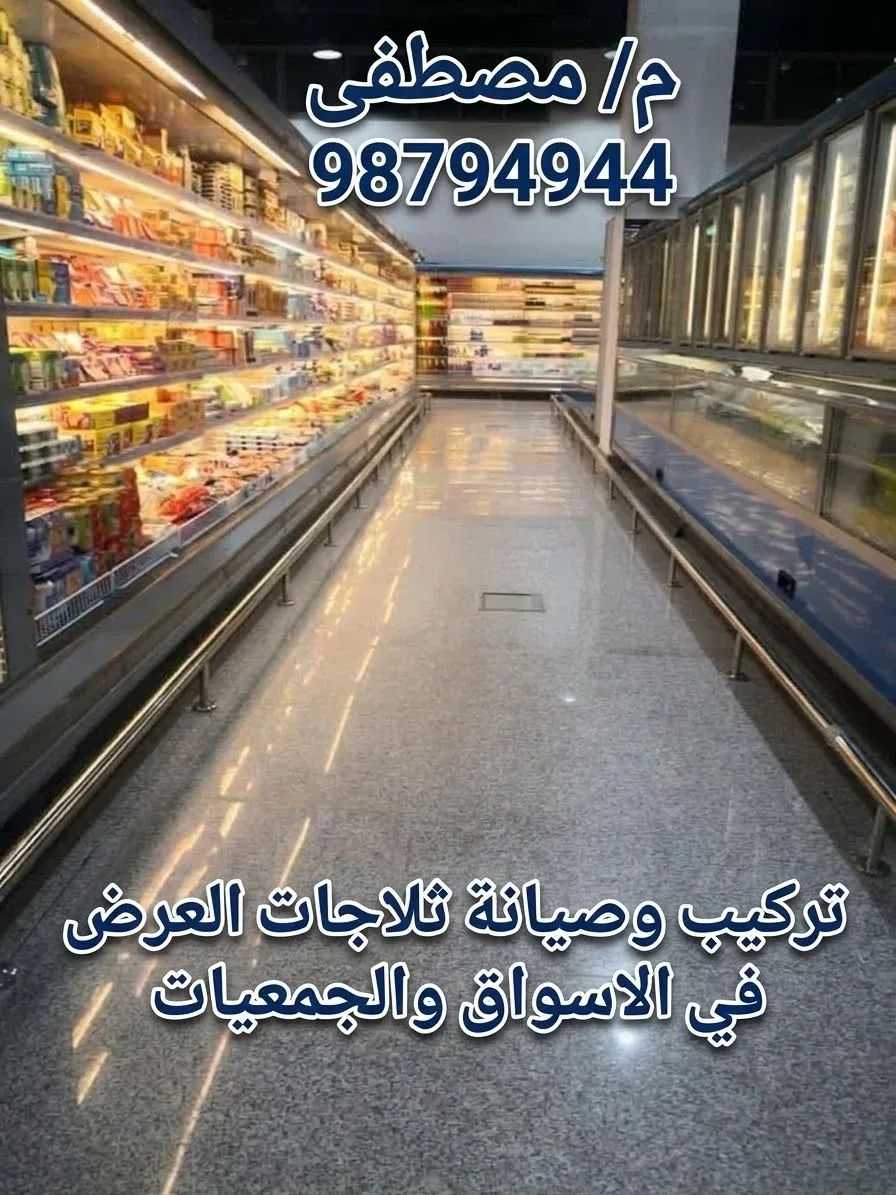
When planning commercial poultry display refrigerator installation, temperature control, hygiene, and product arrangement deserve more attention than the appearance of the display alone.
Raw poultry is particularly sensitive to improper handling and cross-contamination. The display arrangement must therefore comply with the food safety requirements applicable in Kuwait and allow suitable cleaning of surfaces, trays, and areas where liquids may collect.
A distinction must also be made between displaying fresh chilled chicken and frozen chicken because each requires equipment designed for its intended purpose.
What Is the Difference Between a Chicken Display Refrigerator and a Meat Display Refrigerator?
The refrigeration equipment may be similar, but product presentation, separation, and cleaning arrangements may differ.
Raw poultry requires particular attention to preventing liquids or contaminants from reaching other meats or ready-to-eat food.
Using separate display units may therefore be appropriate for some shops, while shared arrangements require effective product separation.
International food safety guidance emphasizes separating raw meat and poultry during storage and display to prevent cross-contamination.
Does Fresh Chicken Need a Different Refrigeration Temperature?
The storage temperature must follow the poultry product's instructions and applicable local requirements. Some products may need stricter temperature limits than the general guidance used for chilled foods.
It is also important to recognize that the air temperature displayed by the refrigerator may differ from the temperature of the chicken itself.
One temperature should not automatically be applied to every product without reviewing its storage requirements.
Product temperature measurements and storage records should therefore be maintained according to the facility's requirements.
Can Chicken Be Displayed Above Red Meat?
Raw poultry should not be arranged in a way that allows liquids or contaminants to reach other products.
Separate display equipment, containers, or sections may be necessary depending on the products and how they are packaged.
Appropriate separation from ready-to-eat foods must also be maintained.
Correct display design is not merely about making the counter look organized; it must help prevent cross-contamination during service and cleaning.
Is a Door-Equipped Poultry Refrigerator Better Than an Open Butcher-Service Display?
The answer depends on the sales method and whether products are packaged or handled directly by employees.
A staffed service counter may suit certain poultry shops, while other retail outlets use enclosed refrigerators for packaged products.
However, the selected design must maintain suitable refrigeration conditions and allow hygienic operation.
An open display should not be selected without reviewing its ability to perform under the shop's conditions.
Does the Refrigerator Need a Special Area for Collecting Liquids?
Display areas for raw poultry require hygienic arrangements for managing liquids produced during handling, according to equipment design and product characteristics.
Certain designs may include trays or internal components that help contain liquids and simplify cleaning.
However, a drainage opening alone should not be assumed sufficient to prevent contamination.
All relevant surfaces and components must be accessible for cleaning and sanitizing according to the facility's procedures and equipment specifications.
Is Stronger Airflow Always Better Inside a Chicken Display Refrigerator?
Not always. Airflow must provide the required refrigeration without affecting products inappropriately or creating substantial temperature variations across the display.
Arranging chicken in densely packed layers may also prevent adequate airflow around products.
Loading limits and manufacturer instructions must therefore be followed.
Fan speeds and sensor positions should not be changed without proper technical assessment.
Can Chicken Arriving at a High Temperature Be Placed Directly in the Display Refrigerator?
A display refrigerator is not necessarily designed to rapidly cool large quantities of warm products.
Introducing products above their required receiving temperature may increase the refrigeration load and affect food already inside the display.
The temperature of incoming shipments must therefore be reviewed, and the facility's procedures followed when an unacceptable condition is identified.
A display refrigerator should not be used to compensate for inadequate temperature control during transportation.
What Should Be Checked After Installing a Poultry Display Refrigerator?
The refrigeration system, airflow distribution, cleanliness of food-contact areas, and accessibility of components requiring cleaning must be reviewed.
Doors or glass panels, drainage, sensors, and controls must also be checked.
Testing under suitable operating conditions may be required before products are introduced.
If you are preparing a fresh poultry section, request a display refrigerator that matches your sales method and products, with particular attention to refrigeration, hygiene, and effective separation from other food categories.
Custom Meat Display Refrigerators for Butchers: How Do You Choose the Right Shop Design?
Custom meat display refrigerators for butchers may be worth considering when a butcher shop has limited space, an irregular corner, or requires a counter with dimensions different from standard ready-made models.
However, successful customization involves more than manufacturing an attractive glass display.
It requires defining product display capacity, customer service arrangements, butcher working height, refrigeration equipment locations, and cleaning access.
A clear drawing should be approved before manufacturing begins to avoid differences between the requested measurements and the finished unit.
When Should You Choose a Custom Display Refrigerator Instead of a Ready-Made Model?
Customization may be necessary when the shop has a narrow entrance, a structural column interrupting the display area, or a space that does not accommodate available standard dimensions.
It may also be useful when special arrangements are required for trays, glass panels, and employee workspaces.
However, some ready-made appliances may perform the same function at a lower cost or with simpler installation, depending on what is available.
The alternatives should therefore be compared based on dimensions, cost, and technical specifications rather than assuming customization is always better.
What Dimensions Must Be Established Before Manufacturing?
The overall length, depth, and height must be specified, along with the usable internal product display area.
The space allocated for the butcher to work and the method used to open the glass front must also be clarified.
Tray sizes, quantities, and removal arrangements for cleaning are important.
External dimensions alone should not be approved because internal space may be reduced by insulation and equipment components.
Is Counter Height Important for the Butcher?
Yes. Counter height affects employee access to products, lifting trays, and cleaning the display.
The refrigerator should also not obstruct the butcher's movement or work at a separate preparation table.
However, one standard height cannot be specified for every shop without understanding the intended use and work equipment.
The design should therefore be reviewed with the people who will operate the display every day.
Is Fixed Glass Better Than Lift-Up Glass?
Fixed glass may be suitable for some designs, while lift-up glass can make certain cleaning or service areas easier to access.
However, the opening mechanism must be safe, stable, and appropriate for the weight of the glass and its supporting hardware.
Hinges, edges, and corners must also be considered.
A design should not be selected solely for its appearance without verifying that the display can be cleaned safely.
Can a Corner-Shaped Display Refrigerator Be Custom-Built?
That may be possible depending on the manufacturer or fabrication workshop, but corners require careful planning of glass connections, insulation, and airflow distribution.
Poorly designed corners may also make cleaning or arranging products difficult.
Special manufacturing requirements can affect costs.
It is therefore better to request a drawing showing the connection point and usable internal area before approving the design.
Which Stainless Steel Grade Is Suitable for a Meat Display Refrigerator?
Food-contact surfaces require materials that are suitable for food use, easy to clean, and resistant to corrosion under the facility's operating conditions.
Stainless steel is commonly used in food equipment, but the appropriate grade and finish depend on the application, cleaning chemicals, and environment.
A supplier's general description of "premium stainless steel" is not enough to establish its specifications.
Welds, joints, and edges are also important because they affect cleaning and safe operation.
Can Lighting Be Added Inside the Display Refrigerator?
Some designs can include suitable lighting to make products easier to see, but electrical components must be appropriate for the humidity, temperature, and conditions inside the refrigerator.
Lighting should present products clearly without creating a misleading impression of their characteristics or quality.
Certain lighting systems may also contribute to the refrigeration load.
Lighting must therefore be considered during design rather than added after manufacturing is complete.
Can Storage Be Added Beneath the Counter?
Certain display counters include chilled storage compartments beneath the product display, while others do not provide this function.
The quotation must establish whether the lower section is genuinely refrigerated or simply part of the structural cabinet.
Its capacity, operating temperature, and access arrangements must also be identified.
It should not be treated as a replacement for a backroom refrigerator if it is not designed to hold the necessary inventory.
What Documents Are Important Before Approving a Custom Design?
Request a drawing showing internal and external dimensions, glass and stainless steel specifications, tray arrangements, door design, and refrigeration equipment locations.
The principal components, price, installation work, and testing requirements must also be specified.
If dimensions change after manufacturing has begun, the changes should be documented before they are implemented.
A custom meat display refrigerator must support the butcher's work, customer service, and suitable refrigeration conditions—not simply provide a glass-fronted counter in the requested dimensions.
Setting Up a Butcher Shop Refrigerated Display: How Do You Organize Products and Sales Space?
When setting up a refrigerated display for a butcher shop, it is important to balance the quantity of products you want to present with the space available for customers and employees.
A long display counter may look attractive, but it can obstruct movement if it occupies too much of the shop or makes product access and cleaning difficult.
Meat arrangement must also support hygienic storage and the shop's daily sales procedures.
What Is the First Step in Planning the Butcher Shop Display?
Begin by mapping customer entry routes, the checkout location, meat preparation areas, and backroom storage.
Then identify the space available for the display without obstructing employee movement or safety routes.
Delivery access points must also be considered if products are brought into the shop near the display area.
An effective design begins with the workflow before the refrigerator's length is selected.
Does the Display Counter Have to Be Positioned Near the Shop Entrance?
That location may be suitable for some businesses, but it may expose the equipment to outdoor air, direct sunlight, or frequent door movement.
Depending on the design, this may increase the refrigeration load or affect temperature stability.
The location should therefore balance product visibility with suitable operating conditions.
The refrigerator should not be placed near heat sources or where condenser ventilation would be restricted.
What Is the Appropriate Distance Between the Counter and Customer Walkway?
The required space depends on shop dimensions, service methods, customer numbers, and how products are accessed.
Safety requirements, circulation, and accessibility must also be considered.
One fixed aisle width cannot be specified for every butcher shop without reviewing the local design requirements.
A layout showing customer standing areas, employee movement, and entrances is preferable.
Does Every Meat Product Need to Be Displayed at Once?
Not necessarily. It may be better to display a suitable quantity while keeping the remaining inventory in a dedicated cold storage room.
This can help reduce overcrowding and improve organization and cleaning.
However, restocking must be performed in a way that maintains the products' required handling conditions.
Does Tray Arrangement Affect Refrigeration?
Yes. Oversized trays or excessive stacking may obstruct airflow according to the refrigerator's design.
Poor arrangement can also make certain products difficult to access.
Tray sizes and their positions should therefore be decided before approving the refrigerator's internal depth.
Additional layers or partitions that may alter airflow should not be installed without proper approval.
Can a Separate Section Be Allocated for Ground Meat?
A suitable area can be considered for different products, but temperature, handling, and hygiene requirements must be observed.
Ground meat may be particularly sensitive to improper handling because of its characteristics and preparation method.
It must not be displayed under unsuitable conditions merely to create an attractive product arrangement.
Product separation, packaging, and permitted display periods must also follow the facility's applicable requirements.
Does Display Design Influence Customers' Purchasing Decisions?
Clear product organization, visibility, and appropriate customer service space may improve the shopping experience.
Cleanliness, product arrangement, and clear pricing also help customers make their selections.
However, an attractive display cannot compensate for unsuitable product temperatures or handling procedures.
The design should therefore combine effective presentation with food safety and operating requirements.
What Mistakes Should You Avoid When Setting Up the Display?
Important mistakes to avoid include:
-
Buying a refrigerator longer than the available shop space can accommodate appropriately.
-
Ignoring the butcher's working space behind the counter.
-
Choosing a depth that does not fit the trays.
-
Installing equipment close to a heat source.
-
Blocking condenser ventilation openings.
-
Using the display to store quantities beyond its designed loading limits.
-
Overlooking how the glass and trays will be cleaned.
-
Failing to establish the electrical supply before ordering.
-
Neglecting backroom product storage.
-
Approving the price before reviewing the specifications.
Does the Butcher Shop Need One Display Refrigerator or Several?
One unit may be sufficient for certain small shops, while larger butcher shops may need separate sections depending on product variety and service methods.
Separating meat and poultry displays may be appropriate or required according to the products and cross-contamination prevention procedures.
However, additional units may increase purchase, maintenance, and energy costs.
The alternatives should therefore be compared before the layout is approved.
When preparing a butcher shop refrigerated display, choose dimensions that support product presentation, employee movement, and hygiene. Do not use counter length alone as a measure of project quality.
Buying a Fresh Chicken Display Refrigerator: What Should You Check Before Choosing?
When considering buying a fresh chicken display refrigerator, the comparison should begin with its ability to maintain products under suitable conditions rather than focusing only on price or glass design.
You may need a service refrigerator operated by an employee or an enclosed unit for selling packaged chilled chicken in a grocery store.
The way poultry is received and the equipment is cleaned also influences which appliance is suitable.
Is It Better to Buy a Ready-Made or Custom Poultry Display Refrigerator?
A ready-made refrigerator may be suitable when its dimensions and functions match the shop's requirements.
Customization may be appropriate when a specific depth, length, or internal arrangement is needed.
However, costs, spare part availability, and ease of maintenance must also be considered.
Neither ready-made nor custom equipment should be selected without a meaningful technical comparison.
What Temperature Specifications Should You Ask About?
Ask which operating conditions the refrigerator is designed for and the range of product temperatures it can maintain under its specified conditions.
Its compatibility with the storage requirements applicable to poultry products must also be checked.
A supplier saying that the refrigerator "can reach zero degrees" is insufficient without knowing the testing conditions and nature of the load.
Actual product temperatures may differ from the air temperature reading.
Does the Front Glass Help Preserve Cold Temperatures?
Glass is one component of the display design, and its insulation properties may vary according to the appliance.
However, refrigeration performance depends on the complete system, including the evaporator, compressor, insulation, airflow, and surrounding conditions.
Thick glass alone does not mean the refrigerator will perform better.
Technical specifications should therefore be compared rather than judging only the glass appearance.
Does a Poultry Refrigerator Need Water Drainage?
Certain appliances may require arrangements for managing condensation, defrost water, or cleaning water.
The details depend on the refrigerator design.
Drainage must not allow contaminated liquids to accumulate near products or the sales area.
The drainage system's purpose, cleaning requirements, and maintenance procedures should therefore be understood before purchasing.
Why Are Easily Removable Trays Important?
Trays that can be removed safely make it easier to access surfaces requiring cleaning.
They also help organize different products inside the display.
However, their dimensions must suit the refrigerator and must not obstruct airflow.
Unsuitable trays should not be used simply because they are already available in the shop.
Does a Chicken Display Refrigerator Need an Internal Fan?
Air distribution methods differ between display refrigerators.
Certain systems use fans, while others rely on a different refrigeration design.
The presence of a fan does not automatically make every refrigerator better for every product.
What matters is maintaining the required temperature and distributing refrigeration appropriately within the design limits.
The appliance's technical specifications and operating method should therefore be reviewed rather than comparing the number of fans.
Can a Used Refrigerator Be Used to Display Chicken?
Certain used appliances may be suitable if they are in appropriate condition and meet the relevant technical and hygiene requirements.
However, the refrigeration system, glass, insulation, stainless steel components, fans, controls, and drainage must be inspected.
Spare part availability and maintenance support should also be considered.
A used refrigerator should not be purchased before its performance has been verified, particularly when it will store highly temperature-sensitive products.
What Should You Ask the Seller About the Warranty?
Ask which components are covered, how long coverage lasts, what exclusions apply, and how breakdowns are reported.
Responsibility for maintenance labor, transportation, and replacement parts should also be clarified.
Do not rely on a general description such as "full warranty" without written terms.
What Is the Most Important Test Before Accepting the Poultry Refrigerator?
Unit operation, control functions, ventilation, drainage, and the door or glass assembly must be checked.
The refrigerator must also be capable of reaching its required operating temperature under suitable conditions.
Any observations concerning safety or hygiene must be addressed before products are displayed.
If you plan to buy a fresh chicken display refrigerator, focus on actual storage temperatures, ease of cleaning and maintenance, and warranty details—not simply the appliance's price and appearance.
Supplying Refrigerated Meat Display Cabinets: What Is the Difference Between Independent and Centralized Systems?

Supplying refrigerated meat display cabinets requires selecting the refrigeration arrangement appropriate for the facility because choosing an independent refrigerator differs from installing several display units connected to a central system.
A small butcher shop may need just one counter, while a supermarket or large meat section may require multiple refrigerated displays.
This decision affects equipment locations, refrigeration piping, electrical work, maintenance, and total project cost.
What Is an Independent Display Refrigerator?
It is generally a refrigerator with its own refrigeration components within a self-contained or integrated arrangement.
It may be suitable for certain shops when space, ventilation, and operating requirements are appropriate.
However, the heat released by its condenser into the installation area must be considered.
A self-contained appliance should not be assumed suitable for every location without reviewing ventilation and cooling loads.
What Is a Display Refrigerator Connected to Central Refrigeration?
It is a display cabinet that receives refrigeration from a shared system or equipment serving several units, depending on the project design.
This may be appropriate for larger stores with multiple display sections.
However, it requires coordination between display cabinets, compressors, condensers, controls, and piping.
The total cost of the centralized system cannot be calculated solely from the price of each individual display cabinet.
Is a Centralized Refrigeration System Always Better?
Not necessarily. It may be appropriate for a large store with multiple displays and compatible refrigeration loads, but it may be more complex than a small shop requires.
Service, maintenance, and breakdown response requirements also differ.
A fault in a shared component may affect several units if the system has not been designed to manage that risk.
The alternatives must therefore be compared according to project size rather than assuming one system is universally superior.
Can Meat and Poultry Refrigerators Be Connected to the Same System?
Connection may be possible in certain designs when technical requirements are compatible.
However, sharing refrigeration equipment does not remove the need for suitable hygienic separation between products.
Operating temperatures, loads, display cabinet types, and controls must also be evaluated.
Connecting cabinets to shared refrigeration equipment does not authorize mixing meat and poultry in the same display area.
Mechanical system design must therefore be distinguished from cross-contamination prevention procedures.
What May Be Included When Supplying Commercial Display Refrigerators?
The supply scope may include:
-
Display cabinets or counters in the required dimensions.
-
Glass panels and internal containers or trays.
-
Evaporators and fans where applicable.
-
Temperature sensors and controllers.
-
Insulation and structural components.
-
Suitable lighting and electrical connections.
-
Condensing units if included.
-
Necessary piping according to the refrigeration arrangement.
-
Transportation and handling.
-
Installation and initial operational testing.
-
Agreed documentation and instructions.
Every item must be identified explicitly because some suppliers provide equipment only.
Does Equipment Supply Mean the Refrigerator Is Immediately Ready for Use?
No. The site may need electrical preparation, drainage, ventilation, or refrigeration piping.
Appliances may also need to be positioned, connected, and adjusted according to manufacturer instructions.
Suitable tests must be performed before food is introduced.
Sales operations should therefore not begin until the work is complete and the equipment has been confirmed ready.
Why Are Compressor Specifications Important in the Quotation?
Compressor capacity must be suitable for the operating conditions and refrigeration loads associated with the display cabinets.
However, horsepower alone is not enough to determine system quality or suitability.
Actual cooling capacity varies with evaporating temperature, condensing temperature, and refrigerant type.
The design and technical specifications should therefore be reviewed instead of relying solely on the nominal power rating.
Does Kuwait's Hot Weather Affect the Equipment?
High temperatures may affect heat rejection conditions, especially when equipment is unsuitable for the location or ventilation is inadequate.
However, an appropriate design accounts for its specified operating environment.
You should therefore ask the supplier about the conditions under which the equipment is designed to perform.
Ventilation openings and access for condenser cleaning must also be maintained after installation.
What Are the Most Important Supply Terms Before Signing a Contract?
The equipment types, models, dimensions, main components, and delivery conditions should be established.
Responsibilities for electricity, piping, commissioning, and warranty must also be specified.
A detailed layout may be necessary when several units are connected to a central system.
If you need several refrigerated meat display cabinets for a shop or supermarket, compare independent and centralized refrigeration according to the number of units, cooling loads, and operating and maintenance costs—not just the price of one refrigerator.
Installing a Stainless Steel Refrigerated Meat Counter: How Do You Choose Suitable, Easy-to-Clean Materials?
When installing a stainless steel refrigerated meat counter, butcher shop owners often focus on the equipment's clean and practical appearance.
However, the specifications that matter go beyond shiny metal surfaces.
The counter must be suitable for food use, allow proper cleaning of areas that contact meat, and withstand everyday operation without edges or joints that create problems when handling products.
The refrigeration system must also perform under its specified operating conditions because stainless steel alone does not keep products cold.
What Are the Advantages of Stainless Steel in Meat Counters?
Stainless steel can provide a suitable surface for food equipment when the appropriate grade and finish are selected.
It may support ease of cleaning and withstand use in an environment requiring frequent washing and sanitizing.
However, its corrosion resistance varies with material grade, cleaning chemicals, and surrounding conditions.
The stainless steel specifications should therefore be identified, particularly for components that contact meat.
Are All Types of Stainless Steel Suitable for Food Equipment?
Suitability should not be assumed from the general material description alone.
The choice depends on material properties, surface finish, the nature of food contact, and the cleaning and sanitizing chemicals used.
Certain areas may also experience greater exposure to moisture or corrosive substances.
A clear description of the material grade and where it is used should therefore be requested.
Does Stainless Steel Thickness Affect Counter Quality?
Thickness may influence how certain components withstand loads, handling, and vibration.
However, thicker metal does not automatically mean every manufacturing detail is better.
Structural supports, frame quality, welds, and assembly methods may also be important.
The complete design should therefore be reviewed rather than comparing sheet thickness alone.
Why Are Welds and Edges Important?
Welds, joints, and edges affect cleaning and safe operation.
Open seams or sharp corners may make residues difficult to remove or expose employees to injuries.
The internal finish of areas used for food display therefore deserves particular attention.
The equipment should also avoid unnecessary inaccessible areas that are difficult to clean.
Does a Stainless Steel Counter Need Drainage?
The design may include arrangements for condensation or cleaning water, depending on the refrigerator type.
Details differ according to the appliance and evaporator location.
The drainage system must not allow water to accumulate or reach food products inappropriately.
Drainage requirements must therefore be understood before the counter is approved.
Does Stainless Steel Eliminate the Need for Cleaning and Sanitizing?
No. Even materials suitable for food-contact applications require cleaning and sanitizing procedures appropriate for the intended use.
Cleaning tools and products must also be selected according to equipment instructions.
Unsuitable chemicals may damage certain surfaces or components.
Clear operating and cleaning instructions should therefore be provided to employees.
Can the Refrigerated Counter and Meat Preparation Table Be Combined Into One Design?
That may be possible in certain designs, but the meat display area and cutting or preparation area must be distinguished.
Hygiene, movement, and loading requirements may differ between these functions.
The combination must not make cleaning difficult or obstruct access to refrigeration equipment.
The layout should therefore be evaluated before manufacturing a unit intended to perform several functions.
Can Glass Be Installed Above a Custom Stainless Steel Counter?
Glass can be included when its fixing method is suitable and safe and allows access to products and cleaning areas.
The glass weight, opening mechanism, supporting hardware, and dimensions must be considered.
Joints between the glass and frame and components near food must also be reviewed.
The display design should not be modified after manufacturing without assessing the effect on refrigeration and safety.
What Should Be Checked When Accepting a Stainless Steel Meat Counter?
Appropriate checks include:
-
Counter stability and level installation.
-
Safe edges and properly finished welds.
-
Specifications of food-contact surfaces.
-
Ease of removing and cleaning trays.
-
Secure glass installation.
-
Drainage arrangements where applicable.
-
Electrical and lighting safety.
-
Fan and evaporator operation.
-
Temperature control.
-
Clear cleaning and maintenance instructions.
If you want a stainless steel refrigerated meat counter, do not rely on its external appearance alone. Request clear specifications for the materials, finish, refrigeration equipment, drainage, and cleaning procedures before approving manufacturing.
Meat Display Refrigerator Designed for Your Shop Space: How Do You Choose the Right Length and Depth?
Choosing a meat display refrigerator according to your shop's available space requires determining how much floor area can be allocated to sales, how much working space the butcher needs, and how many products will be displayed at the same time.
A long refrigerator may be suitable for a spacious butcher shop but obstruct movement inside a small grocery store or restaurant with a limited display section.
The appliance should therefore not be purchased based solely on wall length. The actual available space and operating arrangements must be considered.
What Dimensions Can You Start Comparing?
Display counters with approximate lengths such as 1.5 meters, 2 meters, 2.5 meters, or 3 meters may be considered, depending on available models or customization options.
However, these are planning examples, not mandatory standard sizes or universal technical recommendations.
Usable product display space may vary substantially when refrigerator depth or height changes.
Actual internal dimensions must therefore be reviewed before a choice is approved.
Is a Two-Meter Meat Display Refrigerator Sufficient for a Small Butcher Shop?
It may suit some shops offering a limited range of products, but the decision depends on the number of meat categories and the quantity that needs to be displayed.
Tray dimensions and arrangement, as well as space for the butcher to serve customers, must also be considered.
The display may be too small if the shop sells many types of meat and poultry.
It is therefore better to calculate the products that will actually be displayed rather than relying solely on refrigerator length.
Is Depth More Important Than Length?
Both are important, but they affect the design differently.
Depth influences the number of trays and how easily the butcher can reach the products.
Length determines how far the display extends along the customer service area.
Excessive depth may become impractical if it makes service and cleaning difficult.
Dimensions should therefore be selected according to workflow rather than simply seeking the greatest possible display area.
Does Refrigerator Height Affect Product Visibility?
Height and glass design may affect how clearly customers can see the products and how easily employees can serve them.
Employee comfort, the glass opening mechanism, and access to trays must also be considered.
The counter should not obstruct visibility or movement in an unsuitable way.
The design should therefore be assessed from both the customer's and butcher's positions.
Does the Refrigerator Need Rear Space for Maintenance?
Many appliances require suitable ventilation clearances or access to components for maintenance, depending on their design.
Compressors, condensers, or ventilation openings may be positioned where they must not be obstructed.
Model-specific installation instructions must therefore be reviewed.
A refrigerator should not be installed against surrounding walls in a way that prevents necessary ventilation or equipment access.
Can the Refrigerator Be Installed Under Decorative Panels or a Low Ceiling?
That may be possible if sufficient space remains for ventilation, installation, and maintenance according to the equipment specifications.
However, decorative panels may restrict warm air discharge or access to certain components.
Some designs may require special arrangements for electrical connections or drainage.
The decorative layout and refrigerator location should therefore be reviewed together before dimensions are approved.
Can Storage Inside the Counter Replace a Cold Room?
That depends on inventory quantity and the function of the internal compartment.
Some counters provide a display area only, while others include additional refrigerated storage.
However, they may not be designed to hold large quantities beyond their loading limits.
Sales display inventory and backroom inventory must therefore be calculated separately.
What Is the Best Meat Display Refrigerator Size for a Supermarket?
There is no single size that suits every supermarket.
A store may need a long display counter or several units arranged according to product sections and customer shopping patterns.
Displaying packaged meat may also require different arrangements from serving customers directly at a butcher counter.
Customer movement, service areas, and refrigeration systems should therefore be assessed before selecting the number of units.
Practical Example of Planning a Meat Display Refrigerator
Suppose the available wall space for a display is three meters long.
That does not necessarily mean a three-meter refrigerator is the best choice.
The layout may need space for a door to open, an entrance corner, the end of the counter, or additional customer service arrangements.
The refrigerator's depth and the working area behind it must also be considered.
A drawing showing the actual dimensions should therefore be prepared before ordering.
What Mistakes Could Result in Expensive Modifications Later?
Mistakes include purchasing the appliance before measuring its final location or failing to consider the width of entrances through which it must pass during delivery.
Problems may also arise when electrical connections, ventilation openings, or drainage locations have not been accounted for.
An unsuitable display counter may require changes to the shop's interior design or layout.
The right meat display refrigerator size is one that provides sufficient product space while allowing safe movement, easy cleaning, and suitable ventilation—not simply the largest appliance that fits inside the shop.
Requesting a Meat Display Refrigerator Quotation With Installation: Project Steps and Choosing the Right Provider
When requesting a meat display refrigerator quotation with installation, it is better to provide clear information about the shop so that the proposed price reflects your actual requirements.
Costs may differ between installing a ready-made self-contained refrigerator, preparing a custom counter, and connecting several display units to a centralized refrigeration system.
The quotation must also establish whether it covers equipment supply only or includes transportation, electrical work, connections, commissioning, and testing.
Step One: Identify the Business Type and Products
Begin by explaining whether the project is a butcher shop, poultry shop, grocery store, restaurant, or meat section inside a supermarket.
Then establish whether products will be displayed unpackaged and served by a butcher or packaged for self-service sales.
It is also important to identify whether the refrigerator will display red meat, poultry, or both.
This information affects display design, hygienic separation, and equipment requirements.
Step Two: Measure the Available Space
Identify the length of the wall or display area, the available depth, and the height of the installation location.
Structural columns, entrances, and other obstructions must also be recorded.
It is important to establish whether the equipment can physically be brought into the shop without unplanned dismantling.
Final dimensions should not be approved until the measurements have been verified on-site.
Step Three: Choose the Refrigerator Type
The project is reviewed to determine whether a ready-made or custom refrigerator is appropriate, whether a straight or corner display is required, and whether refrigeration should be independent or centralized.
Glass type, opening arrangements, trays, and stainless steel specifications must also be established.
The choice may differ according to product quantities and service methods.
It is better to compare options in terms of operating requirements and cost before selecting the final design.
Step Four: Determine Refrigeration Specifications
The required product temperature conditions must be clarified while reviewing the appliance specifications and its capacity to achieve them under the intended operating conditions.
Airflow distribution, loading limits, and refrigeration equipment locations must also be considered.
Centralized systems may require additional calculations for piping and shared components.
A compressor should not be selected from refrigerator dimensions alone without technical evaluation.
Step Five: Request a Clear Technical and Financial Quotation
The quotation should preferably include:
-
Internal and external refrigerator dimensions.
-
Proposed appliance type or design.
-
Structural and stainless steel specifications.
-
Glass type and opening mechanism.
-
Product display area and trays.
-
Refrigeration system components.
-
Control unit and temperature sensors.
-
Lighting specifications if included.
-
Electrical supply, ventilation, and drainage requirements.
-
Transportation, handling, and installation.
-
Commissioning and acceptance conditions.
-
Agreed project completion period.
-
Warranty coverage for components and labor.
-
Final cost and excluded work.
Step Six: Prepare the Installation Location
The site may require electrical work, flooring adjustments, ventilation clearances, or drainage preparation.
Safe access to the installation area must also be confirmed.
Certain projects may need coordination with interior finishing or other ongoing shop work.
Agreed preparation work should preferably be completed before the refrigerator arrives.
Step Seven: Supply and Install the Refrigerator
Equipment components, dimensions, and visible condition must be reviewed upon delivery.
The appliance is then positioned and connected according to manufacturer instructions and the approved design.
It should not be operated before the procedures necessary for safe installation have been completed.
The display, glass panels, and trays must also be checked to ensure they do not obstruct employee movement.
Step Eight: Test Operation Before Displaying Meat
The control panel, refrigeration system, fans, ventilation, drainage, and electrical components must be reviewed.
The appliance should also be checked to confirm that it can reach suitable operating conditions before products are introduced.
A low number appearing on the screen does not establish that every display area is maintaining the required temperature.
The system may need monitoring according to the agreed acceptance conditions.
Step Nine: Review Warranty and Maintenance Conditions
Ask which parts are covered by the warranty, how faults should be reported, and whether replacement parts are available.
Responsibility for condenser cleaning, fan maintenance, and control checks should also be established according to manufacturer instructions.
A general description such as "comprehensive warranty" should not be relied upon without written details.
Warranty terms vary between companies and models and should be reviewed before payment.
Step Ten: Request Service From Cold Room and Display Refrigerator Maintenance
The Cold Room and Display Refrigerator Maintenance website describes display refrigerator installation and maintenance services for shops, supermarkets, and commercial facilities.
It also describes receiving service requests, coordinating inspections, explaining and approving proposed work, and verifying operation. Service coverage is listed across Kuwait's six governorates.
You can contact the company to inquire about available meat and poultry display refrigeration solutions and whether your proposed design falls within its actual services.
It is better to send the dimensions, product types, and display arrangements before requesting the price.
What Makes a Good Technical Quotation Better Than Simply Choosing the Lowest Price?
Compare quotations using the following criteria:
|
Comparison criterion |
Benefit for the butcher shop or grocery store |
|
Reviewing available shop space |
Reduces measurement and layout mistakes |
|
Identifying product types |
Helps select displays suitable for meat or poultry |
|
Providing internal dimensions |
Establishes the actual product display area |
|
Stainless steel and glass specifications |
Supports assessment of hygiene, durability, and ease of service |
|
Identifying the refrigeration system |
Clarifies the required equipment and connections |
|
Explaining electrical and installation work |
Helps prevent unexpected expenses |
|
Reviewing ventilation and drainage |
Supports suitable operation and maintenance |
|
Testing refrigeration before handover |
Helps verify the refrigerator's functionality |
|
Clear warranty conditions |
Explains coverage and exclusions |
|
Availability of maintenance services |
Makes it easier to arrange assistance after installation |
These criteria can help guide your decision. They do not mean that every item is automatically included in every quotation from every provider.
What Information Should You Send When Requesting a Quotation?
Prepare the following:
-
Business name and location in Kuwait.
-
Type of business: butcher shop, poultry shop, grocery store, or restaurant.
-
Available length and depth.
-
Number of refrigerators required.
-
Whether you want ready-made or custom equipment.
-
Whether products will be displayed unpackaged or packaged.
-
Preferred display design, if already selected.
-
Whether independent or centralized refrigeration is needed.
-
Existing site installations and services.
-
Required installation date.
-
Photographs of the location, if available.
How Can You Request a Meat Display Refrigerator With Installation?
You can visit the Cold Room and Display Refrigerator Maintenance website and send your project details through the service request form or available contact methods.
The contact number displayed on the website is 98794944.
Ask about inspection availability, the scope of equipment supply, customization, or installation, project costs, handover requirements, and warranty conditions.
If you are preparing a butcher shop or a new meat section, do not approve the price before reviewing the actual dimensions, refrigeration components, stainless steel, glass, and installation work. This will help you understand exactly what you are receiving for the cost.
Frequently Asked Questions About Meat and Poultry Display Refrigerator Installation in Kuwait
How Much Does a Meat Display Refrigerator for a Butcher Shop Cost in Kuwait?
The price depends on display length and depth, glass and stainless steel specifications, the refrigeration system and equipment required, and whether the refrigerator is ready-made or custom-built.
Equipment supply alone also differs in cost from supply, installation, and commissioning.
There is therefore no fixed price suitable for every butcher shop. It is better to request a quotation detailing the specifications and included work after establishing the required dimensions.
What Is the Best Meat Display Refrigerator Size for a Small Butcher Shop?
Approximate lengths such as 1.5 meters or 2 meters may be considered as initial options.
However, the appropriate size depends on shop space, the number of product categories, tray dimensions, the butcher's working area, and customer movement.
Internal depth, equipment ventilation, and installation location must also be reviewed.
The longest refrigerator that can fit should not be selected before a layout showing how the shop will operate has been prepared.
Can Red Meat and Fresh Chicken Be Displayed in the Same Refrigerator?
This may be possible only when storage conditions are compatible, product arrangement effectively prevents cross-contamination, and the applicable food hygiene requirements are met.
Using separate displays or dedicated sections may be more appropriate depending on the sales method.
Raw poultry must never be positioned in a way that allows liquids or contaminants to reach other meats or ready-to-eat foods.
Does a Meat Display Refrigerator Need Its Own Compressor?
Not always. Some display refrigerators use independent condensing units, while others connect to centralized refrigeration systems serving several displays.
The choice depends on the number of units, business size, available installation space, ventilation, costs, and maintenance requirements.
The most suitable system cannot be selected using refrigerator length alone without reviewing the design and refrigeration loads.
How Can I Request a Meat Display Refrigerator With Installation in Kuwait?
Prepare the site dimensions, product types, required number of units, and sales method.
Decide whether you prefer a ready-made refrigerator or a custom design.
Then request a quotation identifying dimensions, glass, stainless steel, refrigeration components, electrical work, transportation, installation, commissioning, and warranty conditions.
You can contact Cold Room and Display Refrigerator Maintenance to inquire about available services and whether the company can undertake your project.
Conclusion: Choose the Right Meat and Poultry Display Refrigerator for Your Shop
If you are preparing a butcher shop or expanding the meat and poultry section of a grocery store, restaurant, or supermarket in Kuwait, meat display refrigerator installation in Kuwait requires selecting equipment that suits the available shop space, sales methods, product types, and refrigeration and hygiene requirements.
A good refrigerator is not simply an attractive glass display.
It is a commercial display system designed to help maintain suitable temperatures, make products easier to handle, allow equipment to be cleaned, and organize movement for employees and customers.
Throughout this guide, we have explained the differences between meat and poultry display refrigerators, when to choose ready-made equipment or a custom stainless steel counter, the factors affecting display prices, and the importance of establishing internal and external dimensions before manufacturing or ordering.
We have also discussed the differences between independent and centralized refrigeration systems and why compressor capacity, evaporators, fans, controls, and ventilation must be reviewed rather than selecting equipment based solely on its length.
For poultry and raw meat, particular attention must be given to hygienic separation and cross-contamination prevention.
Display equipment must be appropriate for the products and the requirements applicable to the facility in Kuwait.
When comparing quotations, do not choose the cheapest offer without knowing the glass and stainless steel specifications, refrigeration components, electrical and installation work, commissioning arrangements, and warranty coverage.
A price difference may result from essential equipment or work being excluded.
Do You Need a Meat Display Refrigerator or Commercial Poultry Cooler for Your Butcher Shop in Kuwait?
Contact Cold Room and Display Refrigerator Maintenance at 98794944 or through the official website.
Provide your shop dimensions, product types, and display requirements, then inquire about inspection availability, equipment supply, customization, and installation services.
Before approving meat and poultry display refrigerator installation for your butcher shop, confirm the appropriate dimensions, suitable refrigeration distribution, ease of cleaning, and complete project cost.
Making an informed choice from the beginning can help you prepare a practical display area, reduce the need for unnecessary modifications, and provide suitable product presentation conditions for your commercial operations.